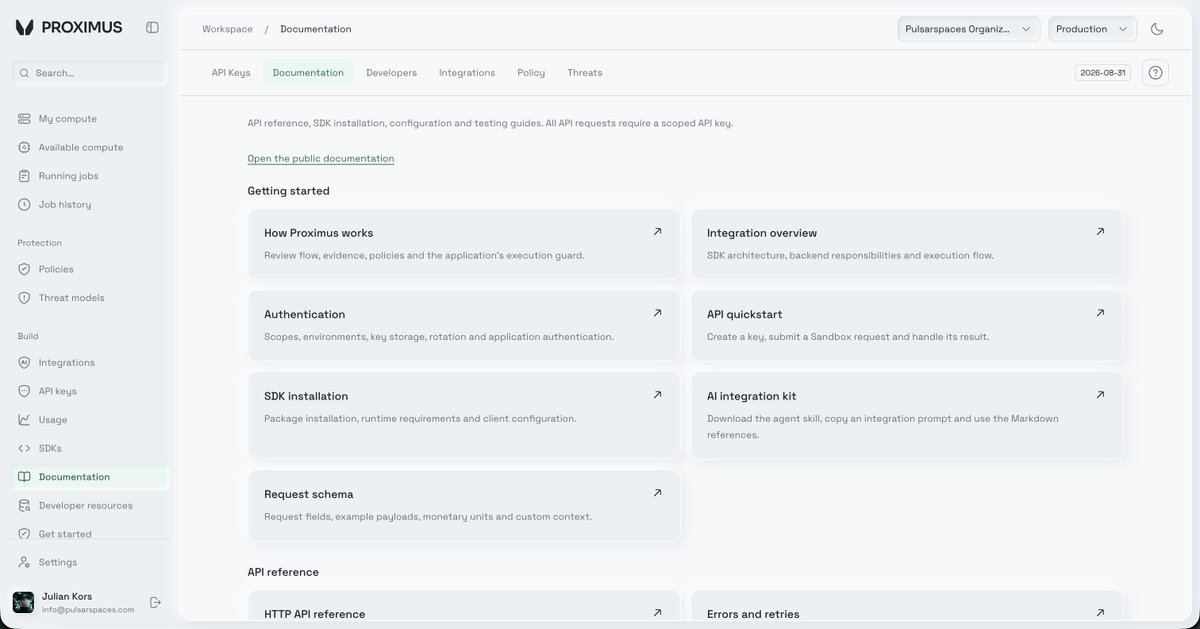
Introducing PROXIMUS.
A safer financial internet. Proximus is a financial security API for banks, fintechs, wallets, protocols and dApps. It compares user intent with executable payloads before authorisation continues.
Read more down below 👇
https://t.co/lSV7ccbH0x
from 19th of October till end of November, everyone signing up to https://t.co/UlR3wwtv8t can get 50% discount on PROXY credits using...
BP26-VIBHU
See you all at Breakpoint London!
$154 BILLION.
That’s how much cryptocurrency was received by illicit addresses in 2025.
162% increase in a single year.
And $154B is only the amount @chainalysis has identified so far.
Their original estimate for 2024 was $40.9B.
One year later?
That estimate was revised to $57.2B as more illicit addresses and their historical activity were identified.
And now AI is lowering the cost of finding, analyzing and exploiting attack surfaces.
The security model has to change. An audit performed months ago isn’t enough when attackers can continuously inspect contracts, applications, infrastructure and dependencies.
Defenders need to operate continuously too.
That’s what we’re building at Proximus.
Continuous adversarial security.
Find it before they do.
https://t.co/fNvSWwayPe
Every day we see exploits across Web2 and Web3, but something has changed.
The cost of finding vulnerabilities is collapsing.
There are hundreds of chains tracked publicly on DeFiLlama, with thousands of protocols and smart contracts behind them.
An attacker can now:
1. Discover smaller protocols with meaningful TVL.
2. Pull their public contracts, ABIs and dependencies.
3. Map externally reachable functions and value-moving paths.
4. Use AI to search for access-control, accounting, oracle and logic vulnerabilities.
5. Simulate candidate attack paths.
6. Validate whether a vulnerability is actually exploitable.
What previously required significant manual research can increasingly be automated and run in parallel.
So why aren’t defenders doing the same thing?
That’s what we’re building into Proximus.
Our new pentesting infrastructure spins up isolated security workers to perform scoped adversarial testing against applications and contracts.
Disclaimer:
Proximus Pentesting requires additional company or individual approval.
https://t.co/NVgPpp7rqy
A recipient check may need the proposed destination and relevant payment history. A permission check may need the token, spender and scope. Their data requirements should be defined separately.
That is the starting point for Proximus' approach to data minimization.
For each field, establish why the check needs it, where it is stored, who can retrieve it and when it can be deleted. Decide which details belong in support logs and which require restricted access.
A hash also deserves careful treatment. Guessable information can still be linked or tested against a hash, so hashing alone does not settle the privacy question.
An integration should make these choices explicit before customer data starts moving through it.
https://t.co/fNvSWwayPe
A detector flags every new recipient. It catches a payment to an attacker, then stops a customer paying a new supplier.
Both examples matter when evaluating the detector.
A useful test set includes malicious actions and legitimate cases that share their surface features: a new destination, an unfamiliar contract, a large payment or a changed device.
Then examine what separates them. Does the additional context improve the decision? How often does the check send normal activity to review? What happens to attacks when the threshold changes?
These are the evaluation questions behind our research.
Catching a known attack is one result. Understanding the cost of that detection across ordinary activity is necessary before choosing how aggressively a product should intervene.
https://t.co/7LoJX14eBv
Proximus is a financial security API for banks, fintechs, wallets, protocols and dApps. It compares user intent with executable payloads before authorization continues.
Working together with the best companies in web2 and web3 to create a safer space for every user.
https://t.co/7LoJX14eBv
Proximus Research Labs Foundation is self-funded. Our work starts with the ways people lose money through financial applications: altered payment instructions, misleading wallet prompts, impersonation and permissions they did not understand.
For each scenario, the useful questions are concrete.
What did the person believe they were doing? What could the application observe before approval? Which signal could have changed the decision? Would that same signal also interrupt legitimate users?
We use those questions to guide our threat library and product design.
A finding becomes useful to a builder when it explains where to place a check, what evidence that check needs and where it can fail.
https://t.co/WKdkmmCzwZ
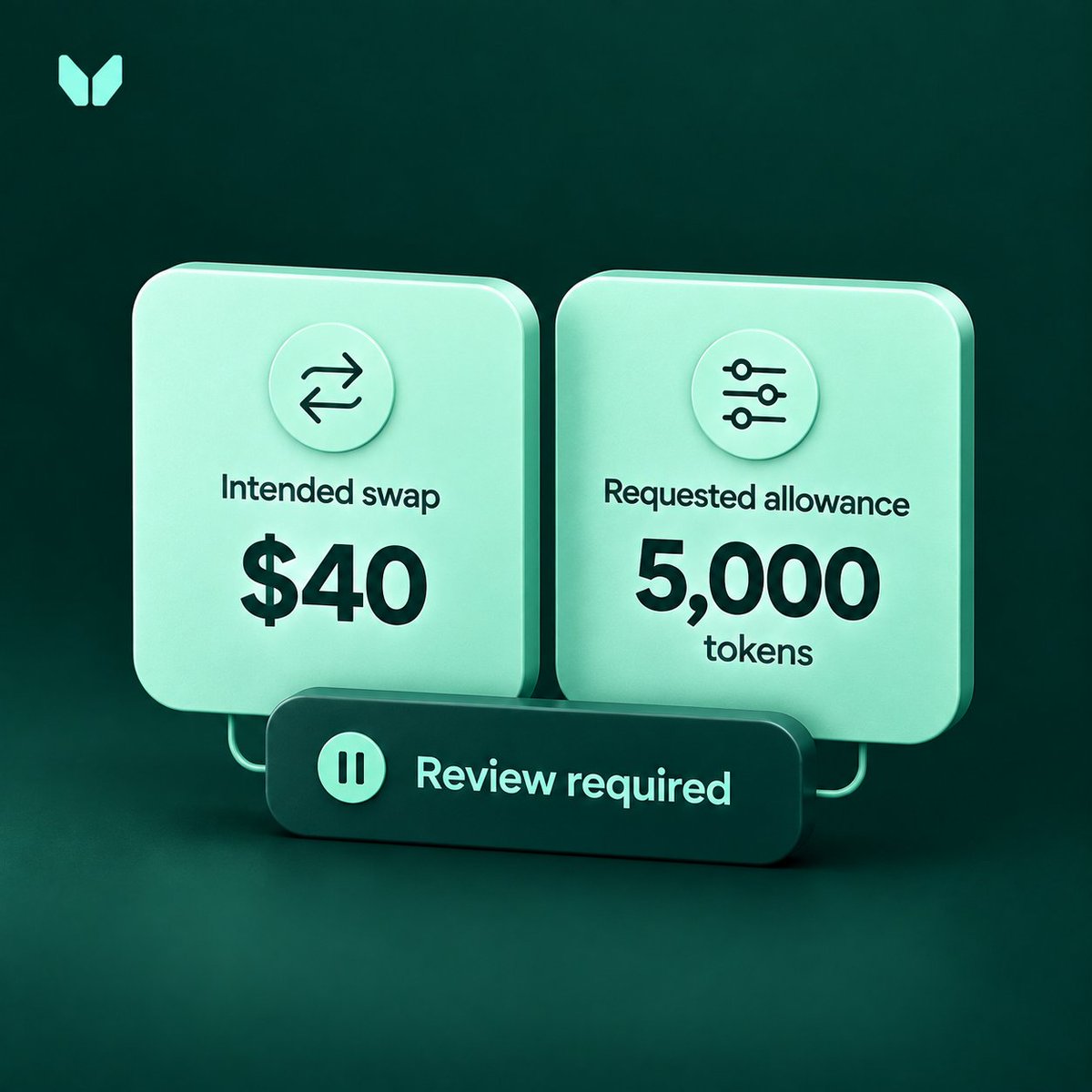
A user wants to swap $40 of a token. The approval asks for permission to spend $5,000.
That difference matters. With an ERC-20 approval, the allowance specifies how much a spender can transfer from the owner's balance of that token. It can support later transfers as well as the action the user is looking at now.
A useful review needs to identify the token, spender and allowance, then compare that permission with the task the user intended.
The amount leaving the wallet immediately is only part of the picture. The authority being granted deserves its own explanation.
Permission scope is one of the questions at the centre of Proximus' wallet security research.
https://t.co/fNvSWwb6EM
Imagine paying a supplier you have worked with for two years. The invoice looks familiar, the amount is correct, and your bank accepts the transfer. The account details were changed before you received it.
Everything in the payment flow can work while the money goes somewhere you never intended.
This is the problem Proximus is building around: compare the intended action with the instruction that will execute, while there is still time to intervene.
That means looking beyond the amount. Who receives the money? Where did the request originate? Which details changed? Does the authorisation grant anything beyond this payment?
Those questions belong inside the confirmation flow.
https://t.co/7LoJX14eBv
Arc Mainnet is live.
Arc launches as the Economic OS for the internet: an open platform for global markets, real-time value movement, tokenized assets, and agentic economic activity.
Arc is more than a blockchain.
It launches as a full-stack financial platform with assets, applications, interoperability, developer infrastructure, and Circle platform services live from day one.
Arc delivers USDC as native gas, deterministic sub-second finality, EVM compatibility, and institutional validators.
It integrates with Arc Studio, App Kits, Arc Portal, Circle Agent Stack, CCTP, Gateway, CPN, and StableFX.
A complete economic platform at genesis.
Arc launches with infrastructure for:
→ Agentic economic workflows
→ Lending and borrowing
→ Trading and liquidity
→ Onchain FX
→ Payments and settlement
→ Tokenized assets
→ Exchanges, wallets, custody, compliance, data, and developer tooling
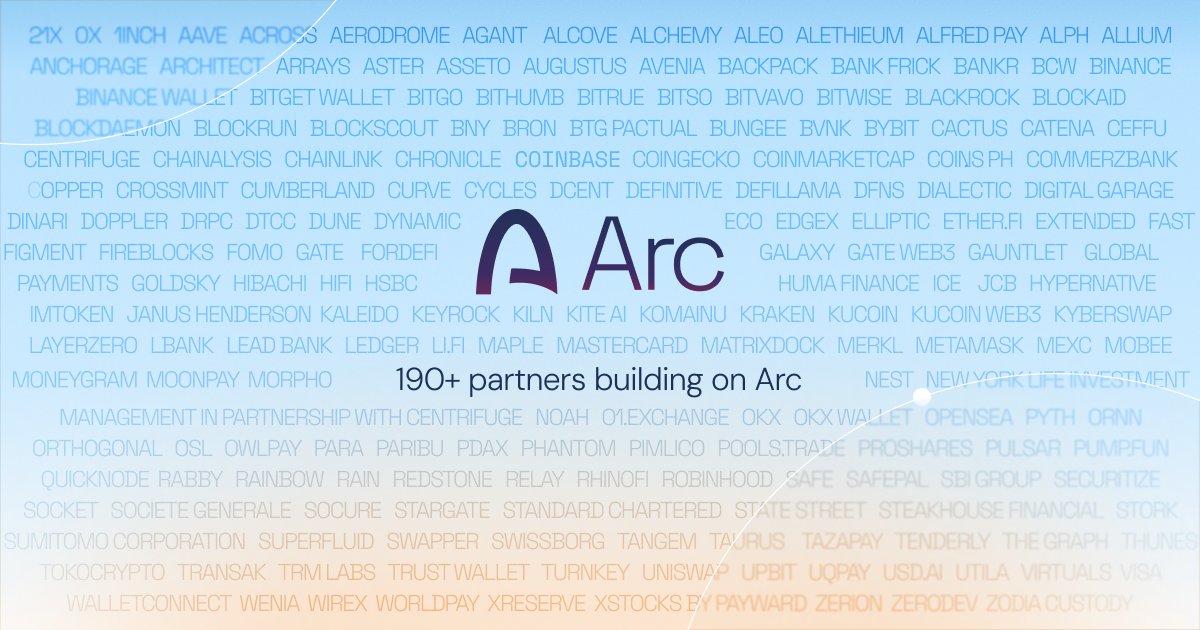
190+ institutional and ecosystem builders are building across Arc.
Pulsar Pro. That's the point.
Rewards on every action, cashback you control, and the full partner stack running underneath your money app.
Live day one of @Arc mainnet, September 16.
Proximus protects the moment before approval becomes loss.
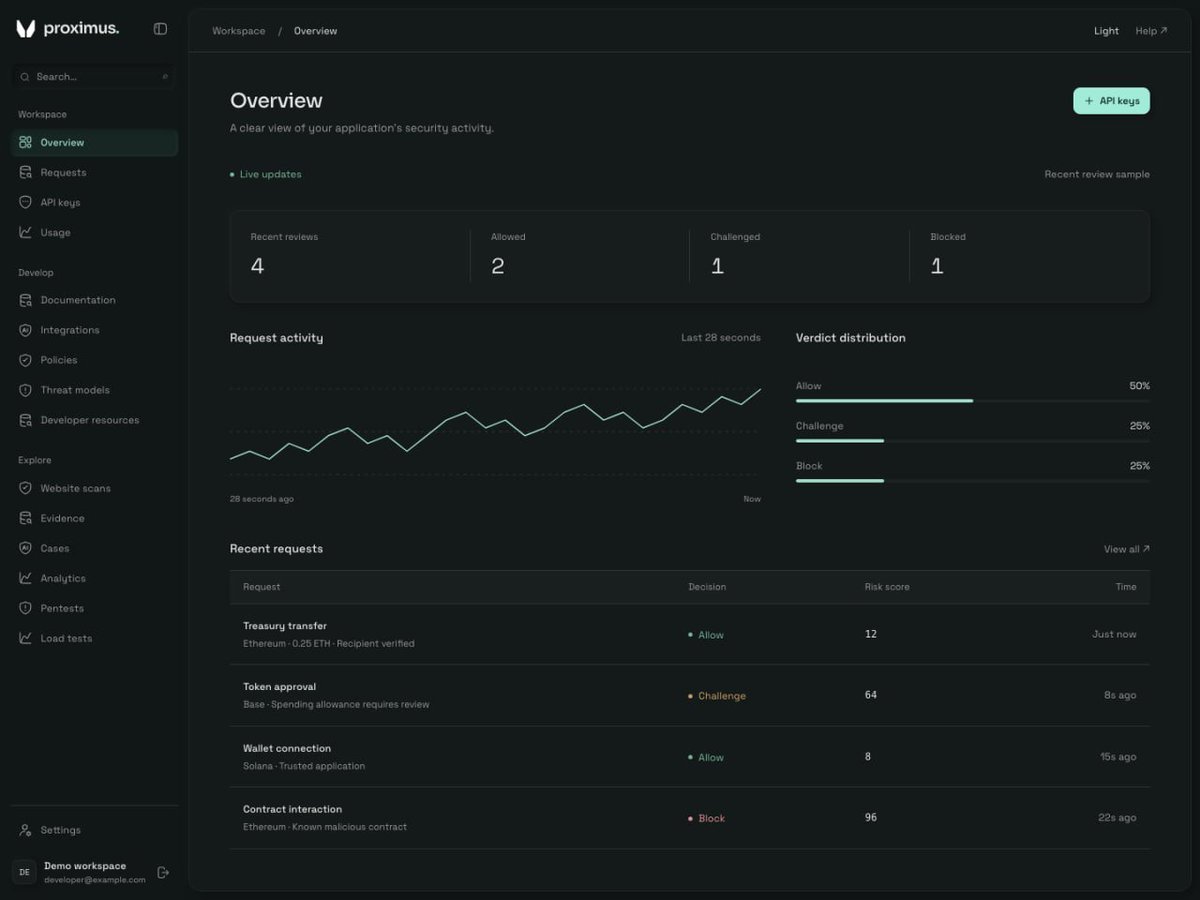
It turns payments, wallet signatures, API calls, browser requests, card flows and agent tool calls into one intention model, checks them against 146 threat models and then returns an enforceable decision.
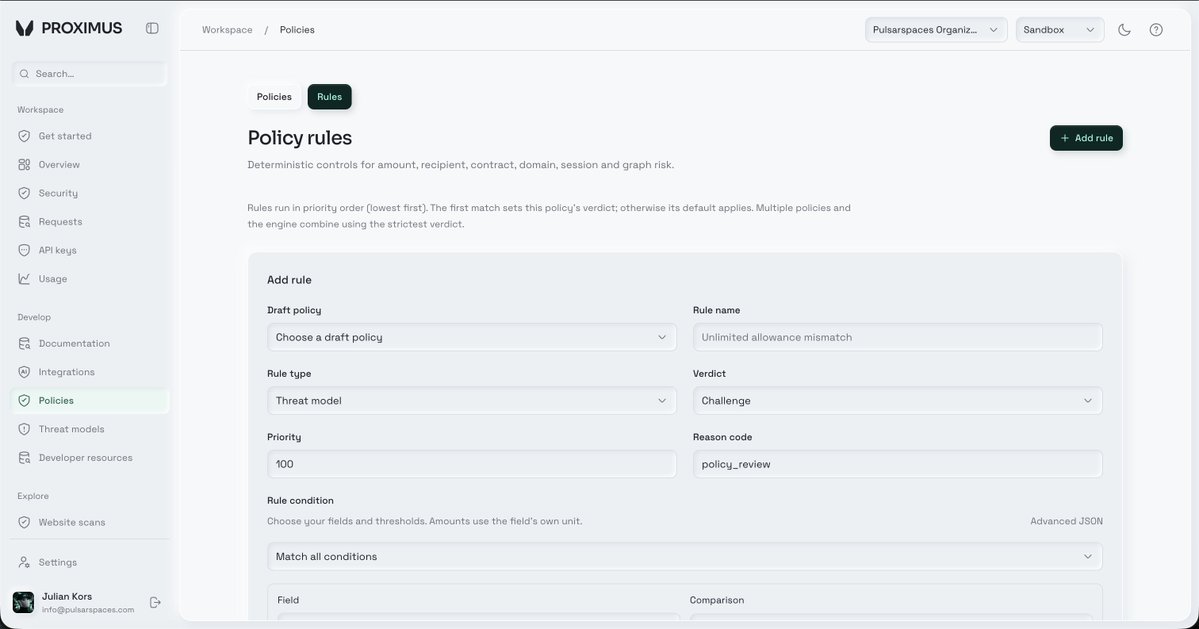
Allow, challenge, block or investigate.
With private evidence that banks, fintechs, wallets and security teams can actually audit.
https://t.co/2d8pyu56UY
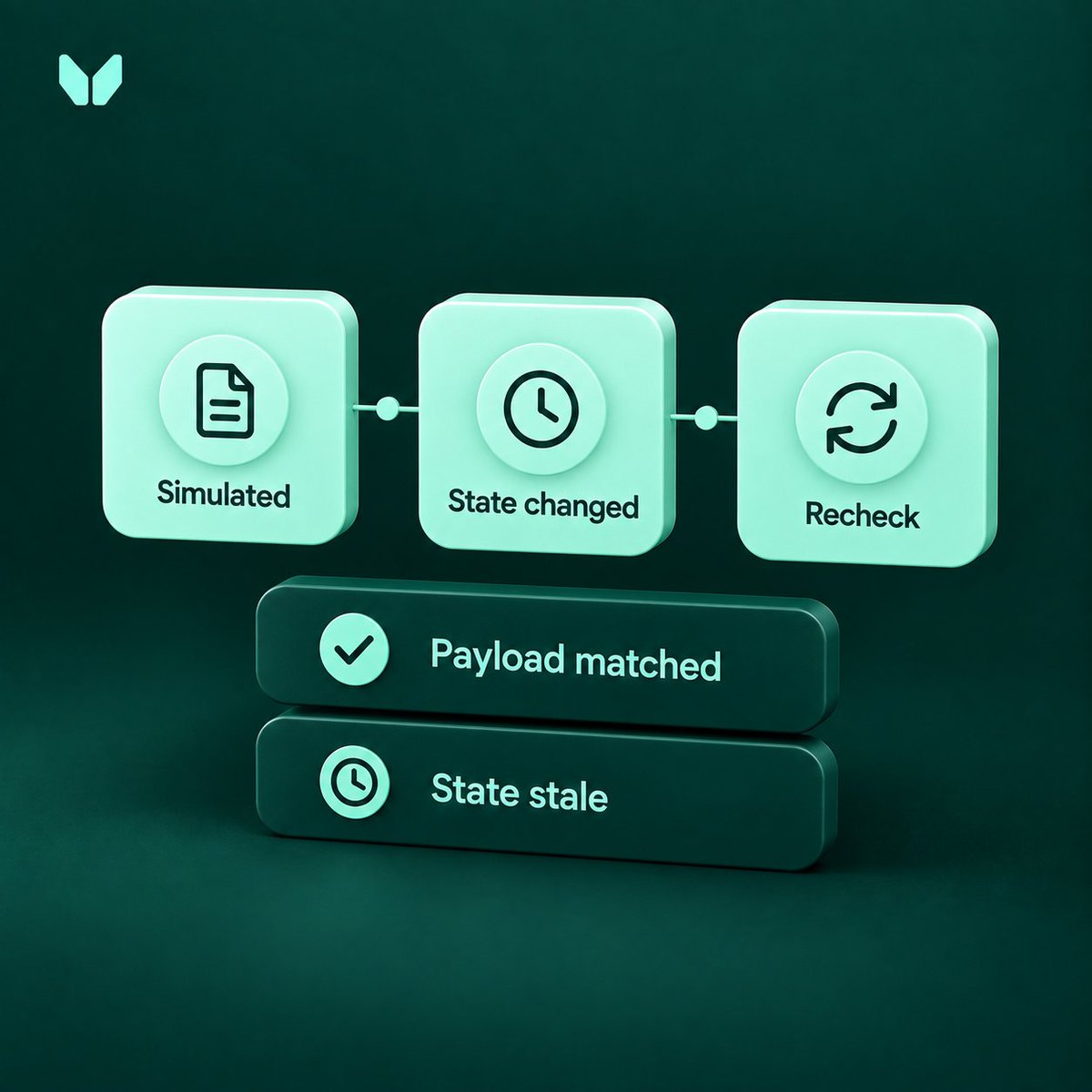
Proximus places a policy-controlled security checkpoint before financial execution. The checkpoint receives a canonical action, decodes the payload, simulates relevant effects, evaluates origin risk, scores behaviour, queries graph reputation and returns a verdict.
Introducing PROXIMUS.
A safer financial internet. Proximus is a financial security API for banks, fintechs, wallets, protocols and dApps. It compares user intent with executable payloads before authorisation continues.
Read more down below 👇
https://t.co/lSV7ccbH0x
The system is not a wallet, custodian, bank ledger or chain. It is an API layer that can be integrated by institutions, fintech teams, wallets, crypto protocols, dApps, payment networks and autonomous agents.