Carga del Regimiento de Voluntarios de Jaruco el 19 de febrero de 1896, contra los rebeldes mambises de Antonio Maceo, en la provincia de Jaruco, Habana.
(José Ferr Clauzel)
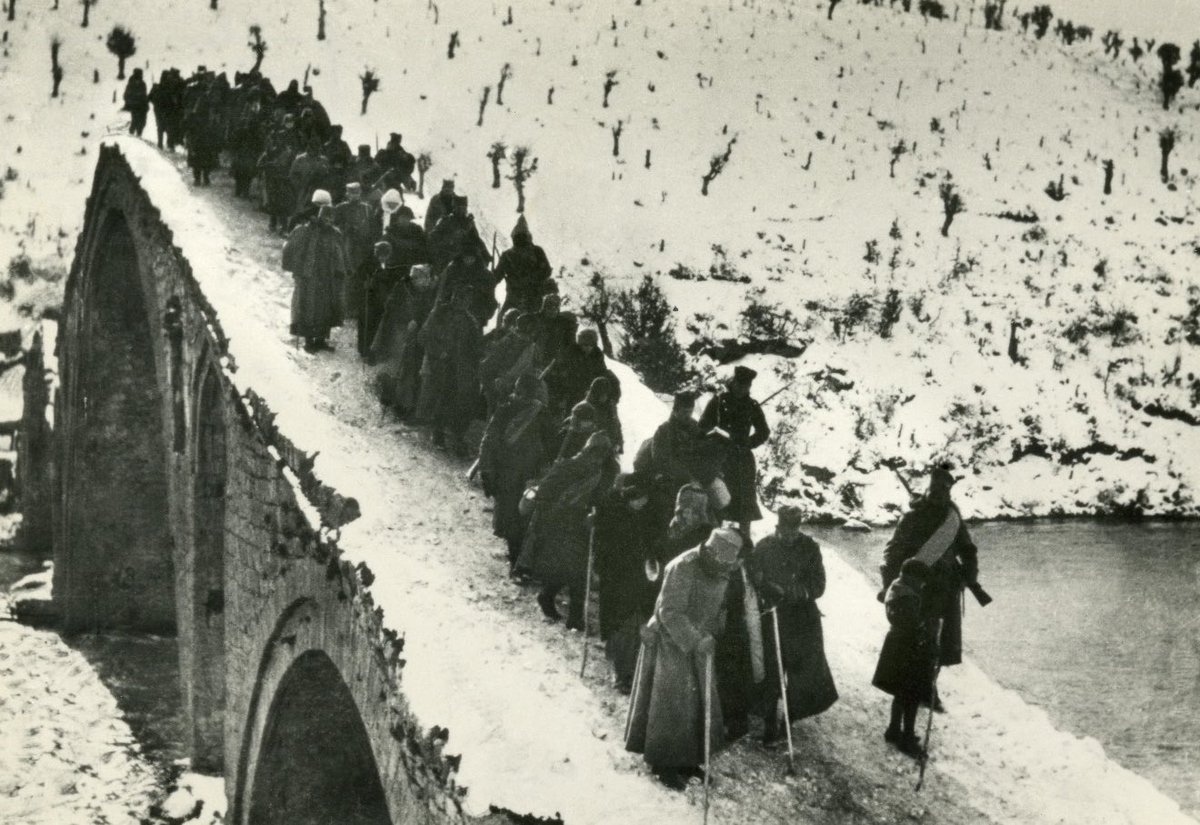
71-year-old Peter, King of Serbia, crossing the Drin river during the retreat of the Serbian Army in December 1915. Serbian forces and refugees were evacuated to Corfu, Greece, in January 1916.
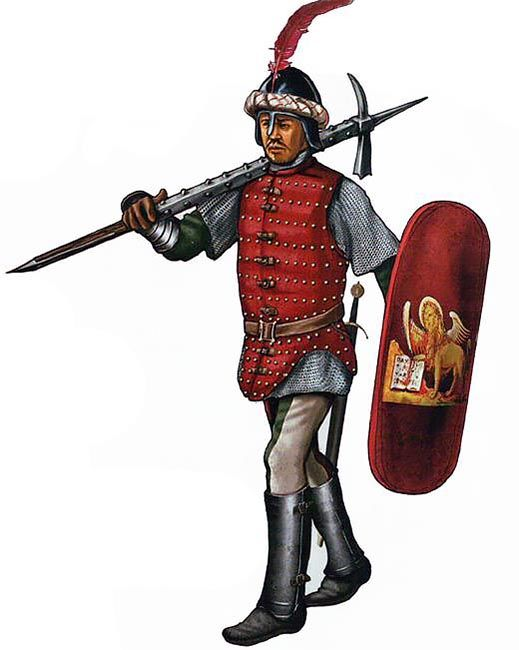
Modern illustration of a Venetian “fante pesante” (heavy infantryman), late 15th century.
One of the sources for Venetian heavy infantrymen using these long war hammers is a contemporary painting from 1498 by Venetian painter Vittore Carpaccio, where you can notice such weapon.
Sea Monster Coin. Lycia. Uncertain Dynasty, c.500-440 BC, Silver Stater, Obverse: Bearded sea-serpent (Ketos?) to left. Reverse. Another bearded sea-serpent to left, within a dotted square border within an incuse square.
One of the most repeated stories in history is that Constantinople fell because someone forgot to lock a small gate. It's a great story. It's almost certainly not true...
On May 29, 1453, the Ottoman army under 21-year-old Sultan Mehmed II breached the walls of Constantinople and ended the Byzantine Empire — a civilization that had endured for over 1,100 years.
The popular version says a small postern gate called the Kerkoporta, near the Blachernae section of the walls, was accidentally left unlocked. Around 50 Ottoman soldiers allegedly slipped through, raised the Ottoman banner, and triggered a panic that collapsed the entire defense. One forgotten gate, one empire gone. That account comes from a single historian named Doukas, writing years after the siege from second-hand sources. He is essentially the only Byzantine writer who mentions this gate at all.
Every other eyewitness — Byzantine, Latin, and Ottoman — points to a different story. The real breach happened near the Gate of St. Romanos, after weeks of relentless artillery bombardment reduced sections of the famous walls to rubble.
Professor Fahameddin Başar reviewed the primary sources and concluded the Kerkoporta story is "completely false," arguing Doukas may have invented it to shift blame away from Ottoman military genius and onto Byzantine carelessness.
Archaeologists have never located a gate in the walls matching Doukas's description, which only deepens the doubt.
The actual story is more dramatic anyway. Around 7,000 defenders — Byzantine soldiers and foreign volunteers — held out for 53 days against an Ottoman force estimated at roughly 80,000. Mehmed II had done the unthinkable, hauling warships overland to bypass the sea defenses and attack from the Golden Horn.
The turning point most historians point to was not a forgotten lock. It was the wounding of Giovanni Giustiniani, the Genoese commander whose tactical skill had held the walls together. When he was carried off the ramparts, sectors of the defense collapsed almost immediately.
Emperor Constantine XI Palaiologos reportedly tore off his imperial insignia so he wouldn't be captured alive, and died fighting in the final breach. His body was never positively identified.
Mehmed II entered Constantinople the same day and rode to the Hagia Sophia, which was converted into a mosque. The city he had dreamed of conquering since boyhood was his before he turned 22.
The Kerkoporta legend persists because it gives us something clean and comprehensible — one human mistake, one empire lost. Real history rarely works that way. The Byzantine Empire fell because of artillery, exhaustion, and the unstoppable ambition of a very young sultan.
What makes the Kerkoporta legend so stubborn is how perfectly it fits the way we want history to work.
We are drawn to the idea that great events hinge on small, avoidable mistakes. An empire that survived for over a thousand years, surely it must have fallen because of something fixable — a door left open, a moment of carelessness, one bad decision on one bad morning.
But the fall of Constantinople had been coming for generations. The Byzantine Empire in 1453 was a ghost of its former self — the city itself was largely depopulated, its treasury was empty, and it had been dependent on Western aid that never arrived in sufficient numbers.
Pope Nicholas V had called for a crusade to relieve Constantinople. Almost no one came.
The Venetians and Genoese, whose merchant interests depended on the city, sent token forces. The roughly 7,000 men who defended the walls were all that stood between a fading civilization and an Ottoman army equipped with the most advanced artillery in the world.
Mehmed had commissioned a Hungarian engineer named Urban to build a cannon so large it reportedly took 60 oxen to move and could hurl a 1,200-pound stone ball. The walls that had held for a thousand years were not built to withstand that.
#archaeohistories
On this day in 1792, an armed mob storms Paris' Tuileries Palace and arrests King Louis XVI. The royal family's Swiss Guards attempt to resist the onslaught and are massacred.
Imágenes de cámaras de seguridad de cuando llegó la onda expansiva en la explosión de Beirut de 2020, de 1kilotón y que dejó 238 muertos y 7.000 heridos.
#UnDiaComoHoy hace 81 años ocurrió el segundo bombardeo atómico, está vez sobre Nagasaki. A las 11:02 AM hora de Tokyo, la bomba Fat Man fue lanzada desde el bombardero B-29 Superfortress con el nombre de #Bockscar
🎥Video IA por #CinaimaFilms#NagasakiDay#WWII#Oppenheimer