Recovery of the Self in Psychosis shows that recovery isn’t about dismantling delusions, but exploring them—integrating personal meaning with reality to rebuild mentalization, insight, and a coherent self
A longitudinal study by Kächele et al. (2018) found that as therapy progressed, patients’ dreams shifted from anxiety‑inducing content to more positive themes. This shows that dreams reflect the internal state and follow a meaningful psychological logic rather than being random.
@SchrodingrsBrat Dreams are random neural firings, and your brain digs into your memories, concerns, fears, experiences and to build a story around it....
I wouldn't ascribe much meaning to them.
Psychosis may represent not a breakdown, but a compensatory effort of the mind to preserve the spatiotemporal integrity of the Self. Neuropsychodynamic models help us rethink delusions as adaptive attempts at coherence.
New acquisitions! Can’t wait to dive in and continue expanding my knowledge into treating severe psychopathology from an integrative neuropsychoanalytic perspective!
#ClinicalPsychology#Neuroscience#Psychoanalysis
In The Divine Comedy, Virgil guides Dante through Hell and Purgatory—much like a clinical psychologist guiding a patient through pain, growth, and healing. Therapy, then, is not just treatment, but a human pilgrimage—for both traveler and guide.
Just watched Andrew van der Vaart’s video essay on Grizzly Man, a deep dive into Timothy Treadwell’s psyche, personality, and pathologies. Fascinating, tragic character study. Highly recommended.
https://t.co/wemzvVkQZL
I wrote an article reflecting on the psychologist´s role in our era of constant neuroscientific development. I hope it helps guide both researchers in their efforts to study mental phenomena and clinicians in their endeavors in treating mental illness. https://t.co/npqPtxQ6i7
“It’s about healing”. Um, what? I guess anything can heal you. The problem is that it trivializes actual self improvement which comes as a result of hard work.
@jesusrglez I really enjoy Henri Ey. His órgano-dynamic theory was on of the first to try and integrate psychoanalytic processes with their neurobiology
@NTFabiano @Unthought10 I think the school of phenomenology has a lot to offer in terms of understanding and conceptualizing mental illness and its treatment. In this case, phenomenology of perception is a good starting point.
@hubermanlab Treating addiction necessarily involves treating existing family dynamics. Now, how much of those dynamics are at play when predicting substance abuse?
Neuropsychology deepens our understanding of how mental processes can be explained through biology. This also applies to pathology, allowing us to observe the anatomical alterations that cause it, contributing to the development of new treatments.
Overprotection limits growth. Overprotective parents can prevent individuals from learning to fend for themselves and handle frustrations. This fosters a core belief of incompetence. It’s crucial that we work with our patients so they can become independent problem solvers.
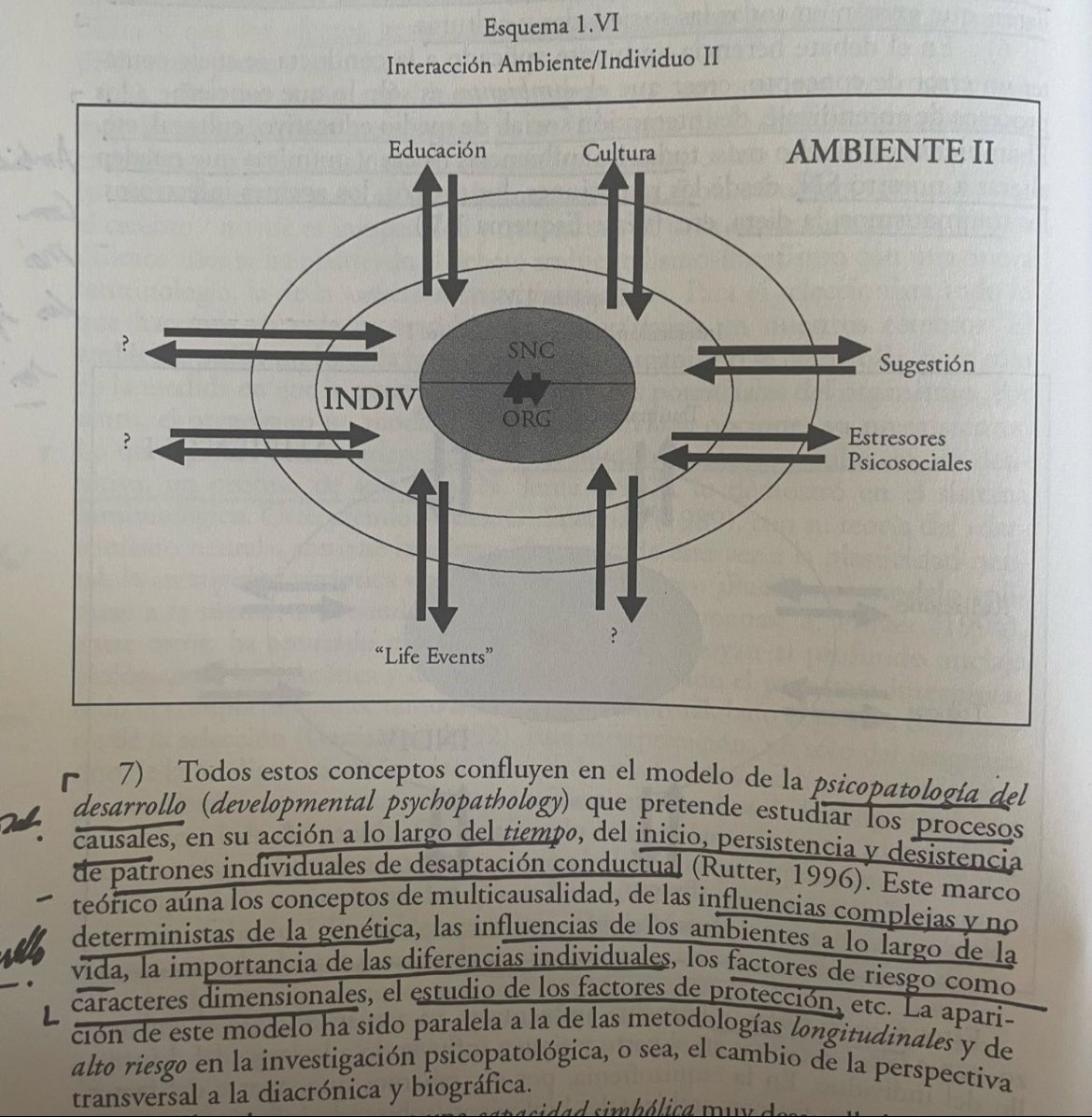
Understanding neuropsychopathology requires studying the factors that shape the psyche, CNS, and overall organism. This diagram illustrates how various influences contribute to psychiatric disorders, their organic effects, and potential interventions.
@DavidPuder That’s interesting, one would think that with the rise of social media that the rates would continue to increase. Does the study go into possible explanations as to why the rates are decreasing?