@DissidentSouth Reminds of this piece by Weaver. Folks like Mr Smith seem intent to argue for a sort of manufactured ethnogenesis by state sanction which has been nothing but a disaster after a short-lived illusion of peace between ppls following the Pax Americana.
https://t.co/LFpAS72sLU
@jonharris1989@JacobHerbold@yhazony No, we have observed your shift for some time now; it stands as plain as a pikestaff, and your protestations to the contrary only render the spectacle more conspicuous to any mind not bent on self-deception.
@PseudoWeaver@New_Christendom We released a collection of essays by M.E. Bradford & Tom Landess a year or two ago.
https://t.co/L5GCy1snvO
The books you mention are not in the public domain and securing publishing right would be very expensive, IF the owner of the publishing right were willing to sell them.
"...knowingly or unknowingly they [liberals] are part of a process of softening up their country for conquest by alien and, to my mind, inhumane ideas."
- "How to Argue the Conservative Cause," Essay in "In Defense of Tradition."
“In 1938 appeared the clearest and most courageous of the Agrarian documents, Donald Davidson’s Attack on Leviathan.” – Richard M. Weaver
Review series by @Chase_Steely
https://t.co/KrJrgyWOqz
“In 1938 appeared the clearest and most courageous of the Agrarian documents, Donald Davidson’s Attack on Leviathan.” – Richard M. Weaver
Russell Kirk tells the story of discovering Davidson’s book in 1938 as a sophomore at Michigan State in the introduction for its reprint in 1991. Kirk writes, “The book was so good that I assumed all intelligent Americans, or almost all, were reading it. Actually, as I learned years later, the University of North Carolina Press pulped the book’s sheets after only a few hundred copies had been sold: clearly an act of discrimination against conservative views.”
Now you might grasp my gratefulness to possess one of the “few hundred copies” that escaped the book bath for the depublished and presumably turned into unnatural ingredients “Intellectuals” like in their soy smoothies and “superfood” bowls.
Preface
Davidson described this work as “a series of essays and informal studies grouped around a general theme. It does not pretend to be a systematic and definitive consideration of sectionalism and regionalism in the United States. To deal adequately with that subject would require a lifetime of travel and investigation and would call for a combination of special skills, particularly in history and other branches of social science, such as I cannot claim to possess, great though my interest and assiduous my reading in those fields may have been. I can claim only the layman’s right to judge warring interpretations of American life and history, to set them beside the reality of experience, immediate or remembered, and then to choose for himself whom his soul will believe.”
->
"The man of culture finds the whole past relevant; the bourgeois and the barbarian find relevant only what has some pressing connection with their appetites."
- Weaver
". . .although the traditional mind of the South recognized in science a fascinating technology, it refused to become absorbed to the extent of seeing It as either a philosophy of life or a religion."
- Weaver
"It thus clung to its inherited religious humanism. Unlike the technician, the average Southerner did not feel that he must do a thing because he found he could do it. It is significant that neither the Jacobins of the French Revolution nor the scientific materialism of


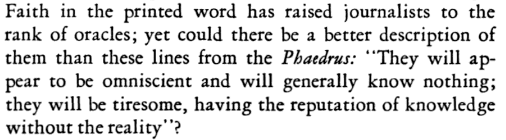

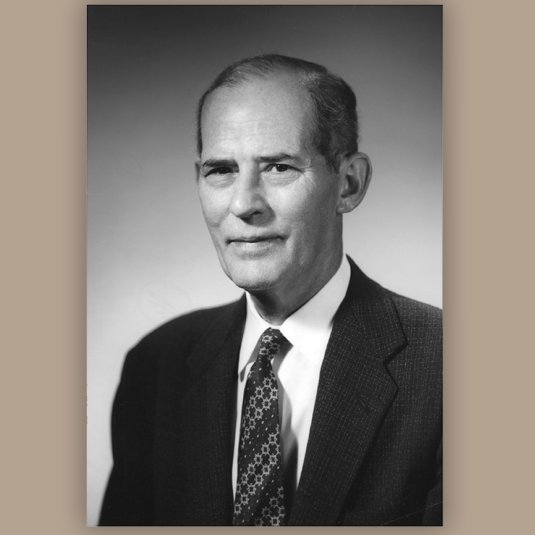





![PseudoWeaver's tweet photo. "...knowingly or unknowingly they [liberals] are part of a process of softening up their country for conquest by alien and, to my mind, inhumane ideas."
- "How to Argue the Conservative Cause," Essay in "In Defense of Tradition." https://t.co/6VcxoVh2cX](https://pbs.twimg.com/media/GecH4DhXYAAuxAh.jpg)