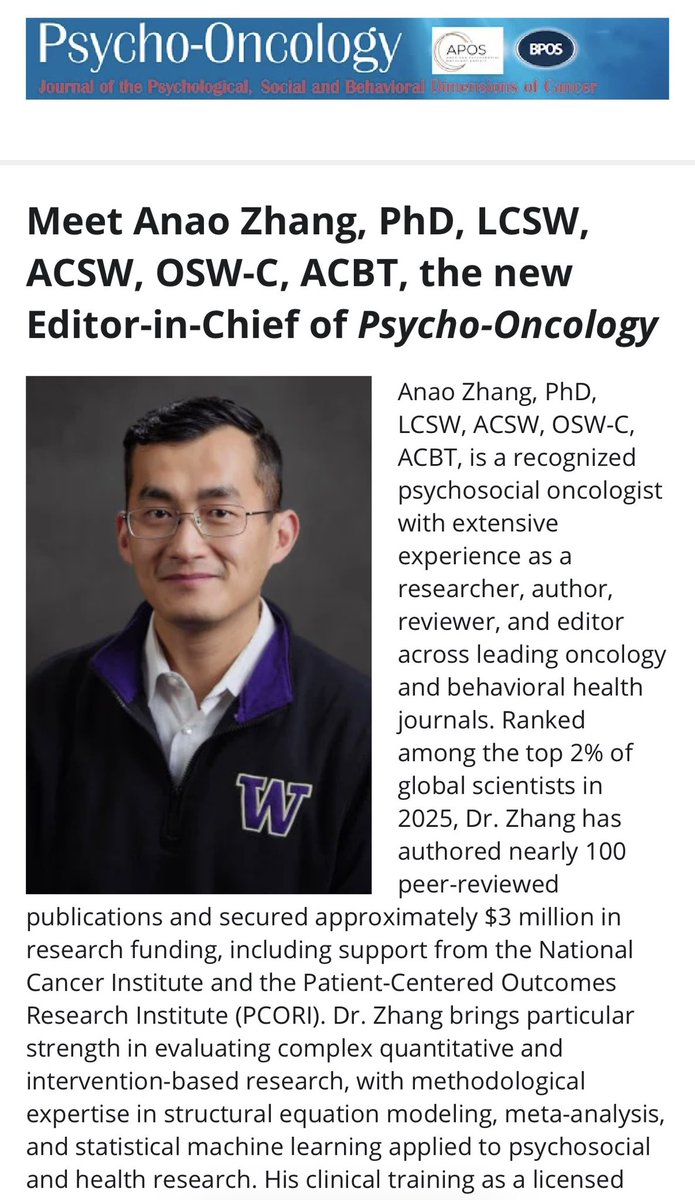
Congratulations to Dr. Anao Zhang on being named the new Editor-in-Chief of @PsyOnc ! 👏
A leading psychosocial oncology researcher, Dr. Zhang brings deep expertise in quantitative methods, intervention research, and patient-centered care
https://t.co/Qf5xmENjK8
Can self-directed digital programs support healthy living after cancer? In this pilot study, survivors valued the co-designed psychosocial content, but engagement was limited by technology barriers, symptoms, and lack of guidance @PsyOnc@bogda_koczwara
https://t.co/fZmElZPAtI
🇹🇷subsample of the @IPOSPsychoOncol Survivorship Survey highlight disparities in #SuppCare delivery @PsyOnc@ozanbahcivan
While institutions systematically assessed & addressed patient unmet needs, caregiver needs were less frequently evaluated & supported
https://t.co/d8Nqmt0fJi
What makes telehealth work in colorectal cancer survivorship care? @PsyOnc@KarolinaLisy#SCORE trial
HCPs identified facilitators & barriers: convenience & safety, balanced against clinical appropriateness, technology challenges, & equity considerations
https://t.co/aKy1Lhm6Ce
New research highlights psychological mechanisms underlying #FCR: intolerance of uncertainty and negative metacognitive beliefs differentiated FCR status, with cognitive-attentional syndrome (CAS) mediating these relationships @PsyOnc@wwtlam07
https://t.co/JC1kNFCqgz
Depression is common among head & neck cancer survivors, but what drives antidepressant use over time?
In this study of 9,267 patients, adherence remained suboptimal (42%), while out-of-pocket costs were modest and unlikely to be a major barrier @PsyOnc
https://t.co/657Nx41yKS
Cancer care has advanced, but support hasn’t kept pace @BillerSheri
This commentary argues #SuppCancerCare isn’t optional; it’s essential infrastructure @PsyOnc
Bridging the gap from evidence to implementation is🔑to improving equity, QOL, & outcomes
https://t.co/MZThEjVymi
“Chemo brain” after lymphoma treatment is real, and may be addressable @PsyOnc@hagsie@GatesPrisc69850
In this pilot RCT, a 4-week web-based CBT program (eReCog) was feasible, acceptable, and showed signals of cognitive benefit
https://t.co/NnvqZRDkBf
Balancing living fully while facing mortality - “double awareness”- may shape QOL in advanced cancer @PsyOnc@ZimmTeamLab@gary_rodin
Double Awareness Scale shows strong reliability,and higher double awareness was linked to better QoL & lower distress
https://t.co/6bUMFCerjX
Today, on World Psycho-Oncology Day, @PsyOnc highlights the importance of integrating psychological and psychosocial care into oncology practice
Research and collaboration continue to drive better outcomes for patients, families, and clinicians
Among women receiving chemotherapy for breast cancer, baseline HRQoL was low (0.27) @PsyOnc
CBT-I significantly improved HRQoL, with 71.2% achieving meaningful gains. No sustained effects at 6 months @MariaFtanou @sheilagarland & cols
https://t.co/vF1vGoua7h
In Nigeria, just 44% of women with non-metastatic breast cancer received mastectomy. Awareness was a major driver (OR 4.10) @PsyOnc
Barriers included cost, fear, and social impact @BillyRosaPhD
https://t.co/5gkHkIk5Ys
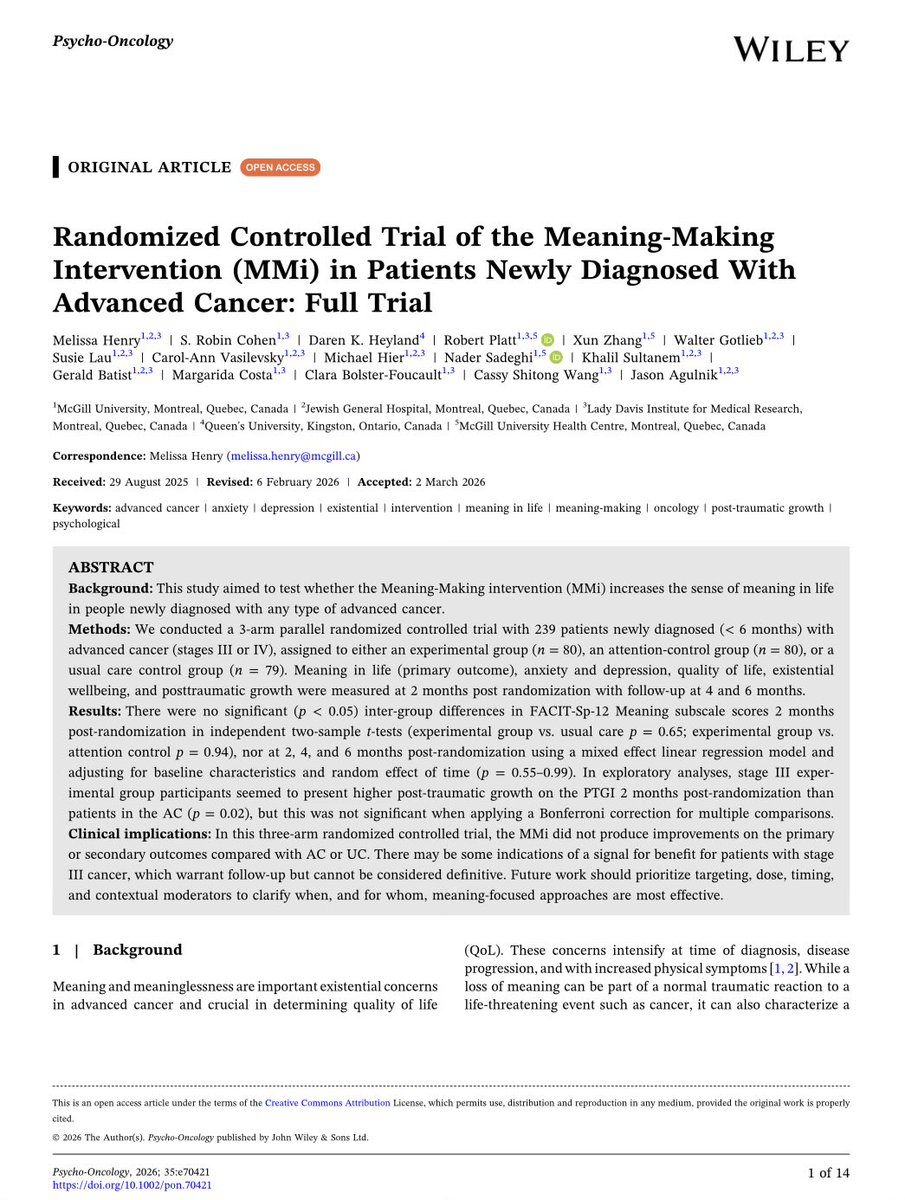
A 3-arm RCT found no significant benefit of a Meaning-Making intervention for patients newly diagnosed w advanced cancer across meaning in life or secondary psychosocial outcomes @PsyOnc
https://t.co/oQaSi9u65Q
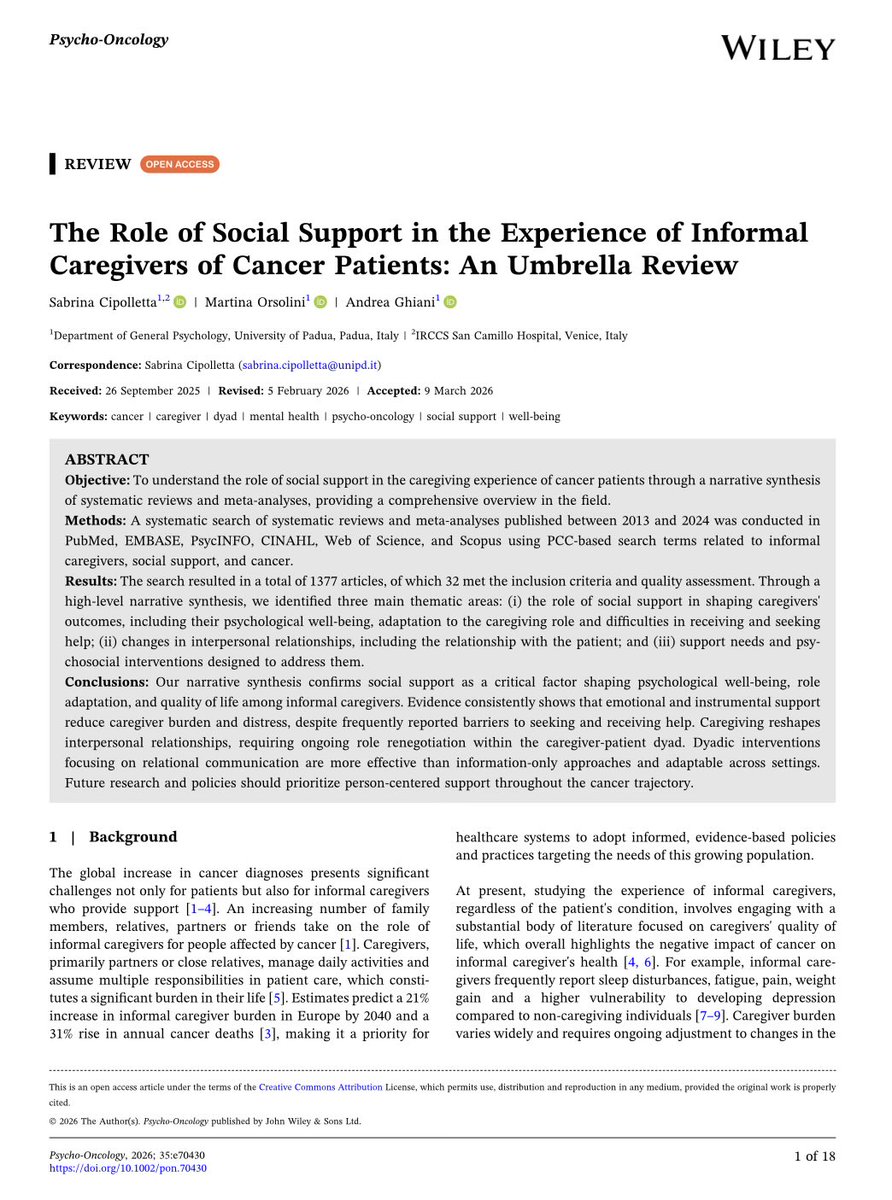
Across 32 reviews, social support emerged as a 🔑 factor in cancer caregiving; shaping distress, burden, adaptation, relationships, & QOL. Dyadic interventions centered on communication appear more effective than information-only approaches @PsyOnc
https://t.co/NoGxEpss63
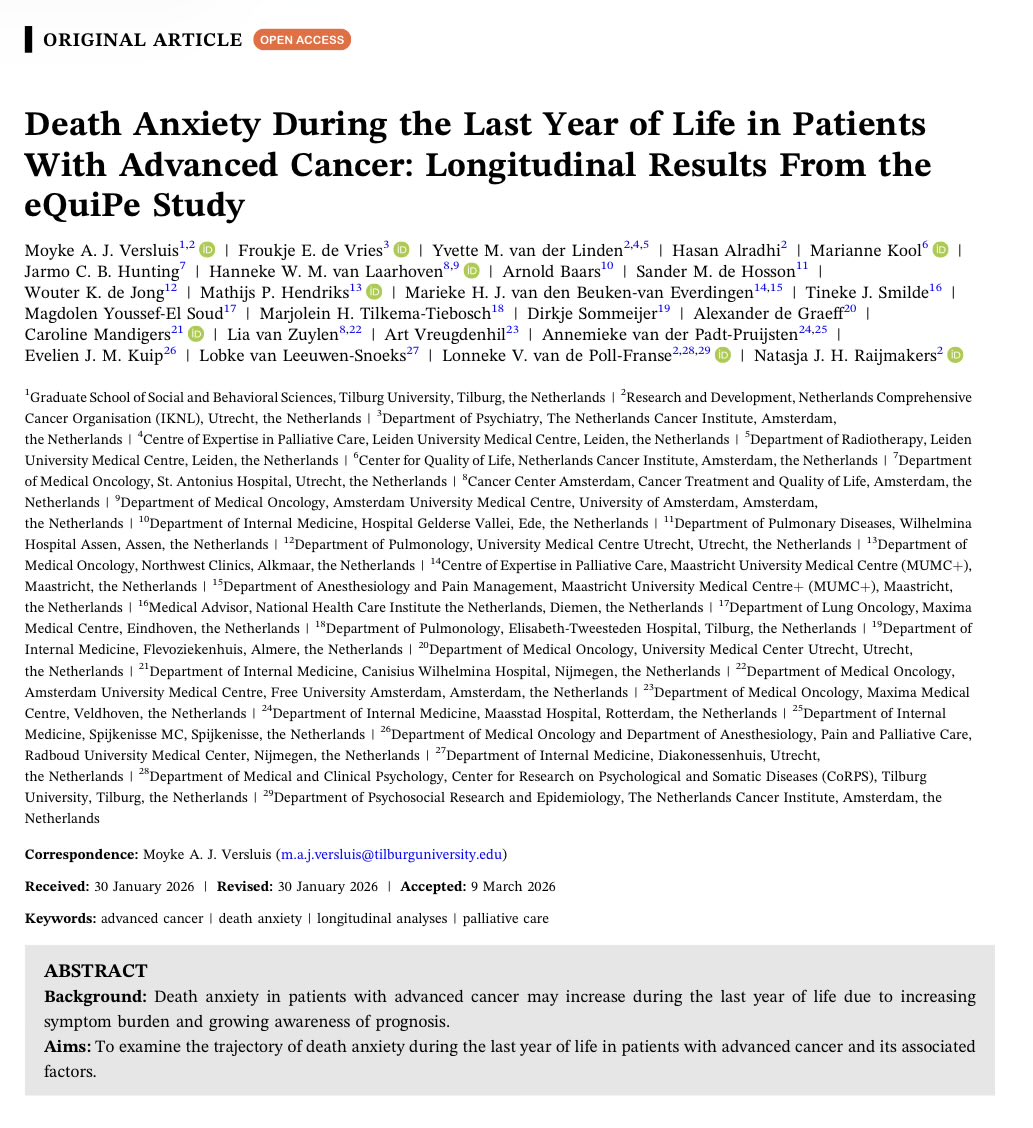
Death anxiety in advanced cancer remains relatively stable during the last year of life and is associated with psychosocial and coping-related factors
@PsyOnc@HannekevanLaar1
https://t.co/uqUG7kfU3R
Anao Zhang is thrilled to take on the role of Editor-in-Chief of @PsyOnc !
He is committed to advancing rigorous, inclusive, and impactful research that improves psychosocial care for patients and caregivers worldwide
https://t.co/oXF8qFcfQC
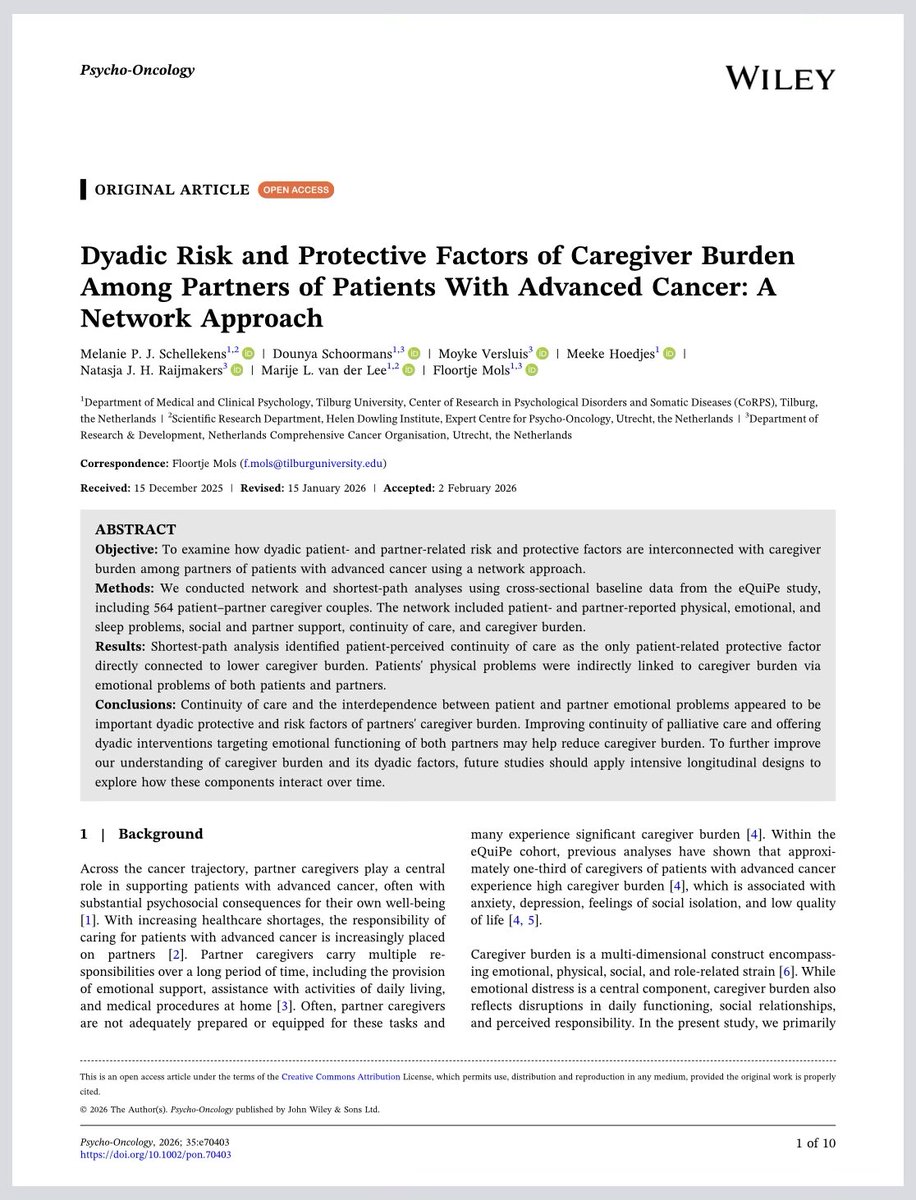
Research using a dyadic network approach shows that continuity of care is directly linked to lower caregiver burden among partners of patients w advanced cancer @PsyOnc
Findings highlight how patient and partner emotional distress are interconnected
https://t.co/WeO5Xms7DC
Depression is common among older adults
This study explored cultural adap of the CARE psychotherapy intervention for 🇦🇺 ≥70 with cancer @PsyOnc
Findings highlight the importance of tailoring language & cultural context to improve acceptability & uptake
https://t.co/5EC1trj03S
Available: Abstracts from the @APOSHQ 23rd Annual Conference (March 18-20, 2026) @PsyOnc
Showcasing the latest research and innovations advancing psychosocial oncology care
https://t.co/EPzFZNhV0Y
Pilot RCT: Iterative, theory-driven modifications improved the feasibility of an online expressive writing intervention for AYA cancer survivors @PsyOnc
Adherence increased from 25% to 83%, and 6-month follow-up completion rose to 72%
https://t.co/g6cbRZljnx
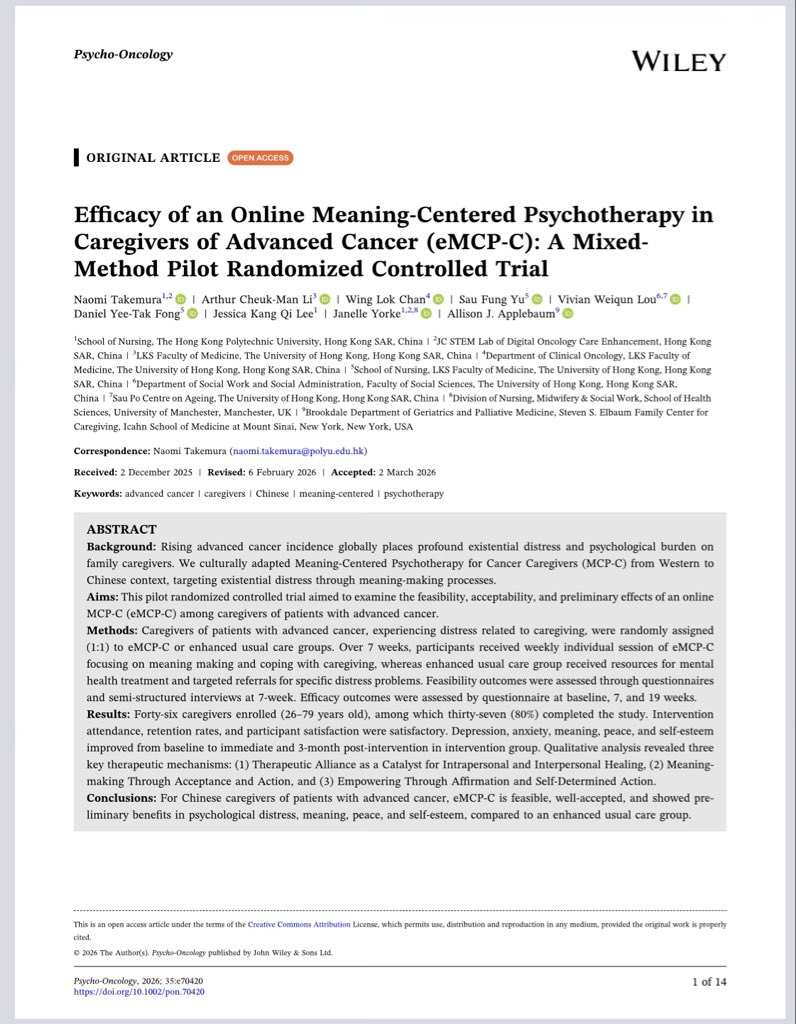
Pilot RCT: An online culturally adapted Meaning-Centered Psychotherapy for caregivers of patients with advanced cancer showed good feasibility and acceptability, with improvements in depression, anxiety, meaning, peace, and self-esteem @PsyOnc
https://t.co/m16Ic1jw5q