Nah Stake really went all out for Merab's return at UFC 333 😭 seeing him with those 5.00 boosted odds is actually wild.
Fight night just got a whole lot more interesting!!🔥 T&Cs Apply
Crypto has humbled us, rugged us, liquidated us, and tested our sanity in ways outsiders will never understand.
But somehow, we're STILL HERE.
That's what makes @Apeshit_co different to me. it's more than memes; it's a shared identity for the degens, the trenchers, and everyone who's survived this market and still has the guts to show up.
With The Lounge getting closer, I'm bullish on the community and excited to see what's next. The trenches brought us together. Now, it's time to go APESHIT.
Get your membership ID: https://t.co/Coz1wJibCi
MINE 👇🏾
Membership ID: 000236
$APESHIT | Robinhood Chain
𝗕𝗥𝗢 𝗪𝗔𝗦 𝗡𝗢𝗧 𝗥𝗘𝗔𝗗𝗬 𝗙𝗢𝗥 𝗧𝗛𝗜𝗦 😳
Emacarius was playing 3 FAT KINGS on @1win, and things got wild when that $10,000 jackpot hit.
The way he reacted said everything. Bro was shouting “por favor” like he couldn't believe what was happening 😂
You could tell the moment caught him off guard. The win was huge, but his reaction was even better.
Moments like this only happen on 1win and you should check it out with me👇
https://t.co/K4dTYVVRpK
Jesse admits he was at the beach eating ice cream when $BALD launched without permission before the network even went live
"Someone messaged me and they said, there’s a meme coin on base and it’s going up... My first reaction was like, whoa, this is out of my control."
Classic hopium
Ft: @jessepollak | @base
Alphio AI is bringing AI agents and memecoin trading together in a competition where participants can start with just 10 USDC and compete for a share of the $20,000 prize pool
Let your AI agent trade
Climb the leaderboard
Take advantage of the loss protection, subject to the official terms
The challenge runs from October 19–28 (UTC), so there's still time to check it out @AlphioAI
Join in here https://t.co/fKWRXt3NRY
A recurring problem emerged as quantum computing research accelerates.
Exposing public keys on-chain creates a permanent attack vector for long-term asset custody.
Static wallet addresses invite cryptographic decryption before networks can react.
Through integrations like its Casper Network partnership, @Americanfort_io pairs post-quantum wallet architecture with stealth address generation.
Shielding institutional capital requires hiding raw public keys behind fresh receiving targets.
Quantum resilience and address privacy are two sides of the same defensive primitive.
Lamborghini Urus SE?
Now that would be a crazy win
@1winToken is giving token buyers a chance to get tickets for the Lucky Drive
Every full $100 spent on 1win Tokens earns 1 ticket, with a maximum of 32 tickets per user
The draw is on November 15
Imagine being the lucky winner
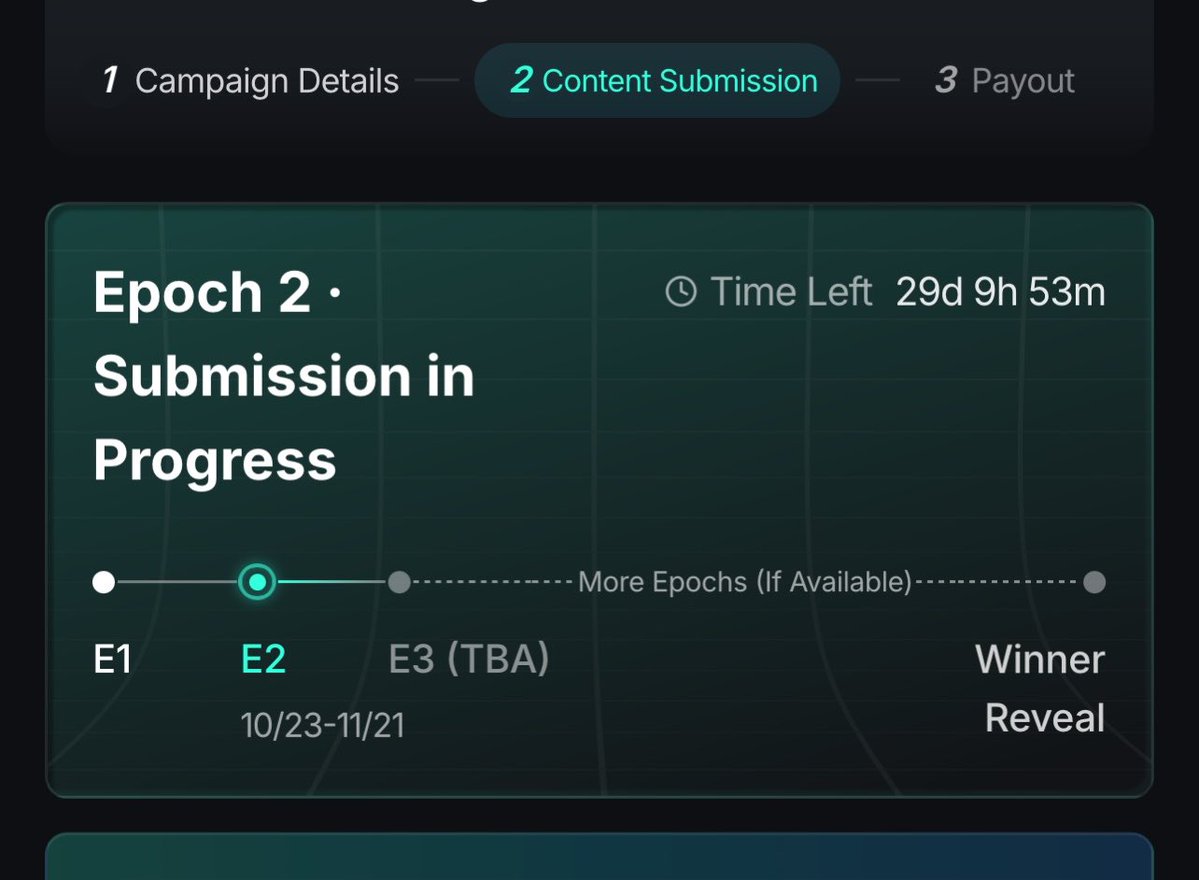
epoch 2 with @primus_labs on Kaito is officially live.
this epoch comes with another chance for creators to earn a share of the rewards.
what you need to know:
→ 0.3% of the total $PRIM supply is allocated → 450 top creators will be rewarded across 3 language regions (global, kr, cn) → your top 4 eligible posts count toward your Mindshare score → you can submit up to 10 posts per epoch.
if you’re building around Primus, this is the time to turn up the content.
join now: https://t.co/91mNnxD5Lm
the @baibai_cx co founder explains how the platform is being built for everyday crypto traders and what users can do with it
a trading platform needs to be easy to use while giving people more reasons to stay active
bringing swaps, tokenized stocks and other features together is one way to make the experience better for traders.
ft @mteamisloading | @AndrewAsksHow | @Spire_Labs
Wait, Stake has Merab at exclusive 5.00 boosted odds for UFC 333? 😭🥊
They really found another way to get people talking before fight night.
T&Cs Apply
Stop wasting time skimming through 2 hour videos.
@lynote_ai extracts timestamps, visual summaries, and structured AI notes directly from your YouTube links.
Clean, fast, and effortless workflow ⚡️
📌 Start here: https://t.co/7WDzS7GshW
#Lynote#LynoteCreatorChallenge
Exploring opportunities in crypto is one thing. Being able to access your funds quickly and conveniently is just as important.
Bitget Wallet's Bank Transfer feature helps bridge the gap between crypto and everyday banking, allowing users to convert supported assets like USDT into NGN and transfer directly to a Nigerian bank account.
What impressed me most was the speed. ⚡
During my transaction, the money landed in my bank account in less than 1 minute! No lengthy waiting, just a straightforward cash-out experience.
In this video, I walk through the entire process, from reviewing the exchange rate and confirming the transaction to receiving the bank credit alert.
Whether you're exploring Web3, participating in the Meme Trade Quest, or simply managing your crypto, convenient cash-out options make a real difference.
A smooth crypto experience shouldn't end at trading. Accessing your funds matters just as much.
Watch my experience below. 👇
@BitgetWalletAF@BitgetWallet
#CashOutWithBW #MemeTradeQuest
I’ve been looking deeper into @primus_labs, and I think the starting point isn’t the technology.
It’s the problem institutional finance has with going onchain.
For a retail user, putting a wallet balance, transaction history or position on a public blockchain may not be a big deal.
For a fund, market maker, treasury desk or financial institution, it’s a completely different situation.
They may want to use onchain markets, access liquidity, interact with DeFi or prove that certain financial conditions are true.
But that doesn’t mean they want everyone to see their entire balance, positions, strategies or financial activity.
And this creates an interesting tradeoff.
Traditional finance gives institutions a lot of privacy, but often at the cost of transparency and verifiability.
Public blockchains give you transparency by default, but that transparency can become a problem when sensitive financial information is involved.
So the real question isn’t simply:
“Can institutions move finance onchain?”
It’s whether they can do it without having to expose everything in the process.
That’s the part of Primus I find interesting.
The idea is to make financial activity and claims verifiable while keeping the underlying information private when it needs to remain private.
Privacy and verification don’t necessarily have to be opposites.
If that balance can actually work at scale, it could make the institutional version of onchain finance look very different from what we have today.
I’m going to spend the next few posts breaking down how Primus is approaching that problem, starting with the technology behind its verification layer.
Be part of it too; https://t.co/i4iom4Clrj
What if your capital could do more than one job at a time? 👁️👁️
I've been thinking about this while exploring @grvt_io's approach to capital efficiency.
GRVT is bringing traditional fixed-income opportunities onchain, targeting up to 11% APY on eligible assets through strategies backed by real-world cash flows.
And there's another interesting piece to this. The idea behind its planned Yield as Margin feature is to let traders use yield-generating assets as collateral, so their capital can potentially keep earning while supporting active positions.
Think about the difference:
Traditional approach → Allocate capital to earn yield OR keep it available for trading.
GRVT's vision → Earn yield while putting that same capital to work in the market.
Of course, yields aren't guaranteed, and the risks still matter. But I think this is a direction worth paying attention to.
Because the next improvement in trading might not just be about better entries or lower fees. It might be about what your capital is doing between trades.
Hey friends, one thing got clearer. Hub is where you compose the agent. Embed is where the agent sits inside a screen that already exists. @ama_protocol keeps them as separate surfaces. One is for composition. The other is for sitting inside an existing screen. Placing the agent into a place that already exists, instead of rewriting it, lets it run without leaving the workflow. The surface can change without the logic changing.
On @quipnetwork 's QVM every result passes through three layers. A comparison against classical simulation, independent benchmarking that classical providers run on their own hardware, and a cryptographic attestation that ties the result to the hardware that produced it. If a dispute comes up, the decision is made against the recorded benchmarks, not against the operator’s own report. That is a check independent of the claim from the machine that ran the job.
(📷According to X rules, a paid partnership has been selected. It is not investment advice or a paid partnership.)
AI agents need more than just good models. They need a place to test what they can actually do.
That’s why I’m keeping an eye on @agentdojo Putting agents against each other and letting them learn through competition could be a fun way to see how far AI can go.
The campaign is live on @rarelistio from October 23 to November 6, so there’s time to check it out and see what comes next..
Proof of Reserves is one of those things everyone agrees is good until they actually try to do it properly.
Exchanges and issuers want to show they have the assets. Institutions want to see it. But the moment you start publishing detailed breakdowns
you are leaking information about where the money is how it is structured and sometimes even who the counterparties are.
So most PoR ends up being either too shallow to be useful or too detailed to be safe.
@primus_labs is approaching it differently. Instead of forcing everything into the open they are using zkTLS to prove the reserves exist and match certain conditions without exposing the full underlying data.
You get cryptographic assurance instead of just a screenshot or a selective spreadsheet.
It is the same idea they are applying to confidential transfers and agent verification.
Prove what is necessary keep the rest private.
For institutions this matters more than people think. A lot of them are not against transparency
they are against the kind of transparency that creates new risks.
If you can give them verifiable proof without forcing them to broadcast their entire book the conversation changes.
Day 1 in Agent Dojo 🥋
Every fighter has to start somewhere.
What makes @agentdojo interesting is that you're not just picking a character and watching it fight. You're training an AI agent, shaping its personality, and helping it develop its own way of handling battles.
Each duel becomes a chance to learn. Each victory is a step toward becoming a stronger fighter.
I'm stepping into the dojo to see how far training, strategy, and memory can take an agent.
Let's see what we can build here. 👀
Campaign is also live on @rarelistio
Good morning, CT
A launchpad’s first impression is easy to control. Its reputation is built by what happens after people start using it.
That’s why I’m watching @RebateLaunch and Rebate Pad on Robinhood Chain.
The homepage is live, and the app launch date is still to be announced. What makes Rebate Pad interesting to me is how it combines three features: a 3% $REBATE bonus on purchases, USDG payouts for holders, and a model designed to use fees from tokens launched on the platform to buy back and burn $REBATE.
Each feature has a different role. Buyers receive additional tokens, holders can share in payouts tied to platform activity, and the planned buybacks connect launchpad fees to the token’s supply.
But the real test will be how these mechanisms work together once the app opens. How accessible will the experience be for new users? How will activity translate into holder payouts? And will the platform generate enough sustained usage for its model to work as intended?
Those are the details worth following, rather than judging the project by its feature list alone.
With 803 creators in the @Starlisting campaign, there’s an opportunity to bring different perspectives to the discussion. Useful content should help people understand the model, examine its assumptions, and distinguish what’s been announced from what still needs to be demonstrated.
Rebate Pad has outlined an interesting approach. Now I’m looking forward to seeing how it translates into the actual product experience.
Which part are you most interested in seeing play out after launch: the 3% purchase bonus, the USDG payouts, or the buyback-and-burn mechanism?
I’ve been looking at Zaps mostly as a place where real trading activity earns rewards.
zETH changes that picture.
Now @zerufinance is testing whether the same idea can decide who gets access first.
Registration opens Monday.
You bring the wallets you actually use, mint your zScore, and when the race begins, real onchain activity determines who earns the first seats.
That’s the part worth paying attention to.
No KOL bag deciding the winners beforehand.
Wash trading doesn’t earn a seat.
And the community chooses the name and art before the market even reaches price discovery.
So verified activity is starting to move beyond:
“how much should this trader be rewarded?”
into:
“who actually earned the right to be here first?”
That feels like a much bigger use for the reputation layer Zaps has been building.
Campaigns proved activity can allocate rewards.
zETH is about to test whether activity can allocate access.
The hardest part of Kendo isn't the training itself. It's coming back when you've trained for weeks and still feel far from where you want to be.
I'm learning that persistence isn't about being strong every day. It's about refusing to let a bad session become a reason to stop.
I can't control how quickly I improve. I can control whether I keep showing up and doing the work.
The person I want to become is built on the days I don't feel progress. @RallyOnChain