Lewis Pugsley is running the London Marathon in aid of our friends at @SocialInterest Pathways to Independence - which provides supported housing, education, employment training and counselling for vulnerable, single people and prison leavers.
Donate at: https://t.co/USRel6A6xI
Google has said links are less important than they used to be, @patrickstox and team analyzed 1M SERPs and their findings indicate that this is true overall, but for certain types of queries, links matter more 👇
* Links matter more at higher search volumes
* Links matter a lot more for local queries
* Links matter more for informational content
* Brands get more links
* Much more!
Read it here: https://t.co/1OYqqCXKfI
Now that Google has expanded AI Overviews more broadly, it's important to understand how AIO tracking works in Google Search Console.
A few months back, I ran an experiment that involved hundreds of SEOs searching for the same query on Google so we could gain a better understanding of how AIO tracking in GSC works.
There were some very interesting takeaways from this experiment. You can check out the full write-up here if you haven't already: https://t.co/LguSWjbmHS
Google has now come out with their own description of how tracking works, with the findings of my experiment aligning well which was pleasing to see.
How does AIO tracking work in GSC?
According to Google, an impression will be counted for an AIO result when scrolled into view or expanded. It is however important to note that features that appear by default and are visible on page 1 will yield an impression by default once the search is made, due to how recording works.
The entire AIO result occupies a single position on the page, with all visible links to websites occupying that same position. So in my example, the 2 websites within the AIO would be recorded as ranking in position 1 for the query "what is marketplace seo" within GSC.
Is Search Labs data also recorded in GSC?
This was something that was unclear based on my experiment. My hunch was that the data was being recorded, but the overall metrics recorded didn't quite add up so I wasn't certain.
Turns out, Search Labs data for AI Overviews aren't recorded within GSC. This means that if you're using a logged in account that has opted in to Search Labs (the title of the AIO will be 'Search Labs | AI Overview' instead of just being 'AI Overview'), this data for AIOs will not be recorded in GSC.
So for a large portion of the SEO community, if you're currently using an account that has opted into Search Labs to conduct your AIO testing, just know that this data won't be recorded in GSC if you're trying to do troubleshooting of AIO results.
Other important aspects for AIOs
As of recently, AIOs have expanded to be shown for users who are not logged to Google. This is a big deal, because it opens up AIO exposure to more users and allows rank trackers to more effectively report on AIO rankings. Both Semrush and Ahrefs now have AIO filters in their tools.
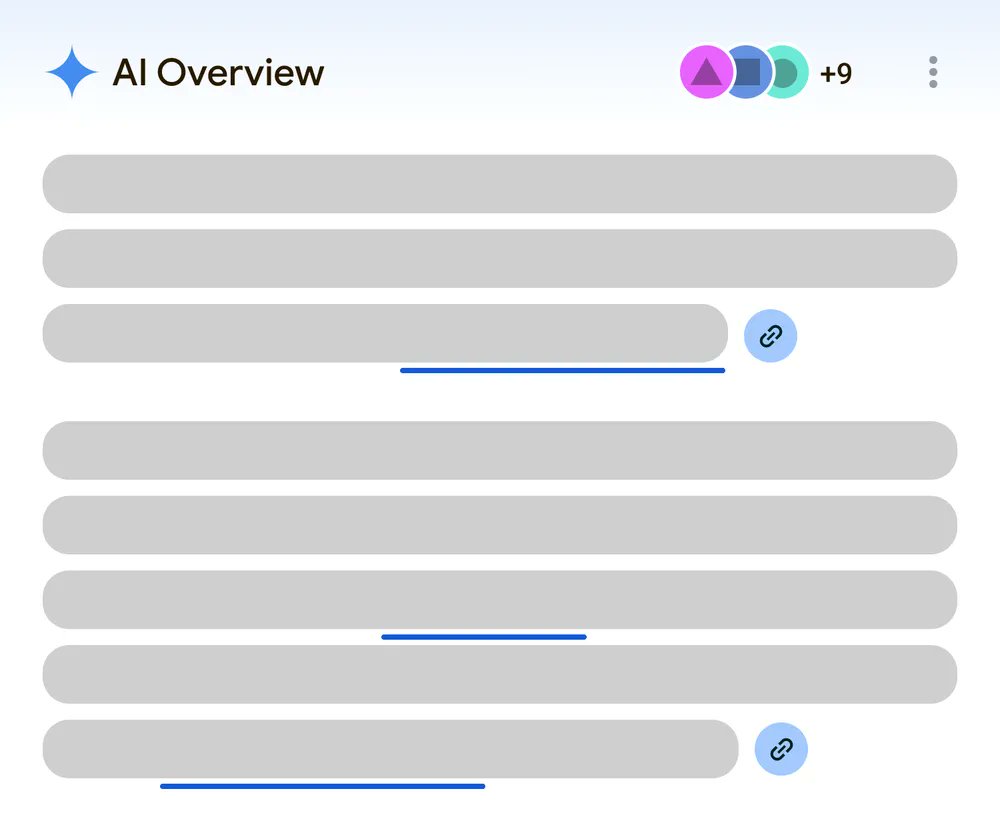
It's also important to note that ranking within a AIO, with the new format (pictured) not being too dissimilar to a featured snippet, it actually allows you to rank twice in search results with the same URL when featured. This is not possible with featured snippets, so is actually quite a big opportunity for sites if you're able to get two placements for the same query in search results.
As always, I'll continue to keep a close eye on developments in this area, so make sure to subscribe to my newsletter: https://t.co/C30wqLF4Mp if you aren't already.
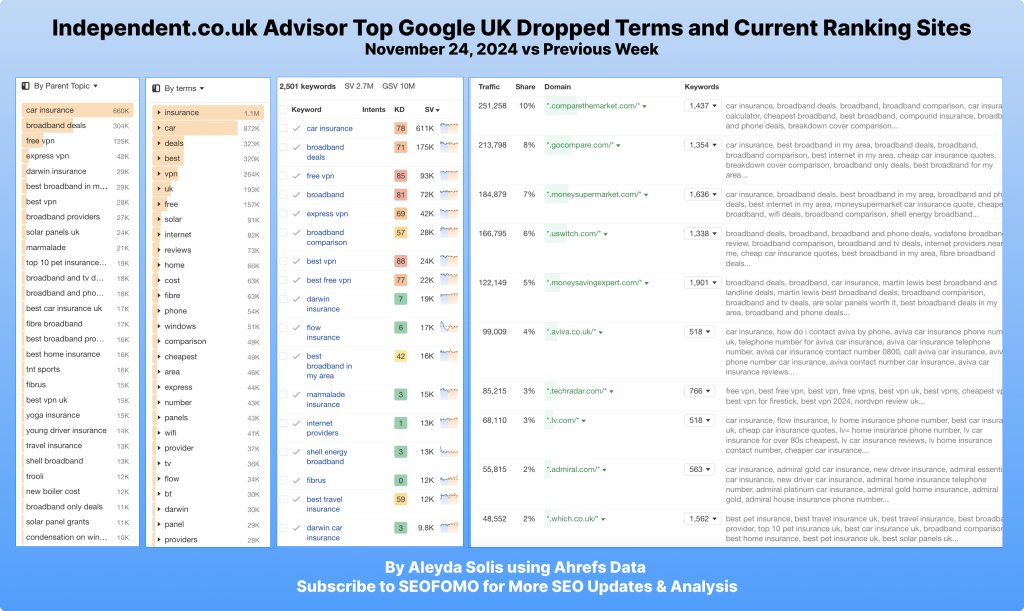
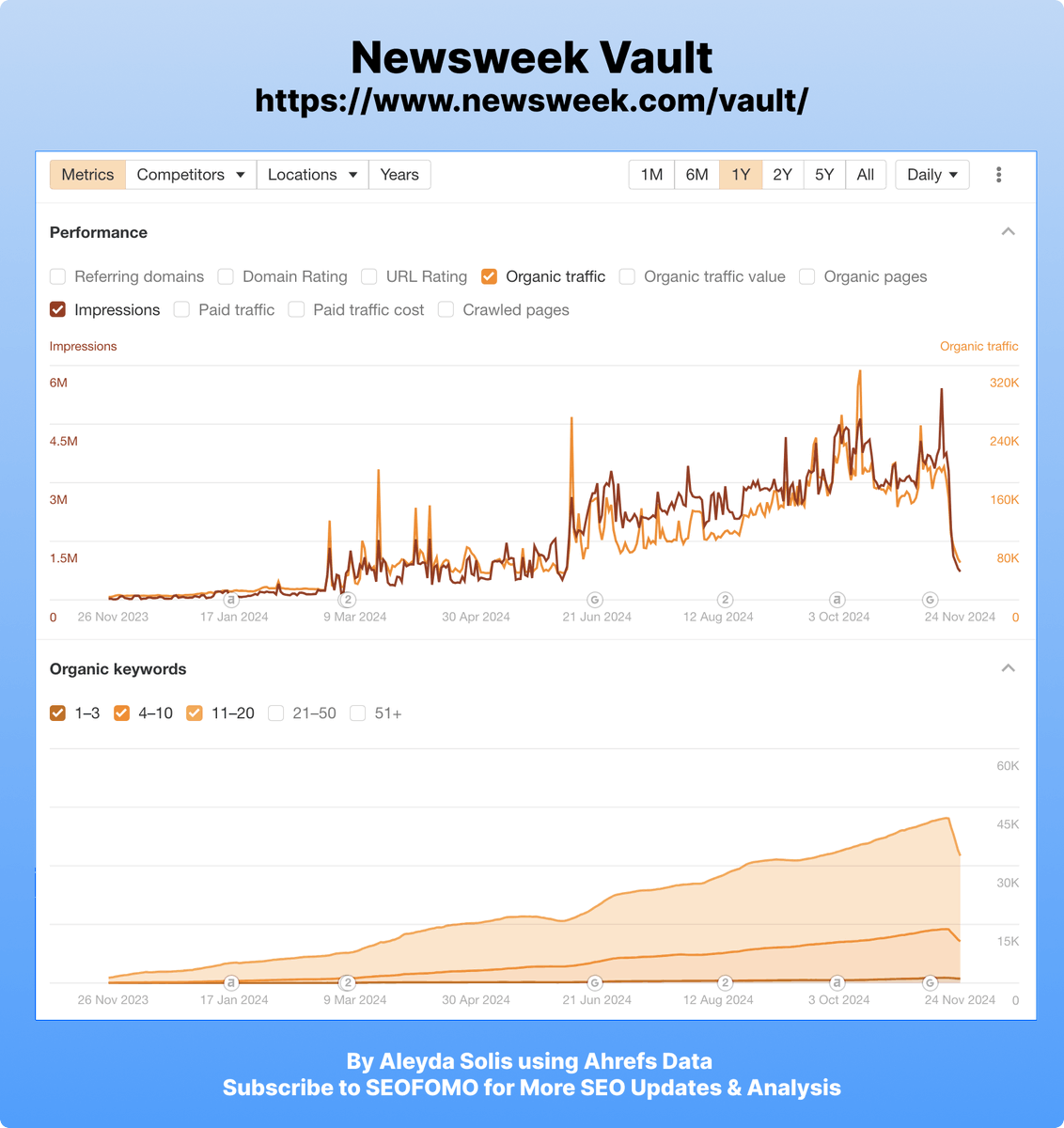
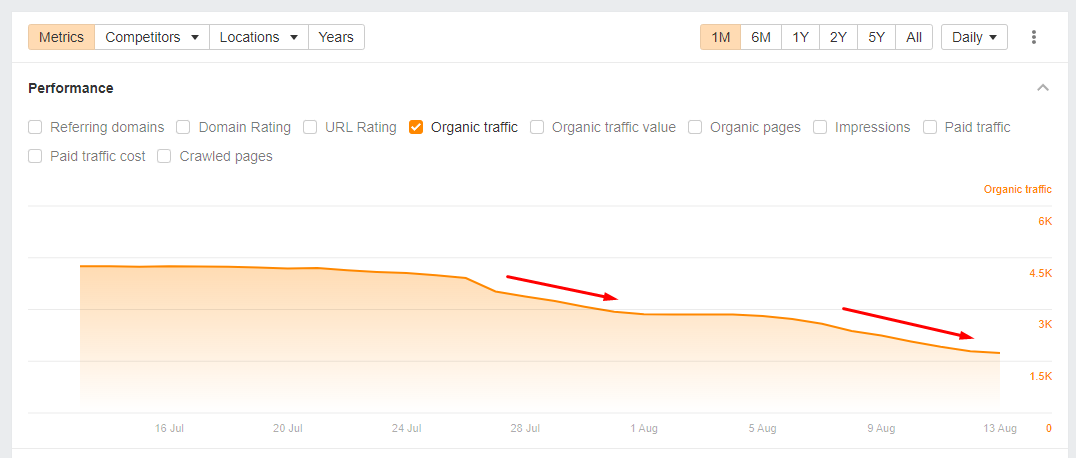
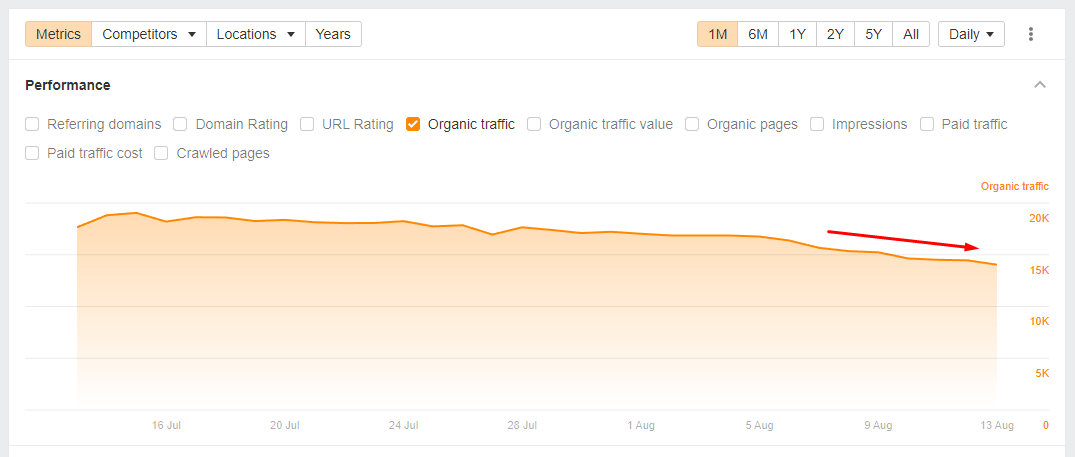
👀 Who’s Winning After Google’s Site Reputation Abuse Policy Change and Publishers Reviews Sections Drops? I've gone through 5 US & UK Publishers Top Dropped Queries:
* Forbes Advisor Section
* USA Today “Reviewed” Section
* Newsweek Vault Section
* Independent UK Advisor Section
* The Sun UK Shopping Section
A few highlights:
* Not all publishers reviews section have had rankings drops: Although Forbes Advisor, USA Today “Reviewed”, Newsweek Vault, The Sun UK Shopping, have drastically decrease in rankings in recent days, The NYTimes Wirecutter or The Telegraph “Recommended” section have had no or minor rankings changes in comparison.
* Most of the sites now ranking instead of the publishers reviews that have dropped are specialized reviews or comparison sites:
** Nerdwallet or Bankrate in the US; gocompare or money supermarket in the US;
** Online retailers like Amazon or Target
** The brand websites like Apple, or Stanley
** Government sites like the IRS or Gov UK
** UGC sites, especially Reddit, followed by YouTube, Instagram or Quora; more in the US than in the UK
Read full analysis: https://t.co/P2lzJwfbke
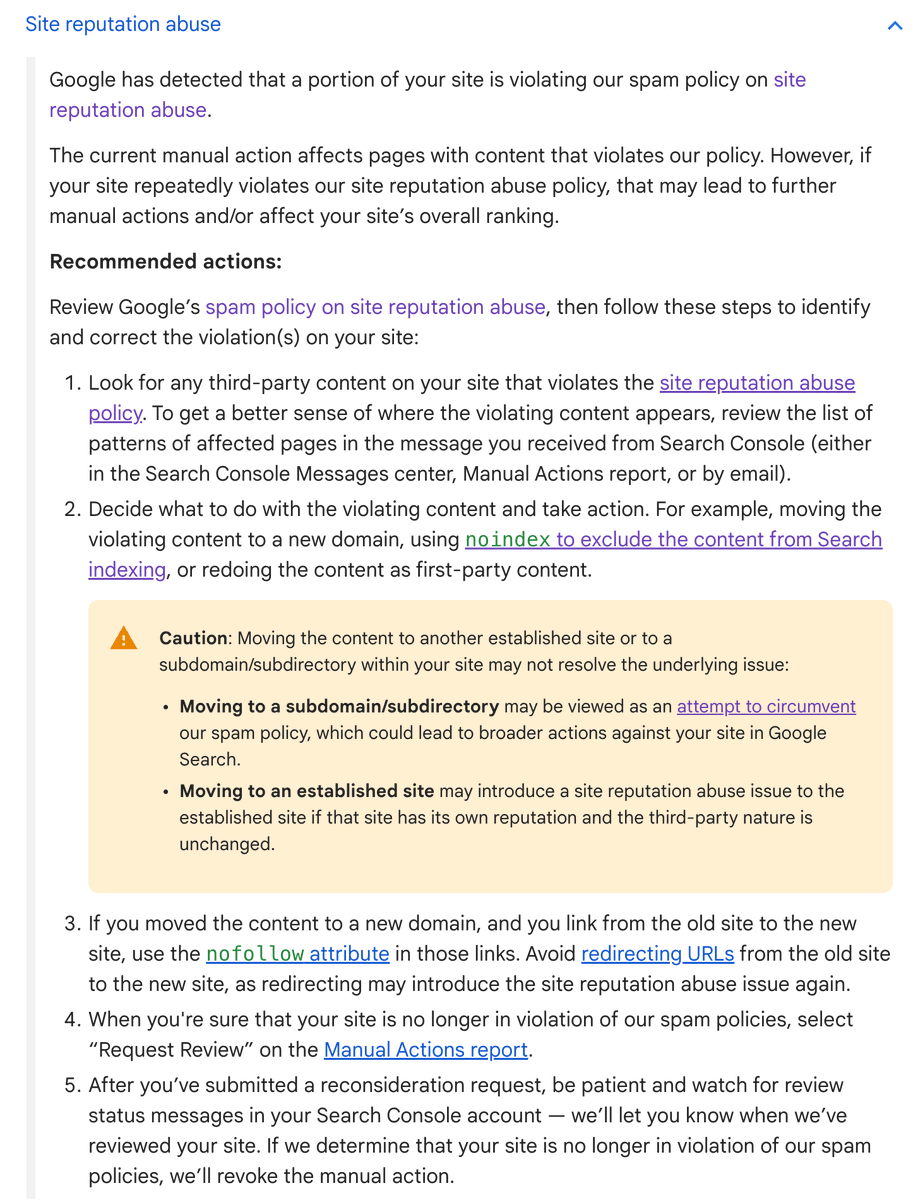
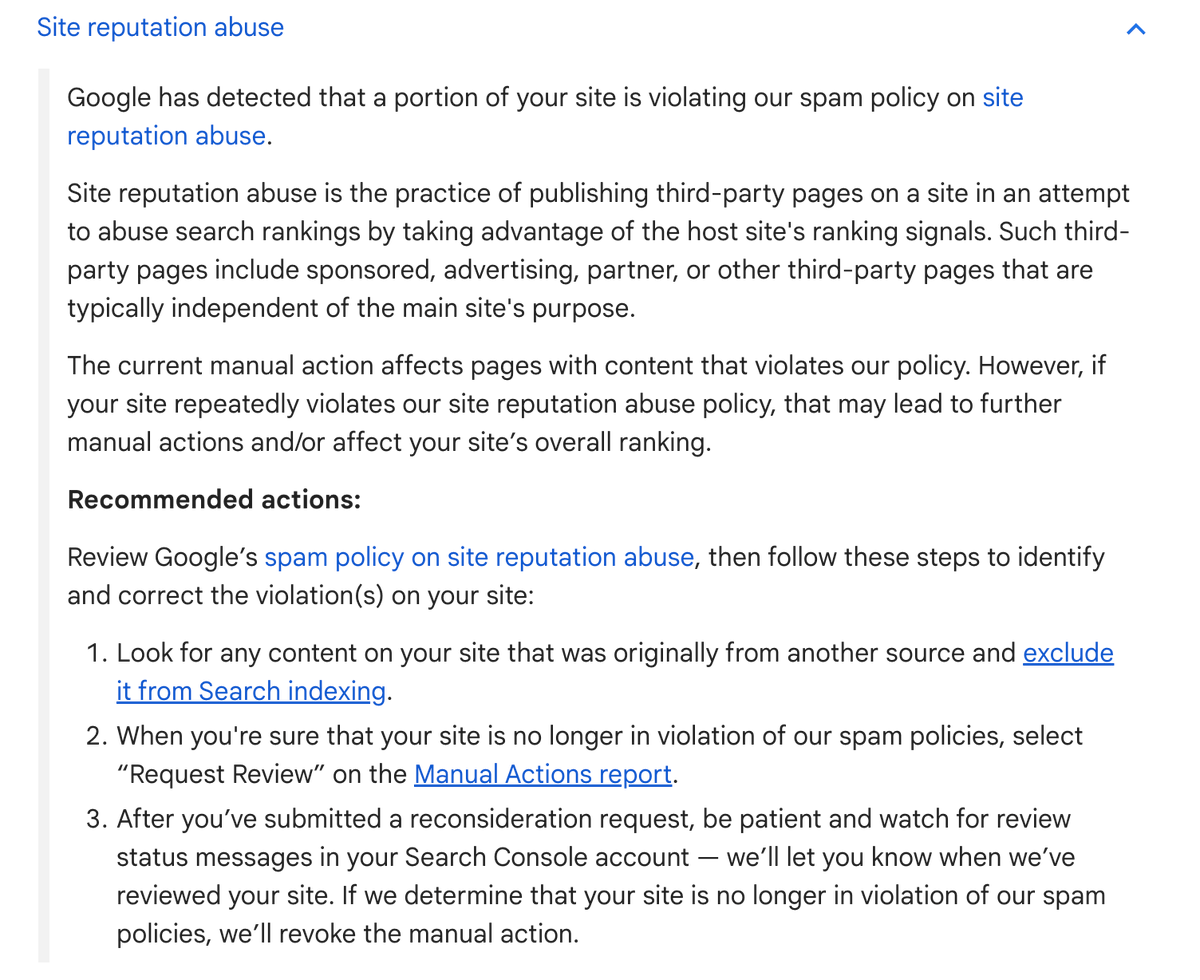
Google expands its site reputation abuse policy to include third-party content that even includes first-party involvement or content oversight - this is a big change that will lead to many more Google Search penalties https://t.co/8FvdBhvz89
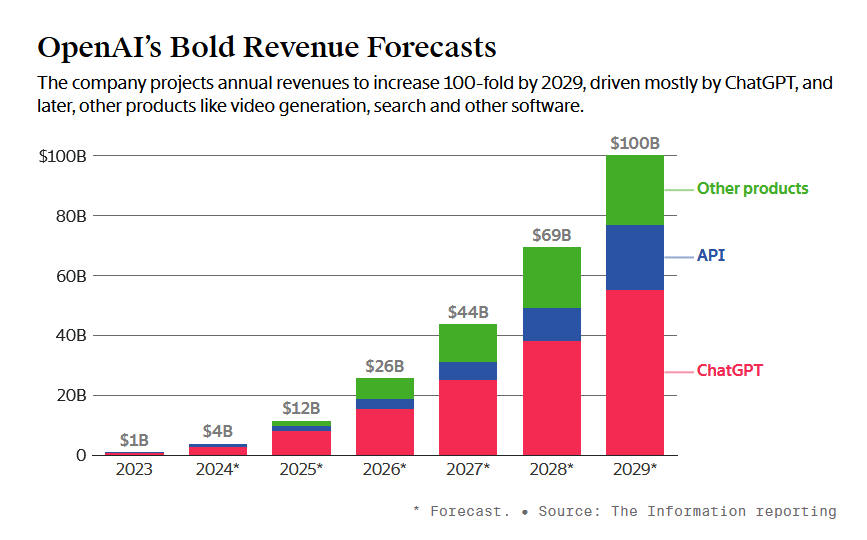
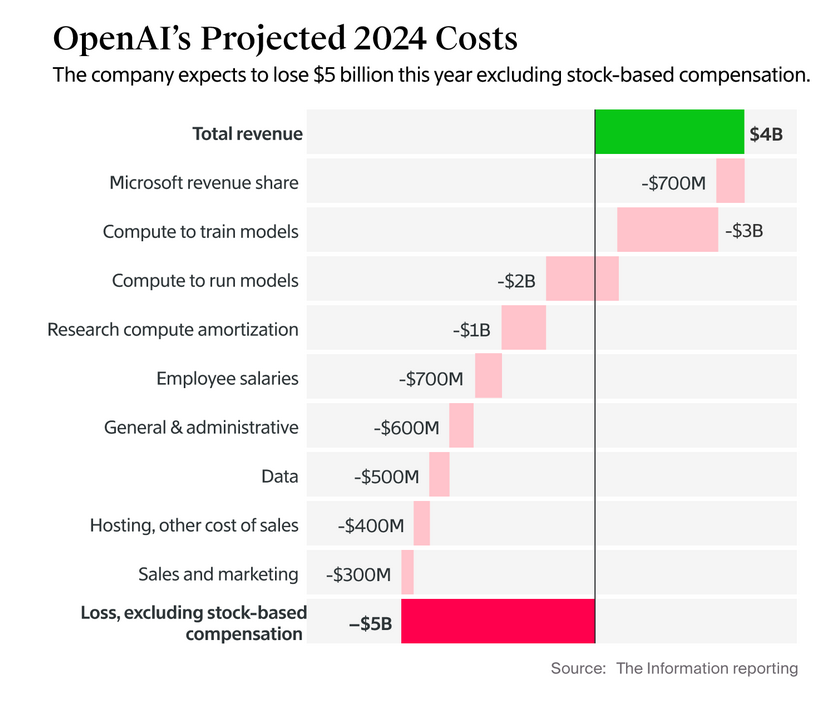
Losses tripling to $14B in 2026 -> OpenAI's projections suggest it won't turn a profit until 2029, when its revenue would hit $100B; losses could hit $14B in 2026, up nearly 3x on 2024 https://t.co/H9FfYL1YJq
The new AI Overview tracking in Ahrefs is a game-changer for SEO analysis.
My favourite use case for AIO filtering is within the 'Organic keywords' report, where you're able to see the exact ranking within the AIO itself and how features have evolved.
To access this report:
1. Input your domain
2. Select 'where target ranks' for AIOs
3. Pick a high volume query & then 'SERP'
4. Choose your comparison date
5. See how rankings have changed
In my view, there are two components to this release by Ahrefs that are particularly valuable:
• Seeing exactly where your page ranks in the AIO
This type of analysis wasn't previously possible to see at scale for historic keywords. Within the AIOs in Ahrefs, you can see whether your page is in position 1, 2 or 3 within the AIO itself – often being the citations that are visible by default to users on page load.
• Showing the SERP feature change pre-AIOs
Because Ahrefs shows the AIO as position #1 (the way it should be), you can see clear ranking changes for core features such as Featured Snippets. So you might be ranking #1 in the FS prior to the launch, but now you're in #2 because you don't appear in the AIO.
Note: because the filtering only just launched in Ahrefs, there isn't much historic data available for AIOs, so you can't go back that far right now, but will become more valuable as time goes on.
If you haven't tried out this new feature in Ahrefs, make sure to take it for a spin – I'm impressed with how they've integrated AIO tracking into their toolset.
👀 Some of the biggest search visibility winners and losers so far since the start of the Google August 2024 Core Update release:*
📈 Not so surprising winners: Reddit, Spotify, PetMD
📉 Surprising losers: Google, TikTok, LinkedIn
👇
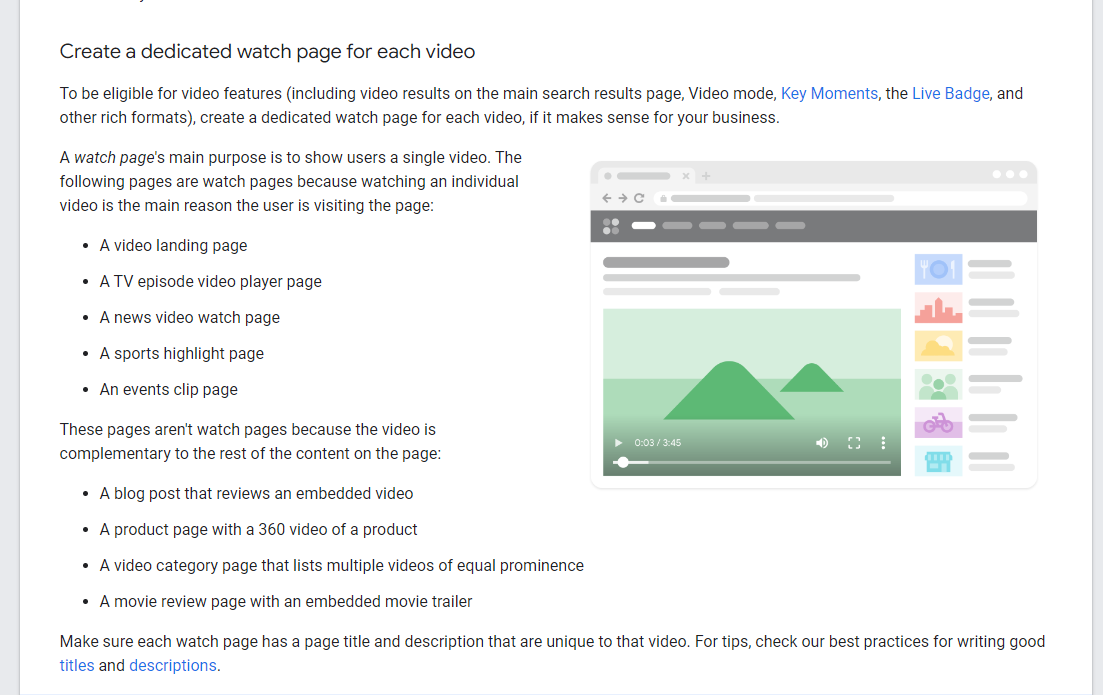
Heads-up, Google updated its video SEO documentation and clarified video indexing requirements, technical requirements, and added a new 'watch page' section.
"We revisited our video SEO guidance to clarify what's eligible for a video result and how site owners can make it easier for Google to find their videos." https://t.co/xCRhnV3ExX
Whoa, this is massive SEO news. Following the announcement from last week, I'm now seeing AI overviews (with the new display) in US search results by default for non-logged in users. This will be a big leap in AIO exposure, as it doesn't just look like a test.
🚨 Google has just announced many AI Overviews Updates:
1. A new right-hand link display for AI Overviews on desktop – also accessible on mobile by tapping the site icons on the upper right, to check out relevant websites while you search.
2. Also currently testing the addition of links to relevant web pages directly within the text of AI Overviews making it even easier for people to click out and visit sites that interest them. "Showing links to supporting web pages directly within AI Overviews is driving higher traffic to publisher sites."
3. Launching new capabilities for AI Overviews in Search Labs: the ability to “save” a specific AI Overview for future reference (you can also see your saved AI Overviews by tapping on your profile icon from Search and navigating to your Interests page) and you’ll now see an option on some AI Overviews to simplify the language with a single tap.
4. Expanding AI Overviews to more places around the world: Bringing the helpfulness of AI Overviews to six new countries: United Kingdom, India, Japan, Indonesia, Mexico and Brazil – along with local language support in each country.
Google also mentions that since launching in the U.S., they've found people who use AI Overviews use search more and are more satisfied with their results: "people are asking longer questions, diving deeper into complex subjects and uncovering new perspectives — which means more opportunities for people to discover content from publishers, businesses and creators."
Link to the announcement 👇 https://t.co/zT1bTotSy2
So, @marfeel just released their Google Discover (and Social Monitoring) and I'm mind-blown 🤯 you can monitor in real-time posts trending in Discover anywhere in the world (it's up to you to set the rules), and also browse per country and language, topics, cities and even hosts (!). Something similar with the social monitoring. This is a must try for any publication out there! The best is that they have a free trial 😉 https://t.co/1hTHpPqs5N
PS: I haven't been paid or requested to share this, I know the awesome @DeiviZzZ working at Marfeel so have had the chance to use the tool since a while ago for LearningSEO and loving it :)
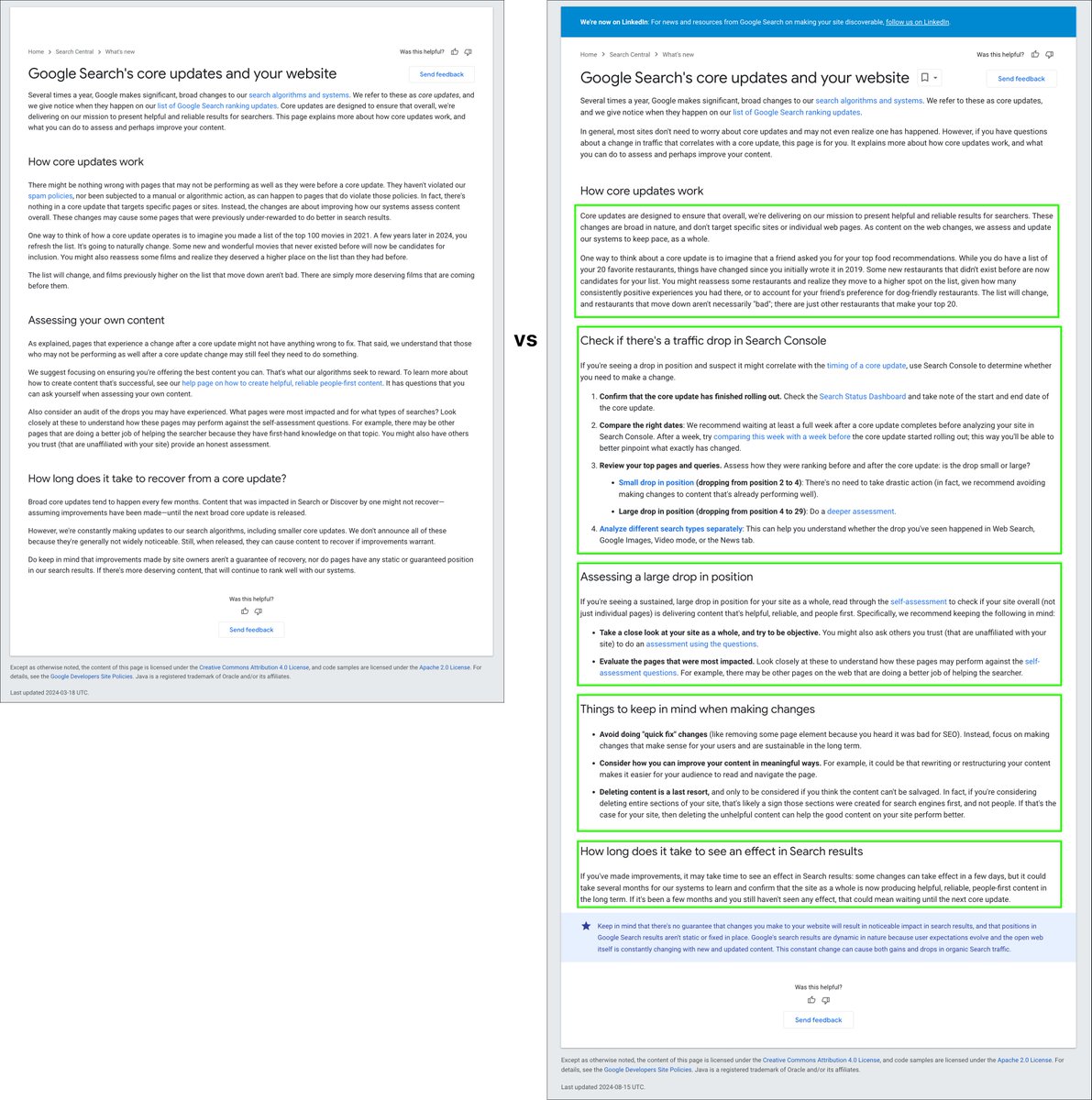
With the release of Google's August 2024 Core Update, @googlesearchc has also done a major update to their help page about them! Here are the major changes 👇👀
1. How Core Updates Work has been reworded: "One way to think about a core update is to imagine that a friend asked you for your top food recommendations. While you do have a list of your 20 favorite restaurants, things have changed since you initially wrote it in 2019... The list will change, and restaurants that move down aren't necessarily "bad"; there are just other restaurants that make your top 20."
2. How to Check if there's a Ranking Drop in the Search Console: Asking to check until the rollout has finished, comparing the right dates, differentiating between small vs large drops (not taking drastic actions with smaller drops and doing a deeper assessment for large ones (+2 positions), analyzing different search types separately.
3. How to Assess a Large Drop in Positions: Use Google's self-assessment questions to Take a close look at your site as a whole, and try to be objective (ask others), Evaluate the pages that were most impacted.
4. Things to keep in mind when making changes: Avoid doing "quick fix" changes (like removing some page element because you heard it was bad for SEO), Consider how you can improve your content in meaningful ways, Deleting content is a last resort.
5. How long does it take to see an effect in Search results: Some changes can take effect in a few days, but it could take several months for their systems to learn and confirm... "If it's been a few months and you still haven't seen any effect, that could mean waiting until the next core update."
Read the new version of the doc: https://t.co/YIveClTWZm
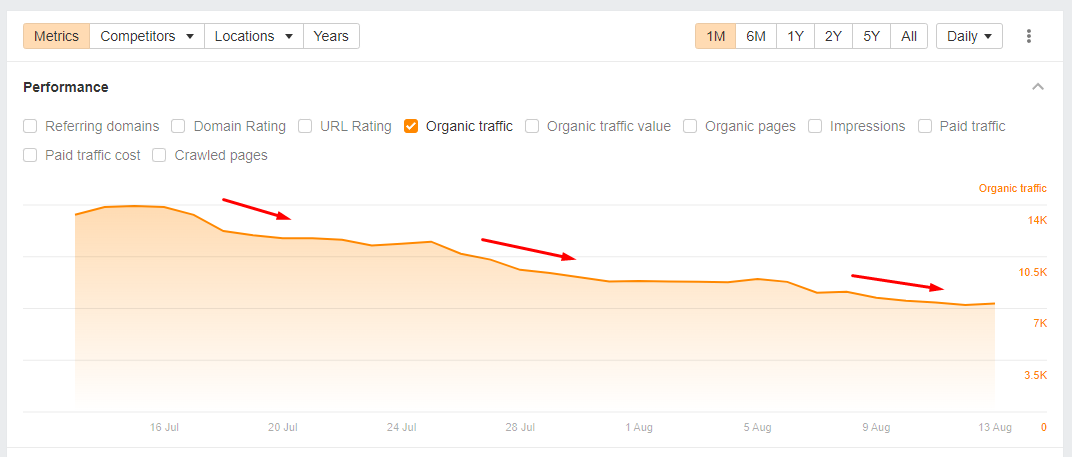
Google volatility has been crazy recently and I've shared some screenshots of that over the past few days. I also checked the visibility numbers for 380+ sites heavily impacted by the September HCU(X). No improvements there (even with the testing we are seeing recently). But, I did see additional *drops* for some of those sites. Oof. Talk about getting hit while your down. We have no idea if those changes will stick, reverse, etc., but it wasn't good seeing those additional drops for the sites... Remember, some are already down 95%+...
SEO Tip: @ahrefs new "Content Changes" feature will show you the EXACT changes a competitor used to improve organic traffic. Here's how you use it:
This is one of the biggest feature adds to any SEO tool that I can remember. Ahrefs new "Content Changes" will automatically detect when substantial changes were made to a page. Then you can see the exactly changes that were made to the content so you can leverage those insights for your own page.
Here's how you do it:
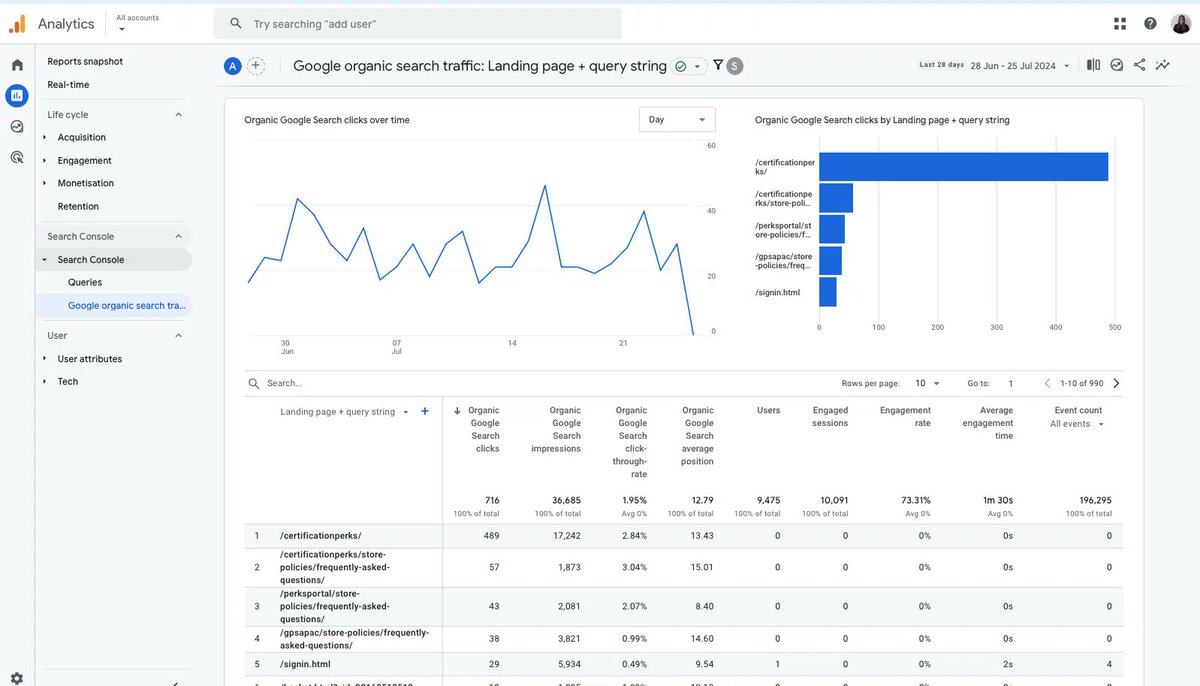
How to make the most of GA4 for SEO 👀 Learn to link GA4 with Google Search Console, analyze organic traffic and set up events and parameters for better SEO insights with @gemmafontane 👌 https://t.co/eY8s1AhdsO
Handling site reputation abuse via manual actions is flawed. My latest post covers how manual actions can fail & how they just aren't scalable -> Google’s site reputation abuse spam policy and why an algorithmic approach to enforcing violations is the way forward
E.g. Regarding noindexing content that's violating the site reputation abuse policy, this could be on purpose or by accident, but noindex could be removed for a time, and during that time Google could reindex a lot of the content that is violating the policy. And then that content can surge back rankings-wise (even if noindex gets placed back for those pages)..." https://t.co/nxOaejDPsG