‘To have and to hodl, for richer, for fiat, until Bitcoin do you part.’
A Maldives honeymoon goes from Sats on the Beach to boating accident via a crash course in #bitcoin.
Thanks to @KonsensusN for publishing my short story
https://t.co/dL4U3oKdBO
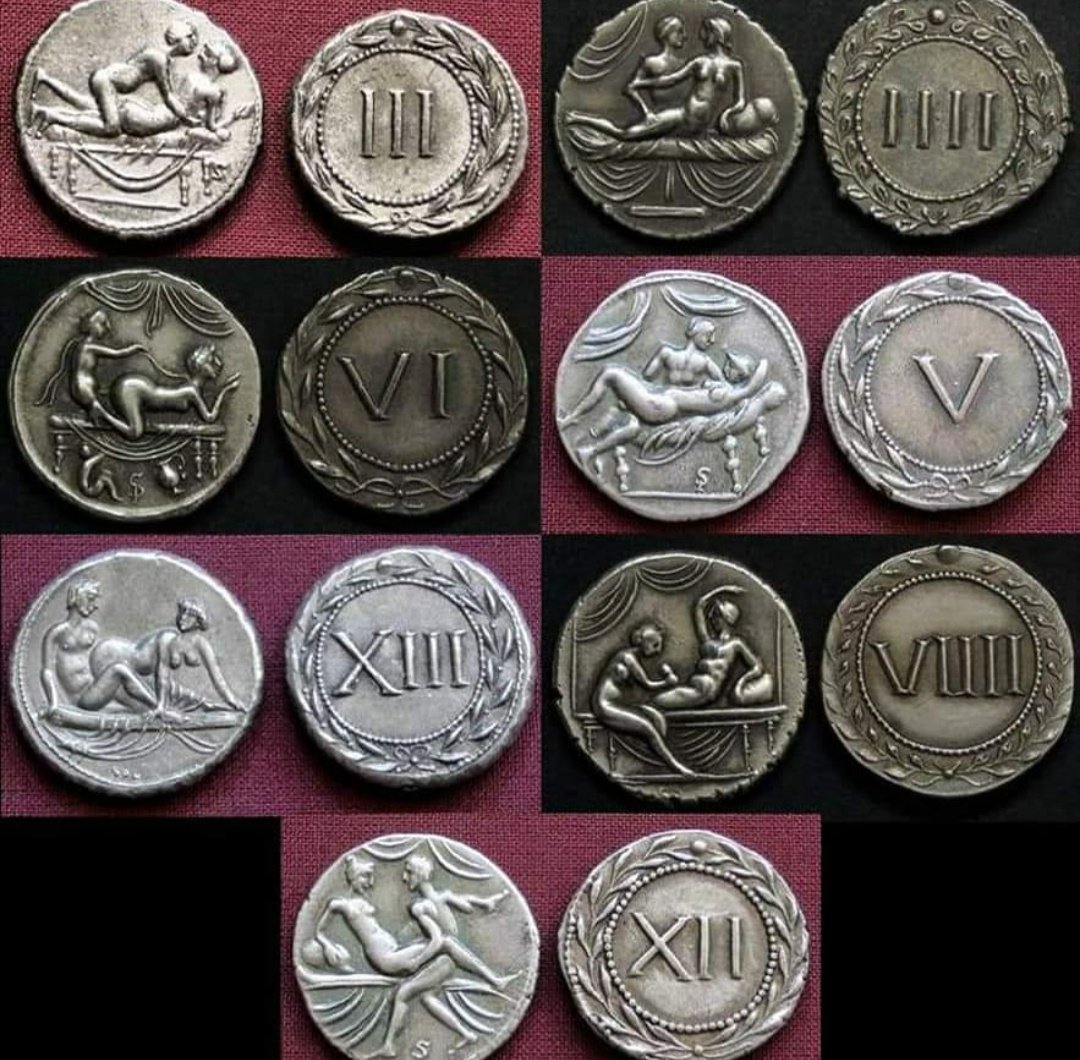
There were many brothels in ancient Rome, but standard Roman coins, Serters and Denars, were not used and were even banned from being there. Store-bought Tokens were used for Denar and Serters and images on them were often obscene. Reason is understandable, because on all Roman coins there was a head image of emperor of that period. Even picture of emperor entering the brothel was synonymous with humiliating and cursing him. Of course, punishment was severe.
In resorts like Herculaneum and Pompeii, brothels were much busier places.
Over time, such places encouraged their customers to use their own currency, called spintriae in Middle Ages. Prevalence of prostitution in Roman culture can be inferred from concentration of this coin in circulation and abundance of examples at these resorts in southern Italy already mentioned.
This was a fairly common phenomenon for those dealing with day-to-day money in brothel coins in Rome. On the obverse and reverse of coins were various sexual images, often depicting people making love. One of theories regarding the purpose of these coins was to advertise price of sexual activities. Moreover, the transfer of this money between two people (the buyer and the “seller”) created a certain privacy. This was especially useful for high-status people to hide what kind of work they did at night. According to some experts, price of event was written on back of pictures of these coins. It was a system that helped break down language barriers. If this theory is correct, it means that these coins are more of an ordering tool than a form of payment. For example, when you say "I want number 4" at McDonalds, the corresponding money is given.
A Roman brothel coin found in London in 2012 was under investigation. As it is known, Romans set up tents and camps in Ancient Britain. This strengthens the theory that coins in question were used as a tool to cross language boundaries. In Britain the spread of language was even slower, but these coins served to universalize language.
#archaeohistories
Elon Musk thinks work will be optional in an abundant future, where AI, like a magic Genie, provides everything we might need. But how realistic is a post scarcity society, and should we be careful what we wish for?
https://t.co/6IMQFWQKyq
HEAR HEAR! #21Futures has landed at our warehouse. It looks amazing! We start shipping tomorrow. This is your last chance to get the book at a presale discount at bitcoinbook dot shop. 🚀
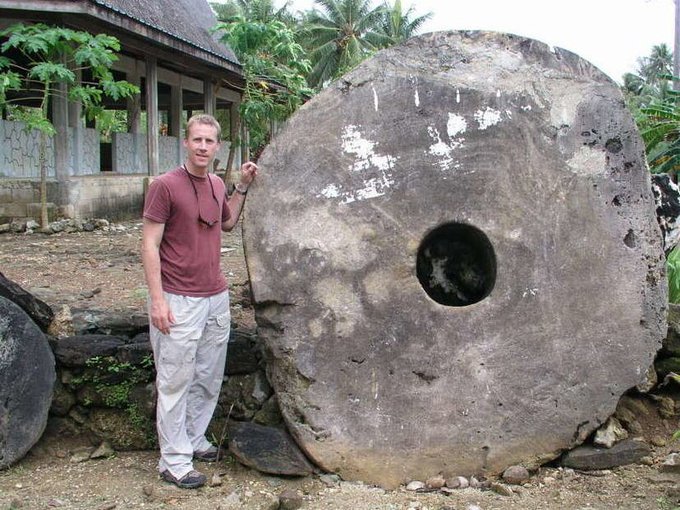
There is an island in the Pacific called Yap that uses circular stones as currency. The stones are too large to move so the ownership of the stones is passed by word of mouth to transact business.
Economists love the tiny island called Yap located in the Pacific Ocean, because it helps answer this really basic question: what is money?
There's no gold or silver on Yap. But hundreds of years ago, explorers from the island found limestone deposits on another island hundreds of miles away. And they carved this limestone into huge stone discs, which they brought back across the sea on their small bamboo boats.
It is not clear if these stones began a currently immediately, but at some point in time the people on Yap realized what most societies realize. They needed something that everyone agrees you can use to pay for stuff.
Like every society, the people of Yap took the thing they considered precious — their version of gold — and decided that was money.
There was just one key thing about this money: it was really heavy. A big piece could weigh more than a car.
They ended up talkimg about the stones themselves not changing hands at all. One person gives it to another person. But the stone doesn't move. It's just that everybody in the village knows the stone now has a new owner.
The stone doesn't even need to be on the island to count as money.
One time, according to the island's oral tradition, a crew was bringing a stone coin back to Yap on a boat. Due to a storm, the stone sank. The crew made it back to Yap and told everybody what happened.
And everybody decided that the piece of stone at the bottom of the ocean was still good.
This system, in the end, feels really familiar. If you go online to pay your electric bill, what's the difference with the stones?
@nic_carter True, that's the trade-off. Hard to benefit from alpha in an illiquid prediction market and regular bookies will have low limits and simply close sharps down.
"People who take behavioral science seriously don’t present the field as a substitute for regulation or enforcement. Instead, it complements and enhances other approaches." 🔍
@mhallsworth unpacks misconceptions of #BeSci for the @washingtonpost👇
https://t.co/K4ceKcJCft
@nic_carter More liquidity=less alpha as markets are more efficient i.e get closer to reflecting the underlying probability. Think about NFL markets, does more liquidity give gamblers more alpha?
History tells us why creating your own money is a risky business. Punishment included being fed to wild animals or hung, drawn and quartered. Today's deterrents are more subtle but no less determined.
#historyofmoney#Bitcoin
https://t.co/AC7dAQ91Vq
What if your money had an expiry date, like the milk in your fridge?
Money with a use-by date, aka demurrage currency, might seem nuts, but it dates back to ancient Egypt and could soon be revived via #CBDC - coming soon to a central bank near you.
https://t.co/cOadSOY5iQ
We did it, we announced almost all of the stories in "21 Futures: tales from the timechain"...all is left is unveiling the final 6 stories in this incredible #Bitcoin Anthology ✨🔥
Ready for this? 👀 👇🏻