For me, Waonder is what you get to know—and later tell—about the places you visit.
It connects you with everything around you: a companion on a tour, a curiosity on the way somewhere, a story before bed.
Not just seeing a place. Knowing it.
Remarkable stories are hiding in the places around you.
Waonder is for explorers, travelers, locals walking a familiar city again, and creators looking for stories rooted in real places.
Wander and wonder, rejoined.
#waonder
Praza da Quintana · Santiago de Compostela, Spain
Every night, a pilgrim appears on the cathedral wall in Praza da Quintana. Local tradition says he is a priest waiting for a nun who never came. The figure is a shadow: lamplight on a stone column.
https://t.co/ZEokMhMnIM
#waonder
Do you see this growth coming primarily from human population expansion or autonomous robots? My guess is robots, creating their own demand for energy, resources, and space infrastructure. But if machines become the main drivers of economic expansion, how do we prevent humans from becoming economically irrelevant?
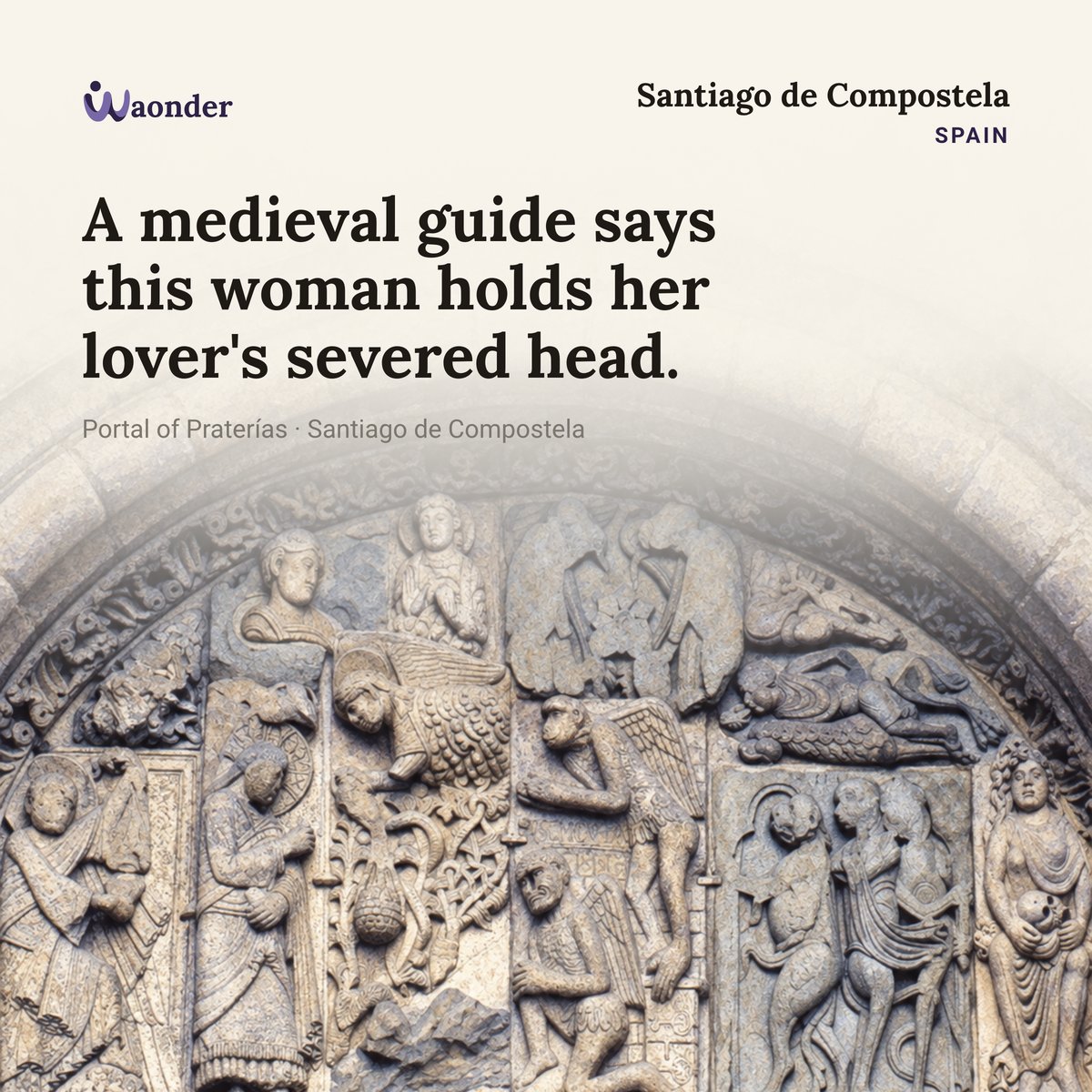
Praza das Praterías · Santiago de Compostela, Spain
Above Santiago Cathedral's Portal of Praterías, a woman holds a human skull.
The medieval Codex Calixtinus says it belonged to her lover, killed by her husband, and that she had to kiss the head twice each day.
Her identity remains disputed. The account is medieval. The warning is still in stone.
https://t.co/ZEokMhMnIM
#waonder
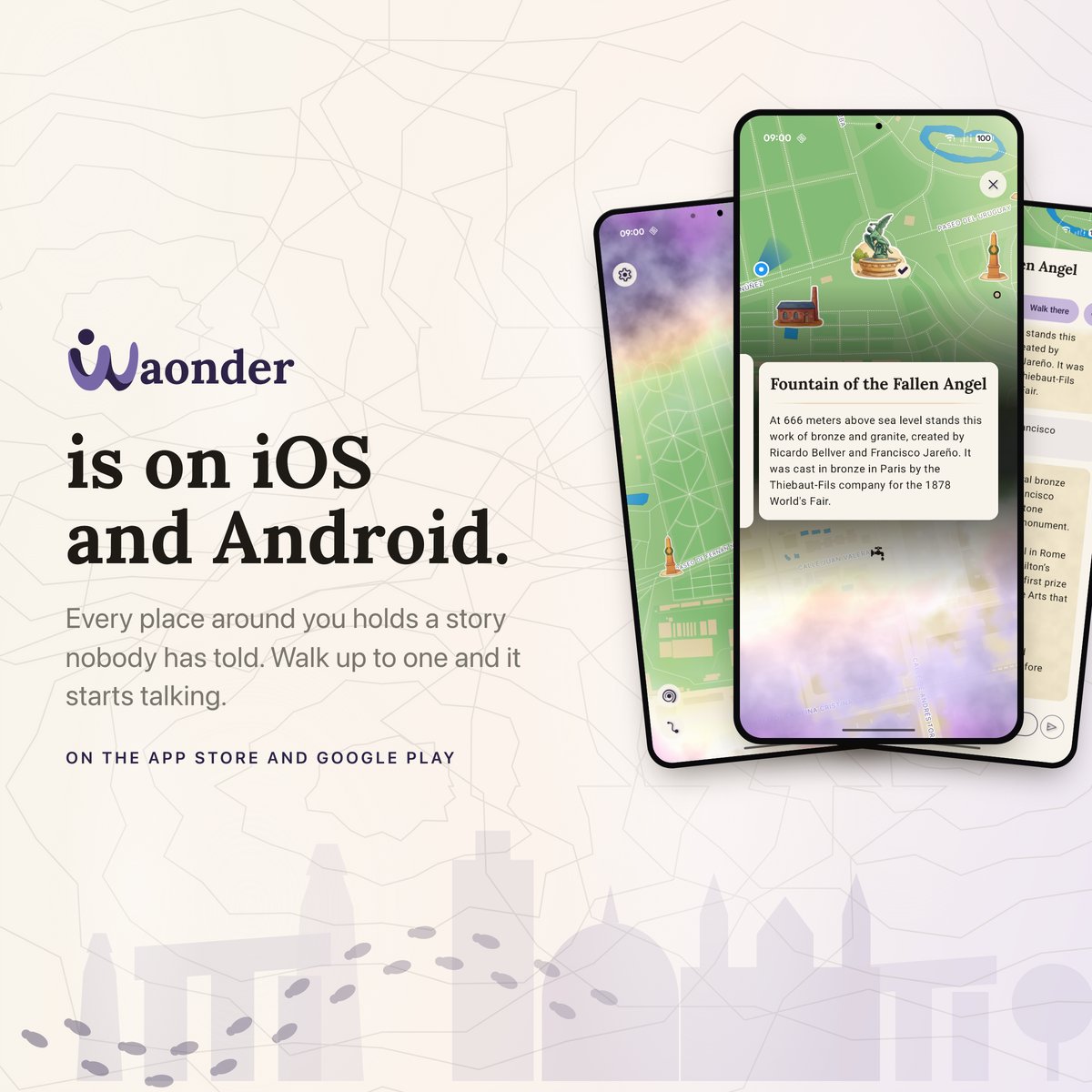
Waonder is on iOS and Android.
Every place around you holds a story nobody has told. Walk up to one and it starts talking.
On the App Store and Google Play.
https://t.co/T6KAqrAMxA
#waonder
You’ve inspired many of us with the Clean Code philosophy. I think this new era creates an opportunity for that philosophy to evolve.
Code may become more complex and even break some traditional concerns—not to make it easier for humans to read, but to make systems easier for LLMs to understand, generate, modify, and maintain. If humans increasingly stop being the primary consumers of code, some of the principles we optimized for may need to change with them.
I think there’s tremendous value in exploring that mental shift. I’m trying to contribute with my own ideas, and I’m currently experimenting with two different approaches.
Four cities, four hidden details: Barcelona's Roman Wall; Paris's Arago medallions tracing the old meridian; Grand Central's tiled Whispering Gallery; and Florence's centuries-old wine windows. Explore the stories around you with Waonder—now on iOS and Android.
@StateDept@WhiteHouse I tried this demo and it just returned a bunch of information about places to fill out forms. I'm unsure if that's a future vision or an already implemented feature.
Today feels like a stay-away-from-X kind of day. Anthropic releases 5.5 and suddenly everyone is posting the exact same thing.
And yes, I’m slightly ashamed that I did it too.
Introducing Claude Opus 5.5, the first model in our new Claude 5.5 family.
It performs at the level of Claude Fable 5.1 for most tasks, and costs 40% less to run than Opus 5.
I’m starting to work on an RFC exploring what an architecture designed specifically for agentic applications and LLMs should look like.
The goal: reduce the cognitive load of building with AI while keeping developers in control of the systems they create.
I think our architectures need to evolve alongside the way we build software.
I’ve been thinking along the same lines. It feels like we’re due for a paradigm shift here.
In an AI-native world, whatever architecture proves most suitable may ultimately be encapsulated inside a harness anyway. The architecture might still matter—but increasingly for the agent, not for the human reading the code.
@ananiket1820@DanielSmidstrup Wow. Those two words—“earning trust”—gave me something to reflect on today.
If AI lets us ship faster than ever, how do we actually earn trust at that same pace? What does “earning trust” even look like in the age of AI?
Socrates understood something that matters even more in the age of vibe coding: knowing what you don’t know.
Imagine someone with no software engineering background integrating a third-party vendor with an LLM.
They don’t know what an API is, how authentication works, how data flows between systems, where failures can happen, or what security boundaries exist.
The LLM can write the code. But how do they know what to ask? How do they know when the answer is wrong? How do they even know what they should be worried about?
AI can fill a knowledge gap. It cannot automatically give you awareness of the gaps you don’t know exist.