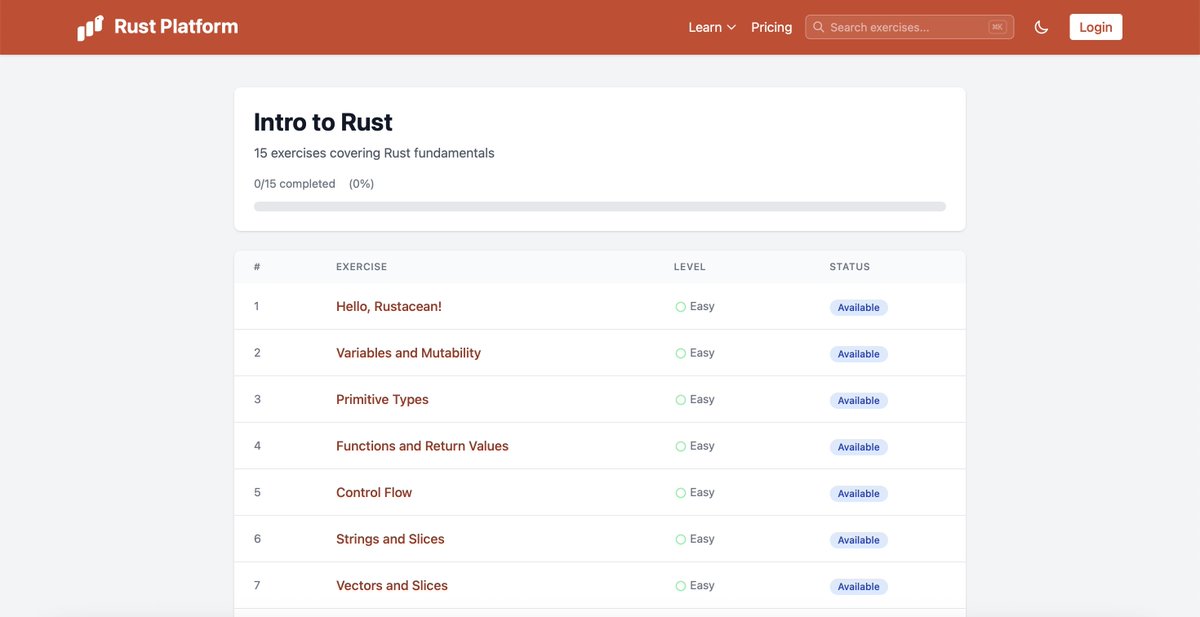
Some more good #rust learning today, wrapping up the intro Bites 🦀
Especially tokenizer + parser (10 and 15) will throw a curve ball here and there, and they form a nice (simplified) sneak preview of things we have you build in our JSON parser cohort. 💪
Build Your First MCP Server: Code Tips in Claude and Slack - fantastic Python tutorial by @bbelderbos on building a quick MCP server and testing it in @ClaudeDevs! https://t.co/YpQuqK1e7S
Lots of #Python developers use great tools written in Rust, such as ruff, uv, and ty.
If you'd like to learn Rust in a fun way, the people from PyBites have a fun platform called Rust Platform where you can learn Rust using small bites of Rust!
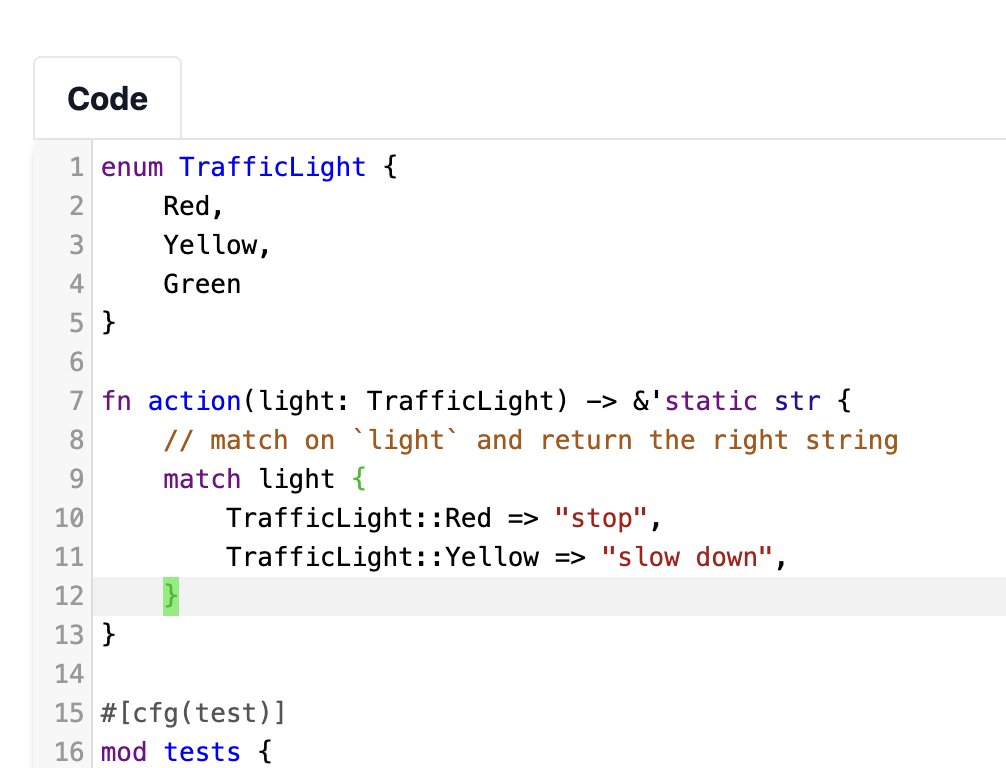
I just completed "Strings and Slices" on @pybites Rust Platform 🦀🎉 https://t.co/9tC4Imo6aD
Not only that manual solving these is invaluable in AI times, the comparison with the solution is useful too - see below 👇
Want to dive into #Rust? The intro bites are a great start.
From Python 🐍 to Rust 🦀 — 6 weeks, Zero-to-One, building a JSON parser from scratch in Rust 🦀
Last November, I came across @pybites hosting a beginner Rust cohort. Having followed @bbelderbos for a while here on X, I was quick to sign up. I had the privilege of being part of this cohort, coached by @jhodapp.
🛫 Over 6 weeks, we built a complete JSON parser from scratch — tokenizer, recursive descent parser, error handling, PyO3 Python bindings, and performance optimization.
🏋It taught me to think like a library developer — every public interface is a promise, every allocation matters, and your users are developers who will push your edge cases harder than any end user ever would. A fundamentally different mindset from being an application developer.
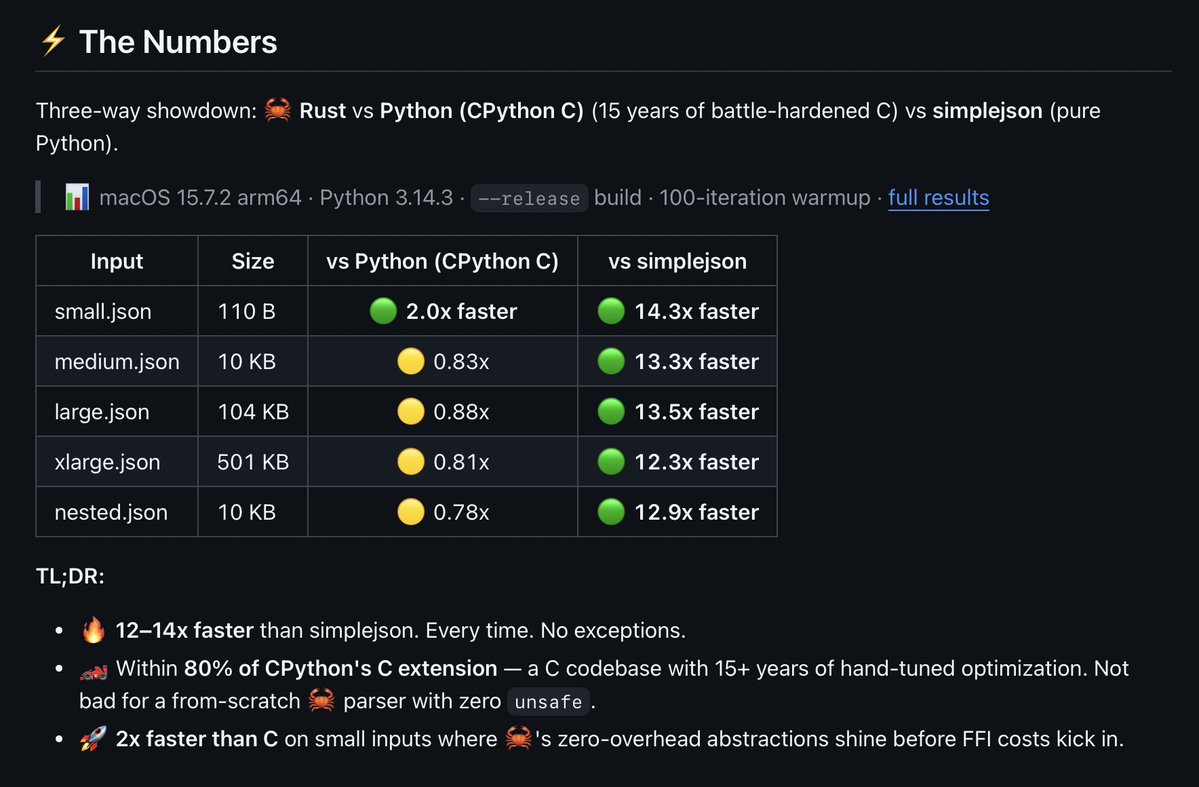
🚀 The result? Only 0.8x slower than CPython's battle-hardened C extension. 10–12x faster than simplejson. Zero dependencies. Zero unsafe.
👉 Check it out on my Github: https://t.co/2K7AxJyuuW
🫡 Jim Hodapp's detailed PR reviews every week and the hands-on approach made Rust click in a way tutorials never could.
⚡ If you're curious about Python or Rust, check out @pybites — highly recommend it.
Benchmarks:
1. 🔥 12–14x faster than simplejson. Every time. No exceptions.
2. 🏎️ Within 80% of CPython's C extension — a C codebase with 15+ years of hand-tuned optimization. Not bad for a from-scratch 🦀 parser with zero `unsafe`.
3. 🚀 2x faster than C on small inputs where 🦀's zero-overhead abstractions shine before FFI costs kick in.
New Pybites podcast is live -> Why #Python developers are learning #Rust
Check it out here: https://t.co/SmHPtwtiKJ and let me know if you're into Rust or planning to learn it this year ...
I hope these docs will contribute to a more friction-free way to learn.
Check it out at Help → Docs.
Not on our platform yet? Start learning Python for free. 🐍 📈
https://t.co/jvm7wgP98V
Not having (complete) docs earlier has been a miss!
And with AI, it's now easier to fix than ever.
Last week we added the whole suite to our @Pybites platform 👇
No more people abandoning the app because it's unclear how it works. 😱
I just completed "Variable Assignment and Mutability" on @pybites Rust Platform 🦀🎉 https://t.co/7v3J2J2ExB < #Rust makes mutability explicit with `mut` 💡
Python dev feedback learning Rust: "I understand Python better now."
Say again?
Here's why that happens.
Python lets you do this:
data = [1, 2, 3]
process_a(data)
process_b(data)
print(data) # What's in here? Depends on what process_a and process_b did.
Is reading books declining? 🤔
Common sentiments:
• Where did my time go today?
• I've just spent (wasted) an hour watching short videos.
• I can never seem to find time to get a deep read in, it's all quick and shallow these days :/
What makes up the 2026 #Python stack?
Why are uv, ruff, FastAPI, Typer, and SQLModel widely adopted by developers that want to have an ergonomic and performant toolset?
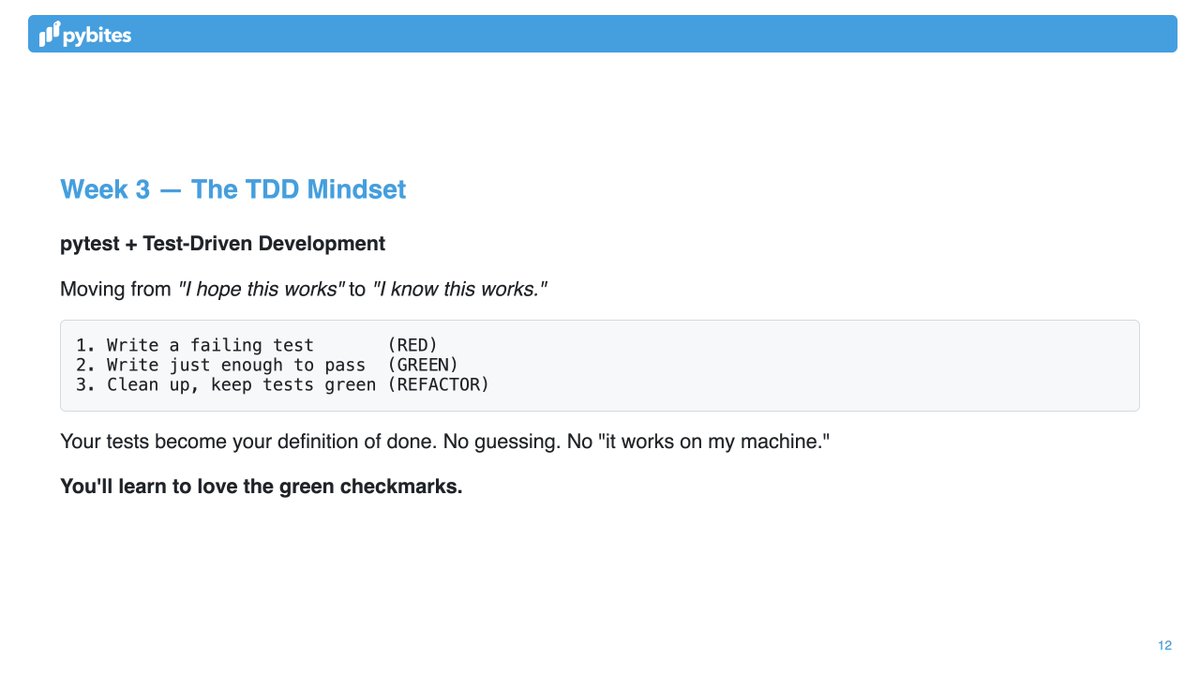
What methodologies do we use in our teaching to help you write clean/ robust code consistently?




![bbelderbos's tweet photo. Python dev feedback learning Rust: "I understand Python better now."
Say again?
Here's why that happens.
Python lets you do this:
data = [1, 2, 3]
process_a(data)
process_b(data)
print(data) # What's in here? Depends on what process_a and process_b did. https://t.co/MzXQLVyY85](https://pbs.twimg.com/media/HCJblS9acAAN5A6.jpg)










![bbelderbos's tweet photo. Python dev feedback learning Rust: "I understand Python better now."
Say again?
Here's why that happens.
Python lets you do this:
data = [1, 2, 3]
process_a(data)
process_b(data)
print(data) # What's in here? Depends on what process_a and process_b did. https://t.co/MzXQLVyY85](https://pbs.twimg.com/media/HCJblbobEAAwcyz.jpg)