#QC_ISCAR2017 : over 400 researchers referring to and developing cultural-historical and activity research perspectives for studies in Education, health, etc.
https://t.co/2NL445qilZ
This way of using AI supports the development of real intelligence—intelligence that is nuanced and humble because forged by the resistance of real problems and the need to collaborate with real other people.
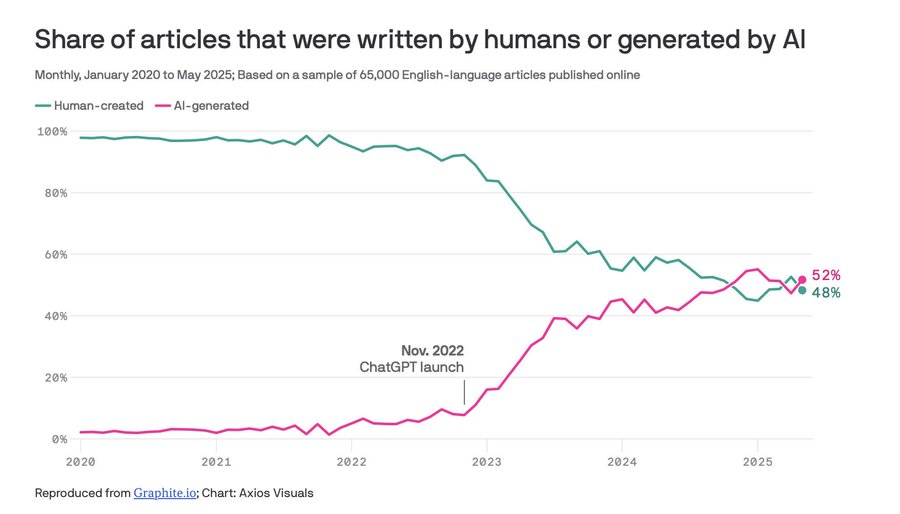
Oxford researchers just confirmed what we feared:
The internet as we knew it is dying.
AI content went from ~5% in 2020 to 48% by May 2025. Projections say 90%+ by next year.
Why? AI articles cost <$0.01. Human writers cost $10-100.
But the real crisis is model collapse. When AI trains on AI-generated content, quality degrades like photocopying a photocopy. Rare ideas disappear. Everything converges to generic sameness.
It's recursive. Today's AI slop becomes tomorrow's training data, producing worse output, which becomes training data again.
Con el aprendizaje de refuerzo distribuido entre actores críticos empleamos una técnica en la que múltiples agentes, conocidos como actores críticos, colaboran para aprender y tomar decisiones en un entorno sin la necesidad de un coordinador central.
L’adoption du PL 23 marque un tournant dans le milieu de l’éducation et de l’enseignement supérieur au Québec. Lire l’article : https://t.co/IpKp0V6Fy1
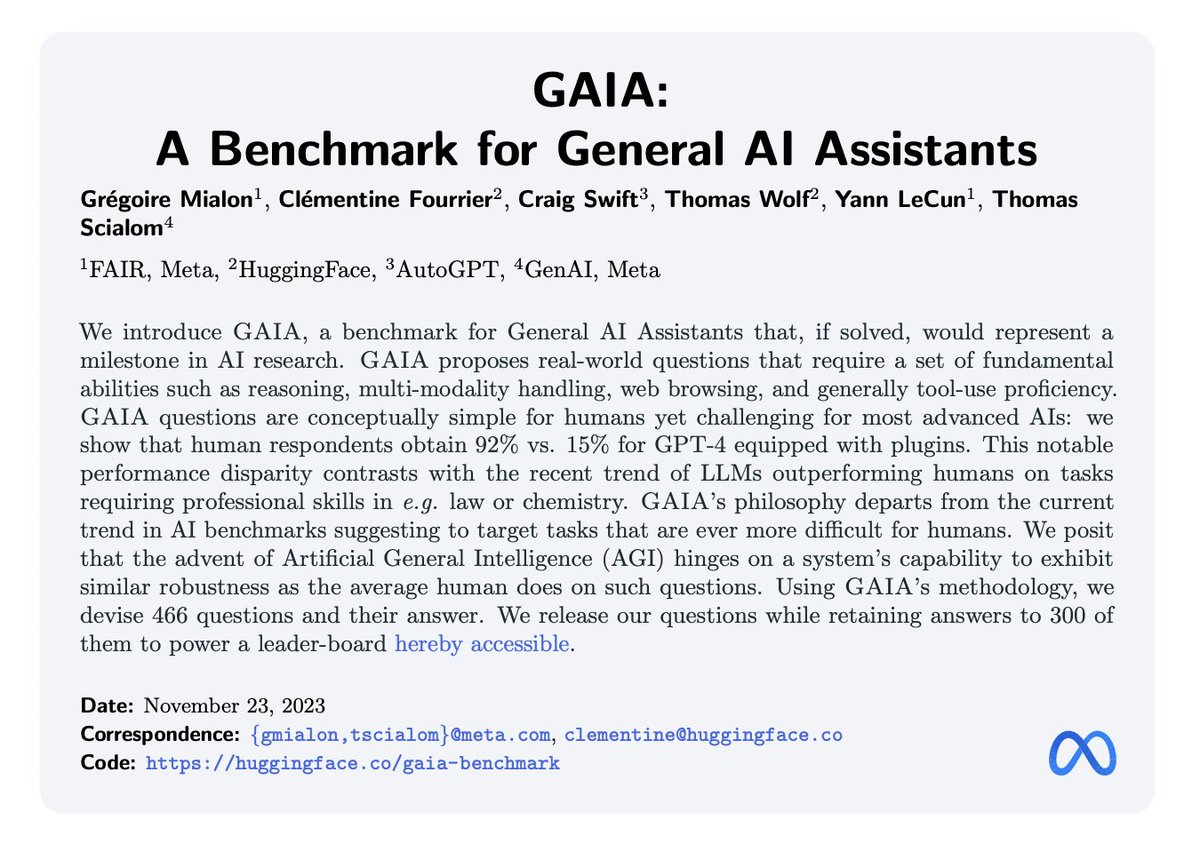
GAIA: a benchmark for General AI Assistants
paper page: https://t.co/XWUT9RmhL8
introduce GAIA, a benchmark for General AI Assistants that, if solved, would represent a milestone in AI research. GAIA proposes real-world questions that require a set of fundamental abilities such as reasoning, multi-modality handling, web browsing, and generally tool-use proficiency. GAIA questions are conceptually simple for humans yet challenging for most advanced AIs: we show that human respondents obtain 92\% vs. 15\% for GPT-4 equipped with plugins. This notable performance disparity contrasts with the recent trend of LLMs outperforming humans on tasks requiring professional skills in e.g. law or chemistry. GAIA's philosophy departs from the current trend in AI benchmarks suggesting to target tasks that are ever more difficult for humans. We posit that the advent of Artificial General Intelligence (AGI) hinges on a system's capability to exhibit similar robustness as the average human does on such questions. Using GAIA's methodology, we devise 466 questions and their answer.
Stephane Allaire, chercheur au réseau PÉRISCOPE, présente quelques nuages que l'ouvrage collectif https://t.co/6RN95Rs8Bi fait apparaitre. Lien à la vidéo de présentation: https://t.co/oVLg968D8t
Ce texte propose quelques réflexions philosophiques sur la relation triangulaire entre l’intelligence collective, l’intelligence artificielle et la noble finalité de mettre la connaissance à la portée de tous.
https://t.co/nXoriCHq7j
I just learned that 'analyse' comes from Greek: ana (upwards) and ly (free). So to free things up - I think that's something I often struggle to feel, when there's a pressure to find ways to converge and confirm. I will come at the data with a 'free things up' aim from now on
Au sujet des #données au @ColloqueAQPC, je me permets de republier ceci : « L’analyse de données d’apprentissage pour soutenir les interventions pédagogiques » https://t.co/JZgsMI9vDw
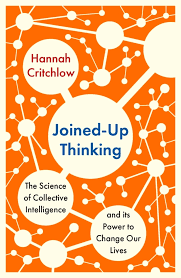
This book is very relevant to education. It describes an evolutionary shift to tech mediated collective thinking with detailed references to convincing neuroscience research. She argues for the need for teaching how to think together across differences.
⭐Article du RIRE⭐
Déployer le Rapport ÉVA : des gestes en classe qui concrétisent équité et valeur ajoutée du numérique ! @ecoleenreseau 📱💻👇
https://t.co/qgZpxIIcG3 #classe#numérique