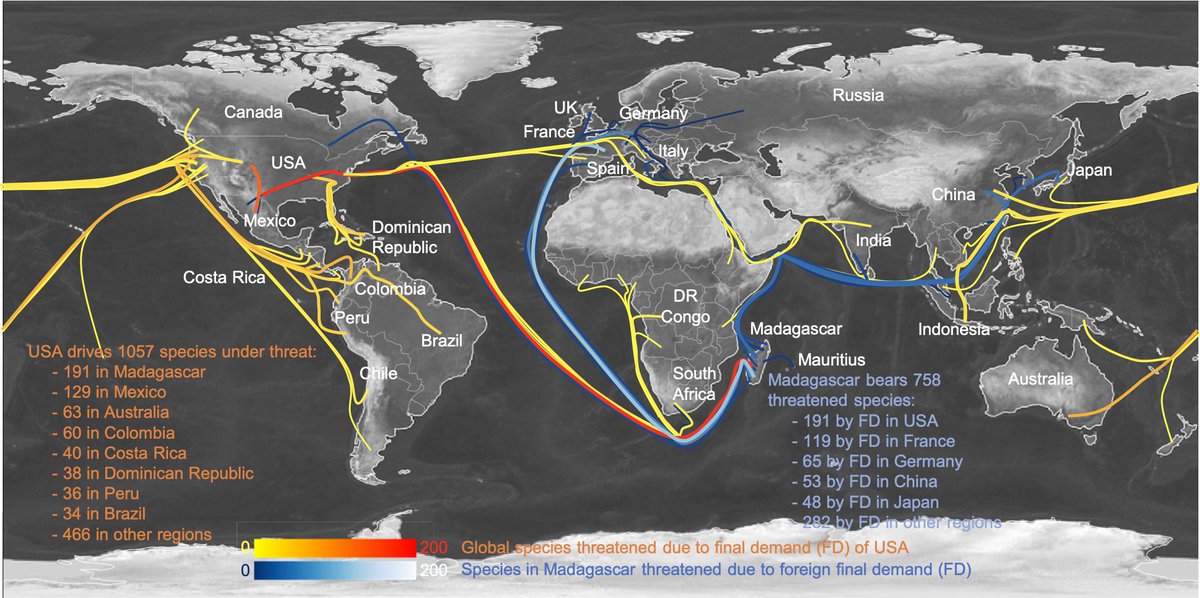
Our latest paper is now out @PNASNews !! We also found a unique pattern for biodiversity footprints that per-capita final demand in developing regions threatens more species than those in developed ones. Quite different from the cases of carbon or material footprints.
If you want to save species, reform global trade. That’s the conclusion of a three-decade-long analysis of threats to 21,207 species posed by production, trade, and consumption of food and goods across 185 countries. In PNAS: https://t.co/LxY1bcDzmt
🚀Open #PhD position @Radboud_Uni for modelling climate, economy, society interactions. Apply by 23 November, because #youhaveaparttoplay
👇👇👇
https://t.co/QD64DNXEqu
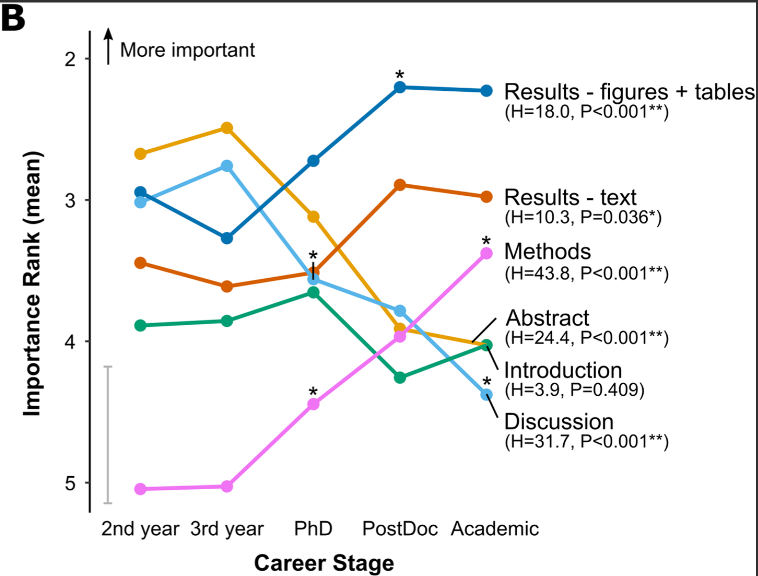
The longer people are in academia, the more they realize that when reading papers it's best to ignore Intro, Discussion etc. and just look at Methods and Results
https://t.co/EzQL7WI71Q
For the first time, with @SafeJustPlanet, we present quantifiable numbers to assess the state of our planet in terms of Earth System stability and resilience, but also in terms of human well-being, equity and justice. New @Nature paper.
https://t.co/WiBlX5BZur
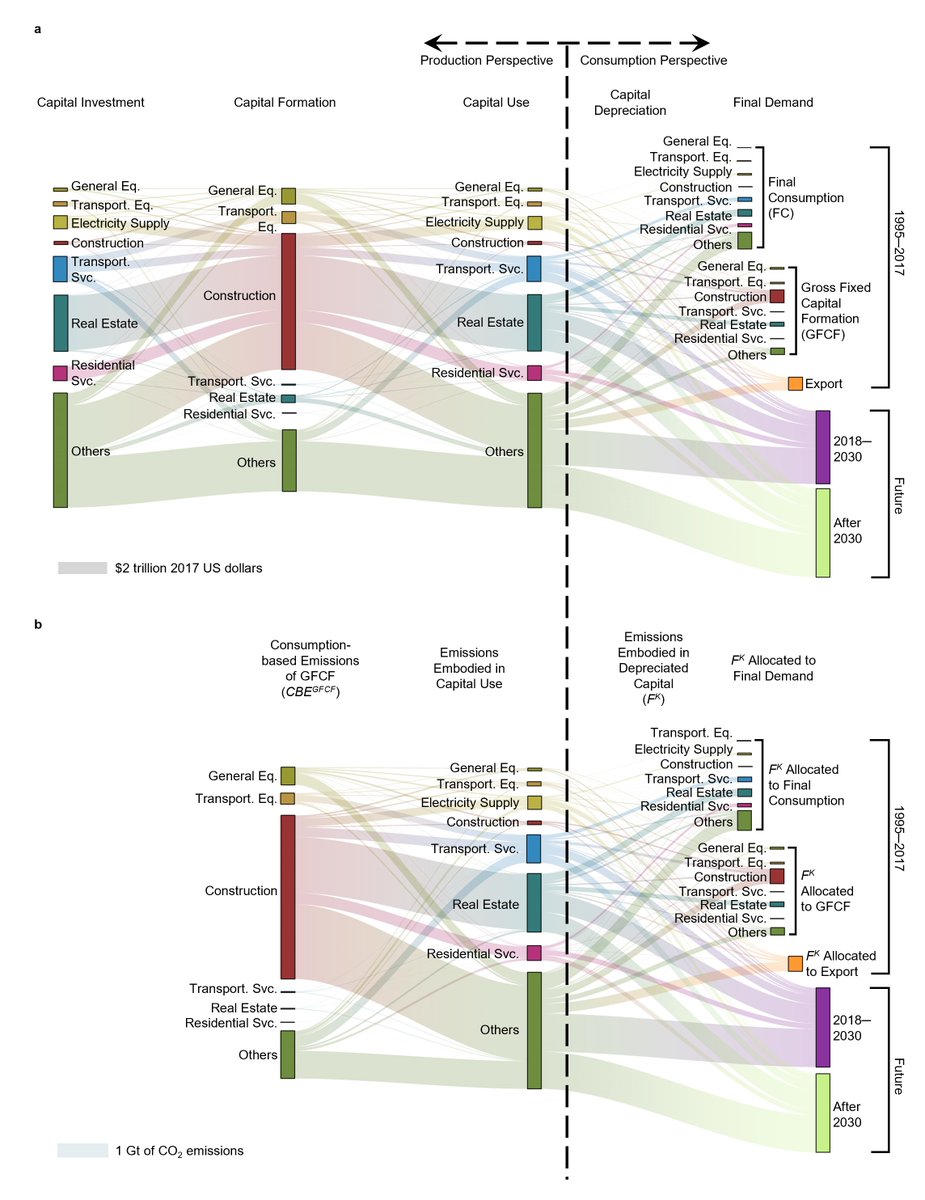
Our latest article in #NatureCommunications Allocating capital-associated CO2 emissions along the full lifespan of capital investments in China. - https://t.co/B5gzKzKd2p
Temporal reallocation of capital-associated emissions diffuses emission responsibilities along time and hence improve the assessment of emission equity across generations. @UTwente, a new paper @NatureComms with @KlausHubacek@yuli_shan
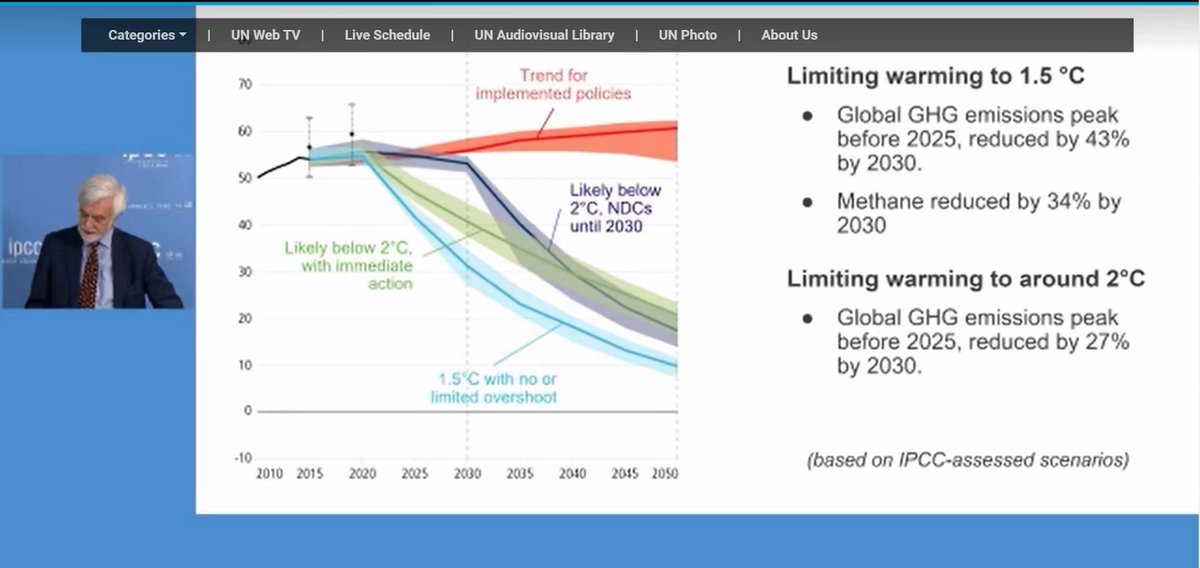
Why it is important to have Near-Real-Time(NRT) CO2 data? The NRT 2021 data showing we are missing the opportunity to limiting the global warming to 1.5 °C, while IPCC AR6 report still got optimistic scenarios because it based on the data in 2018 https://t.co/EXXrVwZtsj
How to treat capital purchase and associated MF is still debatable. Shall we really have to assign MF regarding capital 'investment' to the producers (e.g., construction sector) instead of the users (e.g., transportation services)?
While China has made outstanding economic growth over the past few years, the associated #materialfootprints have been tremendous – why & how? Read more of this new research article that decode China’s material footprints https://t.co/xZIfMQD1mw
Thanks @RCRjournal for publishing and sharing our paper. We developed a Chinese FABIO model with 84 agri-food products and 75 processes between 1990-2013. We also applied the hybrid model to the provincial WF assessments, and revealed key factors with high uncertainty like feeds.
#RCRJournal New Paper: A hybrid multi-regional input-output model of China: Integrating the physical agricultural biomass and food system into the monetary supply chain
https://t.co/F0bO73C9pX
When we assign previously occurred #EnvironmentalPressures (e.g., water, energy, GHG emissions), which are embodied in the currently consumed/depreciated capital goods, into current human final consumption, the associated #EnvironmentalFootprints would increase by 8-46%.
A disproportionally large share of China's GDP went to captial formation. Only a small fraction of this investment has been depreciated. A lot of environmental impact has occurred that enables future production.
https://t.co/1XzcsgKhsc
Wishing a happy birthday to Mo Yan.
Yan was awarded the 2012 #NobelPrize in Literature for his writings in which he merges hallucinatory realism with folk tales, history and contemporary social issues.
The #industrialecology open online course (IEooc) has been online for 3 years now. 🥂
Largest compilation of IE method descriptions & best practice research examples available.
Greatly expanded during 2020, e.g., with 'energy and sustainability' section.
https://t.co/DSU1DOqRUd