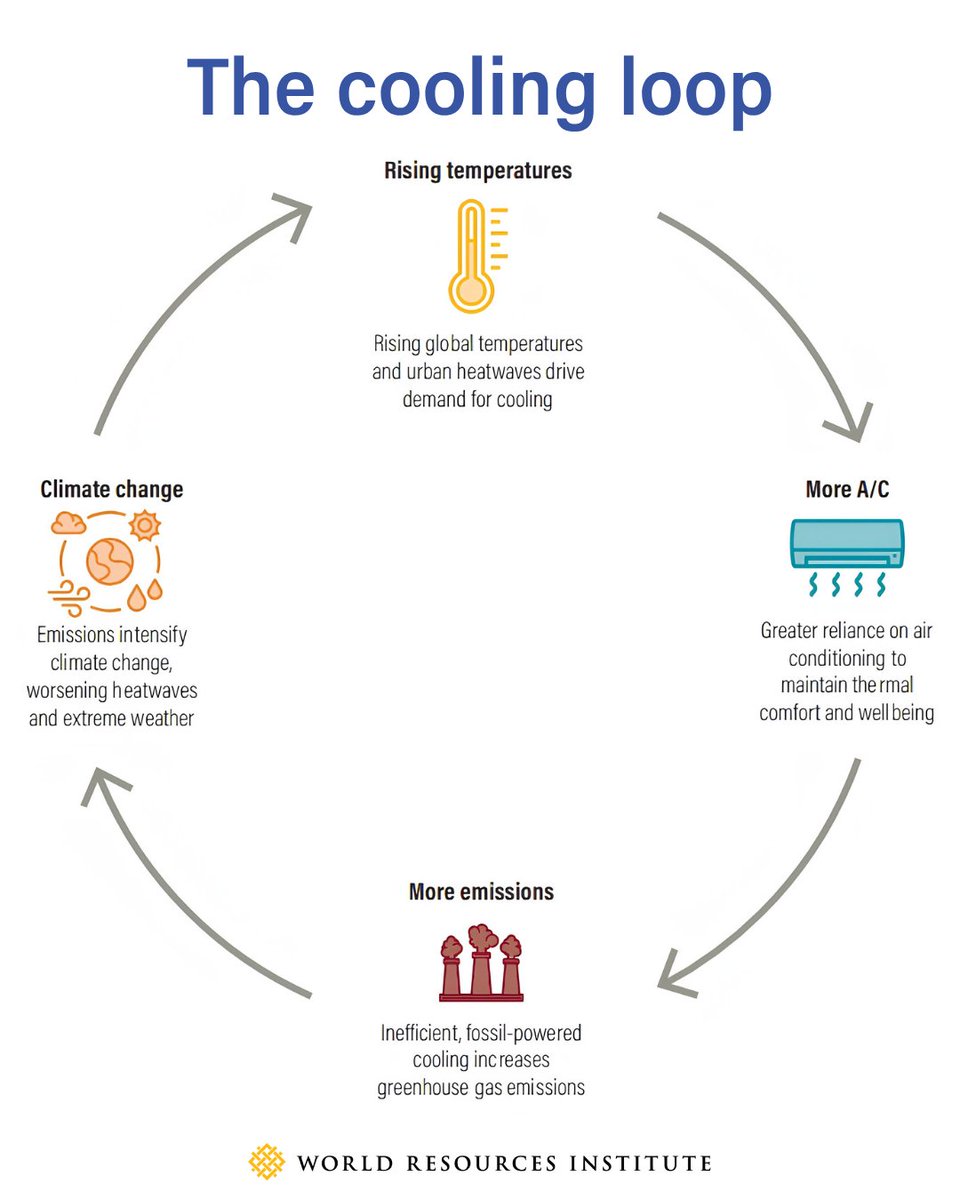
🌡️🥵Deadly heat waves have become the new norm in recent years for Europe, the world’s fastest-warming continent.
With air conditioning in only 20% of the Europe’s buildings, city leaders face a pressing dilemma: how to keep people cool without worsening the climate crisis driving rising temperatures in the first place.
The cycle of rising heat, greater demand for cooling and growing emissions can be broken.
Here, we look at data on Europe’s rising urban heat and explore how cities can adapt➡️ https://t.co/P4aUwaajNc
El Niño-induced climate hazards pose high risks to #FoodSecurity.
By disrupting rainfall and temperature patterns, #ElNiño can strongly impact agriculture and rural livelihoods.
@FAO is working to mitigate its effects on vulnerable communities 👉 https://t.co/ffLT8grzCQ
As El Niño is forecast to intensify, the risk of heatwaves, droughts, heavy rainfall & other extreme weather is increasing. The WMO community steps up coordination, climate info services & #EarlyWarnings to help countries prepare for potential impacts.
➡️ https://t.co/hgILfdYYs7
Indian cities typically have lane widths of around 3.5 metres, compared with European standards of roughly 2.8–3.0 metres.
These wider lanes create "imaginary lanes" in the minds of undisciplined drivers, who try to squeeze between two adjacent vehicles.
Reduce the lane width, and you'll likely see a significant improvement in lane discipline and smoother traffic flow.
Some good news from the latest @IUCNRedList update with the status of the numbat – the faunal emblem of Western Australia – improving from Endangered to Near Threatened.
Its survival depends on continued efforts.
https://t.co/LerLdtjXjD #IUCNRedList
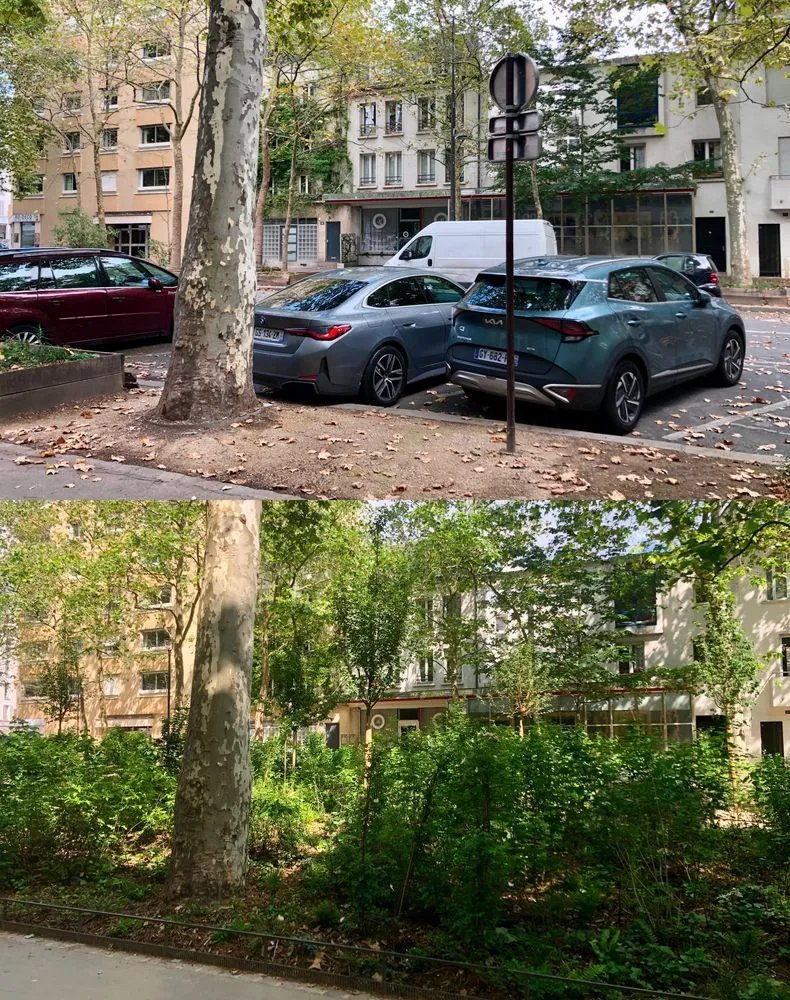
Avant / Après la transformation de l'Avenue de Bouvines dans le 11ème arrondissement de Paris. Ici elle est passé d'une rue parking en 2025 à un petit parc avec jeux d'enfants en 2026.
Avant/ Après Voie Georges Pompidou sous le Pont Louis-Philippe, Paris Centre. En 2012 c'était une voie express. En 2026 c'est une zone piétonne avec une piscine sur la Seine.
Freshwater fish populations have collapsed by a staggering 81%.
This dramatic decline is emerging as one of the most severe, yet often overlooked, wildlife crises on Earth, with serious consequences for both river ecosystems and global food security.
According to a major 2024 global assessment, migratory freshwater fish populations plummeted by an average of 81% between 1970 and 2020. This collapse is happening far faster than declines in terrestrial or marine wildlife. The main culprits are human-made barriers such as dams and weirs that block ancient migration routes, combined with pollution, habitat destruction, and climate change.
These fish play a critical role in maintaining the health of rivers and wetlands. Their disappearance disrupts entire ecosystems, affecting everything from nutrient cycling to the survival of other species. For millions of people in Asia, Africa, and Latin America, migratory fish are also a vital source of nutrition and livelihood. Their decline directly threatens food security and local economies.
The good news? Recovery is still possible. Successful conservation efforts (including the removal of obsolete dams, the creation of effective fish passages, and the protection of free-flowing rivers) have already shown promising results in restoring fish populations and river health.
The challenge now is to act quickly and at scale before these vital freshwater systems cross a point of no return.
[World Wildlife Fund. (2026). Living Planet Report 2025: A System in Peril. World Wildlife Fund]
Kelp forests are among the most diverse habitats on Earth. But climate change, poor water quality and overfishing have damaged up to 60% of them in the last 50 years.
We look at what’s at stake and how to protect the ocean’s kelp 👉 https://t.co/fHHNmc4gbz
India's first hydrogen powered train is set to run between Jind and Sonipat in Haryana.
It is an advanced technology available in only a few countries.
Pleased to share that this train was designed and manufactured using indigenous technology at the Integral Coach Factory (ICF) in Chennai.
Last June saw much of western Europe experiencing a record-breaking heatwave and marine heatwaves across western Mediterranean and Atlantic coasts. Global monthly mean sea-surface temperature, excluding the polar regions, exceeded the June 2024 record.
https://t.co/lYNE0MbLNO







![Rainmaker1973's tweet photo. Freshwater fish populations have collapsed by a staggering 81%.
This dramatic decline is emerging as one of the most severe, yet often overlooked, wildlife crises on Earth, with serious consequences for both river ecosystems and global food security.
According to a major 2024 global assessment, migratory freshwater fish populations plummeted by an average of 81% between 1970 and 2020. This collapse is happening far faster than declines in terrestrial or marine wildlife. The main culprits are human-made barriers such as dams and weirs that block ancient migration routes, combined with pollution, habitat destruction, and climate change.
These fish play a critical role in maintaining the health of rivers and wetlands. Their disappearance disrupts entire ecosystems, affecting everything from nutrient cycling to the survival of other species. For millions of people in Asia, Africa, and Latin America, migratory fish are also a vital source of nutrition and livelihood. Their decline directly threatens food security and local economies.
The good news? Recovery is still possible. Successful conservation efforts (including the removal of obsolete dams, the creation of effective fish passages, and the protection of free-flowing rivers) have already shown promising results in restoring fish populations and river health.
The challenge now is to act quickly and at scale before these vital freshwater systems cross a point of no return.
[World Wildlife Fund. (2026). Living Planet Report 2025: A System in Peril. World Wildlife Fund]](https://pbs.twimg.com/media/HMo-0iHWwAAXQH5.jpg)





