What an exciting time to be alive.
We're starting to explore a regime of physics that has always been out of reach: large, highly entangled quantum systems that we can build and control ourselves.
Quantum mechanics itself is on very solid ground. It has passed every experimental test for a century, and it already underpins the modern world, from the chips in your phone to lasers and MRI.
We know the rules. What we often can't do is calculate what they produce once many particles become deeply entangled. Fully describing the state of just 300 entangled qubits can take more numbers than there are atoms in the observable universe, and no classical computer can keep up.
Quantum computers are the first machines that let us create these states on purpose and study them directly. Scaling them to millions of qubits takes us into territory no one has ever been able to test.
There are two possible outcomes, and both are extraordinary.
If quantum mechanics holds at that scale, as most physicists expect, we gain an instrument for physics we've never been able to compute: new phases of matter, new materials and molecules, and open puzzles like high-temperature superconductivity, still not fully explained 40 years after its discovery. Early machines have already produced exotic states, like time crystals and non-Abelian anyons, that once existed only in theory.
If it doesn't hold, and these systems behave in ways the theory can't explain, that would be the biggest discovery in physics since quantum mechanics itself.
And there's precedent for this.
Electromagnetism was always around us, in lightning and lodestones, long before we understood it well enough to build motors, power grids and radio. The nucleus sat inside every atom for billions of years before the 20th century turned it into nuclear power and medicine.
Entanglement fits the same pattern: it's already everywhere in nature, and we're only now learning to engineer it at scale.
We can't predict where that leads, and history suggests we'd guess wrong. The inventors of the transistor and the laser didn't foresee the smartphone or the internet. The biggest impact of mastering entanglement will likely be something no one has imagined yet, or dare I say even capable of imagining.
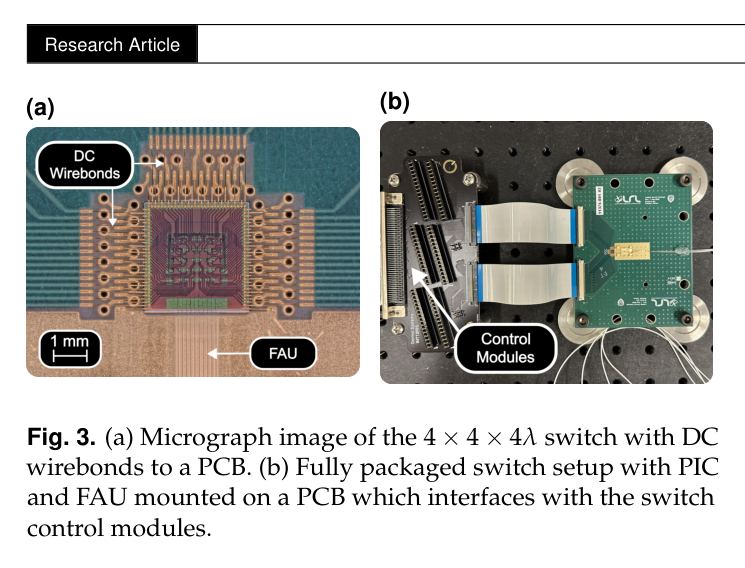
@MPlakhotnyuk@Caltech@NASAJPL It’s an interesting point. I’m an investor in a company that’s working to solve the stable alignment & bonding problem called Dream Photonics in Vancouver. Team is led by Lukas Chrostowski.
Not sure how they’re addressing the back-reflection though.
.@Caltech + @NASAJPL just ran a chip-scale mode-locked laser on lithium niobate off plain electric current.
No pump laser. Turnkey start. Pulses of tens of femtojoules, down to 750 fs with an on-chip modulator.
A key missing part for all-on-chip combs. 🧵
INTEL TO ACQUIRE QUANTUM COMPUTING STARTUP CLASSIQ
$INTC has agreed to acquire Israeli quantum software startup Classiq, whose customers include BMW and AT&T, as part of its push into quantum computing.
Classiq develops software that allows companies to design and run quantum applications across different types of quantum hardware. The startup has raised over $200M and employs around 130 people.
“Joining forces with Classiq transforms Intel’s Quantum Computing Group into a full-stack quantum computing business,” CEO Lip-Bu Tan said.
Financial terms were not disclosed.
Source: Bloomberg
Wróciliśmy z żoną z San Francisco do Warszawy. Ona Amerykanka, ja Polak. @mBankpl dwa razy odmówił jej konta 🤷♂️
Szukamy banku, który nas chce i mówi po angielsku. Oferty w komentarzach 👇
@AliorBank @SantanderPL @PKOBP@Citi_Handlowy
@Igosolo316 I think the point of the paper here isn’t the error rates but the approach. Swapping about bulk optics and table top lasers for integrated on chip system.
Trapped-ion quantum computers still run on tabletop laser racks. That is the scaling problem nobody solves.
UMass Amherst + UC Santa Barbara just drove single and two-qubit gates off a chip-scale laser.
99.61% single-qubit. 92.35% Bell state. 🧵
But zoom out:
The hard part of optical switching was never just the chip. It was making Linux, NICs and training jobs survive the network moving under them. This paper closes that loop, at small scale.
Direction: AI networks are slowly becoming programmable light.
https://t.co/FyzzFW2Hk9
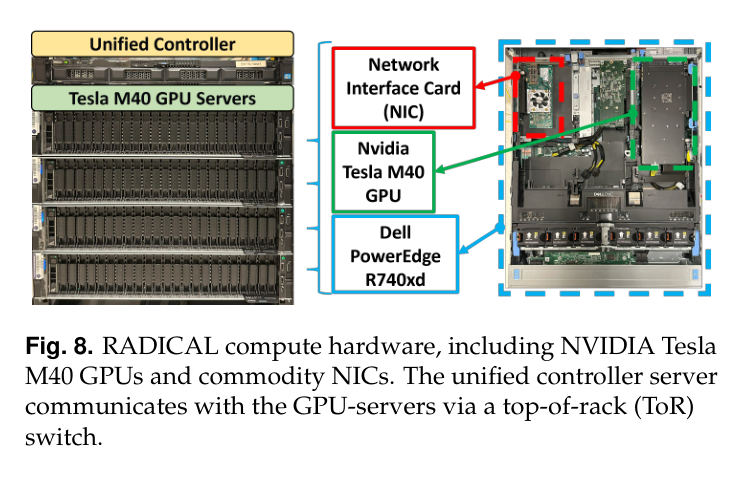
A silicon photonic chip with 80 tiny ring filters just rewired a live GPU cluster every 30 seconds.
6.4 TB moved in 10 minutes. One packet retransmitted.
New from Columbia (Bergman lab) + @MIT. Small cluster, real AI training. 🧵
@MIT@Caltech@NASAJPL@nvidia@IonQ_Inc@PsiQuantum Reality check:
• 4 GPU servers on 2015-era Tesla M40s. Toy scale.
• No speedup claim. No head-to-head vs a packet-switched baseline.
• Fixed-wavelength transceivers, so wavelength steering wasn't tested as a knob.
• Needs an EDFA amplifier on every output.
Reality check:
• Estimates, no hardware run
• T count, not runtime
• Excludes state prep
• Hubbard gain ~3x, not 15x
• Spin-liquid baseline self-built
But zoom out: useful materials simulation keeps getting cheaper on paper.
Direction: FT algorithm discounts are stacking up.
https://t.co/mXQw1dKxZm
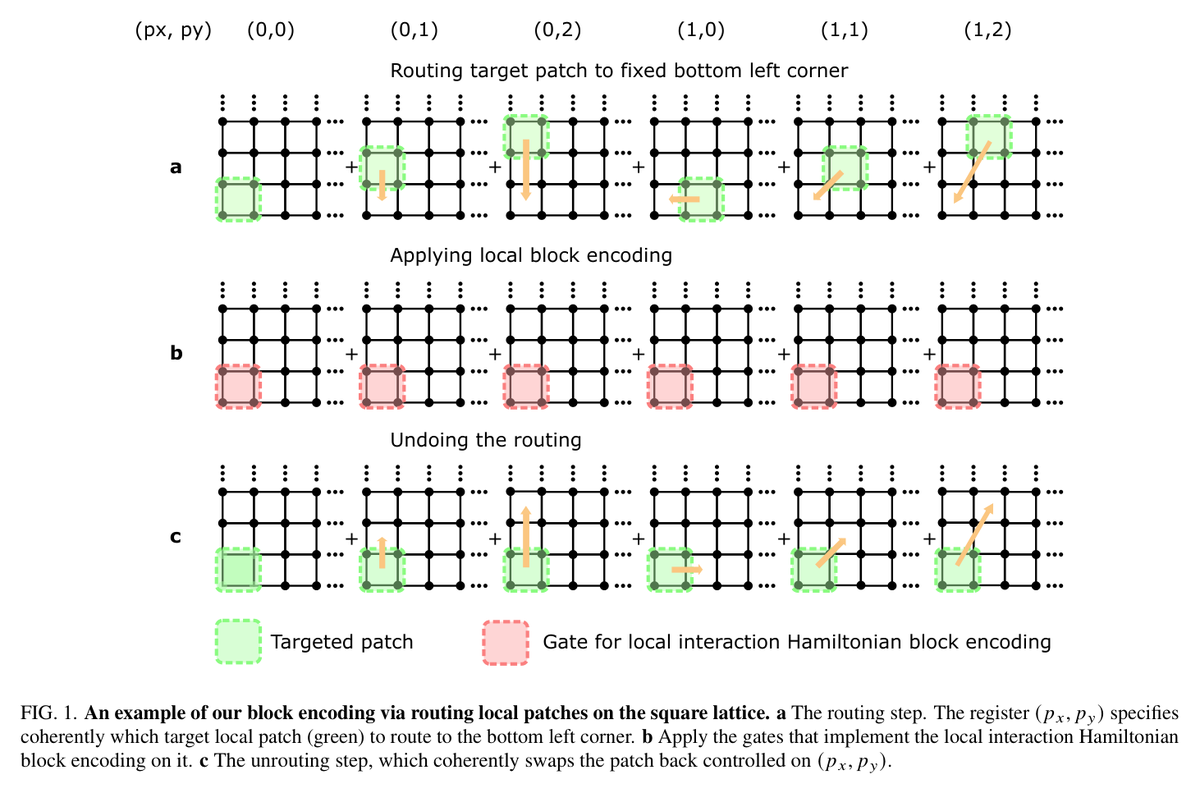
New from @IonQ_Inc (Roetteler, Salton et al.): 15-17x fewer T gates to simulate a frustrated magnet on a 120x120 lattice.
No new hardware. Just a cheaper recipe for what fault-tolerant machines will actually run. 🧵
Investor read:
• $IONQ: Roetteler's team ships fault-tolerant algorithm work, not just hardware claims
• Quantinuum, IBM, Google, QuEra can all use it. Not ion-specific
• No tradable catalyst; payoff needs FT machines
Signal to watch: IonQ citing these T-counts in its roadmap.