If you’ve heard about the mysterious Sabu Disk… well, now we’ve got some actual tests coming in! Word is—it may have been used for manipulating water.
The original disk is made from stone, but with features so advanced, today’s top-tier stonemasons still couldn’t replicate it without computers and precision tools. That alone should tell you something.
I truly hope they keep digging into this, because we might just uncover what this artifact was really used for.
Now—about those “First Dynasty” claims in mainstream archaeology… let’s stay sharp. That’s the main point they love to quote, but their dating system? Way off. They openly admit there’s a big gap between the First and Second Dynasties—but they’re missing the mark by more than 6,000 years.
That’s it for now, but stay tuned… this is only getting deeper.
The discovery of ancient footprints in White Sands National Park has provided fascinating insights into the region’s prehistoric human activity. These footprints, some of which are over 23,000 years old, offer a glimpse into the lives of early inhabitants living at the time of ice age megafauna.
In 2009, a set of footprints estimated to be around 10,000 years old was found by a park ranger. These footprints belonged to a group of adults and children, providing evidence of early human presence in the area. Further excavations unearthed even older footprints dating back more than 23,000 years. These footprints are believed to belong to Paleo-Indian people who lived during the last ice age.
The preservation of these footprints is due to the unique geological and environmental conditions of the park. The fine-grained gypsum sand, combined with the absence of water and organic matter, has contributed to their exceptional preservation over millennia.
The study of these ancient footprints offers valuable information about the movement patterns, behavior, and possibly even the social dynamics of early human communities. These findings provide a window into the region’s cultural and natural history, highlighting the rich heritage of White Sands National Park.
Check this out: at the Museum of Gold in Lima, Peru, there's a skull that screams ancient genius – it’s over 1600 years old and a testament to the wild world of Inca trepanning. These folks knew how to get down to business, literally cutting into skulls and sealing them up with gold! That’s right, gold! And guess what? The fact that this individual survived, with healed bone as proof, shows just how far ahead the Incas were when it came to medical practices. It’s mind-blowing and downright fascinating.
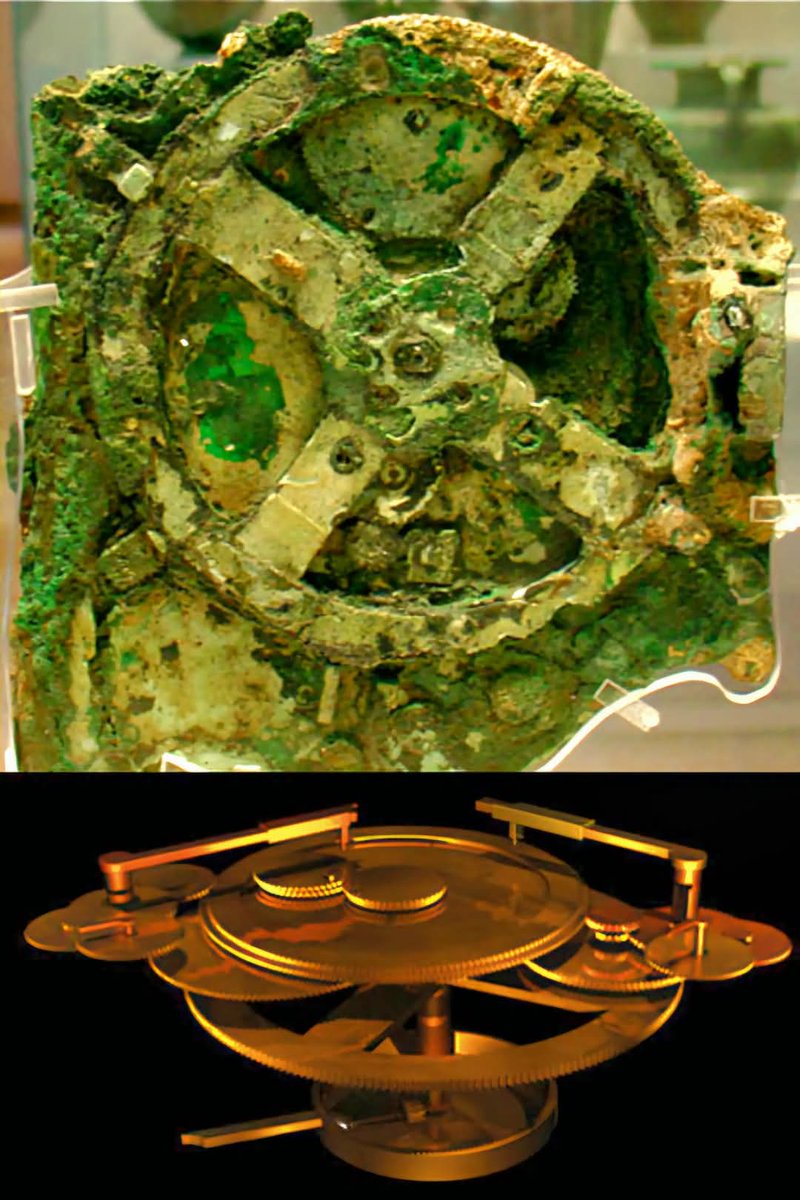
A 2,000-year-old ancient computer that "should not exist" was thought to be impossible until now. A device so advanced that it was once thought impossible for its time has baffled scientists for over a century. The Antikythera Mechanism, often called the world's first computer, is a 2,000-year-old astronomical calculator that has challenged much of what we know about ancient technology. Discovered in a shipwreck off the coast of Greece in 1901, this intricate piece of engineering was far ahead of its time, raising serious questions about the capabilities of the ancient Greeks. Made of bronze and featuring a series of intricate gears, the Antikythera Mechanism was designed to track celestial movements and predict astronomical events, such as eclipses and planetary alignments.