@FrankBr05713205 It's simply the discretionary part of your bill: expecting the average of customer tips at 20%, a restaurant reduces its prices by 1/6th.
They don't open their books to show you how much is paid to whom or by what IRS rules. You can adjust your tip for any reason you wish.
@myCDHands@FrankBr05713205 No, that's entirely between the restaurant and its staff.
Primary factors in a meal price are customers' willingness to pay. We don't have access to food and labor costs. None of our business.
@Cecilia2078602@pyginapithon@chefsevenn@grok A juicy 5-guys burger just might strengthen you.
Seriously they are the best. We can agree to disagree as to whether they're worth it.
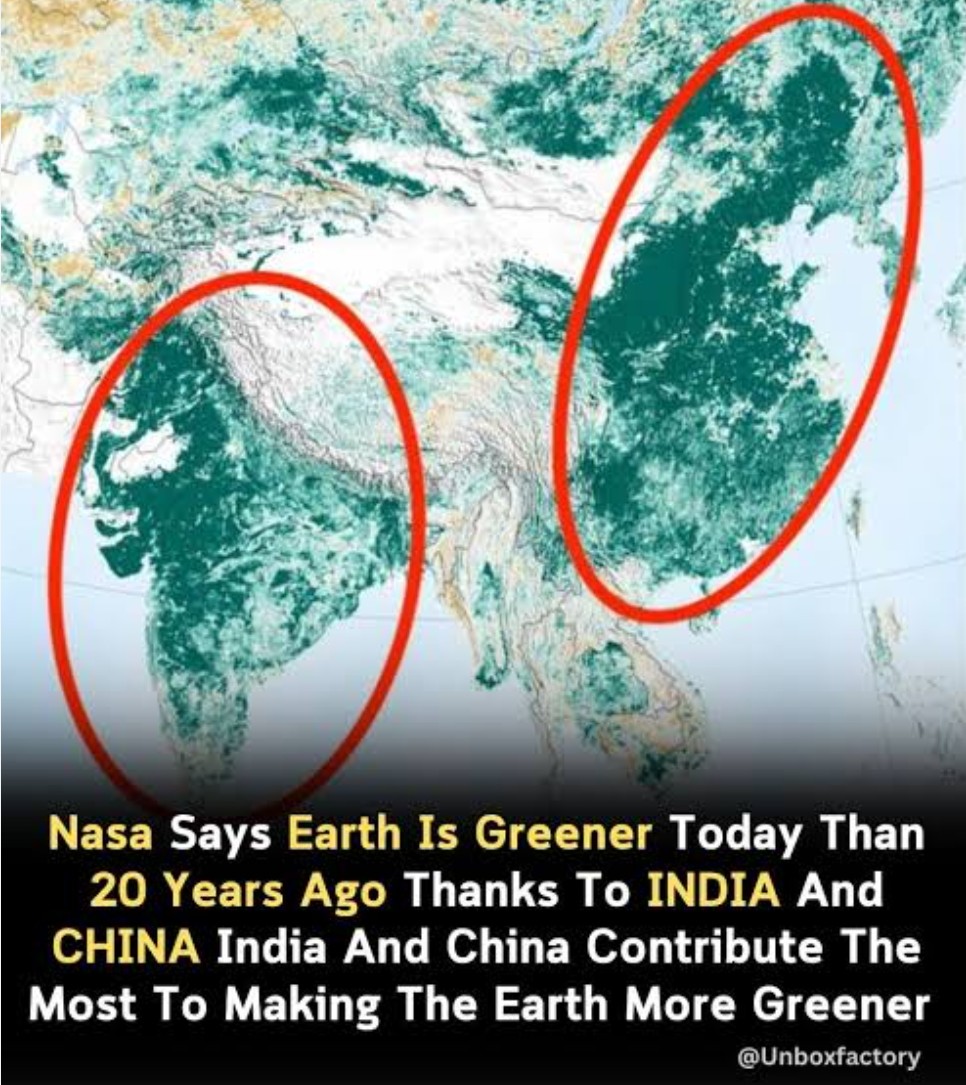
The Earth is greening at a rate never seen before in all recorded history, according to NASA satellite records from 1982–2023.
Global crop yields have risen 15–20% since 1960, almost entirely attributable to CO₂ fertilisation (Idso, 2013; IPCC AR6 WG1 Ch5). Famine deaths have plummeted over a time when the world's population doubled and CO₂ deserves much of the credit. We have increased CO₂ over the past century to thank for this explosion in plant life and available plant food from booming agriculture.
There's been a more than 18% increase in the global leaf area in 40 years, with the largest gains in India and China from CO₂ fertilisation. Warmer and more balmy temperatures are lengthening the growing seasons. These are features of rising levels of water vapour and cloud cover around the world. Every 100 ppm increase in CO₂ typically boosts plant growth by 25–50% in all non-water-limited conditions.
This analysis draws on 776 studies from 1993–2019, showing an ideal average CO₂ level of 550 ppm delivers a 38% increase in global biomass.
It's an astonishing windfall for life on earth from CO₂, a trace gas at 420 ppm (or 0.04%). It also has a secondary benefit for life by contributing to baseline levels of warmth around the planet, along with water vapour and other trace gases with similar properties, like methane (approx. 1.9 ppm or 0.00019%).
However, water vapour and cloud cover are the mainstays of rainfall and the entire hydrologic cycle, returning water as precipitation to rivers, lakes, and oceans (where 78% of rain ends up).
These are the reasons why commercial greenhouses pump CO₂ to 1,000–1,500 ppm deliberately. It ensures that crop yields jump by 20–70% depending on the crop. If 1000 ppm is good for tomatoes, why is 420 ppm an 'emergency' for the planet?
The science says 600–1,000 ppm of CO₂ plus 1–2°C extra warming hits the sweet spot for all terrestrial and marine life, including human civilisation. We should not be waging war on a trace gas that makes the planet greener.
Higher CO₂ is a net benefit to life on Earth.
@COrepKdeGraaf@writethewrongs2 Yes. And meanwhile the planet greens — grasses, trees, shrubs, and algae everywhere, turning CO₂ back into C and O₂ at increasing rates.