Trump brags that the US government is looting Venezuela: "To the victor belong the spoils."
Barely any international pushback. We've completely normalised US imperial conquest.
"Dying for your country is a patriotic fairy tale. In reality, you will bleed out in the mud like a butchered dog for absolutely nothing." - Ernest Hemingway
India’s NEET/MBBS math is broken. We have less doctors. We have more students aspiring to be doctors. Most increase is in private colleges and outside the reach of 99% students. The NMC is territorial and a choke point.
While the govt. claims a 1:811 doctors to population ratio, in reality, it is closer to 1:1300. They included AYUSH doctors too in the ratio.
The regional imbalances are stark too: UP has 1 doctor per 2363 people, Bihar has 1:2000, but Goa has 1 per 353. Most importantly, 74% of doctors cluster in cities while rural India carries the shortage.
On the other hand, about 23 lac students write the NEET exam where the highest closing rank in open category woukd not be more than 30,000. That is a rejection of 98.7% doctor aspirants.
While Govt. increases MBBS seats, it is in private medical colleges where the fees is upwards of 1.25 Crores. This year, 9911 seats increased and 78% are in private colleges!
We need to create affordable seats where a cutoff of 70000 also can get a seat in a decent medical college. We should create at least 40000 seats that are affordable and for the meritorious. That is still the top 3%!!
We should relax the norms of student to bed ratio and faculty to student ratio by a quarter in districts with Doctor scarcity.
We should allow medical hospitals to partner with teaching colleges for increased MBBS seats.
Allow new medical colleges to be set up with such relaxed norms.
These increased seats should cost no more than 30 Lacs over the 4.5 year program.
This will increase meritorious becoming doctors.
This will satiate the pent up demand of NEET.
It will correct the doctor to population ratio.
It will spread doctors in districts too.
Having reduced the costs of MBBS, service orientation will hopefully increase.
@nmc_india@PMOIndia@MoHFW_INDIA@EduMinOfIndia
@RuhiTewari Don't agree with your analysis !
Roughly 30% of the electorate voted this time. And this constituency is the upper middle class of Patna . Mostly educated guys.
They might be looking for someone educated to represent them , someone different from the same old parties !
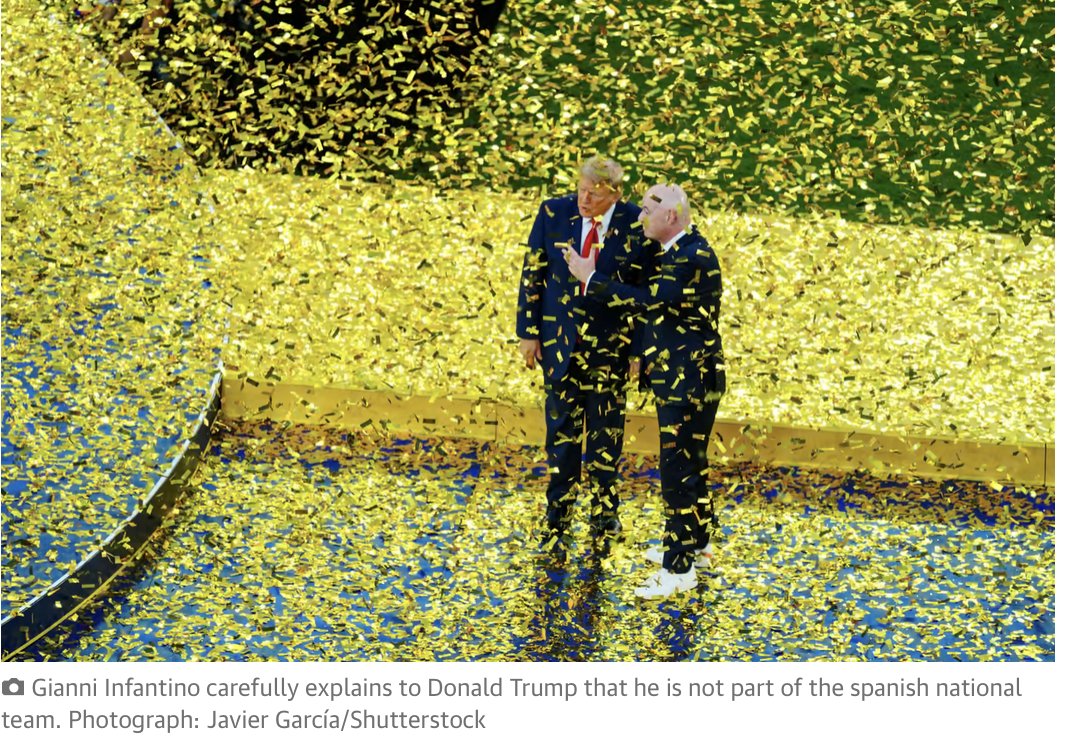
U.S. soldiers were sent to die in the Middle East for Israel’s wars.
Meanwhile, the families of the people who pushed those wars are enjoying the World Cup from luxury seats.
The ruling class gets the view.
Ordinary families get the coffins.
Argentina’s behavioral crisis in the World Cup final has brought to light traits many of us in Latin America have internalized and that we need to come to terms with.
In many countries, emotional self-control and the ability to admit mistakes are seen as virtues. A behavioral problem in parts of Latin America is that there are social circles where the opposite is often celebrated.
This is the idea that someone who remains in control of their emotions is a coward or, depending on the situation, a traitor.
If someone offends you, your family, your team, the reaction that is celebrated in these circles is not restraint but flipping the table. The more berserk you go, the more you show that you care. That is a harmful value to hold, and also, one that many of us once shared. I certainly had it internalized when I left Chile 20+ years ago. In fact, I’ve spent much of my adult life trying to unlearn what I grew up believing was the socially acceptable behavior.
The second trait is an unwillingness to admit mistakes. You can always find an excuse, move the goalposts, or, once again, start a fight instead of publicly accepting that you’ve made a mistake. Admitting fault is a sign of weakness. Defending a losing position is a symbol of courage or, in sports, a test of loyalty.
Together, these two traits are behavioral dynamite. People explode because they cannot admit fault, and double down. Instead of learning from their mistakes, they become prisoners of them.
I grew up watching football with my father. When I was 10 or so, I was learning what was right and wrong from the way he interpreted the game. This included behavior both on and off the field. Only later in life did I realize that every penalty he called for, or contested, had little to do with the play itself. Whether a call was fair depended entirely on which team benefited. He was happy if his team received a nonexistent penalty or an opposing player got an undeserved red card.
These traits are among the things that pushed me away from the continent. They are certainly not exclusive to Latin America or the Southern Cone. I’ve encountered them in people all over the world. In an important sense, these are behaviors that all of us exhibit as children. What strikes me as unusual from the place I am from is having been part of social circles where these behaviors were not seen as flaws of character but as virtues to be admired, celebrated, and enforced.
These excessive forms of pride are not conducive to learning. They make it psychologically difficult to update one’s beliefs, accept responsibility, or improve. Although they become particularly visible in sports, they are by no means confined to them.
Something I am proud to have learned is to apologize quickly and often. Not because it is too difficult, but because it was like learning a new language at old age. That doesn’t mean becoming a pushover. But I’ve learned that a man who never apologizes cannot be a man of integrity, because we all make mistakes.
Argentina’s behavior on and off the field during the World Cup final was, to me, a particularly blatant expression of values that many people continue to defend. In some circles, these attitudes have become intertwined with ideas of national identity and loyalty. Yet they are shackles that ultimately limit our development, not because they make us lose a football match, but because they make it harder for us to learn from our mistakes.
The right thing to do now is the least likely: offer an honest apology. If my interpretation is even partially correct, we are more likely to see the opposite. Never back down. Never apologize. Never control your emotions. There is such a thing as having the wrong values. I hope that one day we can do better.
American national anthem before kick off, game not played at night, hydration breaks, dynamic ticket prices, camera panning to celebrities every 25 seconds and a 30 minute HT show still to come
Never let these fucking idiots host it again
A Nobel Prize in Economics does not confer permanent ownership over West Bengal’s identity, nor does it make anyone's political judgment astute.
Amartya Sen’s 2007 essay now reads less like political analysis and more like an obituary for the Bengal his ideological class imagined would exist forever.
He wrote that Hindutva had received no serious popular response in West Bengal and that its “storm” appeared to have subsided.
Nineteen years later, West Bengal handed the BJP 207 seats!
History did not merely disagree with the Nobel laureate. The Bengali voter did.
For decades, a self-appointed 'bhadralok elite' insisted that Bengali culture belonged exclusively to the Left, Trinamool Congress and their sanitised, abhorent version of secularism. Hindu civilisational assertion was dismissed as intellectually inferior, culturally alien and electorally impossible.
That arrogance has now been demolished at the ballot box.
Sen’s romantic description of secular Bangladesh has aged equally poorly. The attacks, killings, rapes, fear and insecurity faced by Hindus and other minorities expose the distance between drawing-room theory and lived reality.
West Bengal was politically conditioned to believe that it was not pro-Hindutva.
The people have now broken that conditioning and the old intellectual establishment is discovering that they have been footnoted out of existence.