REVES is an international research network, set up in 1989, dedicated to promoting health expectancy as a critical metric of population health around the world
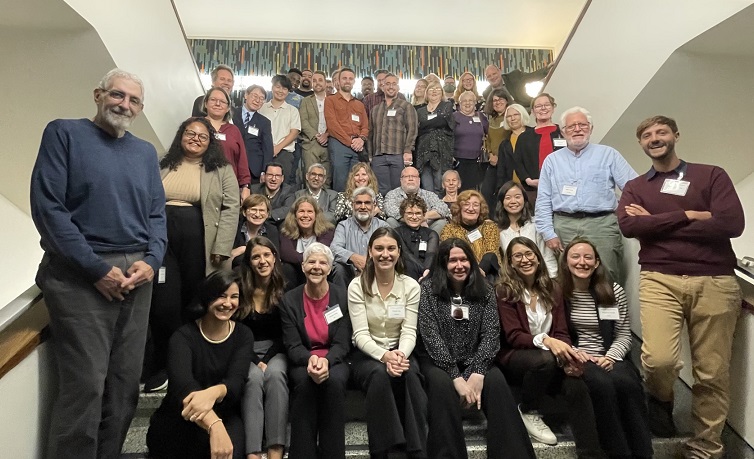
Over 50 people attended the 33rd REVES meeting (International network on health expectancies and the disablement process), organized by @GACI_MSVU taking place in Halifax, Nova Scotia. #AcademicTwitter#research#healthylifestyle
Over 25 people participated in the 2-day training workshop, "Advances in international research on health and life expectancy in the Covid-19 era" hosted by the GACI at Dalhousie University as a pre-conference to REVES #DataAnalytics#DataScientists#AcademicTwitter#researchers
Register today for REVES meeting taking place in the beautiful port city of Halifax, Nova Scotia, Canada in September. Deadline is August 1, 2022. https://t.co/6kU2lLe7AH
A study in French showed that elderly can gain independence in daily outdoor activities by improving the residential physical environment, even when the number of functional limitations is high. Stairs are important barrier to independence #REVESHEX2021 https://t.co/UKrsnXvsCx
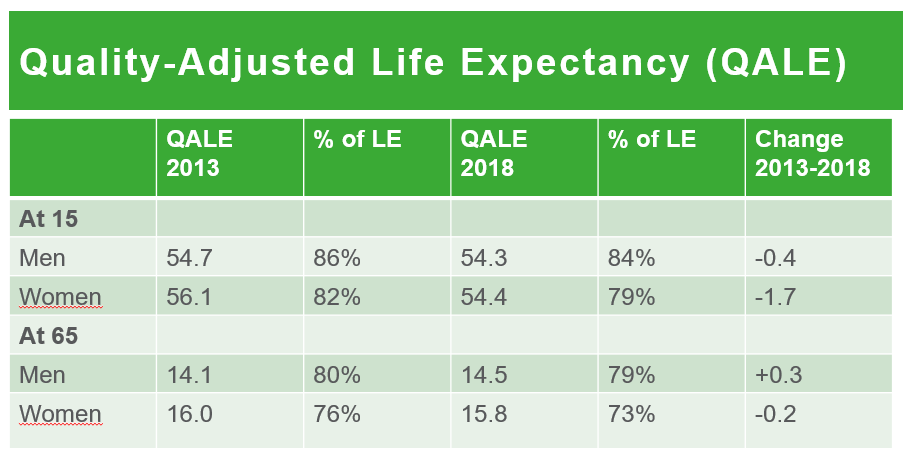
Quality Adjusted Life Expectancy at age15, based on the #qualityoflife indicators decreased in #Belgium between 2013-2018, in contrast to the trends in Healthy Life Years #HLY based on the Global Activity Limitation #REVESHEX2021 https://t.co/UKrsnXvsCx #Healthyaging#disability
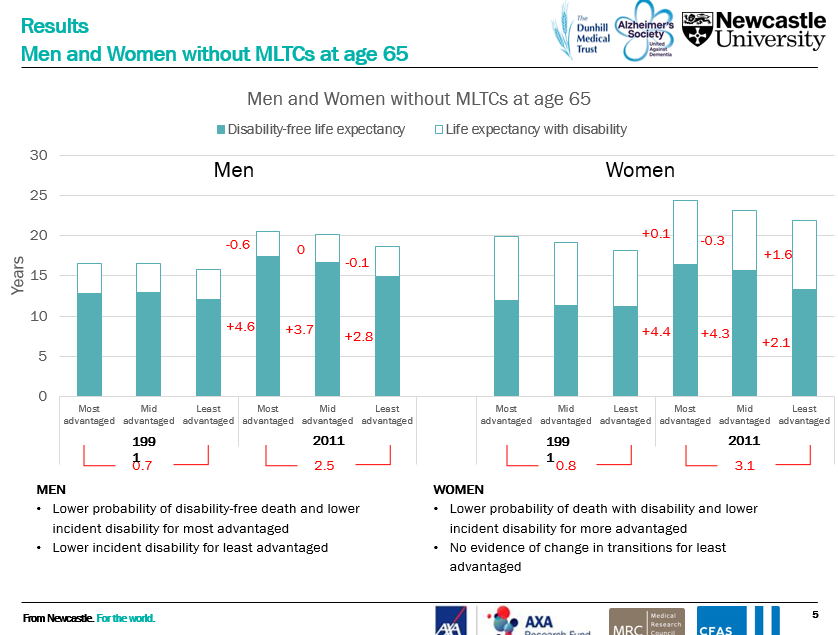
In the #UK, there is an increase (1991-2011) in prevalence of multiple longterm conditions (MLTC). #inequality in #Disability free life expectancy in people with MLTC increased, but MLTCs are not the whole reason for widening inequalities #REVESHEX2021 https://t.co/UKrsnXvsCx
When using cross-sectional studies and/or panel studies data to estimate #disability free life expectancy, possible selection and attrition #bias may occur due to differential participation by #health status #REVESHEX2021 https://t.co/UKrsnXvsCx #healthyageing#surveys
People in #Columbia are living longer. The burden of #disability is higher at older ages. Women are expected to live a larger proportion of their life with mobility and daily (instrumental) activies restrictions compared to men #REVESHEX2021#Healthyaging https://t.co/UKrsnXvsCx
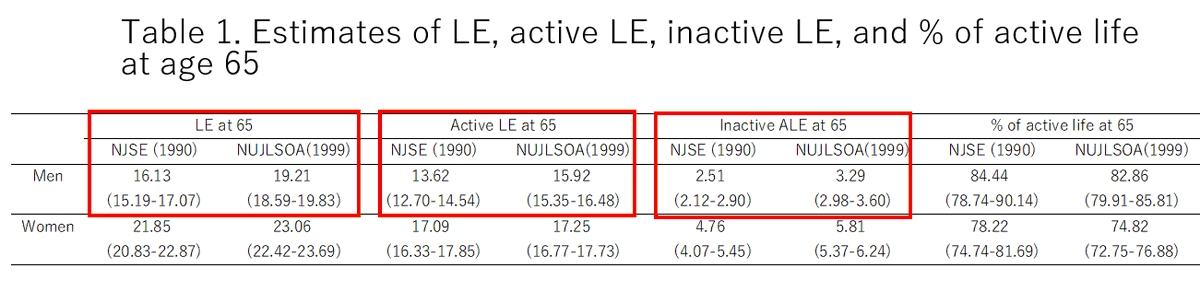
Between 1990-99, both life expectancy (LE) at age 65, as the active and inactive LE increased in Japan. Especially among women, the inactive LE increase was larger, reducing active life part of the remaining life expectancy #REVESHEX2021 https://t.co/UKrsnXvsCx #healthyageing
8 waves of the English Longitudinal Survey on Ageing are used to estimate working life expectancy using different multistate models. Different softwares (ELECT (R), ImaCh and Space (SAS) provided similar results https://t.co/UKrsnXdRdX #REVESHEX2021#aging#Disability#retirement
High eductated men or women aged 90-plus in #Finland have a longer Life Expectancy (LE),higher % LE without #disability and lower %LE with severe disability, due to the higher disability among basic educated https://t.co/UKrsnXvsCx #REVESHEX2021#aging#inequality#education
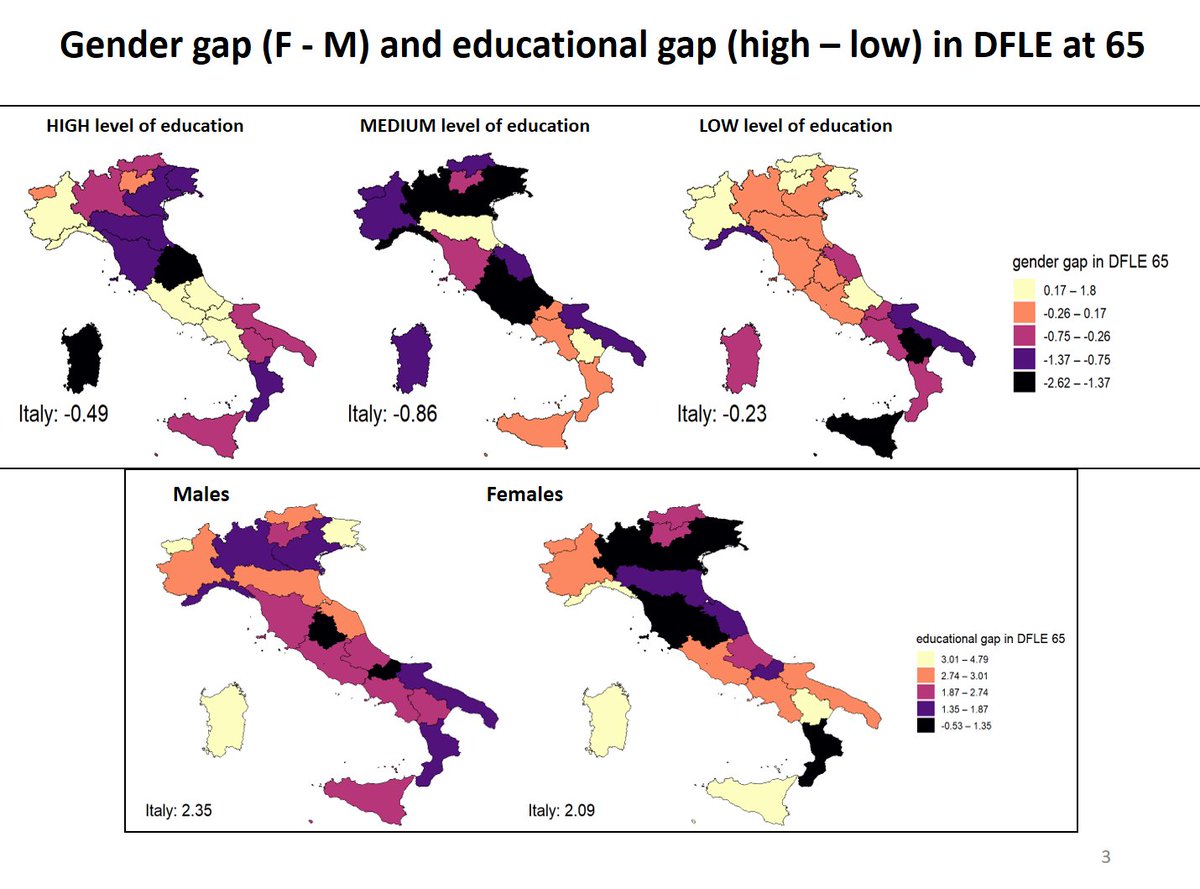
The contribution of morbidity and mortality to the gap in #disability free life expectancy at age 65 years by #gender and by #education varies by regions in #Italy https://t.co/UKrsnXvsCx (page5) #REVESHEX2021#aging
Second day of the 32nd annual #REVESHEX2021 meeting. We focus on educational #inequality in health expectancies and on #Health and #retirement age. Prof P Deboosere, Brussels, will give the George Myers Keynote "The changing body and the changing society" https://t.co/uUH5ztU9wh
Higher #education is associated with a positive shift in the distribution of lifetimes as the number of #dementia at the mode decreases and the amount of variability around the mode decreases (data from 2000-2016 @hrsisr, #USA) https://t.co/UKrsnXvsCx #REVESHEX2021#inequality
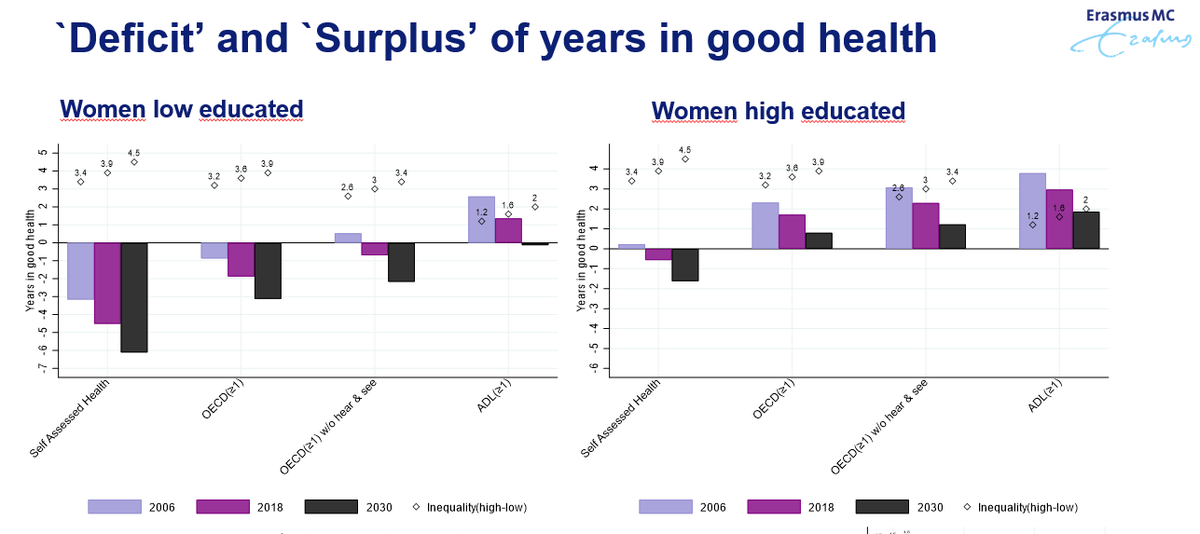
Understanding if gains in life duration are years in good (compression)-bad health (expansion) needs evaluation of the relation between life and healthy life expectancy, but also the changes in healthy lifespan inequality (HLI) https://t.co/UKrsnXvsCx #REVESHEX2021#HealthyLife
#Jewish-Arab gap in life expectancy increased since 1980s, but the gap in life disparity decreased. This can be explained by a decreasing disparities in infant and child mortality and a loss of #Palestinian-Arab old-age mortality advantage https://t.co/UKrsnXvsCx #REVESHEX2021