An enzyme just reversed 78% of aging damage in human lens tissue that had accumulated for 64 years.
The damage in question comes from sugar reacting with proteins, and it concentrates in the proteins your body cannot replace. An engineered enzyme called CMLase removed the majority of this damage in aged human tissue.
Most longevity interventions slow the rate at which damage accumulates. Exercise preserves mitochondria. SGLT2 inhibitors reduce glucose load. Rapamycin dials down growth signaling. These work upstream, reducing how fast damage forms.
This enzyme works differently. It removes damage that has already formed.
Glucose circulating in your blood encounters proteins and occasionally forms a permanent bond. No enzyme directs this. It's the same Maillard chemistry that browns toast, running slowly at body temperature over years.
These sugar-protein bonds are called advanced glycation end products, or AGEs. They accumulate most in proteins your body never replaces.
The lens proteins in your eyes are laid down before birth and never replaced. The collagen in your arteries and skin turns over so slowly that much of what you carry at seventy was made in your twenties. These long-lived proteins accumulate chemical damage like stone buildings accumulate weathering.
The specific modification targeted is carboxymethyl-lysine, or CML. It's one of the most abundant AGEs in aged tissue, and it does two kinds of harm.
Structurally, CML reverses the electrical charge on a lysine residue, disrupting how the protein behaves. Functionally, it binds to RAGE, a receptor that activates inflammatory signaling and tissue stiffening. This creates a self-reinforcing loop, since the oxidative stress from inflammation accelerates the formation of more AGEs.
Until now, CML was considered chemically irreversible. The body has defense systems that intercept reactive sugar molecules before they attach to proteins. Drugs like aminoguanidine do the same. But once the modification forms on a protein, there has been no way to remove it.
No enzyme in nature removes CML from proteins, so researchers engineered one. They started with a glycine oxidase scaffold, then used directed evolution across more than 500 million variants to create an enzyme that could find CML on a protein, cleave it, and restore the original amino acid underneath.
Here's what happened when they applied CMLase to aged human tissue:
• Lens protein from a 64-year-old donor: CML dropped 78%
• Arterial tissue from a 75-year-old: CML staining fell over 70%
• Elderly skin: CML dropped over 55%, below the level found in skin from a 31-year-old
• Across five test proteins: CML removed by 52 to 97%
The enzyme removed decades of accumulated damage in tissue that had carried it for a lifetime.
The limitations define this as proof of concept, not therapy. Chemical reversal was demonstrated but functional restoration was not. The experiments used tissue sections and homogenized proteins, not living organisms. The enzyme is bacterial and would face immune obstacles in humans. Glucosepane, the crosslink most responsible for tissue stiffening, remains untouched.
Still, the conceptual advance is significant. A form of molecular aging the field had classified as permanent turned out to be reversible once someone built the right tool.
The directed evolution platform generalizes to other age-related protein modifications. The team has named glucosepane as the next target. After two decades in which the damage-repair approach to aging was largely theoretical, this is one of the first demonstrations that repair tools can be built and made to work on genuine human aging damage.
Most interventions reduce the rate at which damage accumulates. This study demonstrates the other approach: removing damage that has already formed. The question is whether this category of intervention can be optimized to the point where it reverses enough tissue-level dysfunction to matter clinically.
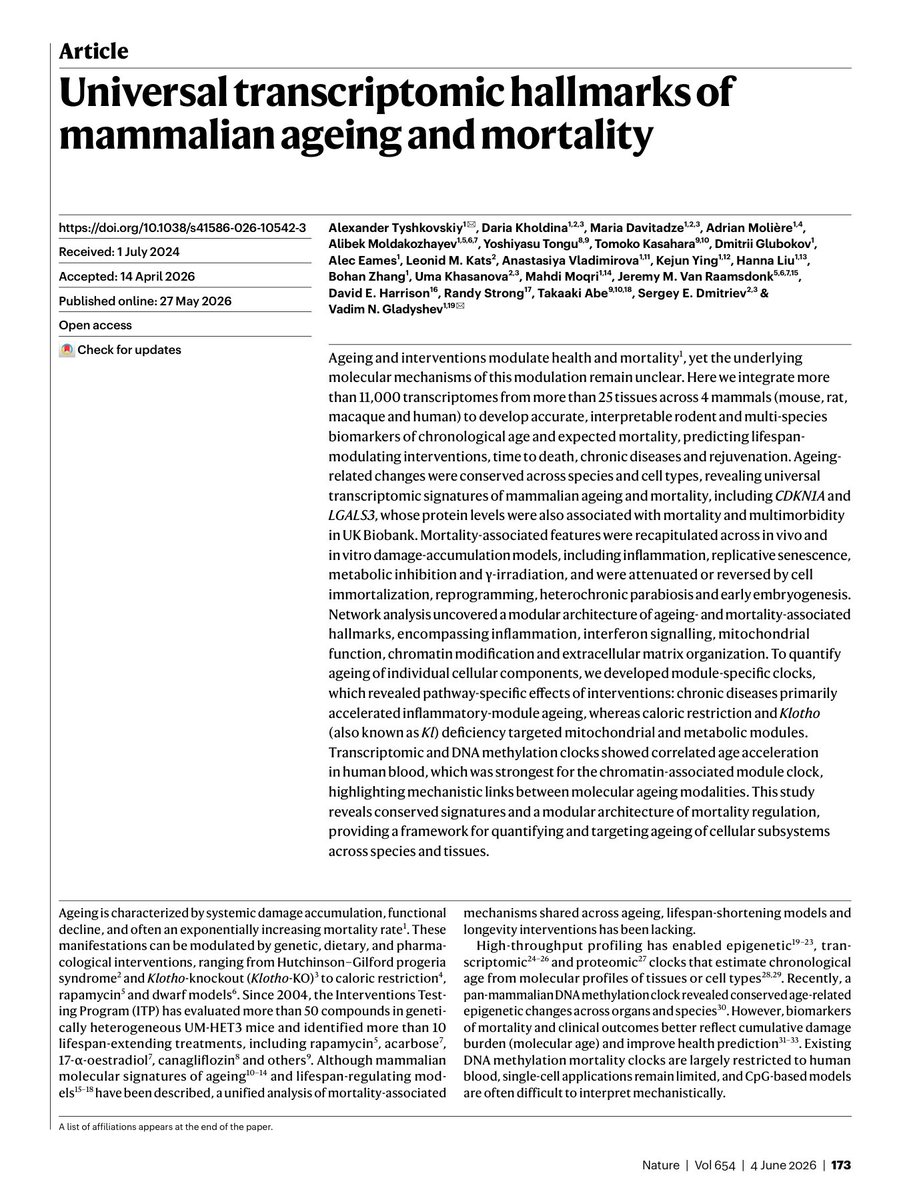
One of the most consequential aging papers this year: an open Nature study integrates >11,000 transcriptomes across 25+ tissues and four mammals, building interpretable clocks for chronological age and expected mortality.
https://t.co/ne5ADf8FBO
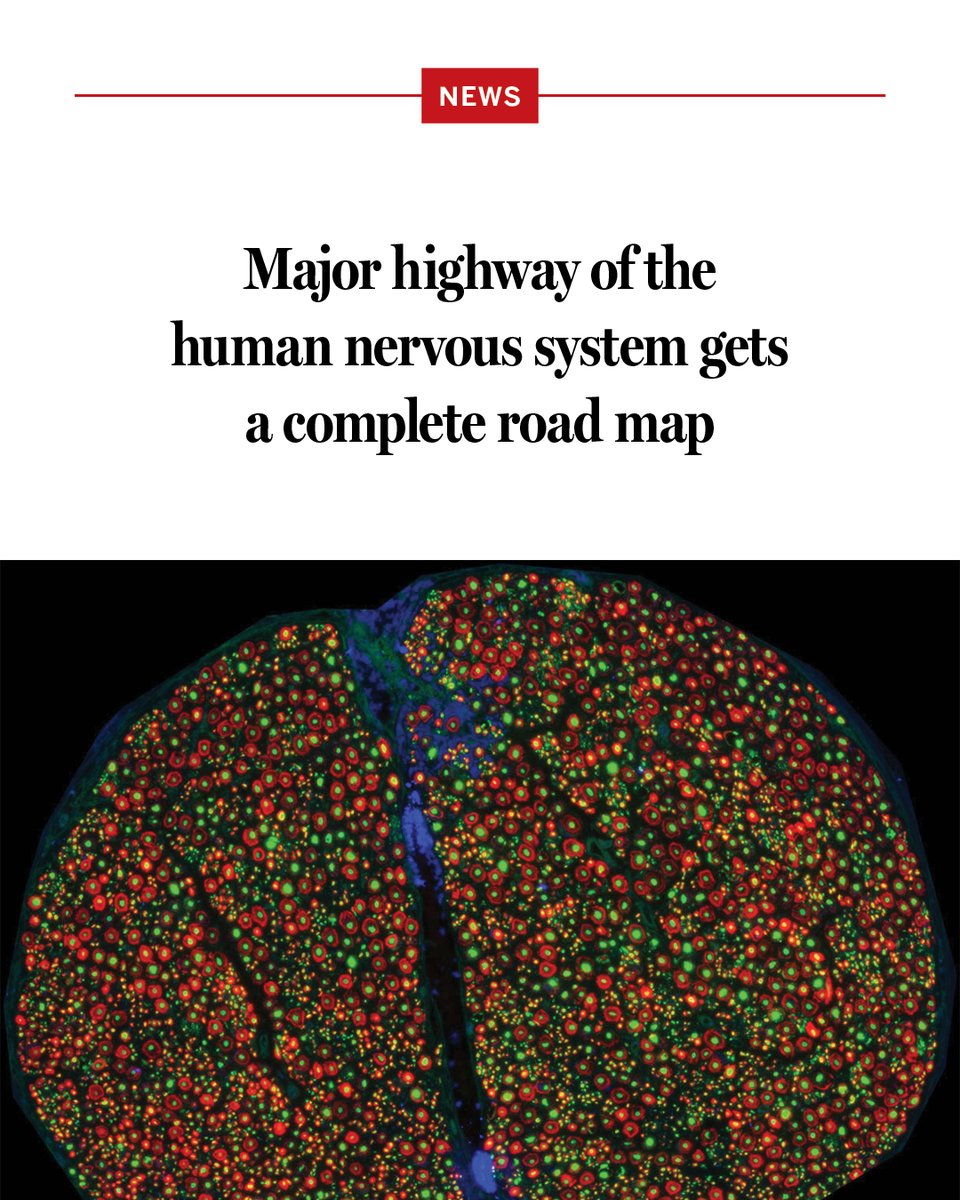
Scientists have created the first comprehensive map of the human vagus nerve, tracing thousands of individual nerve fibers stretching from the lower brain stem to all major organs.
The map might help scientists and doctors more precisely stimulate the nerve as a potential treatment for conditions such as epilepsy, stroke, and inflammatory diseases.
Learn more: https://t.co/KsjHgaVLK6
Today is the official deadline for LBF applications for the 8th cohort, kicking off in North Carolina!
We'll still review applications after the deadline, but cannot guarantee you can be accepted if we're over capacity.
Apply here: https://t.co/KhtpCqwt6n
🔥Hot Off the Press -Open🔓 Access
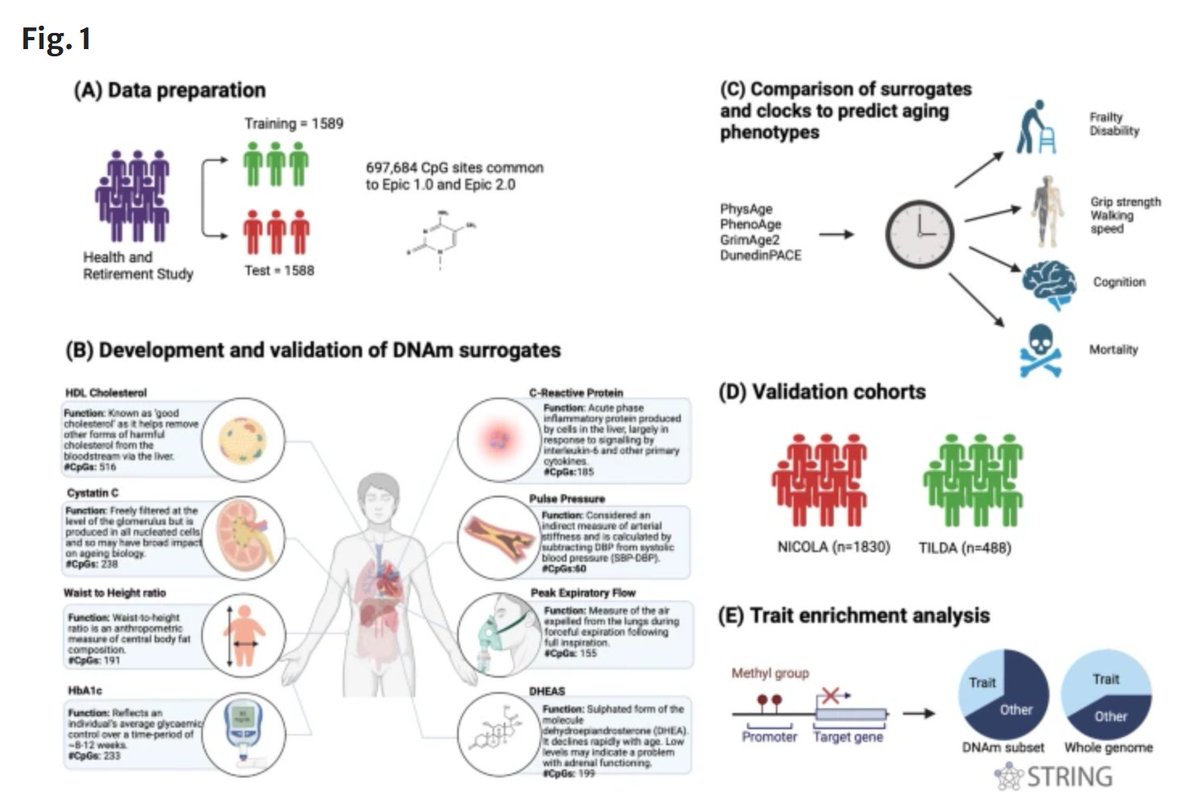
Physiological health Age (PhysAge): a novel multi-system molecular timepiece predicts health and mortality in older adults by Thalida Em Arpawong & Cathal McCrory (@CathalMcCrory1) et al.
https://t.co/4dYbNPXPuo
#epigenetics #acceleratedaging #mortality #BiologicalAging #functionalhealth
@ASoleauro presenting gender differences in healthy life expectancy for women in Catalonia. A fascinating presentation investigating if gender differences have been reduced or increased over time.
Mateo Farina presenting his work on cognitive health inequalities and race in Brazil in #REVES2024. His findings show approximately 8yrs difference between race groups.
🔬🧬🧫 What are #biomarkers, and what do they have to do with #aging? Recent studies supported by @nia_demography @NIHAging shed light on how these measures of what’s happening in our bodies can help us lead longer, healthier lives. https://t.co/KsvYxTwB07
We are excited to kickstart #REVES2024 workshop on Healthy Life Expectancy in Colombia at @UniJaveriana thank you Dr. Alessandro Feraldi and all the participants!
A recent @washingtonpost opinion piece speculated that COVID-19 deaths are over-counted.
Our new @ConversationUS article explains why this piece is flawed.
COVID-19 deaths are not overcounted; most evidence indicates they are undercounted.
Thread 1/6
https://t.co/mEtqd84NXZ
That's a wrap! Our 3-day social epigenomics workshop involving @tilda_tcd@NICOLA_QUB and @hrsisr was a raging success. The PhD students and postdocs attached to this project are frighteningly good. Plans hatched and collaborations cemented. See you all next year!
Kick off meeting of the @CienciaGob research project "Long and healthy lives? Uncovering inequalities in morbidity onset variation-LONGHEALTH" led by Iñaki Permanyer @CEDemografia@icreacommunity and our colleague @ASoleauro.
Great team!
Over 25 people participated in the 2-day training workshop, "Advances in international research on health and life expectancy in the Covid-19 era" hosted by the GACI at Dalhousie University as a pre-conference to REVES #DataAnalytics#DataScientists#AcademicTwitter#researchers
Check out @ewrigleyfield's thoughtful discussion and open-sourced software proposal for the outdated denominator problem. [In my field, I'm often dividing prison data from a state's daily count (today) by group population data that are several years old.]
https://t.co/j5naN4Z22G
Come work with me! We're hiring 2 new tenure track positions in health systems management & policy @publichealthpdx. Happy to answer questions or talk to prospective applicants! https://t.co/CbnqV7lTBL