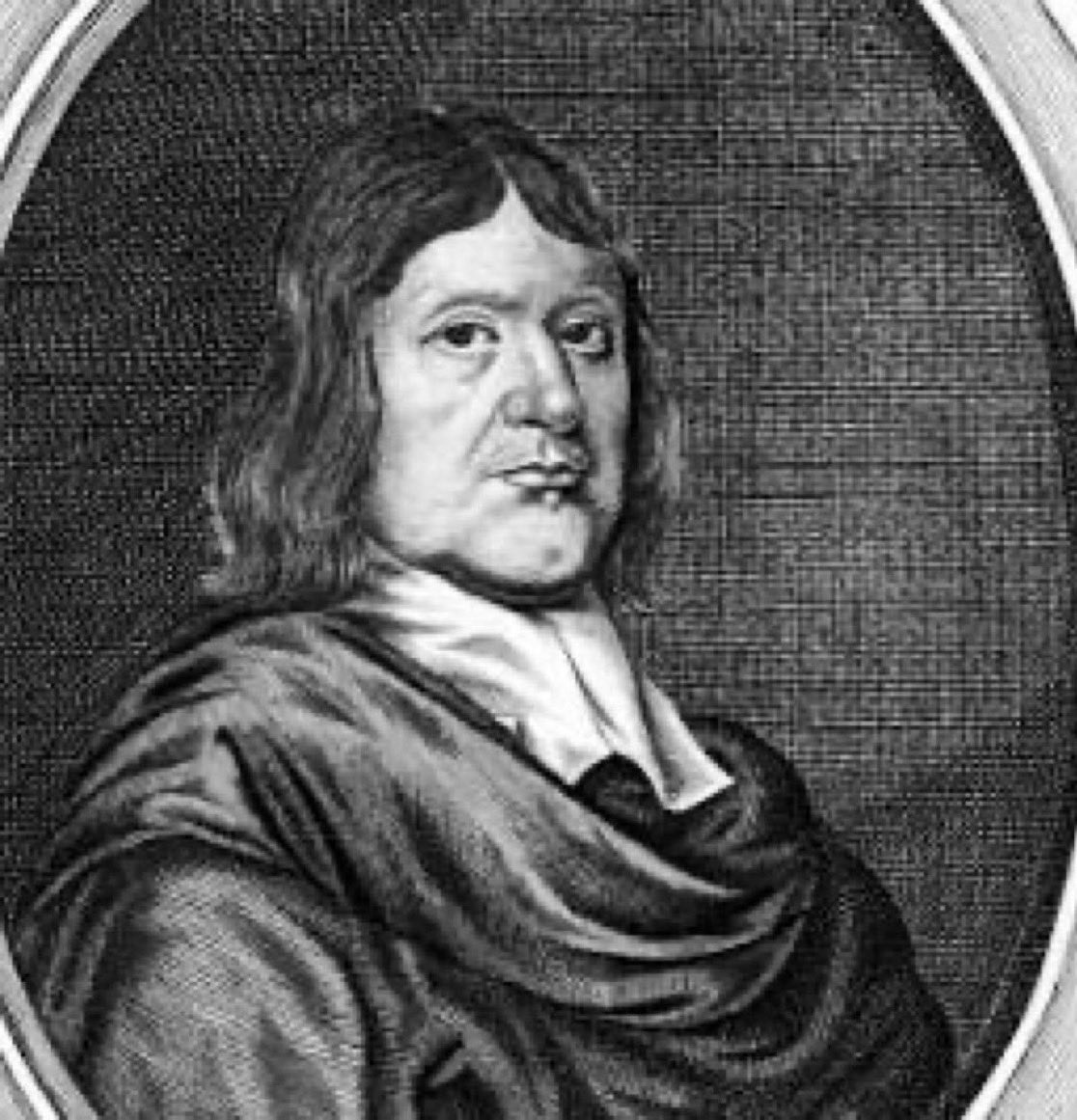
The 21 volumes are divided into six sections:
—Doctrine (Volumes 1-8): These are book-length, polemical treatises that reflect Rutherford's learning, lucidity, and theological wisdom, including some freshly translated from the original Latin by Dr. David Noe and Dr. Joseph Tipton (Feel free to chime in with more details @LatinPerDiem!)
—The Magistrate (Volumes 9-10): Two volumes of classical, Reformed thought on the civil magistrate, untampered-with and thoroughly resourced. Dr. Van Dixhoorn writes that "Lex, Rex bought Rutherford his most powerful enemies; A Free Disputation earned him his most eloquent foes, including the poet John Milton."
—The Church (Volumes 11-14): "How should the Church relate to the state?" "How should the Church govern herself?" Rutherford argues clearly and forcefully against Congregationalism, Episcopalianism, and Erastianism, subjects hotly debated in his day (and ours!),
—The Christian Life (Volume 15): Rutherford's treatise on prayer and sermons in Trial and Triumph of Faith represent his most devotional published works.
—Sermons (Volumes 16-17): The fullest text of Rutherford’s sermons and notes of his sermons ever published, including sermons and sermon notes never before printed. Complete with editorial guidance and introductions.
—Letters (Volumes 18-19): If Rutherford is most revered for his political theology, he is most beloved for his letters. The bedside companion to many Christians over the years, these personal correspondences are filled with the aroma of Christ from cover to cover.
—Shorter Works + Index (Volumes 20-21): Many of these works are ecclesiastical in nature; some are polemical, some pastoral. It is here that Rutherford’s catechism will be found, as well as his Latin poetry. Volume 21 includes a series index to supplement the index in each volume.
In other words, while you may have read classics like Lex Rex, The Loveliness of Christ, or The Letters of Samuel Rutherford, many works by one of the 17th century's foremost Reformed Divines were thought to have been lost to history... until now:
Read Colquhoun:
"The term law in Scripture is to be understood in either an extended In its extended or large acceptation, it is used sometimes to signify the five books of Moses (Luke 24:44); at other times all the books of the Old Testament (John 10:34); sometimes the whole word of God in the scriptures of the Old and the New Testaments (Ps. 19:7); in some places the Old Testament dispensation as distinguished from the New (John 1:17); in others the Old Testament dispensation, as induding prophecies, promises, and types of Messiah (Luke 16:16; Heb. 10:1), and in several the doctrine of the gospel (Isa, 2:3; 42:4).
In its restricted or limited sense, it is employed to express the rule that God has prescribed to His rational creatures in order to direct and oblige them to the right performance of all their duties to Him. Or in other words, it is used to signify the declared will of God, directing and obliging mankind to do that which pleases Him and to abstain from that which displeases Him.
This in the strict and proper sense of the word, is the law of God; and it is divided into the natural law and the positive law.
The natural Law of God, or the law of nature, is that necessary and unchangeable rule of duty which is founded in the infinitely holy and righteous nature of God, to obey which all men, as the reasonable creatures of God, are and cannot but be indispensably bound.
The positive law of God comprises those institutions that depend merely on His sovereign will and which He might never have prescribed, and yet His nature has always continued the same, such as the command not to eat of the forbidden fruit; the command during the period of the Old Testament dispensation to keep holy, as the Sabbath of Jehovah, the seventh day of the week, which under the New Testament is altered to the first day; the ceremonial law given to the Israelites that prescribed the rites of God's worship, together with many of the precepts of their judicial law; and the positive precepts concerning the worship of God under the gospel.
The dictates of God's natural law are delivered with authority because they are just and reasonable in their own nature previous to any divine precept concerning them inasmuch as they are all founded in the infinite holiness, righteousness, and wisdom of His nature (Ps. 111:7-8). On the contrary, the dictates of His positive law become just and reasonable because they are delivered with authority.
The former are 'holy, and just, and good,' and therefore they are commanded; the latter are commanded, and therefore they are 'holy, and just, and good' (Rom. 7:12).
Those commandments of God founded in the holiness and righteousness of His nature are unalterable and perpetually the same, whereas these founded on the sovereignty of His will are in themselves alterable, and He may, by His own express appointment, alter them whenever He pleases. But till He Himself alters them, they continue to be of immutable obligation (Matt. 5:18).
Although the positive precepts of God are capable of being changed by Him, yet our obedience to them is built on a moral foundation. It is a moral duty, a duty of perpetual obligation, to obey in all things the revealed will of God. It was on a moral ground that Christ as Mediator proceeded when He changed the seals of the covenant of grace [my Baptist heart dissents here but I'm tracking...], altered the Sabbath from the seventh to the first day of the week, and instituted new ordinances of worship and government for His church. And it is on the same ground that we are bound to obey the positive commands of Christ respecting those ordinances.
The law of God strictly taken in the aspects that it bears on mankind is to be considered in a threefold point of view: first, as written on the heart of man in his creation; second, as given under the form of a covenant of works to him; and third, as a rule of life in the hand of Christ the Mediator to all true believers."
You won’t want to miss the Puritan Reformed Conference this year! Come hear Scott Aniol, Brooks Buser, and PRTS seminary faculty preach on missions and evangelism from a biblical, Reformed, experiential perspective. Sign up today! https://t.co/00rMRExrBV
I have so enjoyed following @RememberLondon so it was cool to get a shout out from him today. Also Jayson, don’t know if you’re on this app but if you DM me your address, I’ll send you a free copy of Spurgeon: A Life for you to give to someone in your church. @RHB_Books
Q: Of what use, then, are works of regeneration, if they neither form any part of the condition which is in the gratuitous covenant, nor any part of the reason for our justification and salvation?
A: They exist in order that we might thank God for our calling - which calling exists by means of the gratuitous covenant established with us - and for our justification. 1 Cor 5:15; Eph 4:1.
Robert Rollock
as touching the faithful in the old Testament which embraced Christ the mediator of the covenant of grace...being justified in him which was to come, and regenerant by his grace, the promises of eternal life were made under condition of the works of regeneration"
2/2
R. Rollock:
"I grant that the works of regeneration are necessary unto eternal life promised in the Gospel, but not as merits...but as the means and way...they may also be said to be causes, after a sort: for they please God in Christ, and in some respects move him...
1/2
Ussher said you need to read all of Robert Rollock, William Perkins, and Arthur Dent's Pathway. Thanks to @RHB_Books, we have all three in print in some way or other. We just need more Rollock!
“To preach Christ, or faith, or grace, or the benefit of the sacraments so, as that a godly, exact, and diligent walking and working is excluded, is to preach another Christ, another gospel than we have received.”
Anthony Burgess, Sermon 23
“If sin is punished by those in authority, God will not punish the nation for it;
“but if magistrates wink at sin and neglect their God-given duty, the Lord will take the sword of justice into His own hands
“and punish not only the offending malefactor but the neglectful magistrate, and indeed the whole nation that is stained and polluted with their sins.”
— John Downame
"The intercession of our Lord Jesus is a boundless field full of flowers from which we may draw sweet nectar for our souls."
—Joel R. Beeke and Paul M. Smalley, Reformed Systematic Theology, Volume 2: Man and Christ (Wheaton, IL: @Crossway, 2020), 2: 1101.
It would be sad, if, as oft as we break covenant with God he should break covenant with us; but God will not take advantage of every failing, but in 'anger remember mercy.'
This book changed John Bunyan's life.
The Plain Man’s Pathway to Heaven was one of the books the Lord used to convict John Bunyan of sin and lead him to salvation.
In a fascinating twist, this classic became the lesser known ‘cousin’ of Bunyan’s Pilgrim’s Progress, featuring dialogues between four characters who discuss matters of salvation on a spiritual journey.
This work, which became one of the most popular Puritan devotionals in the seventeenth century and beyond, is full of profound insights from Arthur Dent, a great luminary of the first Puritan generation.
God is also to be blessed by us, which blessing adds nothing to His blessedness, but is therefore required of us that we may somewhat enjoy His blessedness."
- Edward Leigh





![MichaelCarlino's tweet photo. Read Colquhoun:
"The term law in Scripture is to be understood in either an extended In its extended or large acceptation, it is used sometimes to signify the five books of Moses (Luke 24:44); at other times all the books of the Old Testament (John 10:34); sometimes the whole word of God in the scriptures of the Old and the New Testaments (Ps. 19:7); in some places the Old Testament dispensation as distinguished from the New (John 1:17); in others the Old Testament dispensation, as induding prophecies, promises, and types of Messiah (Luke 16:16; Heb. 10:1), and in several the doctrine of the gospel (Isa, 2:3; 42:4).
In its restricted or limited sense, it is employed to express the rule that God has prescribed to His rational creatures in order to direct and oblige them to the right performance of all their duties to Him. Or in other words, it is used to signify the declared will of God, directing and obliging mankind to do that which pleases Him and to abstain from that which displeases Him.
This in the strict and proper sense of the word, is the law of God; and it is divided into the natural law and the positive law.
The natural Law of God, or the law of nature, is that necessary and unchangeable rule of duty which is founded in the infinitely holy and righteous nature of God, to obey which all men, as the reasonable creatures of God, are and cannot but be indispensably bound.
The positive law of God comprises those institutions that depend merely on His sovereign will and which He might never have prescribed, and yet His nature has always continued the same, such as the command not to eat of the forbidden fruit; the command during the period of the Old Testament dispensation to keep holy, as the Sabbath of Jehovah, the seventh day of the week, which under the New Testament is altered to the first day; the ceremonial law given to the Israelites that prescribed the rites of God's worship, together with many of the precepts of their judicial law; and the positive precepts concerning the worship of God under the gospel.
The dictates of God's natural law are delivered with authority because they are just and reasonable in their own nature previous to any divine precept concerning them inasmuch as they are all founded in the infinite holiness, righteousness, and wisdom of His nature (Ps. 111:7-8). On the contrary, the dictates of His positive law become just and reasonable because they are delivered with authority.
The former are 'holy, and just, and good,' and therefore they are commanded; the latter are commanded, and therefore they are 'holy, and just, and good' (Rom. 7:12).
Those commandments of God founded in the holiness and righteousness of His nature are unalterable and perpetually the same, whereas these founded on the sovereignty of His will are in themselves alterable, and He may, by His own express appointment, alter them whenever He pleases. But till He Himself alters them, they continue to be of immutable obligation (Matt. 5:18).
Although the positive precepts of God are capable of being changed by Him, yet our obedience to them is built on a moral foundation. It is a moral duty, a duty of perpetual obligation, to obey in all things the revealed will of God. It was on a moral ground that Christ as Mediator proceeded when He changed the seals of the covenant of grace [my Baptist heart dissents here but I'm tracking...], altered the Sabbath from the seventh to the first day of the week, and instituted new ordinances of worship and government for His church. And it is on the same ground that we are bound to obey the positive commands of Christ respecting those ordinances.
The law of God strictly taken in the aspects that it bears on mankind is to be considered in a threefold point of view: first, as written on the heart of man in his creation; second, as given under the form of a covenant of works to him; and third, as a rule of life in the hand of Christ the Mediator to all true believers."](https://pbs.twimg.com/media/HI87rgNXoAAAL-D.jpg)