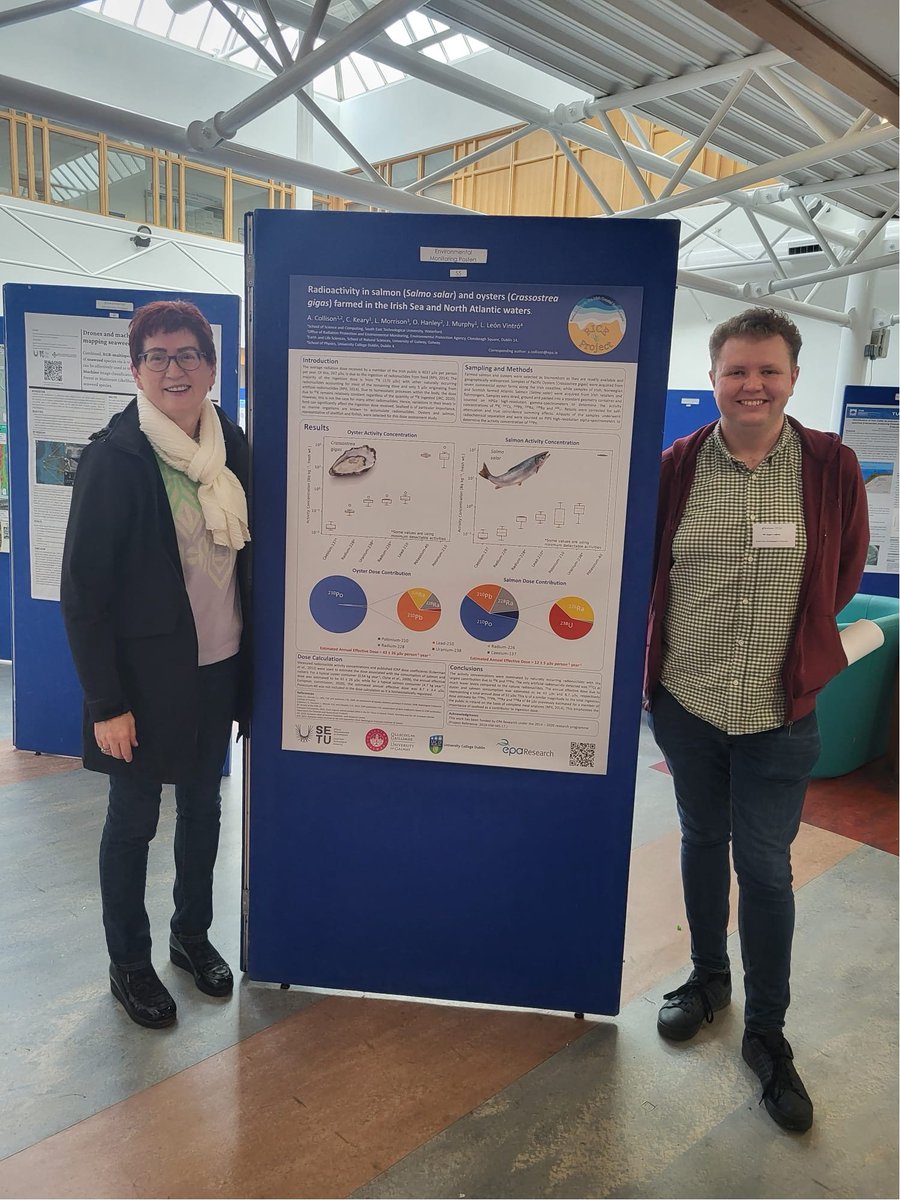
The @EPAResearchNews-funded @RICEProj has recently launched. This 3-year project will investigate artificial and natural radioactivity levels in the Irish coastal environment, with a keen interest in naturally occurring radioactive material #NORM 🇮🇪 ☘️🌊☢️
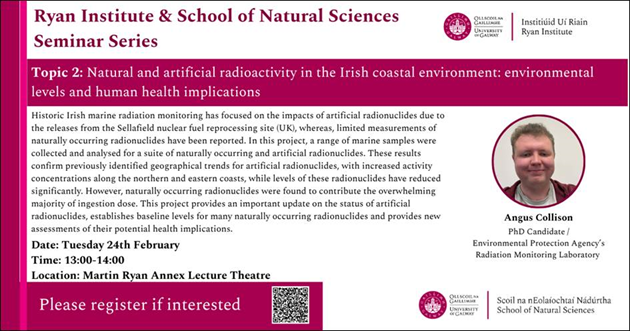
Looking forward to presenting some of the RICE project results at the University of Galway's Ryan Institute & School of Natural Science Spring Seminar Series
Germanium was discovered on this day 140 years ago!
Clemens Winkler came upon this chemical element in 1886 as he was analysing the composition of argyrodite, a rare mineral found at a silver mine in Germany. He named his new discovery after the Latin word ‘Germania’, the namesake of Germany. Fifteen years before, Dmitri Mendeleev had predicted its existence based on the gap between silicon and tin, which he noted in his newly created Periodic Table of Elements.
Being highly sensitive to ionizing radiation like gamma rays and X-rays, germanium plays an important role here at the IAEA. One of the tools our safeguards inspectors use to verify enrichment levels of uranium is a detector with germanium crystals, which, when cooled to -140 degrees Celsius, can detect gamma radiation released from uranium. This is one part of how the IAEA works to assure the peaceful uses of nuclear material.
Today is Dmitri Mendeleev’s birthday! He is best known for creating one of the most iconic emblems in all of modern science: the periodic table of the elements.
Born in 1834 in Siberia, Russia, Dmitri Mendeleev overcame a challenging childhood to become both a teacher and an academic chemist in St. Petersburg, publishing 400 books and articles throughout his life.
In 1860, he was invited to Karlsruhe, Germany for the first-ever international chemistry conference, which highlighted the need to standardize chemistry and had a great influence on Mendeleev’s work. Determined to find a better way to classify elements, he formulated the periodic law, which states that many properties of elements tend to recur in a systematic manner with increasing atomic number. Although not immediately accepted, his work gained international attention when elements he predicted were discovered. His diagram, known as the periodic table of elements, is widely used today and is a cornerstone of modern chemistry.
The table has grown over time, but Mendeleev’s periodic law has held true.
@SETUIreland@SETUPhysics@SETU_Research@RyanInstitute@UCD_physics@EPAResearchNews Highlights:
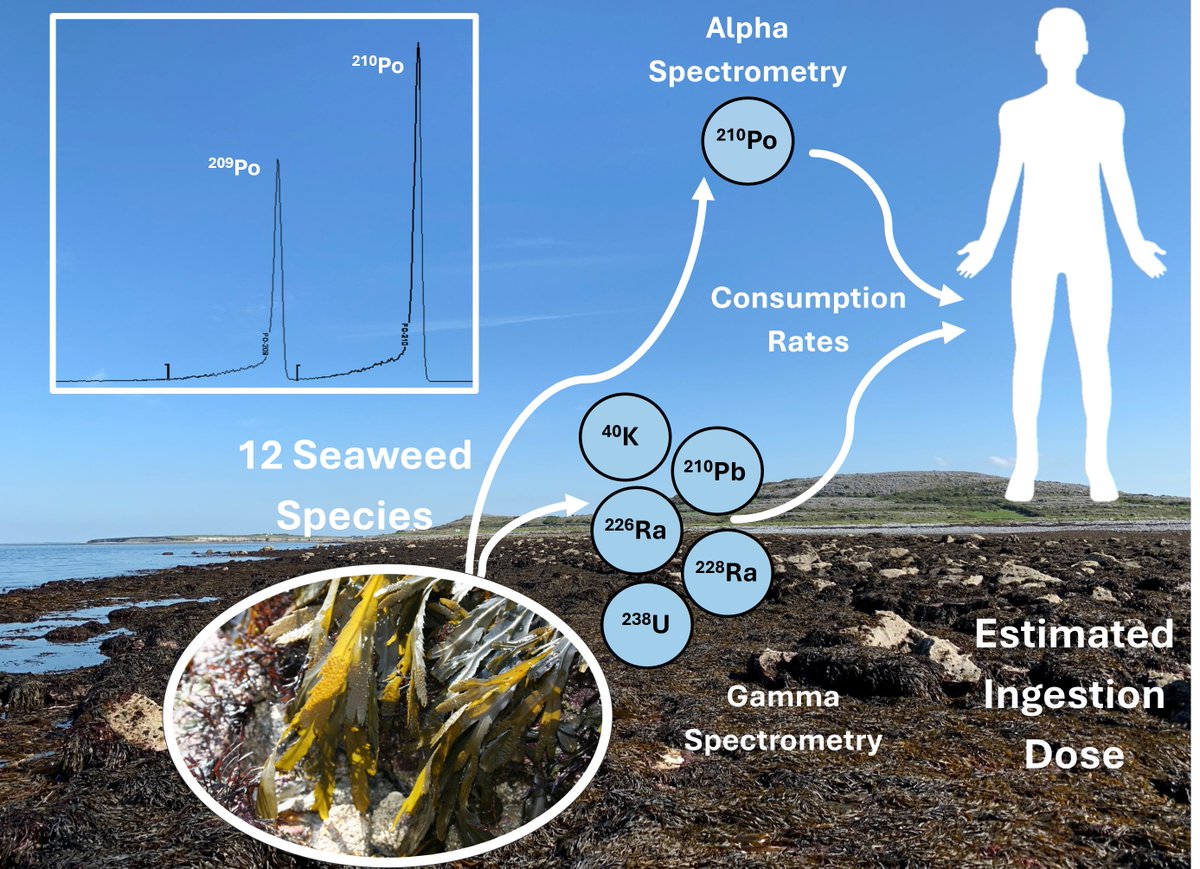
- Activity concentrations and concentration factors for Po-210 reported in 12 seaweeds with 6 species previously unreported
- Human ingestion dose estimate performed based on seaweed consumption
- No significant radiological risk from consumption of edible seaweeds
Our first paper, "Dosimetric implications of human ingestion of the natural radionuclide polonium-210 from commercially important and edible seaweeds", has just been published on results from 12 seaweed species and found no risk from seaweed consumption.
https://t.co/MXGBi2jp6Z
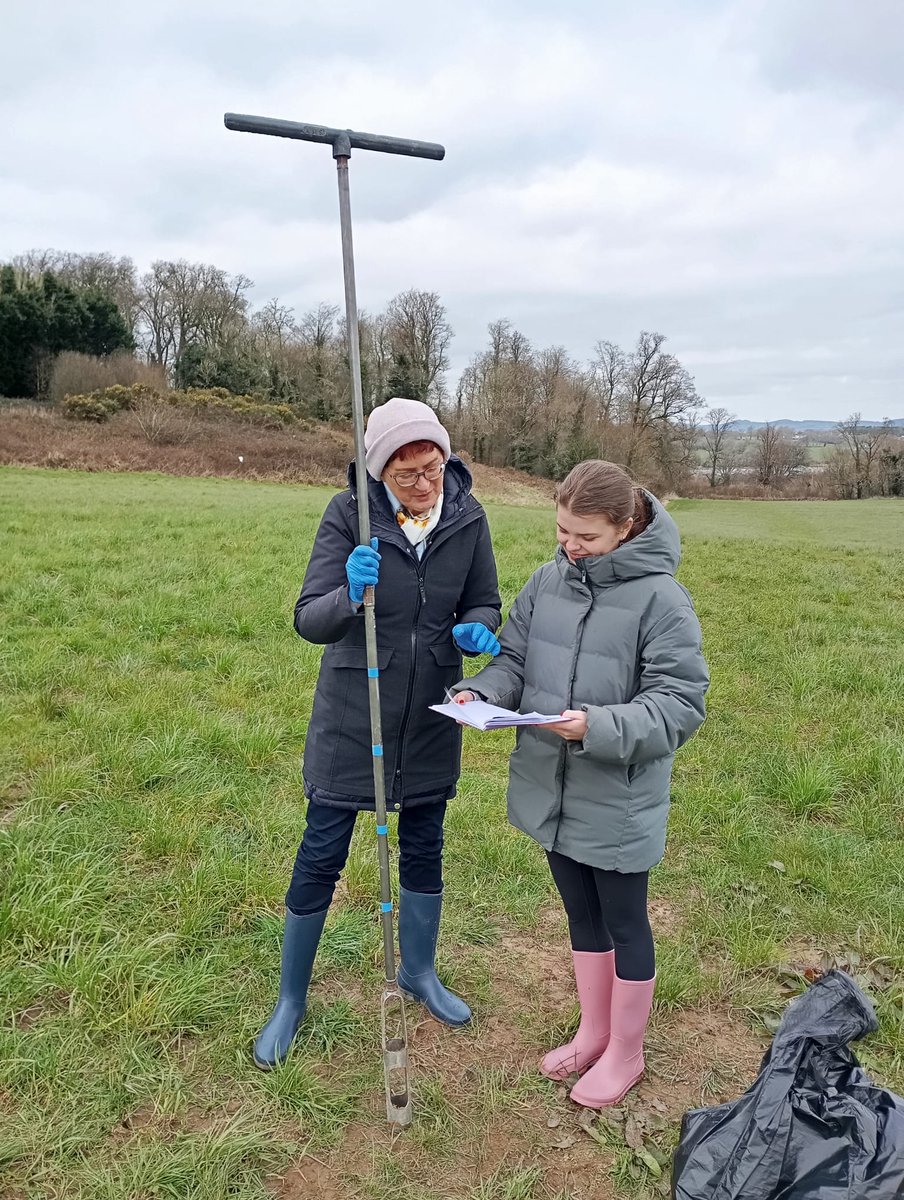
Some very successful soil sampling was undertaken last week for a fourth year physics project @SETUIreland. Many thanks to Sara Vero for the loan of the soil auguer which allowed us to take soil cores down to 1m. Results will be very useful for our EPA-funded GRaDE project.
Very proud to have won the European Radioecology Alliance's first place poster award at the ICRER Conference in Marseille, presenting results of radionuclide concentrations in various seaweeds collected from the Irish coastline
Happy birthday, Lise Meitner, the pioneering woman behind nuclear #fission! Meitner was a prolific, award-winning physicist, but being a woman born on this day in 1878, it meant some of her biggest discoveries were credited to male scientists.
(1/4) More 👇
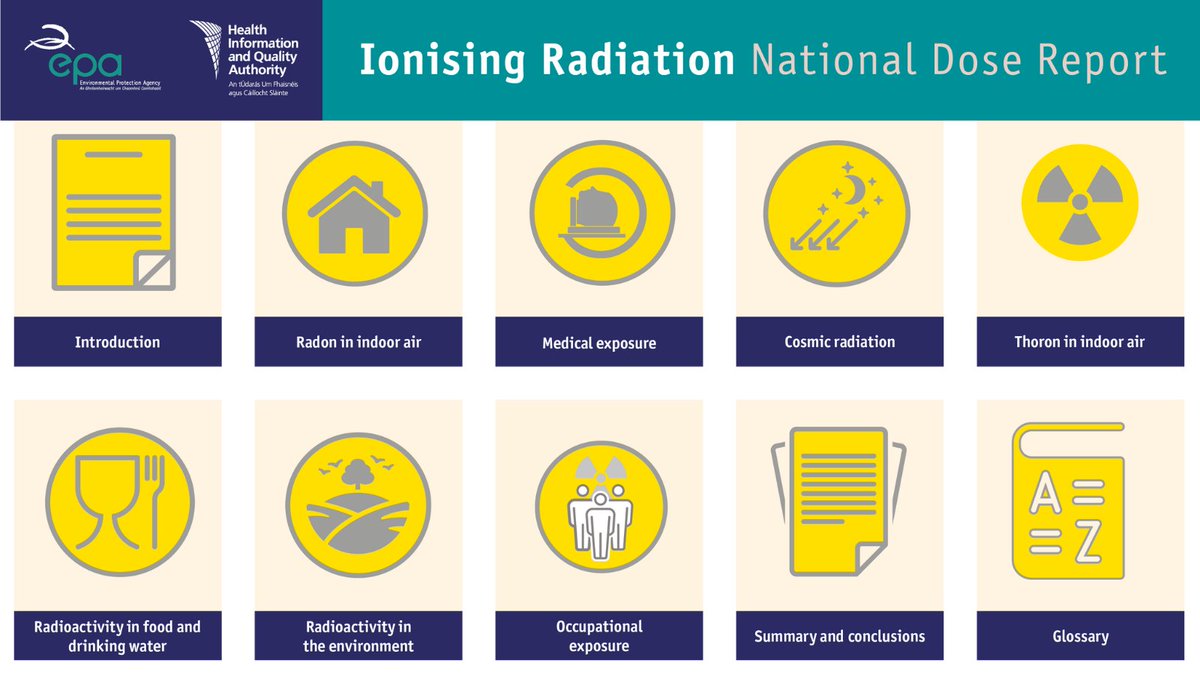
How much radiation are you exposed to? The EPA and @HIQA published a new assessment of the average radiation doses received by the Irish population. 60% comes from radon – get your home tested. Watch our explainer on the report https://t.co/t3C8MiPYpU
We reviewed medical exposure to patients, finding that the average amount of radiation from medical exposure has decreased. This is in part due to increased access to new and improved medical imaging.
Our new report with @EPAIreland on the average radiation exposure received by the Irish population found that average exposure amount remains similar to 10 years ago.
Radon is still the main source of radiation exposure for the public.
Read the report: https://t.co/pT4r1ffCEz
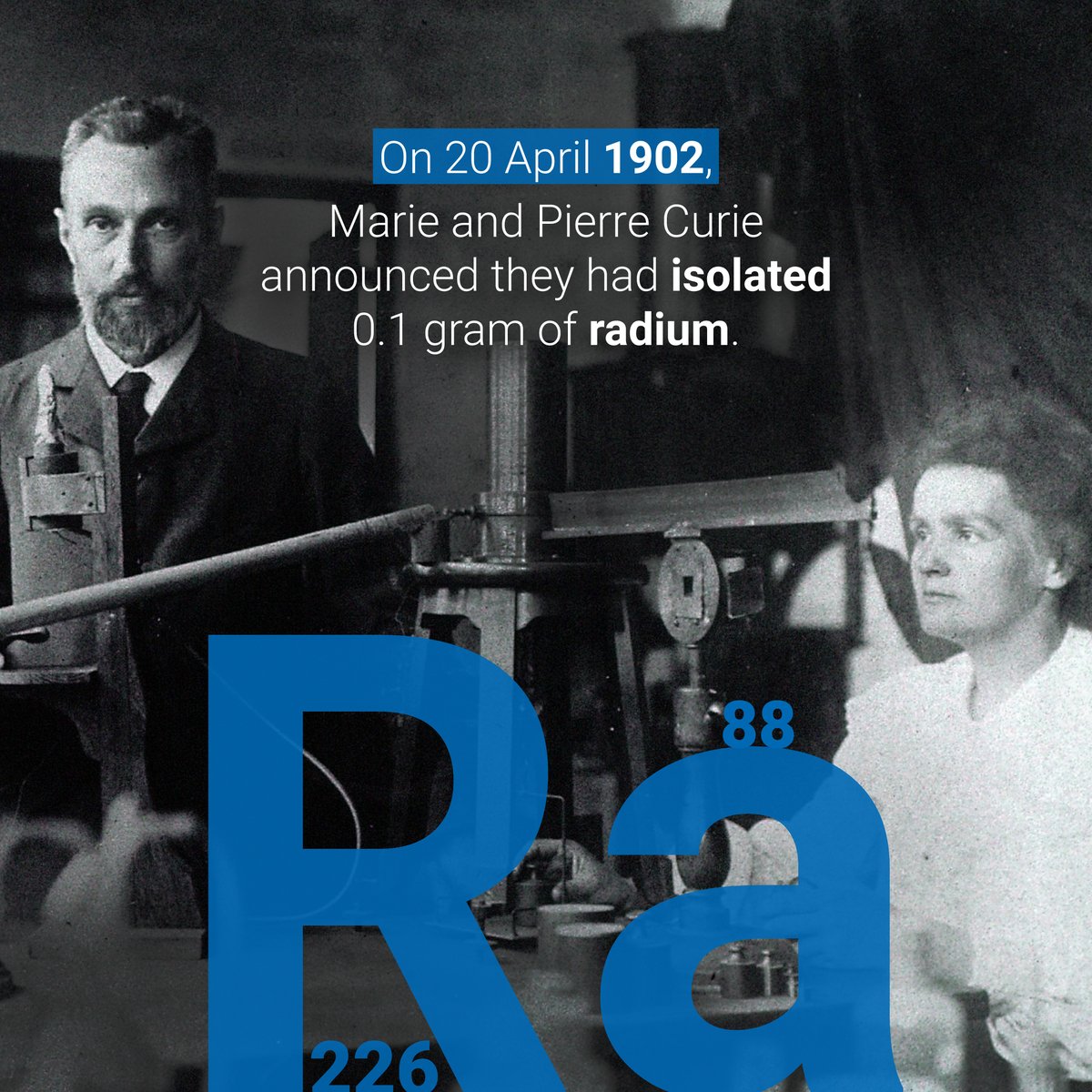
#OnThisDay in 1902, Marie Skłodowska-Curie & Pierre Curie announced they had isolated a small quantity of #radium — the first ever sample of this radioactive element naturally found in #uranium and in #thorium.
A thread 🧵