@JKyalo37828 Nkrumah saw the future perfectly in 1963. A fragmented continent is a vulnerable continent. Our wealth, our resources, and our borders will only be truly secure when we stand as one unshakeable block. True salvation is sovereign unity.
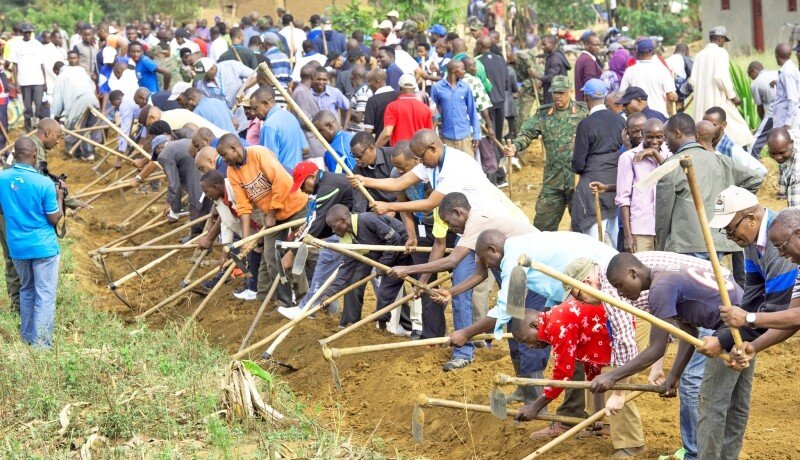
Today is the 3rd edition of the National Cleaning Day in Uganda.Long before modern bylaws, African societies relied on communal cleanup days like Umuganda — the pillar wood for a communal house ;the roots lie in the pre-colonial Kingdom of Rwanda. Formalized in 1974 and revived in 1998 for national unity, it proves communal care is an ancient sacred duty.We are Riddim Africa with the unhurried Truth!
Burkina Faso 🇧🇫 is officially rewriting its history, geography, and citizenship textbooks to replace colonial-era terms like "explorers" and "conquerors" with "invaders" and "spies".
Africa’s textile traditions tell stories that stretch across centuries, carrying the history of communities through color, weaving, dyeing, symbols and patterns. Long before mass-produced clothing became common, textiles across the continent could communicate identity, status, occupation, spirituality and belonging. There is no single “African fabric.” Different regions developed their own materials and techniques, shaped by local resources, trade networks and generations of skilled artisans.
In West Africa, Ghanaian kente became famous for its brightly colored woven strips and patterns associated with Akan and Ewe traditions, while Yoruba artisans in Nigeria developed Aso Oke, another handwoven textile traditionally used for important clothing and ceremonies. Mali is closely associated with Bogolanfini, commonly called mudcloth, in which cotton fabric is decorated through a labor-intensive dyeing process involving fermented mud and plant materials. In Central Africa, Kuba textiles from the present-day Democratic Republic of Congo are especially known for raffia, geometric designs and complex surface decoration.
North Africa has equally deep textile traditions. Amazigh communities, including Kabyle and Tuareg peoples, developed distinctive weaving, embroidery and clothing traditions influenced by geography, trade and cultural identity. Egypt, meanwhile, has been associated with linen and later high-quality cotton production, particularly the long-staple cotton that became internationally famous during the 19th century.
Across eastern and southern Africa, textiles such as kanga, kikoi, kitenge, shweshwe and leteisi became important parts of everyday and ceremonial dress. Kanga is especially fascinating because the cloth can literally carry a message, with Swahili sayings printed onto the fabric communicating everything from affection and wisdom to humor and social commentary. Shweshwe, now strongly associated with southern African fashion, also shows how textile histories can cross borders and evolve through trade, colonial contact and local adaptation.
Ever notice how commercial radio plays the exact same ten songs on a loop all day long?We are breaking that cycle. No repetitive playlist loops. No loud shouting over beats. Just pure, uncompressed African sounds and real history. The transmission is coming.
Which artist or legendary track does local radio completely ignore? #RiddimRadio #ComingSoon #Kampala @Kisfra1@McWright256
African history is built on hard facts, not fairy tales. From the great universities of ancient Timbuktu to the powerful beats of Congolese Rumba, our past is real and proven. No clickbait or fake stories here. Just real truth.We are Riddim Africa! https://t.co/gwrA4zcAax
@AfricanArchives@African_stat
#AfricanHistory #RiddimRadio #SourcedOrSilent
Airplay without a fair payment system is charity, not a partnership. Our digital marketplace fixes this by sending listener payments directly to local artists live from the studio.See how we change the narrative: We are Riddim Africa! https://t.co/AFy9tRfGMq
#RiddimAfrica #TheArtistEats #Riddimradio
Sourced or Silent." If a historical claim or musical genealogy track cannot be verified through primary archives or certified oral custodians, it will never cross our airwaves. We deal in unhurried truth not internet gossip. #SourcedOrSilent#RiddimAfrica#RiddimRadio #Africanhistory
We completely reject the chaotic noise of commercial pop radio. The studio microphone is a sacred space. We deliver peer-reviewed clarity and sound like a continent, not a nightclub.We are Riddim Africa!
https://t.co/H4NUwDUXqt
#RiddimRadio#Kampala#Uganda
Africa is not a country . Africa is a library and most of it has never been read aloud. For a century, our history, music, and philosophy were interrupted by voices standing outside the continent. Riddim radio exists to read the library from the inside, in our own voice, with footnotes we are not ashamed of. The library is opening in Kampala; https://t.co/AFy9tRfGMq
#Riddimradio
#PanAfrica
#Kampala
#Rootsyard
Some of it is African artists’ money. A lot of it. The music travelled the world. The royalties never found their way home🧐Why not? That’s what this week is about.
Let’s Start with a number. There is an estimated $2.5 BILLION sitting in what the industry calls “black box” funds right now……..That is money earned by music. Collected. Just never paid to the artists who made it. Where does it go?
An African song can play in a taxi in Nairobi, a club in London, a Netflix series, and 10 million phones — and the artist who made it can still be broke. How is that possible??
Riddim Africa is coming. A place where African artists don't just get streamed — they get paid. Music. Merch. Marketplace. Instant Mobile Money payouts Built in Kampala. For the culture. Launching September 🇺🇬 https://t.co/fmRKhPlC24
#RiddimAfrica#AfricanMusic