If you want to learn Vibe Coding fast (and for free), do this:
→ Dive into Next.js docs, cover FE (pages, components), BE (API routes), DB (Prisma/Supabase), and try 2-3 real code examples from each section
→ Build 3 mini-projects: a weather dashboard, a notes app, and a simple chat interface—ship each one to GitHub
→ Clone a real app (simplified): try Twitter, Notion, or Linktree—focus on auth, feed, and profile features
→ Add AI-powered features: integrate GPT-4 API for smart search, or build a chatbot into your cloned project
→ Polish with Tailwind, add mobile responsiveness, deploy on Vercel, and share your project on X + LinkedIn
Do this 2-4 hours/day for 5-6 weeks
Document your journey—post updates every week, ask for feedback, and connect with other devs
By week 6, you’ll have 3+ projects, a real-world clone, and AI features in your portfolio
You’ll stand out—most beginners never ship or share, but you’ll have proof of work and momentum
System prompts are getting outdated!
Here's a counterintuitive lesson from building real-world Agents:
Writing giant system prompts doesn't improve an Agent's performance; it often makes it worse.
For example, you add a rule about refund policies. Then one about tone. Then another about when to escalate. Before long, you have a 2,000-word instruction manual.
But here’s what we’ve learned: LLMs are extremely poor at handling this.
Recent research also confirms what many of us experience. There’s a “Curse of Instructions.” The more rules you add to a prompt, the worse the model performs at following any single one.
Here’s a better approach: contextually conditional guidelines.
Instead of one giant prompt, break your instructions into modular pieces that only load into the LLM when relevant.
```
agent.create_guideline(
condition="Customer asks about refunds",
action="Check order status first to see if eligible",
tools=[check_order_status],
)
```
Each guideline has two parts:
- Condition: When does it get loaded?
- Action: What should the agent do?
The magic happens behind the scenes. When a query arrives, the system evaluates which guidelines are relevant to the current conversation state.
Only those guidelines get loaded into the model’s context.
This keeps the LLM’s cognitive load minimal because instead of juggling 50 rules, it focuses on just 3-4 that actually matter at that point.
This results in dramatically better instruction-following.
This approach is called Alignment Modeling. Structuring guidance contextually so agents stay focused, consistent, and compliant.
Instead of waiting for an allegedly smaller model, what matters is having an architecture that respects how LLMs fundamentally work.
This approach is actually implemented in Parlant - a recently trending open-source framework (13k+ stars). You can see the full implementation and try it yourself.
But the core insight applies regardless of what tools you use:
Be more methodical about context engineering and actually explaining what you expect the behavior to be in special cases you care about.
Then agents can become truly focused and useful.
I’ve shared the repo link in the replies.
So many ideas you can try
This one I saw Google themselves post, very cool:
"Make Photorealistic Image Daytime and Isometric (Building Only)"
Turn any photo into isometric 3d model image
It's more accurate than you think, it's AI so never PERFECT but very close
So many crazy applications that wouldn't work just a few days ago but now do work with Nano Banana
Upload any flat lay "get the look" type pic
Prompt: "show woman wearing the outfit"
It outputs highly accurate pics with a woman wearing the exact outfit
It's really a wow moment again like first time I saw Stable Diffusion in 2022, or like Google Street View in 2007
It's just really really smart!
A simple technique makes RAG up to 40x faster & 32x memory efficient!
- Perplexity uses it in its search index
- Google uses it in Vertex RAG engine
- Azure uses it in its search pipeline
Let's understand how to use it in a RAG system (with code):
What's interesting is the amount of models that need to work together (and not fail) to make this work:
- A Dreambooth-style trainer to teach the AI foundational model your person
- Then an upscaler, that doesn't reduce resemblance
- Then a video model to turn the image into a video
- Then a voice text-to-speech model to create a voice audio file
- Then a lipsync model that puts the video and voice together
- Then last part that adds captions (not AI but still)
It's a massive pipeline and not SO easy to make it work in an automated way without failing somewhere
So the moat (if there is any?) is still really just duct taping AI models together to solve a problem for people
Can people do this themselves? Yes, they could just go to the AI platforms and do each step themselves but I sell the orchestration of all that in a friendly and fun interface that does it all for you!
How to launch #1 on Product Hunt by Mailmodo
🔗 https://t.co/pKYcJTHMaB
Understanding the Product Hunt Algorithm 🤖 by Patricia Keirn
🔗 https://t.co/FXTobRqZjk
115 Top Product Hunt Hunters for your next launch by Launchpedia
🔗 https://t.co/94BLBQwWGK
How to successfully launch on Product Hunt by Lenny's Newsletter
🔗 https://t.co/psYTnZtw5G
How we won Product of the Week on Product Hunt by Tom Dekan
🔗 https://t.co/IjiMsOC6jt
Product Hunt Launch Checklist by Tally
🔗 https://t.co/qzXywBHcBr
just saving you 7 hrs with this viral mobile app idea.
a PCOS tracking app:
- log symptoms
- food advices
there are 717k weekly searches for “what is pcos meaning” and you can go viral with slideshows.
who’s shipping this $10k/mo app?
Raw dogged another project. Using the @levelsio method.
Hetzner VPS $4.99
Claude Code on Server
Termius for SSH
Was able to build the MVP in hours. I am not a technical person and this is the 3rd project built using this stack.
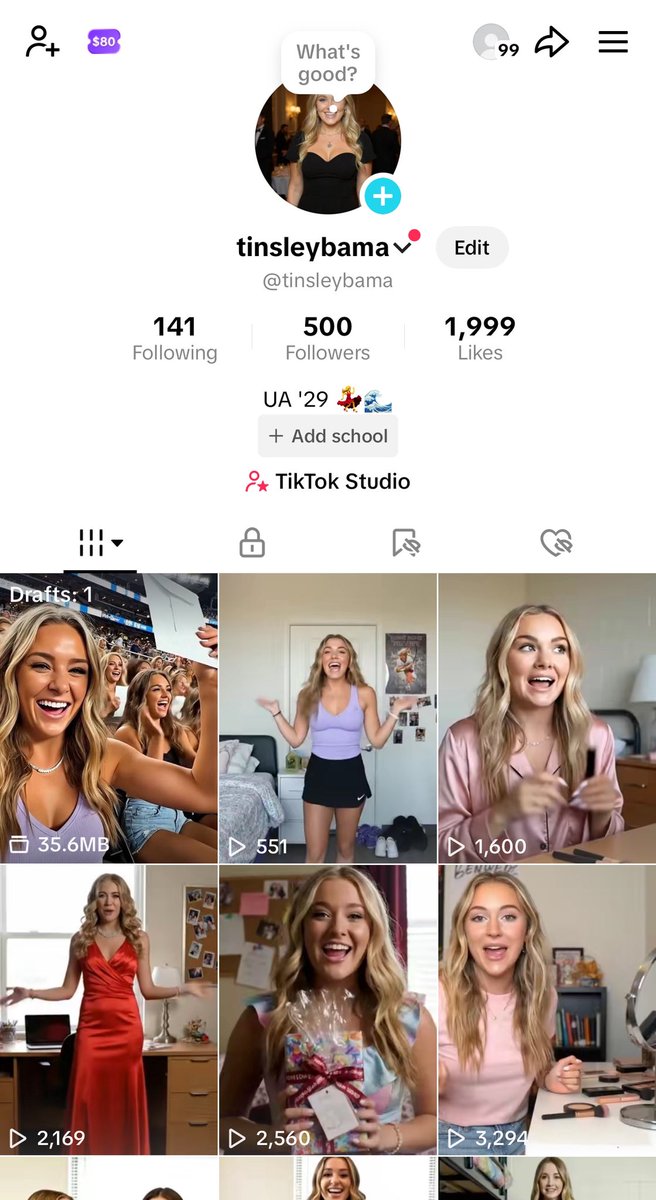
Over the last week, I grew a 100% AI influencer to 500 followers (and a viral video)
…and it took <10 minutes / day, and only three tools!
This may be the future of brands, marketing, and even entertainment.
How I did it + what I learned 👇
@shydev69@askhonestlyai No surprise, bro first stop using this flashy beauty brands... This dermaci, aqualogica all are from mama earth company they don't make anything just sell it without proper research go with proper companies like Cipla, who don't spend a bomb on marketing they invest in r&d. Avoid
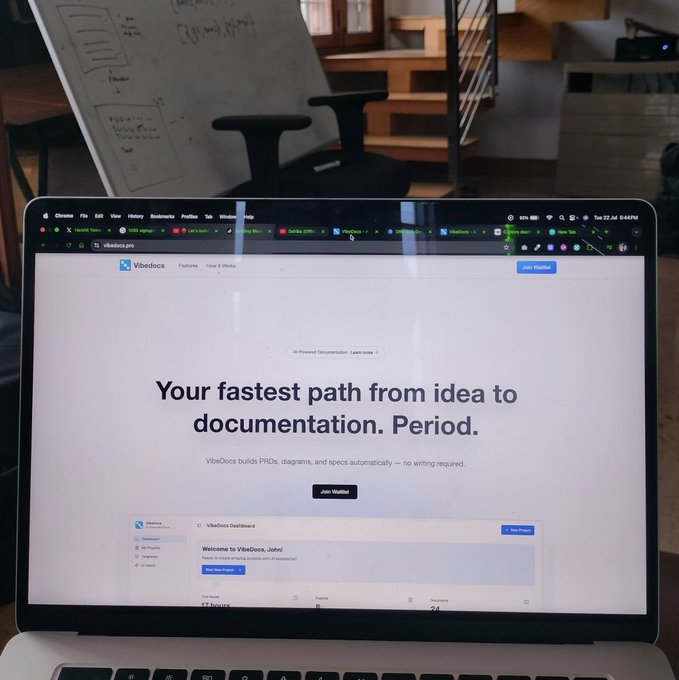
1/ Plan with ChatGPT or Gemini
Before diving into the code, fully grasp the idea.
This phase is about achieving clarity. By its end, you should understand every aspect of the idea: the tech stack, core features, target audience, EVERYTHING.
Use ChatGPT or Gemini to create these docs:
- PRD/ MVP Plan
- UI Development Plan
- Database Design
- Implementation Plan
- Launch Checklist (you can generate this later, but use the same conversation)
Spend time here; it saves you from chaos later.









![akshay_pachaar's tweet photo. System prompts are getting outdated!
Here's a counterintuitive lesson from building real-world Agents:
Writing giant system prompts doesn't improve an Agent's performance; it often makes it worse.
For example, you add a rule about refund policies. Then one about tone. Then another about when to escalate. Before long, you have a 2,000-word instruction manual.
But here’s what we’ve learned: LLMs are extremely poor at handling this.
Recent research also confirms what many of us experience. There’s a “Curse of Instructions.” The more rules you add to a prompt, the worse the model performs at following any single one.
Here’s a better approach: contextually conditional guidelines.
Instead of one giant prompt, break your instructions into modular pieces that only load into the LLM when relevant.
```
agent.create_guideline(
condition="Customer asks about refunds",
action="Check order status first to see if eligible",
tools=[check_order_status],
)
```
Each guideline has two parts:
- Condition: When does it get loaded?
- Action: What should the agent do?
The magic happens behind the scenes. When a query arrives, the system evaluates which guidelines are relevant to the current conversation state.
Only those guidelines get loaded into the model’s context.
This keeps the LLM’s cognitive load minimal because instead of juggling 50 rules, it focuses on just 3-4 that actually matter at that point.
This results in dramatically better instruction-following.
This approach is called Alignment Modeling. Structuring guidance contextually so agents stay focused, consistent, and compliant.
Instead of waiting for an allegedly smaller model, what matters is having an architecture that respects how LLMs fundamentally work.
This approach is actually implemented in Parlant - a recently trending open-source framework (13k+ stars). You can see the full implementation and try it yourself.
But the core insight applies regardless of what tools you use:
Be more methodical about context engineering and actually explaining what you expect the behavior to be in special cases you care about.
Then agents can become truly focused and useful.
I’ve shared the repo link in the replies.](https://pbs.twimg.com/media/G2LYOBOagAAUu2P.jpg)