The world’s best healthcare systems aren’t always the biggest spenders. See which countries ranked highest in 2026—and why the U.S. placed 40th despite spending the most. https://t.co/fjH0aAZ04a via @visualcap
'A workable response cannot rest on national autarky. No European state can reconstruct alone, at sustainable cost, the full spectrum of critical supply chains, satellite infrastructure and undersea resilience capability', writes Jonathan Thébaud in the latest member exclusive #RUSINewsbrief.
https://t.co/MsdI13rVKX
On this day in 1942, 3,700 Free French soldiers were holding a fort made of sand against the Italian Ariete Division and the German Afrika Korps.
They had been told to hold for five days.
They held for sixteen.
The fortress was Bir Hacheim, a crossroads in the Libyan desert with one old Ottoman cistern, no natural defenses, and no way out. The commander was a 43 year old general named Marie-Pierre Koenig, who in June 1940 had refused to lay down his arms when France surrendered and had escaped to England to join Charles de Gaulle.
Half his men were French Foreign Legionnaires. The rest were Pacific islanders from Tahiti and New Caledonia, Senegalese tirailleurs, Syrians, Lebanese, Spanish Republicans who had lost one war and were ready to fight another, and Jewish refugees from across Nazi Europe who had walked, sailed and smuggled themselves out to fight again.
Among them was one woman. Susan Travers, an English ambulance driver, the only female ever officially enrolled in the French Foreign Legion. She was also the general's lover.
For sixteen days they were dive-bombed by Stukas, shelled by 88s, attacked by tanks, choked by sandstorms, and slowly starved of water. The Italians tried first and were thrown back with 32 tanks destroyed in a single morning. Then the Germans came. Rommel himself eventually drove out to the perimeter under a white flag to demand surrender in person.
Koenig refused.
When Hitler heard that Free French troops were holding out at Bir Hacheim, he personally signed an order that any captured were to be shot as terrorists, not treated as prisoners of war. The order was passed down the German chain of command to Rommel.
Rommel read it. Then quietly threw it away. The Free French were soldiers and would be treated as soldiers.
On the night of June 10, Koenig and 2,400 of his men broke out through the German lines in a single column. Susan Travers drove the lead vehicle straight through enemy machine gun fire with the general in the passenger seat. Her car was found the next day with 11 bullet holes in it. She was unharmed.
When the news reached London, de Gaulle wept openly.
The next day he stood in front of a microphone and told the world:
"When at Bir Hacheim a ray of her reborn glory came to caress the bloody brow of her soldiers, the world recognized France."
I've just signed "Establish a public inquiry into foreign interference" - Will you support the campaign too? https://t.co/HQmcZO6kba @OpenBritainHQ@action_storm
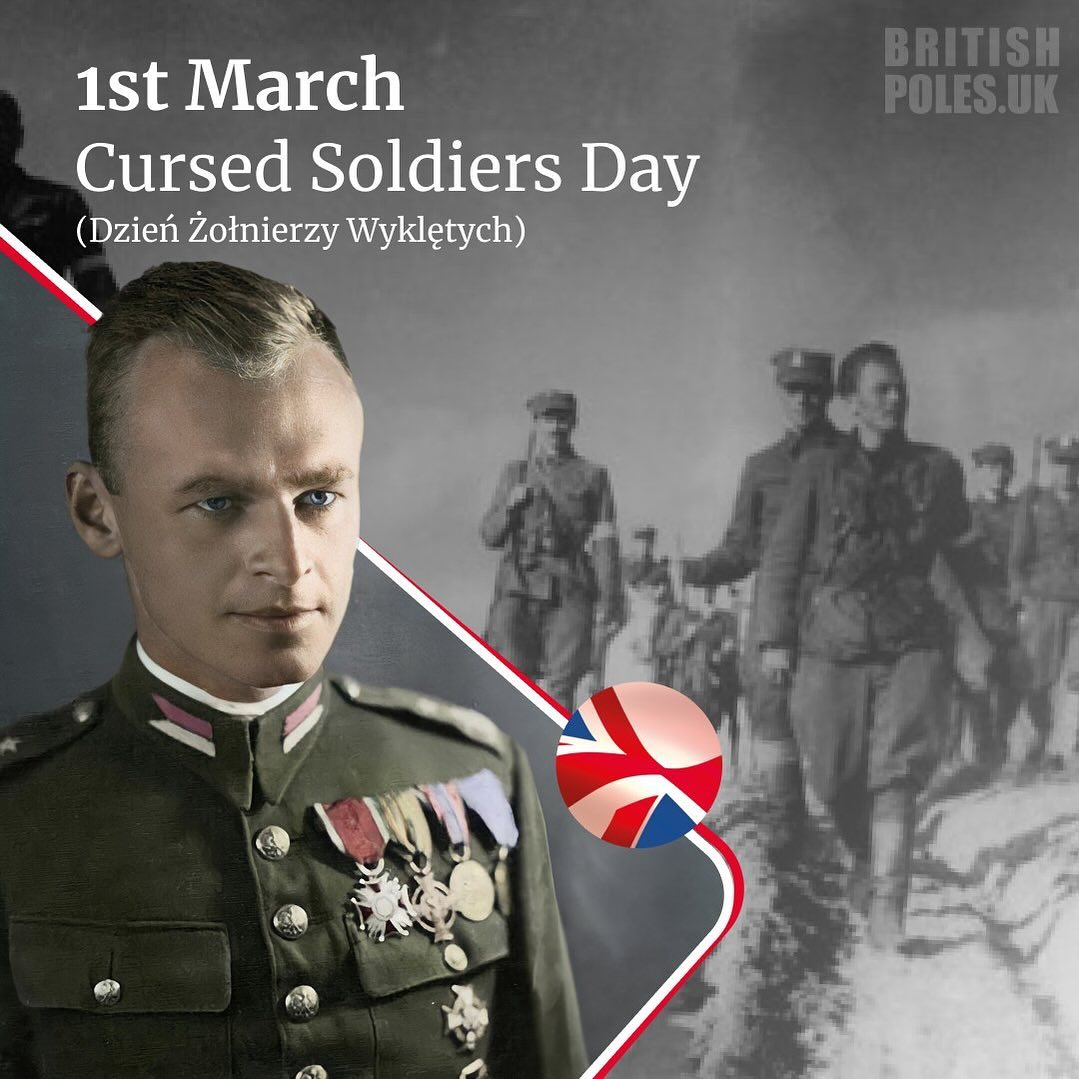
The Soviets didn’t liberate Poland—they enslaved it. Today, we commemorate the National Day of Remembrance of the Cursed Soldiers (Narodowy Dzień Żołnierzy Wyklętych). These anti-communist resistance fighters opposed the Soviet-backed regime that took over Poland after WWII. Refusing to lay down their arms, they fought for a free Poland for nearly 20 years after the war—the last, “Lalek,” was killed in 1963.
One of the most well-known figures was Witold Pilecki, the only man who volunteered to infiltrate the German concentration camp in Auschwitz. He gathered intelligence about the German atrocities committed at the camp and organised the underground resistance movement.