I'm happy to share our latest pre-print on assessing the clinical validity of brain age as a biomarker of aging-related diseases and structural and cognitive decline in the brain!
https://t.co/Yh8ghBkPX3
(1/7)
New data, new findings, new preprint! 🧵
Here are the results from the first psychedelic simultaneous PET-MRI study mapping LSD's receptor binding, blood flow changes, and functional connectivity.
https://t.co/LHo6NSFsAy
I'm happy to share our latest pre-print on assessing the clinical validity of brain age as a biomarker of aging-related diseases and structural and cognitive decline in the brain!
https://t.co/Yh8ghBkPX3
(1/7)
9/ We are piloting a version of the imaging battery suggested above in our clinical trial of rapamycin in early-stage Alzheimer’s disease patients (also our submission to the XPRIZE Healthspan competition). https://t.co/krEahQWjNe
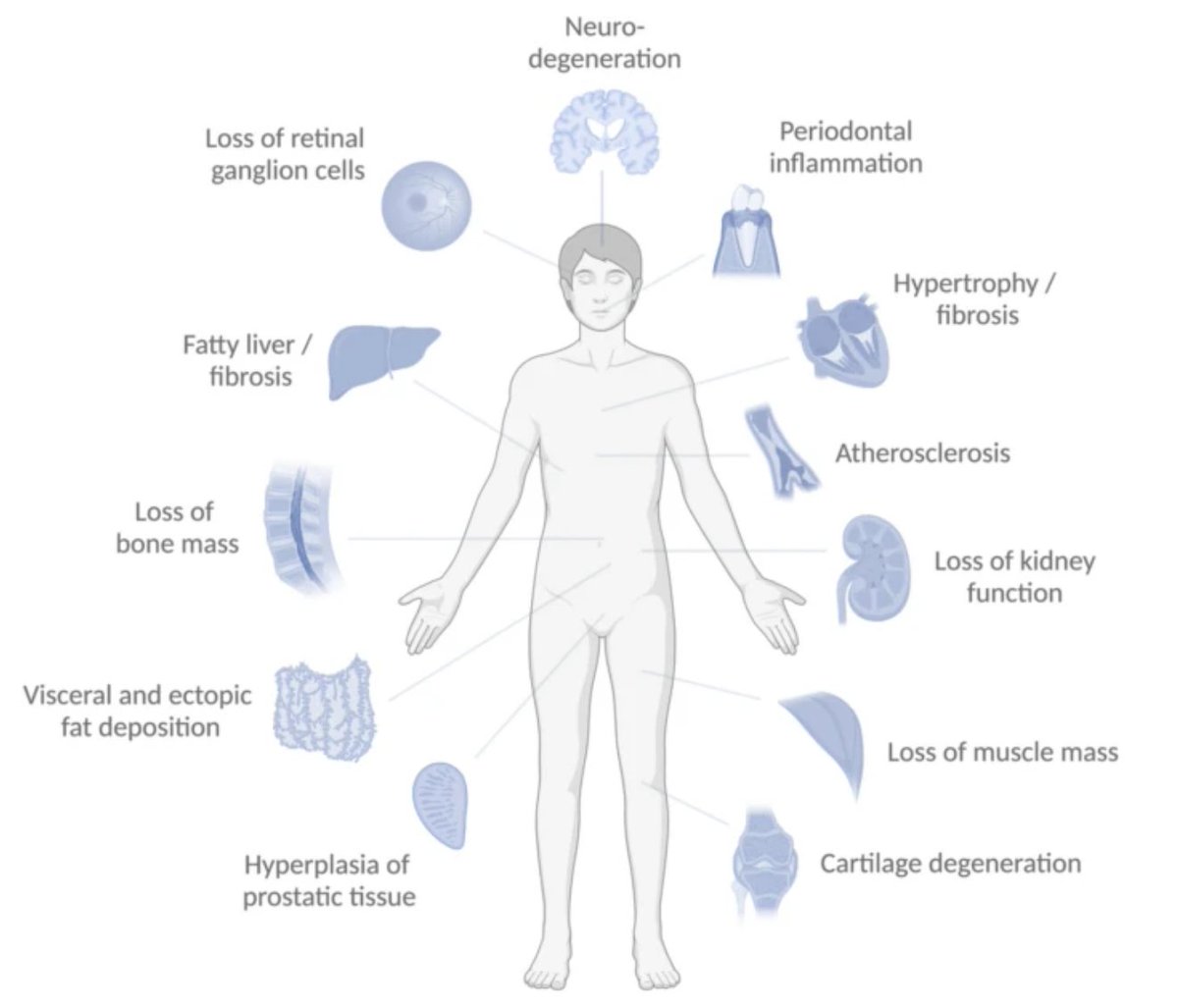
🧵 NEW PAPER: A framework for using medical imaging to evaluate geroprotective interventions in humans. We outline how this could provide mechanistically interpretable outcomes in early phase clinical trials.
https://t.co/F8HWa4cdAU
Effective geroprotective interventions must demonstrate effects across multiple physiological systems simultaneously. Single measurements are insufficient - comprehensive assessment is essential. If there is a general geroprotective effect, we should see it in multiple sites. 3/3
📢New open🔓 access article proposes a battery of medical imaging protocols, including #magneticresonanceimaging, #positronemissiontomography, #computedtomography, and #opticalcoherencetomography, to assess age-related processes preceding #diseaseonset.
In vivo medical imaging for assessing geroprotective interventions in humans by Jonas E. Svensson (@jaralaus), Martin Schain & Pontus Plavén-Sigray.
https://t.co/nbnDW9IKhY
#Biomarkers #geroprotection #drugdevelopment #agerelateddisease #imagin
The authors review aging-related pathologies and well-established ways to measure them. For most diseases, well-validated protocols that are used both clinically and by pharmaceutical companies exist, and the infrastructure is readily available in most modern hospitals. 2/3
@Karl_Lauterbach Nice paper!
Der WHO zufolge:
"At the biological level, aging results from the impact of the accumulation of a wide variety of molecular and cellular damage over time."
https://t.co/EkJUrhcCzg
Also, dort ansetzen und altersbezogene Krankheiten vorbeugen.
This is not to say that neural activity does not change with age. The same group previously showed that there is indeed a change in neural activity, as measured using MEG, which allows for a more direct measurement of neuronal activity. (3/3)
This is an interesting paper investigating changes in the BOLD response with age. According to this paper, "neurovascular and vascular changes are sufficient to explain age effects on the BOLD response in the ROIs and task considered here." (1/3)
https://t.co/8aJGrhWnAk