Here’s a part of social media you won’t see often.
I’m flat on the week thus far…
No chasing. No settling for worse entries.
Just the discipline to respect the 7+ years of work I’ve committed to my craft…
And not to be an asshole because of short term variance.
The setup you take most often, the one where the hard work is already done, is the continuation.
So I wrote the whole thing down. 6 pages.
Continuation theory in the @LathyrusHQ framework 🧵
Do you trade reversals based on SMT, PSP & CISD — but still hesitate at the level?
This flowchart makes the decision mechanical:
→ Two-stage CiC or no trade
→ Strength switch confirms the swing
→ No CiC? Wait for the continuation & filter gaps by IDR
→ Entry TF needs zero CiC — you already did the filtering
One look tells you: trade the reversal, wait for the continuation, or stand down.
Dropping a detailed study booklet on reversals soon. 📘
Enrollment is open for the Ritrade mentorship.
One futures model taught properly, live streams, a structured curriculum, reviewed backtests, and a curated prop firm plan built around your current situation.
→ https://t.co/RtGLzJZInL 🧵
Trading with ADHD | Part 1
If you have ADHD, managing Rejection Sensitive Dysphoria (RSD) is a prerequisite for consistent execution.
RSD biases the interpretation of uncertainty.
A losing trade is no longer processed as statistical variance but is encoded as evidence of personal inadequacy.
The missed opportunities become proof of incompetence and lessons that should be learned from failures, equate to rejection.
Once that cognitive distortion takes hold, decision quality deteriorates.
You begin optimizing for emotional relief rather than expected value.
Position sizing becomes impulsive.
Rules become negotiable.
The objective shifts from executing your edge to repairing your self-image.
If you have ADHD it is difficult to understand that self-worth and trade outcomes occupy separate domains.
The ability to maintain that separation, especially if you’re predisposed to RSD, isn’t just beneficial.
It’s necessary to even have a chance of succeeding.
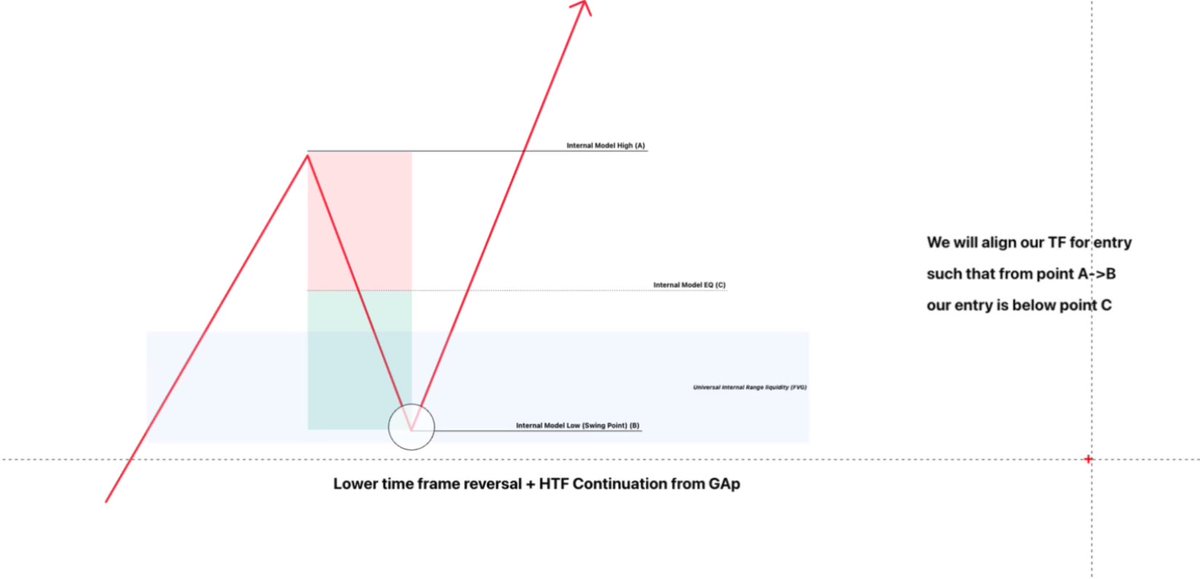
Your TF alignments are bullshit.
A 30 minute gap does not mean I go to the m3 immediately…. Think about how arbitrary that is.
Use logic & ranges.
This is from a lecture I did today.
giving away 5 Lucid 150k DIRECT funded accounts 🤍
no eval, straight to funded. you just trade. biggest lucid giveaway i've done
to enter:
- follow @aw_trades_ + @TradingLucid
- like + repost
- reply "AW"
winners in 6 days!!!
You are losing trades because you are not building price narratives. Read this entire post twice. It will help.
Before you focus on aligning expansion candles through swings & cracks in correlation/SMT, you need to apply universal model logic.
Don't blindly search for a "2 stage" or a "strength switch" or a "Psp" do the following.
There are 5 components of my model; this is the order you must apply them in. Here's the logic as to why.
1. Draw on liquidity | Highs/Lows & Gaps
- This is derived directly from universal models
i. ERL > ERL (Order Paired Ranges) -> i.e. Reversal P.o.P
ii. IRL>ERL (FVG>Swing) -> i.e. Continuation P.o.P
iii. ERL>IRL (Swing>FVG) i.e. Retracement P.o.P
2. Profile [Protraction Profiles]
- How are we delivering to that ERL or IRL in context of a fractal OHLC/OLHC concept (Daily and H4 [session])
i. Asia Reversal
ii. London Reversal (Classic P or Delayed P)
iii. NY reversals
iv. Void Profiles (S&D)
3. Key Level | Also Highs/Lows or Gaps
- Where are we delivering to the draw from?
i. Reversals (External Ranges | highs & lows)
ii. Continuations away from Reversal (Gaps)
At this point we have established a Price Narrative, now we can apply FILTERS to qualify high probability swing formations, and specific price phenomena such as SMT Breaking, Decoupling etc.
Filter 1: Cracks in Correlation | Component 4 of Model
4. CiC | SMT & PsP formations
i. At a "True Reversal" we will see a 2-Stage CiC; this will confirm the swing formation as high probability and filter out relevant swings in the market that form in key levels.
- This can look like some variant of SMT + PSP (Part 1 of my YouTube masterclass on reversals, go study if unsure)
ii. In continuation from a true reversal we will see at least a 1-stage CiC forming within [ideally] a gap to qualify the redistribution swing [think MMXMS here, redistribution away from a fair value gap]
- This can look like some variant of SMT-Fill (Part 2 of my YouTube masterclass, go study if unsure)
Filter 2: Asset Synchronization | P.o.P Arguments
i. Decoupling | 6:00 H4 Candle on Indicies
- In the case of decoupled expansion at 9:30 I have a specific protocol to identify which assets are manipulating and which are in foreseen distribution. I also have a specific protocol using CiC to trade the resync.
- This is referred to as Algo 1 in my teachings.
ii. SMT Breaking | Leading/Lagging Asset Dynamics
- In the case of SMT Breaking I will mechanically use strength switch to qualify/time when assets will expand to previously diverged highs/lows.
- I will use SS-CiC's | Remember CiC is a FILTER on a swing. So if I am trading a lagging asset in continuation, I will demand a SS-CiC either a SS-SMT (SMT fill in gap) or a SS-PSP
- If you are unsure about this watch my YouTube lecture titled: Strength Switching Universal Frameworks)
-- --
Once you have
1. Established your Price Narrative
2. Qualified your swing points using CiC Logic
3. Established which Filters you are applying to the specific trade
you then demand the following:
5. Lower Time Frame Reversal Signature
- A v shape away from the key level + CiC + Filter
- CISD, the creation of LTF gaps
Now you have a complete trade idea. A narrative + swing formation. You now are trading a high probability Universal Model.
3 months ago…
- Three years in
- Still self sabotaging
- Considering giving up
Fast forward to today….
The difference between videos and mentorship, is structure. It’s why I respond to every dm.
No student is a number to me. They are each a future success story.
Yours is next.
When markets are decoupled at 9:30 your protocol can be simplified. In most cases this will keep you onside.
1. Wait for the 6:00AM H4 candle to close, it will likely be a PSP
2. NQ/ES will be expanding in the opposite direction of YM.
- One is in foreseen distribution -> the direction the other pair[s] will reverse and expand to; typically YM
- The other[s] are manipulating -> to a key level opposing the draw, opposite the asset in foreseen distribution; typically ES/NQ
3. The market will resynchronize at the key level that the manipulating assets are trading into, while the asset that distributed will enter a new phase of price
- Consolidation or Retracement.
4. This will result in two things
i. A PSP forming at 6:00AM H4 close
ii. A strength switch in the 10:00 H4 candle
- While the manipulating assets reverse, the asset that already distributed will begin to consolidate/retrace.
5. This will give you an SMT fill sequence from a gap on the asset that was in foreseen distribution, and a SS-SMT on the manipulating assets.
6. If 10:00 does not resync price, typically 10:30 will, this will be a new 90 Minute open.
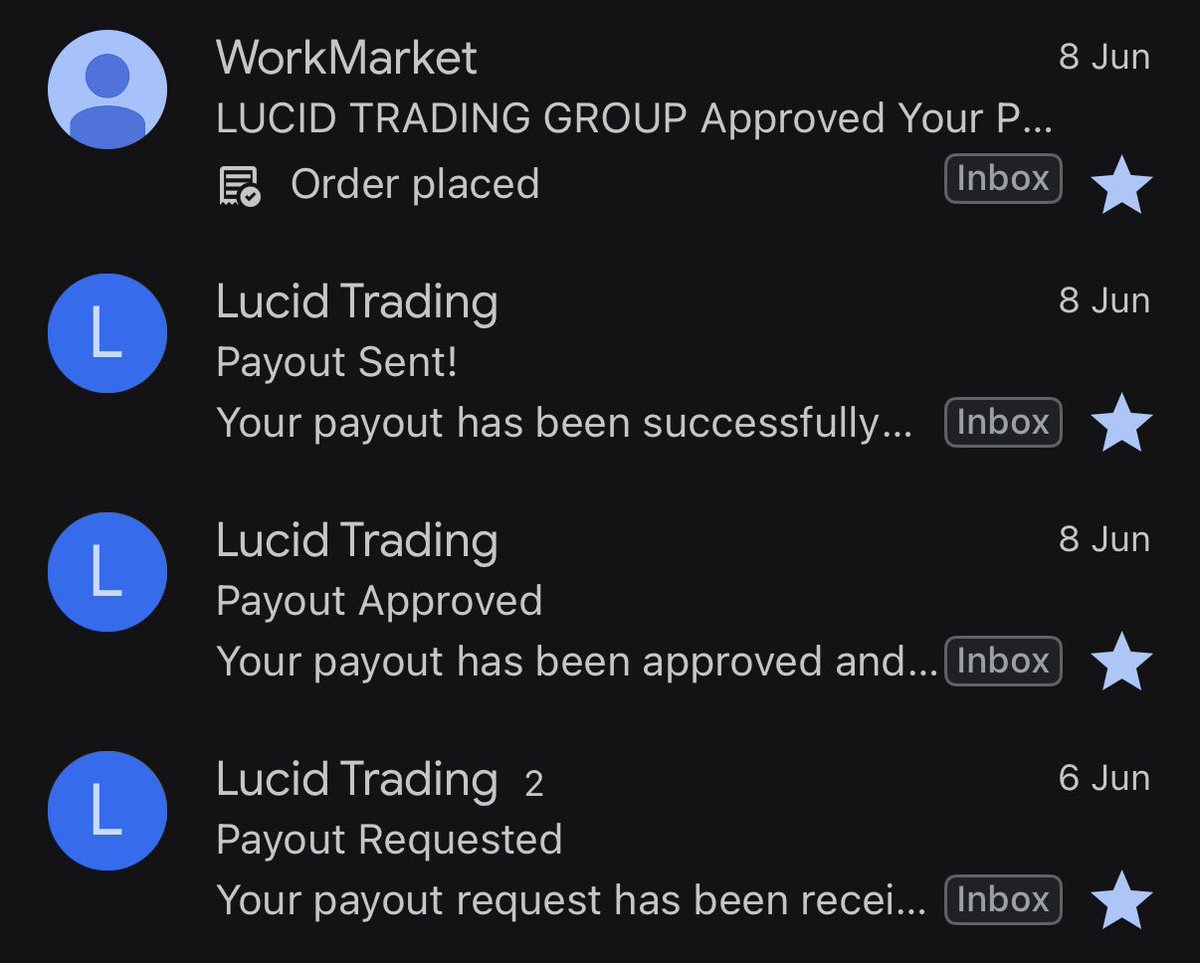
10k months have never been easier.
$91/day on 5 funded accounts = ~$10,000/month.
Let that sink in.
Now raise the target to just $150/day per account:
$150 × 5 accounts × 22 trading days = $16,500/month.
And that's BEFORE a 90% payout split.
Most traders fail because they're obsessed with hitting home runs.
The professionals focus on consistency, compounding, and scaling size over time.
Small daily wins change your life when repeated hundreds of times.
Trading is Biochemistry.
Most traders have never studied the brain states driving their decisions. I can tell you with certainty trading is a performance sport... you must understand how brain activity impacts relative performance & your decisions if you are ever going to succeed.
Before I was a trader/educator I was a Biochemical Engineer.
I can give you the best model in the world, and it won't do anything for you unless you understand these fundamentals.
Here's the Cole's Notes:
Beta (13–30 Hz) = active thinking. Analysis, decision-making, focus. Too much beta creates anxiety, overtrading, FOMO, and revenge trading.
Alpha (8–12 Hz) = calm focus. This is the ideal trading state. You're relaxed but alert, allowing better pattern recognition and emotional regulation.
Theta (4–8 Hz) = learning and habit formation. This is where your trading behaviors become programmed. Every time you respond to a loss with a revenge trade, you're strengthening that neural pathway.
Gamma (30–100 Hz) = peak cognition. The brain rapidly integrates information, creating moments of deep clarity, insight, and effortless execution. Some refer to this as "Flow State"
The problem?
Most traders spend their entire session in high-beta stress while believing they're being productive.
The best traders operate from alpha, build habits in theta, and occasionally access gamma-level performance when preparation meets opportunity.
Tilt isn't a discipline problem.
It's what happens when stress pushes your brain out of optimal states and into survival mode.





![XYJtrades's tweet photo. When markets are decoupled at 9:30 your protocol can be simplified. In most cases this will keep you onside.
1. Wait for the 6:00AM H4 candle to close, it will likely be a PSP
2. NQ/ES will be expanding in the opposite direction of YM.
- One is in foreseen distribution -> the direction the other pair[s] will reverse and expand to; typically YM
- The other[s] are manipulating -> to a key level opposing the draw, opposite the asset in foreseen distribution; typically ES/NQ
3. The market will resynchronize at the key level that the manipulating assets are trading into, while the asset that distributed will enter a new phase of price
- Consolidation or Retracement.
4. This will result in two things
i. A PSP forming at 6:00AM H4 close
ii. A strength switch in the 10:00 H4 candle
- While the manipulating assets reverse, the asset that already distributed will begin to consolidate/retrace.
5. This will give you an SMT fill sequence from a gap on the asset that was in foreseen distribution, and a SS-SMT on the manipulating assets.
6. If 10:00 does not resync price, typically 10:30 will, this will be a new 90 Minute open.](https://pbs.twimg.com/media/HK5wGVybMAAEpV-.jpg)
![XYJtrades's tweet photo. When markets are decoupled at 9:30 your protocol can be simplified. In most cases this will keep you onside.
1. Wait for the 6:00AM H4 candle to close, it will likely be a PSP
2. NQ/ES will be expanding in the opposite direction of YM.
- One is in foreseen distribution -> the direction the other pair[s] will reverse and expand to; typically YM
- The other[s] are manipulating -> to a key level opposing the draw, opposite the asset in foreseen distribution; typically ES/NQ
3. The market will resynchronize at the key level that the manipulating assets are trading into, while the asset that distributed will enter a new phase of price
- Consolidation or Retracement.
4. This will result in two things
i. A PSP forming at 6:00AM H4 close
ii. A strength switch in the 10:00 H4 candle
- While the manipulating assets reverse, the asset that already distributed will begin to consolidate/retrace.
5. This will give you an SMT fill sequence from a gap on the asset that was in foreseen distribution, and a SS-SMT on the manipulating assets.
6. If 10:00 does not resync price, typically 10:30 will, this will be a new 90 Minute open.](https://pbs.twimg.com/media/HK5u8iraUAERPs2.jpg)











![XYJtrades's tweet photo. When markets are decoupled at 9:30 your protocol can be simplified. In most cases this will keep you onside.
1. Wait for the 6:00AM H4 candle to close, it will likely be a PSP
2. NQ/ES will be expanding in the opposite direction of YM.
- One is in foreseen distribution -> the direction the other pair[s] will reverse and expand to; typically YM
- The other[s] are manipulating -> to a key level opposing the draw, opposite the asset in foreseen distribution; typically ES/NQ
3. The market will resynchronize at the key level that the manipulating assets are trading into, while the asset that distributed will enter a new phase of price
- Consolidation or Retracement.
4. This will result in two things
i. A PSP forming at 6:00AM H4 close
ii. A strength switch in the 10:00 H4 candle
- While the manipulating assets reverse, the asset that already distributed will begin to consolidate/retrace.
5. This will give you an SMT fill sequence from a gap on the asset that was in foreseen distribution, and a SS-SMT on the manipulating assets.
6. If 10:00 does not resync price, typically 10:30 will, this will be a new 90 Minute open.](https://pbs.twimg.com/media/HK5wUYeasAA-T5l.jpg)


