Strength and honor are her clothing; She shall rejoice in time to come. She opens her mouth with wisdom, And on her tongue is the law of kindness.
Proverbs 31:25-26 NKJV
https://t.co/kbFuio01Gr
Hey, Renay A Mercer believes you deserve chef-made meals delivered to your door. We agree. You now have X in CookUnity credits. Sign up to claim this gift and build your perfect menu. https://t.co/LbdsbIoxfS
When the Zulu People of South Africa 🇿🇦 defeated the British 🇬🇧
—A THREAD—
In 1879, the British army invaded the independent & previously friendly Zulu kingdom, which had been founded by the formidable Nguni warrior Shaka Zulu in 1818.
Kwame Nkrumah pictured with his mother soon after arriving back in the Gold Coast, 1947.
In 1947, after years of study, political organizing, and activism abroad, Kwame Nkrumah returned to the Gold Coast, now known as Ghana.
Before becoming one of Africa's most influential independence leaders, Nkrumah spent nearly a decade in the United States and later continued his political work in Britain. During those years, he was exposed to Pan-African ideas and movements that shaped his vision for the future of Africa. He believed that African people should govern themselves and that political freedom was essential for economic and social progress.
His return to the Gold Coast marked the beginning of a new chapter. Within a few years, he emerged as the leading voice of the independence movement, mobilizing ordinary workers, farmers, students, and traders in the struggle against colonial rule. In 1957, Ghana became the first sub-Saharan African colony to achieve independence in the modern era, and Nkrumah became the country's first Prime Minister before later serving as its first President.
He has shown you, O man, what is good; And what does the Lord require of you But to do justly, To love mercy, And to walk humbly with your God?
Micah 6:8 NKJV
https://t.co/sx19hlMoxO
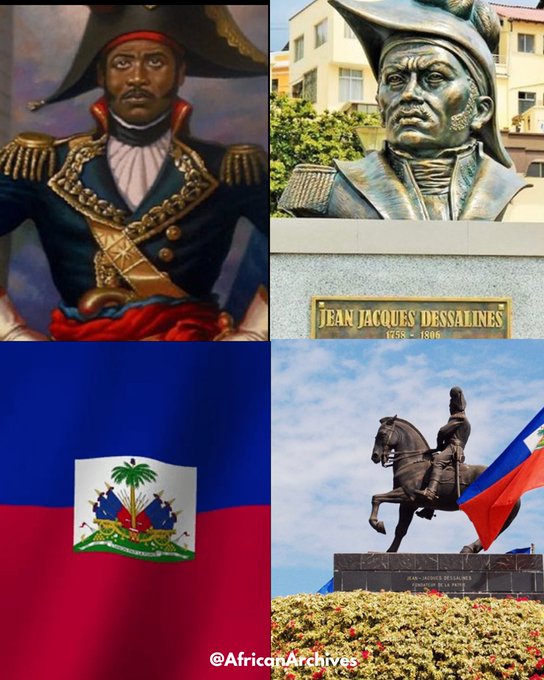
On this day in 1806, Jean-Jacques Dessalines, a leader of the Haitian Revolution and later Emperor of Haiti, was assassinated.
He led armies to defeat France to become the first free colonial society. It was the greatest slave uprising since Spartacus.
It was a powerful reminder that Black liberation Could be achieved.
On this day in 1967, the Supreme Court ruled in Loving v. Virginia, striking down laws banning interracial marriage as unconstitutional.
June 12, 1967: The United States Supreme Court in Loving v. Virginia declares all U.S. state laws which prohibit interracial marriage to be unconstitutional.
Loving v. Virginia, 388 U.S. 1 (1967), was a landmark civil rights decision of the United States Supreme Court which invalidated laws prohibiting interracial marriage.The case was brought by Mildred Loving, a black woman, and Richard Loving, a white man, who had been sentenced to a year in prison in Virginia for marrying each other.
Their marriage violated the state's anti-miscegenation statute, the Racial Integrity Act of 1924, which prohibited marriage between people classified as "white" and people classified as "colored." The Supreme Court's unanimous decision held this prohibition was unconstitutional, overturning Pace v. Alabama (1883) and ending all race-based legal restrictions on marriage in the United States.
The decision was followed by an increase in interracial marriages in the U.S., and is remembered annually on Loving Day, June 12. It has been the subject of two movies as well as songs. In the 2010s, it again became relevant in the context of the debate about same-sex marriage in the United States.
Despite the Supreme Court's decision, anti-miscegenation laws remained on the books in several states, although the decision had made them unenforceable.
In 2000, Alabama became the last state to adapt its laws to the Supreme Court's decision, by removing a provision prohibiting mixed-race marriage from its state constitution through a ballot initiative. 60% of voters voted for the removal of the anti-miscegenation rule, and 40% against.
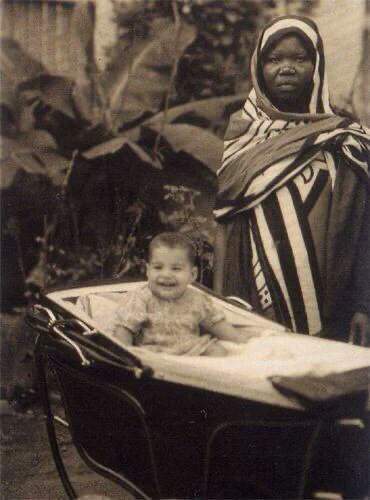
The British colony of Zanzibar off the east coast of Africa. A tired nanny poses next to her ward named Farrukh Bulsara. A quarter of a century later, the boy would take the pseudonym Freddie Mercury, 1947.
When you pass through the waters, I will be with you; And through the rivers, they shall not overflow you. When you walk through the fire, you shall not be burned, Nor shall the flame scorch you.
Isaiah 43:2 NKJV
https://t.co/kphABavdor