Join us! 🙌
Let's take positive action together and dedicate a day to #DoingGood > > > April 16, 2023 is Good Deeds Day!
Registration is OPEN TODAY! Learn more or sign up now and help fuel a global movement for good https://t.co/4CtDKpAsWC
Application Process
To submit your application:
1. Visit the AU careers website; https://t.co/DZdjUCw0qI, click on « Search Jobs » and click on the AUYVC post.
What’s holding Africans back? President Kagame asked.
Prof. Murigande told Kagame that the main reason is that African leaders don’t care about their people. They seek to enrich themselves — to eat, and to eat alone. The president agreed with him, but he pressed further, asking why this problem seems peculiar to Africa.
Kagame doesn’t ask rhetorical questions. He has identified a problem and is involving Rwandans in finding a solution.
Here’s my take:
To overcome challenges like those faced by postcolonial societies, a people must rediscover a sense of collective self-worth. Usually, this comes from the memory of their past achievements— who they were as a people informs who they are and who they aspire to be.
While Africa was not the only region to experience colonization, it is one of the few where colonialism either erased the memory of past greatness or created new countries with no shared memory of such greatness.
Colonisation captured African minds. In that sense, although Africa was colonised last, it was colonised the worst.
Colonial education deepened this alienation, distorting African aspirations, turning them from collective to individual.
In the 1950s, the small group of “educated” African elites aspired to join the white world : the colonial administration. Today, with colonial education still intact and keeping African minds in chains, the elites it creates do not aspire to uplift their people; they aspire to join the global elite. They don’t seek to improve their own societies; they seek to escape from them.
Accordingly, these elites measure their self-worth by:
•how fluently they speak foreign languages,
•which foreign schools they send their children to,
•which foreign hospitals they can afford,
•how many houses they build, and how much money they invest abroad.
At the heart of this lies a quiet acceptance that Africans are somehow defective as a people, and that the only way to succeed is individually. Even those who once believed they could change things often abandon the quest for collective improvement once they grasp the scale of the effort it demands.
The kind of heavy lifting required for real transformation breeds a sense of hopelessness, one that pushes people from collective ambition toward individual greed.
So, the individual’s aspiration becomes to join the global bourgeoisie. But these are strategies of self-evacuation. They are attempts to flee backwardness by moving from the rural village to the capital, then on to the enlightened colonial metropolis, and ultimately to disappear into cosmopolitan anonymity - a form of self erasure rather than a search for self restoration.
This journey became the measure of progress. Those who remain in Africa do so with one foot already out (through dual citizenship or close connections to the representatives of their desired metropoles) for themselves, and especially for their children.
Although Kagame brings up this topic, it has been a theme he turns to whenever he notices that some ethic is creeping in amongst the leaders, only that this time he is more specific.
For example, while he has been teaching agaciro as a form of mental decolonization, most people over the years understood agaciro merely as a material pursuit.
Yet agaciro is, at its core, about retracing and reclaiming the memory of self-worth and therefore the basis for collective pursuit.
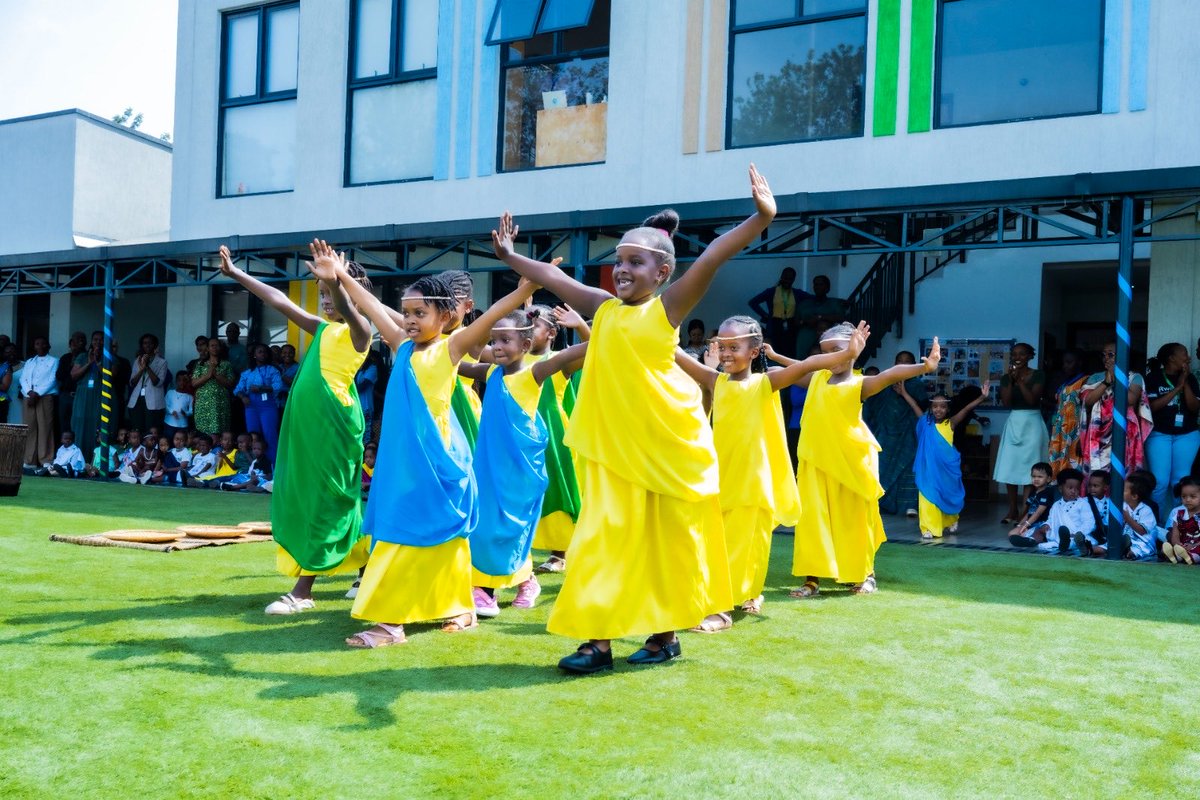
Through traditional Rwandan dances & heartfelt poetry, Nursery Learners proudly shared with their parents what they’ve learned. It’s moments like these that remind us why passing on our traditions matters.
Together, let’s keep celebrating and preserving our cultural heritage 🇷🇼
Today, we honour the strength and resilience of rural women. Our Volunteers facilitate rural women in creating work opportunities, promoting financial independence, and improving social standing. Happy International Day of Rural Women!
#ThisIsCorpsAfrica#UmugoreWoMuCyaro
UMUGANDA: Today, the youth engaged in various activities at Club Rafiki started the day with the special Umuganda (community work) aimed at maintaining cleanliness in the center. The youth believe that cleanliness is the foundation of a healthy life.
Dear Chairperson,
It’s a joy to celebrate you!
You lead by example, and yours is one we strive to transmit through our work. Thank you for the unwavering strength, the kindness, the wisdom, the culture, the shared celebration dances, and most importantly, the generous trust, in our ability to bring your incredible vision to life.
Happy Birthday Your Excellency @FirstLadyRwanda!
Every day, through connecting directly with people most in need, #volunteers touch millions of lives.
Take that step. Join the tribe. Engage a volunteer: https://t.co/Pdm9phfTTS
"Measuring 📏 volunteering means every action counts.
Why it matters:
📝 Know who’s volunteering & what they do
🔧 Match skills to needs
📊 Show the value of every hour given
Racism, discrimination & exclusion still keep many #IndigenousPeoples out of decision-making that affects their lives.
So what can volunteer organisations bring to the struggle for Indigenous rights? A way to unite and act on their own priorities.
More🔗https://t.co/mCxUHfeB4Q
“ Sport is good for everybody. A powerful mean to strengthening mental health, to learn discipline, to progress. It also helps to learn teamwork.
Isonga: one team, one vision to achieve more. You have talents, so believe in yourself; but don't take it for granted." @nmukazayire
This week in Pre-Service Training, our trainees took on the Marshmallow Challenge—building creativity, adaptability, and teamwork, the very skills that will guide them in serving and empowering their communities as CorpsAfrica Volunteers.
#ThisIsCorpsAfrica#PST2025