Roman Zubarev’s group at Karolinska Institutet focuses on Molecular Biometry using mass spectrometry for studying various processes of biomedical importance.
Noise isn’t always bad! Sometimes it helps us see the unseen. 🚀 Our new preprint shows how stochastic resonance boosts single-cell proteomics signals. 👉 https://t.co/Ot1TjwnJS6
#Proteomics#SingleCell#MassSpec#Preprint
For decades, scientists believed that stable isotopes in our tissues reflected our diet with a small correction. Our new preprint shows it’s more complex: isotopes actively shape biology and converge in surprising ways.
Read the preprint 👉 [https://t.co/d91K6pagja]
#isotopes #
New paper published. Hopefully our results will lead to developing novel biomarkers and therapeutic interventions against traumatic brain injury in the long run.
Our paper on identification of biomarkers and therapeutic targets in traumatic brain injury (TBI) is now published. Here, we use PISA to dissect the early molecular events and proteome solubility changes following a dynamic injury to neurons.
https://t.co/bPPBSQ3FZl
Check out our new work on PISA-REX for analysis of proteomes in the three dimensions of redox state, solubility and expression for target identification.
Finally after a year of data analysis, fine-tuning and writing, one of my most important papers is online. It is about a tool for 3D analysis of proteomes in target deconvolution (1).
https://t.co/EJzWo4pgTf
Our new collaborative study shows that NCF1-dependent production of ROS protects against lupus by regulating plasmacytoid dendritic cell (pDC) development and functions. ROS deficiency enhances pDC generation through the AKT/mTOR pathway.
https://t.co/6tYvGyj76r
DOPA is just as good (or even better!) than Vitamin C - when it comes to protecting tissues from free radicals. 🛡️🔥 Proud of this largely experimental (!) work of our lab. 🎉🎉🎉 Thanks to amazing collaborators @RedoxDKFZ@RZLabKI@prisnerlab and others!
Excited to share our work, where we combine a novel apparatus with state-of-the-art solubility proteomics and simulate traumatic brain injury, to uncover mechanisms of neuron damage, for ultimate identification of diagnostic and therapeutic biomarkers.
https://t.co/DnY42cQw1d
Happy Sunday 🙂
Please check out our new protocol - "Proteome Integral Solubility Alteration (PISA) Assay in Mammalian Cells for Deep, High-Confidence, and High-Throughput Target Deconvolution".
https://t.co/CSKr23iIPO
@RZLabKI@XuepeiZhang#proteomics#spectrometry#cells
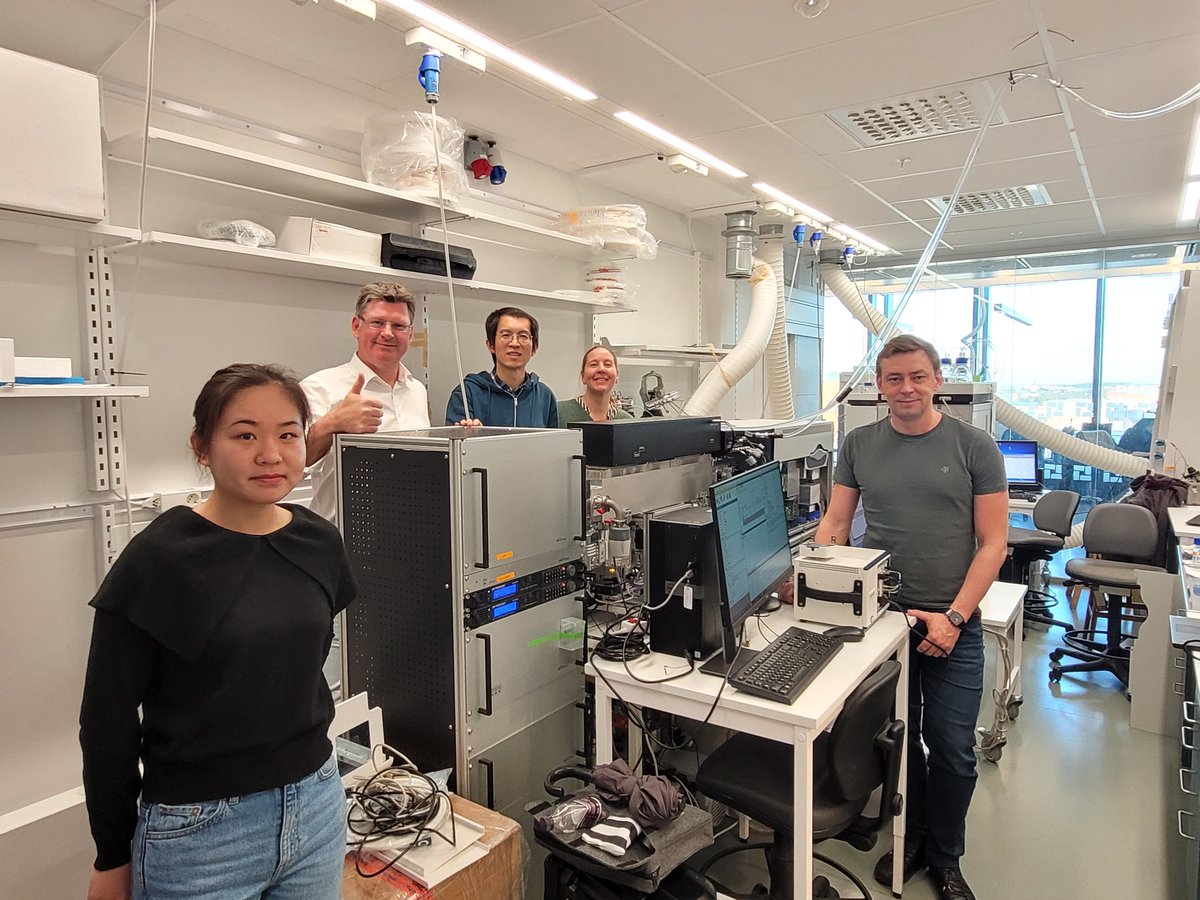
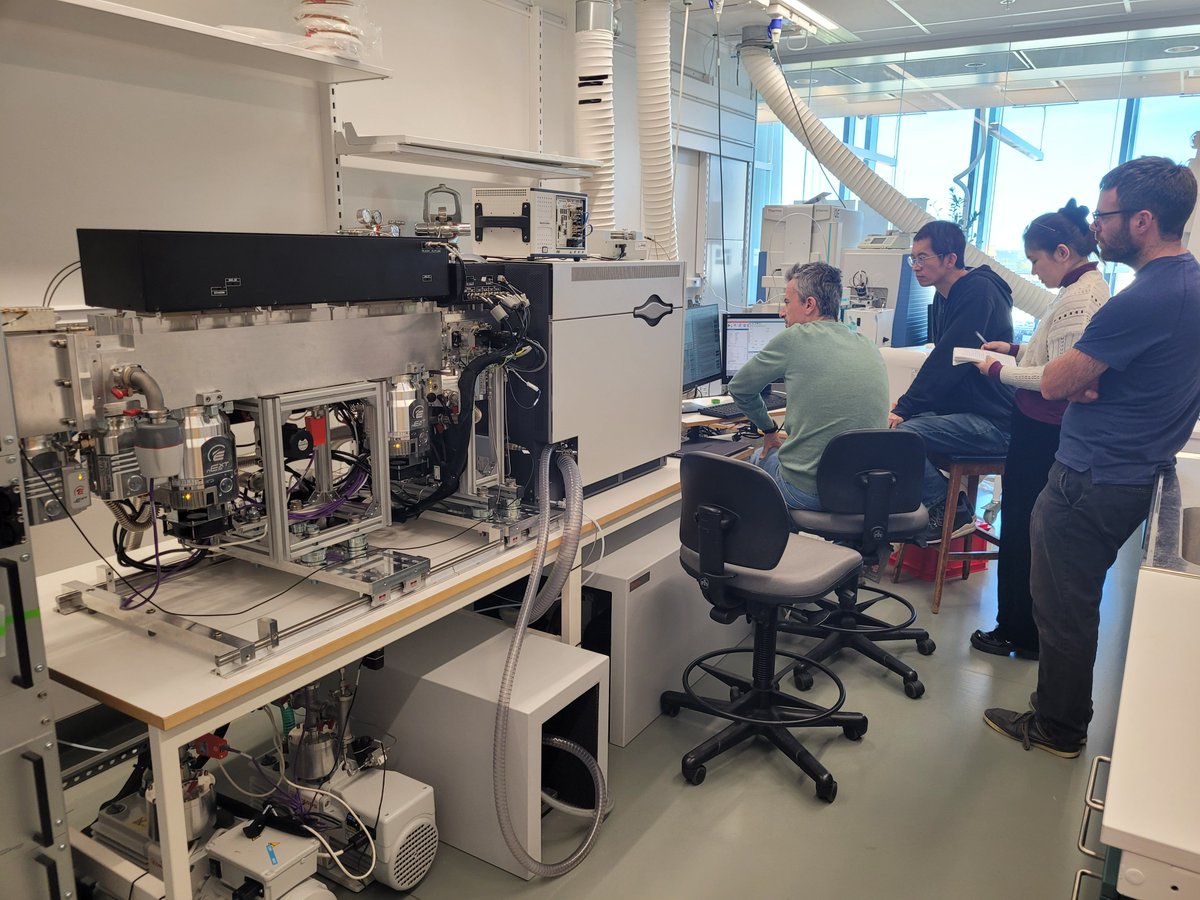
Finally, all pieces have been put together! The #FTMS Booster is now installed in the @RZLabKI. Thank you @Spectroswiss for all the help and also for a great talk!
Fourier Transform Isotopic Ratio Mass Spectrometry enables precise measurements of isotopic composition of the elements C, H, N, and O in individual amino acids using only 1 μg of protein sample.
@RZLabKI@hasangharibi@chernolab@AmirAta8
https://t.co/MPCHAf9fgR
The Omnitrap – IMS platform has successfully been installed at KI! Thank you @Fasmatech_MS , MSvision and @RZLabKI for the great effort. Time to produce some exciting data!
In our new preprint, we identify the O-glycosylated substrates of GALNT1 using versatile proteomics tools. Arguably one of the most challenging PTMs to study. We close in on a motif too.
Do you know isoaspartate acts as a molecular clock in aging? We collaborated with Prof. @CharlotteTeuni1 and Dr. Guo to test the link between isoaspartate and Alzheimer's disease etiology on A&D journal https://t.co/vUkpsTCFta @alzdemjournals@alzassociation@ISTAART