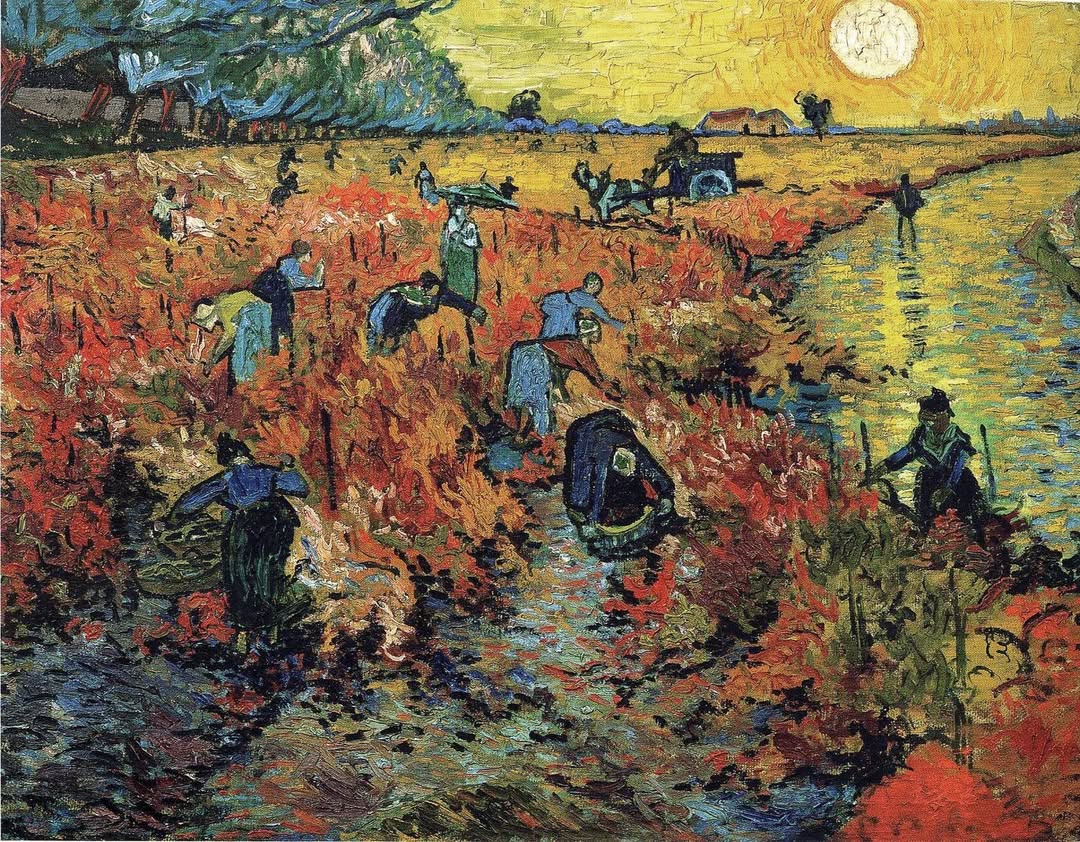
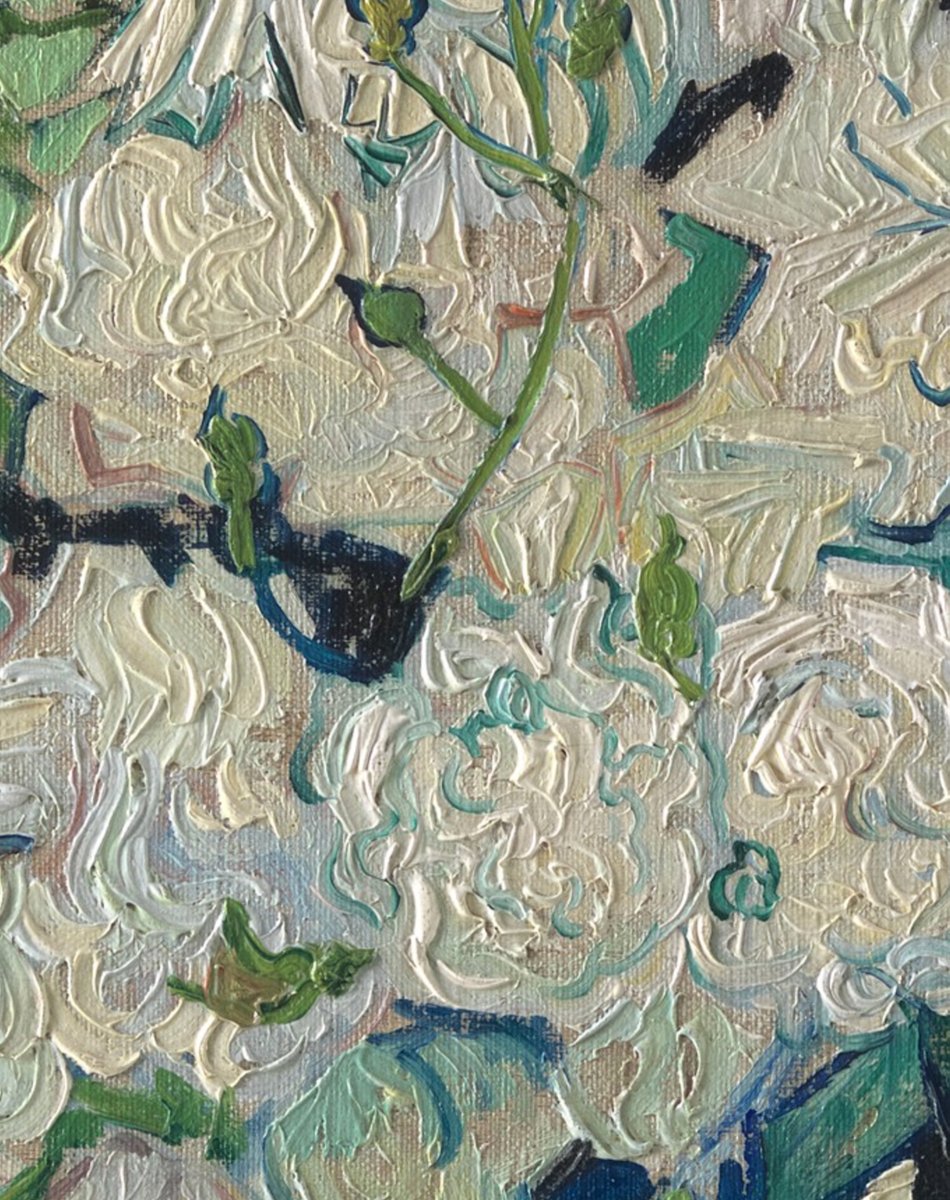
@vangoghmuseum Below is a photo of a tree in Vondelpark, Amsterdam, that I took on 4 July 2026. The park is within walking distance of the Van Gogh Museum. Do you like the yellowish leaves among the green and the road stretching beautifully further away?
https://t.co/RmxcuXSy2G
@vangoghmuseum Below is a photo of a tree in Vondelpark, Amsterdam, that I took on 4 July 2026. The park is within walking distance of the Van Gogh Museum. Do you like the yellowish leaves among the green and the road stretching beautifully further away?
https://t.co/RmxcuXSy2G
Below is a short, electric exchange between Vincent van Gogh and Paul Gauguin from Irving Stone’s Lust for Life:
“You’ll never be an artist, Vincent,” announced Gauguin, “until you can look at nature, come back to your studio and paint it in cold blood.”
“I don’t want to paint in cold blood, you idiot. I want to paint in hot blood! That’s why I’m in Arles.”
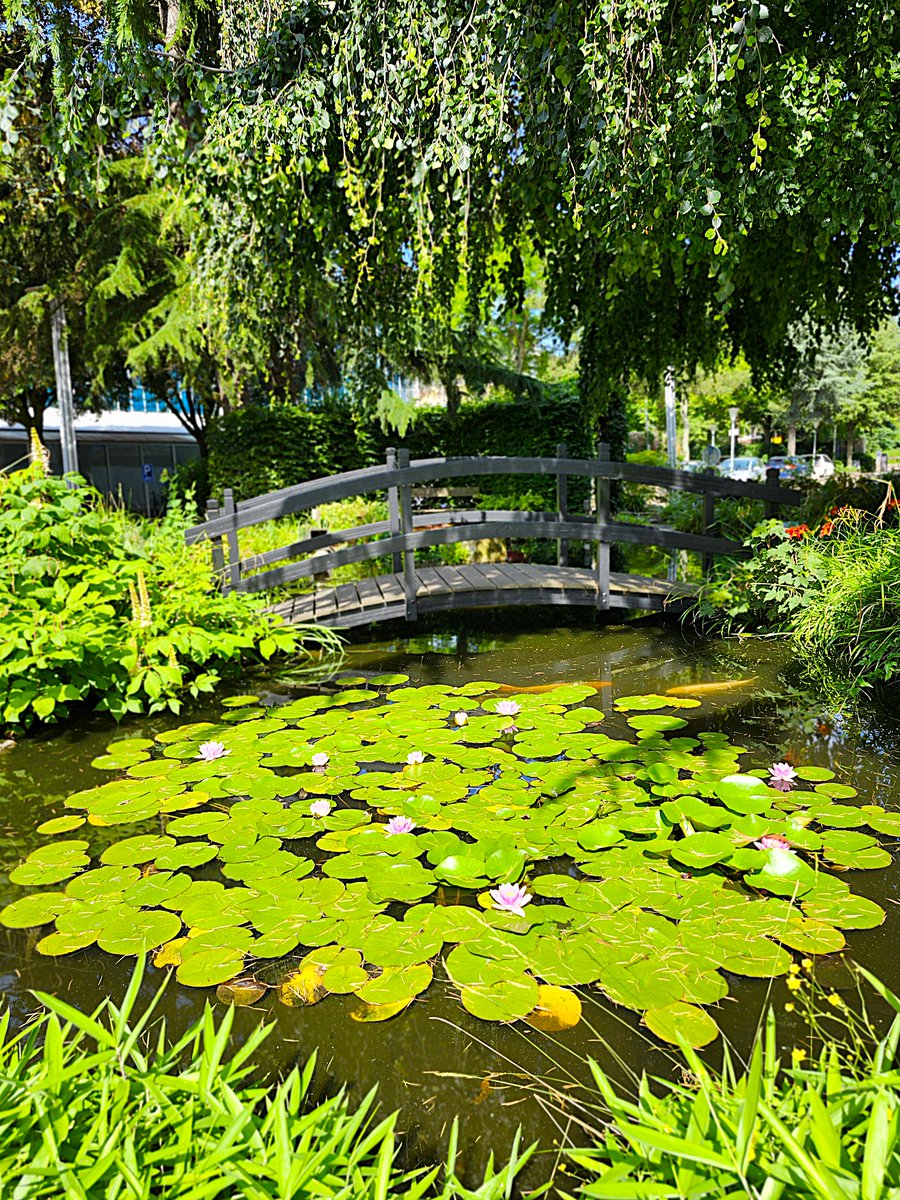
Below is a photo of a water-lily pond in the front yard of my hotel in Amsterdam. Can you spot the two big, fat and stunning golden fish between the water lilies and the arched bridge (right-hand side, middle of the image)? I snapped it on 29 June 2026.
https://t.co/2eL2cItQWi
Below is my edited version of the Truth about how I realized that #VincentvanGogh and I share the same soul. It was posted on Truth Social on Dec. 21st, 2024.
My dream post 10 was posted on Aug. 16th, 2024 on X. This post replaces the one I deleted as my dream post 11.
My dream on the morning of Sat., Apr. 20th, 2024:
I got up early between 6 a.m. and 7 a.m. to jot down the dream.
There’re lots of things going on in the dream, but I can’t remember anything except that I'm told telepathically that #VincentvanGogh is one of my past human incarnations on Earth and kind of, he is me.
I'm too overwhelmed with this statement and refuse to be engaged in conversation with the invisible communicator because I don’t know what I'm going to do with this information. At that moment, like Vincent once said - “my thoughts sail over many seas”. However, the sailing thought doesn’t let me go until I accept Vincent as me wholeheartedly.
In truth, I've always felt naturally close to Vincent. I understand everything about him and feel for him. In the current lifetime, I'm not a painter and don’t have a Fine Arts degree. Still I often sense a strong urge to do oil painting even though I don't know how and also to comment on all sorts of paintings, not just oil paintings, done by professionals.
I did get shiny grades in art class at school, although I wasn't surprised since my paternal grandpa was a painter, calligrapher, and teacher all his life. He could speak English and loved playing the erhu. He always entertained me with riddles, folktales, and his amateur magic tricks when I was little.
🎨: Vincent van Gogh’s Self-Portrait with Palette (oil on canvas, 1889, Saint-Rémy, France). The strikingly contrasting colours had me at hello.
@MinisterOCW@DickSchoof@RobJetten@SecGenNATO@vangoghmuseum
#GalacticFederationOfLight #Ascension #Taygeta #MakeAwakeningGreatAgain #MAGA #LetsGogh
Vincent van Gogh, Princess Elisabeth Charlotte (Liselotte) of the Palatinate — Duchess of Orléans — and I are one soul expressing itself through three different bodies. As this is my final incarnation on 3D Earth, I feel deeply connected to the lessons from those other lifetimes, particularly Vincent’s and Liselotte’s. This may explain why I understand them so profoundly, despite knowing almost nothing about them beforehand.
https://t.co/BBeqGD7RWK
I always love Vincent van Gogh's art. I wrote and posted a tweet on March 30th, 2024 for his B-Day. Little did I know I wrote for myself❤️I watched the TV series Versailles in June 2024, I liked Madame Elizabeth Charlotte, Duchess of Orléans. Little did I know I liked myself🌅
My Chinese name's initials are J.J.L. (J.J. for the given name and L. for the family name).
My father put the Chinese character 锦 — which means "bright", "brilliant", and "gorgeous" — in my given name. I love it sooo much that I wanted my Angie BaoBao to have it too, so I included 锦 in her Chinese given name as well.
The Japanese language uses Chinese characters, which were introduced to Japan from China around the early 5th century CE. Japanese speakers need to know roughly 2000 of these Chinese characters (taught in school) to read comfortably.
Vincent van Gogh created three oil paintings based on Japanese ukiyo-e (浮世絵) prints: The Courtesan (after Eisen) and two studies after Hiroshige (Paris, October��November 1887). In the latter, he added calligraphic borders featuring Chinese characters because he clearly loved their aesthetic qualities — after all, Chinese characters are pictographic in origin, basically little pictures of real objects.
In both of Vincent’s studies after Hiroshige, the Chinese character 锦 (Jin) appears as the fourth from the top on the left border of Flowering Plum Orchard and in the matching position on the right border of Bridge in the Rain.
Interestingly, the character 锦 is shared by both my Chinese given name and Angie BaoBao’s, each made up of two characters.
#GalacticFederationOfLight #Ascension #Pleiadians #Taygeta #MakeAwakeningGreatAgain #MakeLoveGreatAgain #LetsGogh
Below is a Truth I wrote for Vincent/me and already posted on Truth Social on Dec. 17th, 2024.
“Know that one day, your pain will become your cure.” – Rumi (1207 – Dec. 17th, 1273)
I hope all the pain, suffering, and struggling that #VincentvanGogh (March 30th, 1853 - July 29th, 1890) had endured are becoming my cure since this is the final incarnation my 7D Lemurian-Taygetan soul has on Earth and all of my past earthly incarnations are coming together as an all-in-one me🎨
Vincent had never been a devoted salesman for his art because he put all his heart, soul, passion, and energy into his beloved work. He utilized colours to express himself breathtakingly and believed art should convey true feelings. The subject matter of his paintings was often nature, everyday people, and everyday life, but never religions, nor the rich.
Personally, what I love about Vincent’s art the most is the eye-catching subtle three-dimensional depth he consistently created employing thick layers, varied brushwork, and a lot of nuances of light magically captured with oils.
Despite all the unbearable in Vincent’s life, he accomplished his mission triumphantly/colourfully – to show earth humans the pure soul of an artist, the beauty of colours, and how art could console those, including himself, who are broken by life.
“I don't know anything with certainty, but seeing the stars makes me dream...” – Vincent van Gogh
@MinisterOCW@DickSchoof@RobJetten@SecGenNATO@vangoghmuseum
#GalacticFederationOfLight #Ascension #Taygeta #MakeAwakeningGreatAgain #MAGA #LetsGogh
Vincent van Gogh drew and painted the Langlois Bridge (French: Pont de Langlois) and the canal in Arles several times. He must have loved this bridge. In 1888, he wrote to his brother Theo that “many of the subjects here are just — in character — the same as in Holland — the difference is in the colour”.
The double-beam drawbridge, the canal, and the expansive fields of the Arles countryside felt deeply Dutch and homey to him — like a slice of the Netherlands transplanted to France that fed his nostalgia for home. Van Gogh even asked his brother Theo to frame The Langlois Bridge at Arles with Women Washing (the first masterpiece of his Arles period) and send it to an art dealer in The Hague. I believe that, at heart, Van Gogh remained a straightforward, passionate Dutchman who, as Archibald Standish Hartrick observed, “had an extraordinary trick of pouring out sentences in a mixture of Dutch, English, and French”.
The bridge wasn’t merely stylistically reminiscent of the Netherlands; it was one of several drawbridges built along the canal by a Dutch engineer. In homage to Vincent van Gogh, the reconstructed Langlois Bridge was renamed Pont Van Gogh (Van Gogh Bridge) in 1962 to honour his 1888 paintings and drawings of the original. Relocated for that purpose, this authentic period twin was classified as a historic monument in 1988 and fully restored in 1997.
I took the photo below on 4 July 2026 in Amsterdam. In it, the double-beam bridge with its striking shapes looks very similar to #VincentVanGogh’s beloved Langlois Bridge. The elegant linear silhouette of the bridge against the sky was so rich and really made me want to paint in oils.
Looking at that silhouette, I was reminded that bridges (桥梁) have long held a special place in Chinese poetry and painting as well, and are often seen as earthly rainbows (尘世间的彩虹). I bet there are gazillions of bridges in China called Rainbow Bridge. Haha… When I was little, I was mesmerized by the rain and the rainbows that followed. I was over the moon whenever it rained, and my hometown has no shortage of rain — on top of the famous plum rain (梅雨), named for the way it coincides with the ripening of plums.
Of course, my Lemurian-Taygetan soul is also quite fond of rainbows — Lemurians’ skin was once the colour of rainbows, though it is no longer, after we left Earth millions of years ago and returned home to the higher realms: the Pleiades. So we look Pleiadian, but we will never forget our unforgettably colourful rainbow skin…
The fairies that lived with us in Lemuria still live with us now😇
https://t.co/xF6sFADp1C
Elizabeth Charlotte (27 May 1652 – 8 December 1722), Duchess of Orléans, born Princess Elizabeth Charlotte of the Palatinate and better known as Liselotte von der Pfalz, was named after her paternal grandmother, the🇬🇧British princess Elizabeth Stuart ("The Winter Queen").
Liselotte’s paternal grandfather’s mother🇳🇱was a daughter of William the Silent (also known as William of Orange), the founding father of the Netherlands. He inherited the principality of Orange in 1544 and led the Dutch Revolt against Spain in the 16th century.
William, founder of the House of Orange-Nassau and Leiden University — the oldest Dutch university established in 1575 — and a Dutch national hero, is still remembered through the colour orange, the official colour of the Dutch Royal Family and the Netherlands, and through the national anthem, “Wilhelmus van Nassouwe” (William of Nassau).
Thus, my love for the colour orange can be traced to both Vincent van Gogh’s passion for bold colours and Liselotte’s ancestral ties to the House of Orange-Nassau.
📸: Once upon a time in Beijing, me and my one big beautiful orange. In fact, anyone who saw the photo couldn’t resist asking me the same question: “Why were you holding an orange?”😇
Unsurprisingly, New Orleans, Louisiana, was named in honor of Liselotte’s son, Philippe II, Duke of Orléans, who shared his mother’s passion for literature, art, history, science, and nature. The more I learn about Liselotte and Vincent, the more I see myself in them — and them in me. I love both of them. They’re exactly the kind of people I enjoy being around.
In her characteristically blunt style, Liselotte famously remarked that “Dogs are the best people I’ve found in France.” Her comment was clearly 1000% aimed at the French court at Versailles rather than the country🇫🇷 itself. While highly critical of and pragmatic about court life at Versailles, Liselotte nevertheless warmly appreciated everyday French people.
Here are some fun facts about Liselotte:
🌻took pleasure in playing the spinet and the guitar
🌻amassed an extensive personal library of more than 3000 books
🌻declared that she preferred trees and fields to the finest palaces
🌻was a big fat fan of sauerkraut and green cabbage. (Me too!)
🌻collected old coins, precious stones, seals, and, most remarkably, microscopes, which she used to study insects
#GalacticFederationOfLight #Ascension #Pleiadians #Taygeta #MakeAwakeningGreatAgain #MakeLoveGreatAgain #LetsGogh
Vincent didn’t paint this work just because he loved nature. Almond trees bloom early in spring and symbolise new life. In 1890, that new life had just entered his own family.
His nephew, Vincent Willem, had been born. Overjoyed, Vincent wrote:
‘It gives me more pleasure than I could express in words.’
He began the painting almost immediately, as a gift.
‘Almond Blossom’ became one of the family’s most treasured works, kept by Theo, Jo, and later their son. It was never sold.
And that’s why, to this day, it can still be seen at the Van Gogh Museum.
🖼️ ‘Almond Blossom’ is now on view in the exhibition ‘Vincent's Path to Fame’, until 6 September.
👨🎨 Van Gogh's irises, each unique, showcase his mastery of form and movement. Theo recognised the quality of this painting. In September 1889, he wrote to Vincent: ‘[The painting] strikes the eye from afar. It is a beautiful study full of air and life’. ✍️


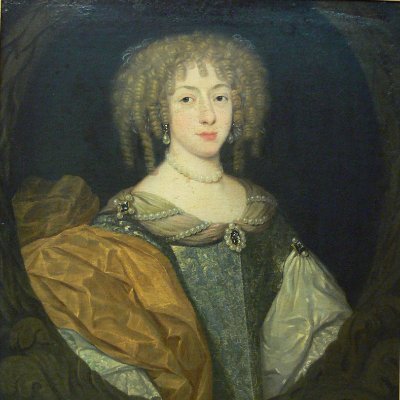


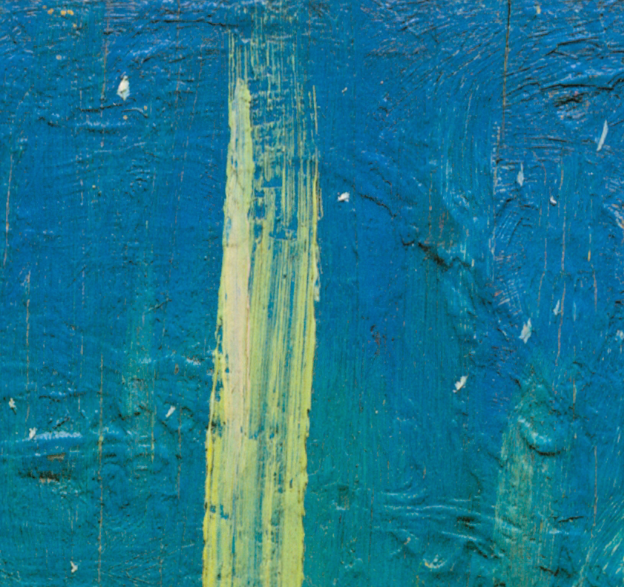







![vangoghmuseum's tweet photo. 👨🎨 Van Gogh's irises, each unique, showcase his mastery of form and movement. Theo recognised the quality of this painting. In September 1889, he wrote to Vincent: ‘[The painting] strikes the eye from afar. It is a beautiful study full of air and life’. ✍️ https://t.co/R65zfht6Fn](https://pbs.twimg.com/media/GMp_ajVW4AAc9sD.jpg)