🚨EXCITING NEWS🚨 This column is the first in an ongoing series I'll be writing for @nytscience, called BODY LANGUAGE!
Every month, we'll put a new piece of medical terminology under the🔬, and ask how it affects patients, doctors, and society 🧠🩺💊
The question is both about who we honor, and why we name: Is it right to glorify individuals as "discoverers"? Or does that perpetuate the misconception that medicine moves forward thanks to a few brilliant minds, rather than collaboration and cooperation?
MUCH TO UNPACK 🧐
Listen to the podcast episode with author of THE VAGINA OBSCURA, Rachel Gross, to learn what singing Shakira on stage has to do with reaching for a cup of coffee — and how the surprising relationship between the two is making us rethink thinking.
https://t.co/TmZjDLTDpO
The bad news: At 35, Rachel E. Gross found out she had a stroke. The good news: the stroke was in her cerebellum, a part of the brain that doctors assured her was "redundant."
But after Rachel had surgery in her cerebellum, she didn't feel like herself. https://t.co/99FNoS1g6N
@sciencegirl Thank you so much for this great write-up, @sciencegirl!
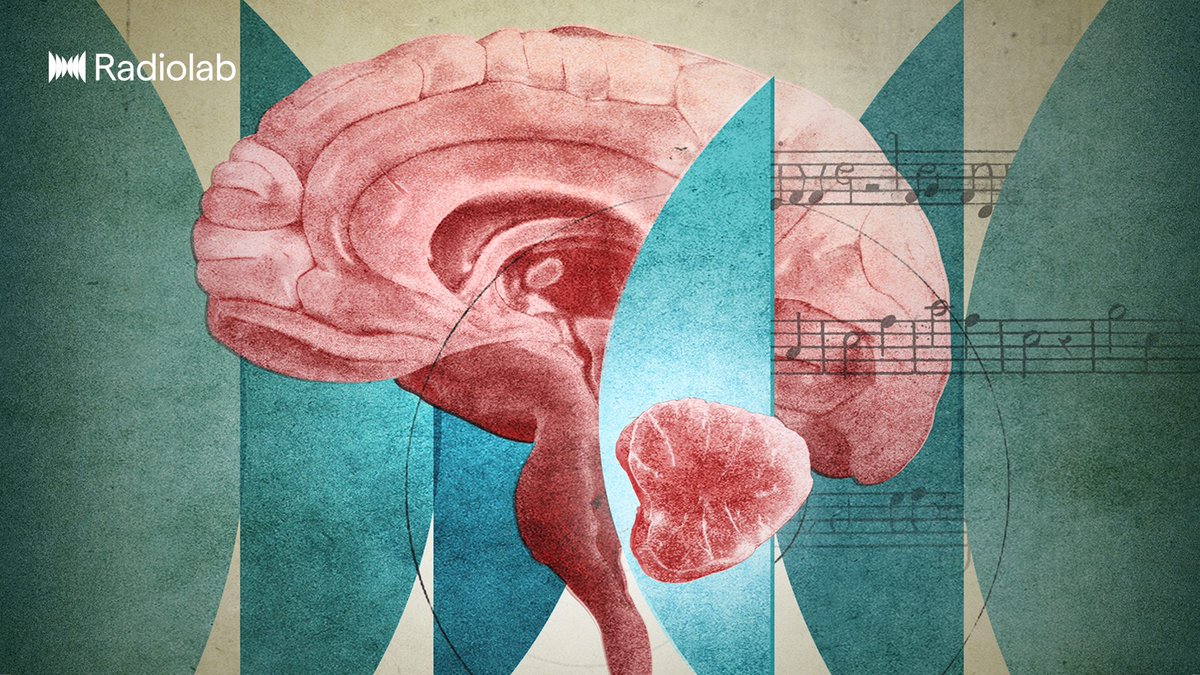
You may be interested in my @Radiolab episode, the Song of the Cerebellum, on the cerebellar revolution in neuroscience:
https://t.co/HqLECPd41c
In 2024, I had a bleed in my cerebellum, a fist-sized part of my brain surgeons told me was "redundant" & mainly concerned with motor control.
So why, after months of recovery, did I no longer feel like myself?
I went to @Radiolab to find out.
https://t.co/HqLECPd41c #karaoke
This just out. Broadcast on NPR last night. Real world impact of dysmetria of thought and the cerebellar cognitive affective syndrome. @NAF_Ataxia @anpadirect @harvardneuromds @MGBResearchNews https://t.co/NL95t7IzLY
The most valuable insights a cerebellar scientist can get are first hand accounts from people like @rachelegross who so beautifully/generously/eloquently share their experiences post cerebellar damage. Great listen from @Radiolab.
https://t.co/2zsTpUArCz
It is a love letter to the cerebellum — a part of the brain that helps our bodies & thoughts unspool effortlessly across time & space — and a plea to researchers to shine a light on this crucial part of all of us.
More on that here: https://t.co/V8VzibI4uG
#cerebellum#brain
It is a love letter to the cerebellum — a part of the brain that helps our bodies & thoughts unspool effortlessly across time & space — and a plea to researchers to shine a light on this crucial part of all of us.
More on that here: https://t.co/V8VzibI4uG
#cerebellum#brain
This is the story of how I tumbled down into the brain’s dusty basement, and came out with a changed understanding of how the brain works.
It’s also a story about bombing at karaoke. 🧠🎤
(cc @kicklikeagirl1)
This is the story of how I tumbled down into the brain’s dusty basement, and came out with a changed understanding of how the brain works.
It’s also a story about bombing at karaoke. 🧠🎤
(cc @kicklikeagirl1)
In 2024, I had a bleed in my cerebellum, a fist-sized part of my brain surgeons told me was "redundant" & mainly concerned with motor control.
So why, after months of recovery, did I no longer feel like myself?
I went to @Radiolab to find out.
https://t.co/HqLECPd41c #karaoke
📷 It's not a nub, it's a bird! Thrilled to be a guest on @longestshortesttime dispelling myths about the cl!t & neighboring organs. Such a fun, nerdy convo with the fabulous Hillary Frank.
📷 LISTEN: "A Very Vaginal Voyage with Rachel Gross": https://t.co/rrCgrduAat
The outdated idea of estrogen as merely the 'female sex hormone' may have stifled research into its myriad effects on the brain. No longer:
https://t.co/Qn0EzxVU1w via @nytimes@NYTScience
Agree: updating disease names for scientific reasons makes sense, ("heart failure" anyone?). But let's ensure we're doing so for the right reasons, not just to avoid scaring patients.
Compassionate communication > renaming everything.
🙌 @rachelegross
https://t.co/roDrfMxvmw
@writingblock@nytimes Thank you so much Jennifer! What I heard was that, in the past, the ovaries were definitely understood as endocrine organs - however, their effect was thought to be mainly on other 'reproductive' organs rather than the whole body. But I'd love to know if you've heard differently!
All surgeries require informed consent. No exceptions.
Yet when it comes to hysterectomies, an alarming number of patients say they don't know exactly what organs the surgery includes — or which ones remain afterward. Why?
I investigate for @nytimes:
https://t.co/FuErDUILv9
Hysterectomies, aside from C-sections, are still the most common surgical procedure among women. But patients often are in the dark about which organs remain and which were removed — particularly the ovaries, which profoundly influence lifelong health.
https://t.co/UUEIrLYNC7