Forty years ago, two liberal professors published a "provocative" book about immigration that sold poorly and got terrible reviews. Here's how they accidentally handed Trump the legal argument he's using to attack birthright citizenship. https://t.co/8YdAFrGfW2
I am among the McClatchy journalists withholding my byline from AI-generated content. I cover sensitive stories that should never be repackaged or altered in any way by artificial intelligence. Whether the story is about sexual abuse or immigrants caged at Alligator Alcatraz, our journalists take great care to ensure that their material is accurate, fair and conveys invaluable aspects of humanity that AI simply can't do.
I'm not familiar with Helen DeWitt, but I am familiar with executive dysfunction, and thus this discourse appeared on my timeline.
In this thread, DeWitt vulnerably discloses that she was so overwhelmed earlier this year that she ended up walking away from a $175,000 prize. 🧵
The Times says a strategy of publishing “fewer, better stories” has led to three consecutive months of record-breaking global audience growth - including Google traffic increases
The Times has gone from publishing more than 200 stories a day to about 150 – a 25% cut
It remains implausible that Rubio really summoned Peters to the US to chat about the war, oil, economy and the Pacific.
Why him, why NZ, why right now?
Could we be being asked to do something quietly as a less troublesome Five Eyes member that stayed in Tehran over the years?
Forty years ago, two liberal professors published a "provocative" book about immigration that sold poorly and got terrible reviews. Here's how they accidentally handed Trump the legal argument he's using to attack birthright citizenship. https://t.co/8YdAFrGfW2
The oil crisis is spreading throughout the world. Many countries are going to extreme lengths to ration their supply as a result. Here are all the cases I could find:
1) The Philippines declared a national energy emergency. Government offices have shifted to a four-day work week, and agencies must cut fuel and electricity use by 10–20%.
2) Sri Lanka instituted a weekly public holiday for public officials and schools. It has also revived a QR code-based fuel rationing system that limits private cars to 25 liters of petrol per week.
3) Pakistan closed schools for two weeks and cut free fuel allocations for government vehicles by 50%. It also hiked high-octane fuel prices by 60%.
4) Bangladesh, shut down universities and colleges and implemented five-hour rolling blackouts for households to prioritize the garment export sector.
5) South Korea launched a nationwide energy-saving campaign and released a record 22.46 million barrels of strategic oil reserves. It also temporarily lifted limits on burning coal.
6) Thailand ordered civil servants to work from home, set office air conditioning to 26–27°C, and halted petroleum exports to preserve domestic stock.
7) Japan and announced its largest-ever release of strategic oil reserves, approximately 45 days' worth, to stabilize local markets.
8) Egypt ordered early closures for malls, restaurants, and government offices while switching off illuminated billboards.
9) Myanmar introduced an "odd-even" rationing system where private vehicles can only purchase fuel on alternating days based on their license plate numbers.
10) Nepal is a state-run oil corporation has begun rationing cooking gas by filling cylinders to only half their normal capacity (7.1 kg) and is urging a nationwide switch to induction cookers.
11) India has invoked emergency powers to divert liquefied petroleum gas (LPG) away from industrial users to prioritize household cooking needs.
12) Slovenia became the first EU member to implement fuel rationing, limiting private drivers to 50 liters of petrol per week and businesses to 200 liters.
13) Bhutan has officially banned the sale of fuel in jerry cans to prevent hoarding and has established strict rationing priorities for emergency services.
14) Vietnam is accelerating a transition to ethanol-blended gasoline ahead of schedule to reduce its reliance on pure fossil fuel imports.
15) South Sudan has begun rationing electricity in its capital, Juba, due to the high cost of oil used for power generation.
16) Laos has made working from home mandatory for all non-essential civil servants and introduced rotational shifts to reduce commuting demand.
It gets worse. Gulf producers are nearly at their maximum storage capacity; once they run out of space to put unsold oil, they will be forced to "shut in" (permanently close) wells, which can cause long-term geological damage to the oil fields.
This is the worst oil crisis in history. And it is going to get so much worse. unlike previous shocks, this crisis has wiped out the world's spare capacity because major producers like Saudi Arabia and the UAE are physically cut off from their customers by the Strait of Hormuz closure.
All for what?
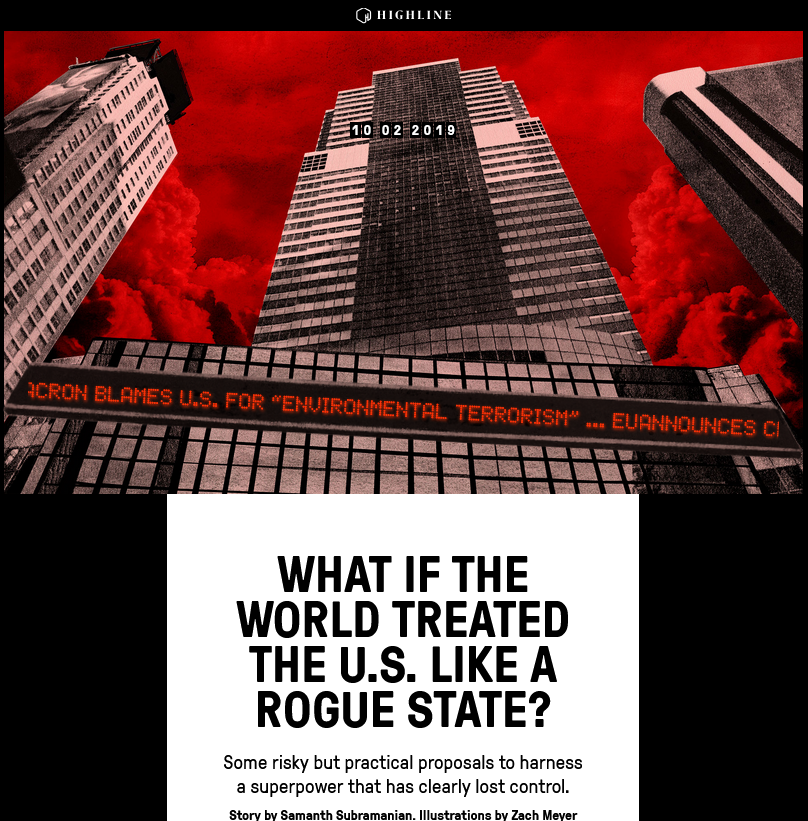
I wrote this for @RachelMorris in 2019, not expecting it to be even more relevant in 2025.
And yet, with Canada levying tariffs on the US and Denmark threatening to cut off Ozempic and shipping, here we are.
(Link in the next tweet.)
Ministers citing concerns over the style and manner of a reporter's questioning have convinced Parliament's Speaker to withhold accreditation for when the Crown says sorry https://t.co/wsqqgM1ea0
Think you're safely in a blue bubble in DC? Think again. From banning abortion to changing the DCPS curriculum to firing thousands of your neighbors, the new admin may do something no president has done in years: dramatically change local DC. https://t.co/WAf6LoQYTi
Every incumbent party around the world when the post-pandemic inflation began has lost, regardless of ideology and regardless of where inflation was at the moment of the election.
For those who think that Trump wouldn't be able to pull off mass deportations, this superb piece by @RachelMorris is a necessary read into how, in his first admin, he did end up building his (invisible) border wall after all.
https://t.co/w3NDQEoazO
every book I read about the '60s reminds me that we've been having fundamentally the same cultural conversation for at least the past three generations
some of the faces have changed. the fights have not.
Bizarre claim from John Key that Kamala Harris’s economic views are similar to Bernie Sanders & “well to the left of Joe Biden.” She’s a standard corporate-friendly Dem with major Silicon Valley backing; Biden is far more supportive of organized labor. https://t.co/Ydv2GUuQp0
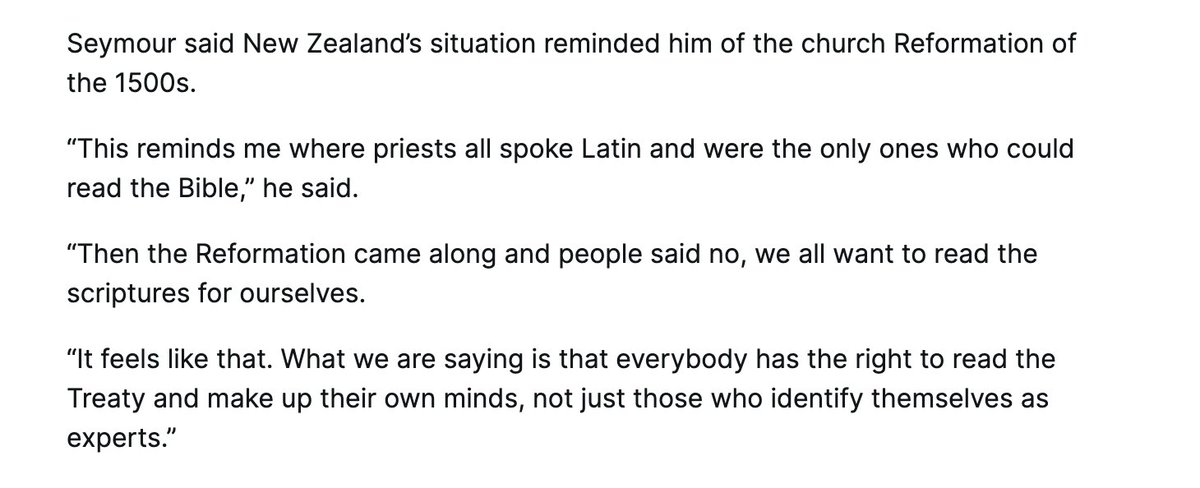
Relatedly ... it's curious to see David Seymour call for Kiwis to read the Treaty for themselves without relying on expert interpretation, when the website created to explain the ACT Treaty principles bill doesn't include the full text (or even a link to it!)
Wrote about a new book of NZ history, Kiwis' generally poor understanding of their country's history, and the Treaty principles bill: https://t.co/qNaMiAGaOR
@JeremyReesnz@nzherald@radionz An editorial is supposed to be a well-reasoned point of view from either an institution or individual. Using generative AI to produce them massively reduces their value to readers/defeats the entire purpose of running editorials imo.