Je vais rebondir sur le tweet de notre ami radiologue pour parler un peu d'une pathologie très fréquente, que tous les médecins pensent connaître mais qui est un peu plus complexe qu'on ne le pense.
(fil essentiellement pour nos amis étudiants en médecine ou médecins généralistes peu à l'aise avec le rachis, spécialité très mal enseignée dans les facs... quand on en parle...)
👇
What is “mitochondrial dysfunction”? 👇
When it comes to mitochondria - the cell’s “energy factories” - well-trained athletes have two things that "couch folk" don’t:
1/ More mitochondria.
2/ Better functioning mitochondria.
What does “better functioning” mean?
Three main things…
1/ Less oxidative stress per unit of energy produced.
Active muscle may produce more total reactive oxygen species because it processes more oxygen.
But, relative to that oxygen use, it leaks fewer electrons toward damaging free-radical production
Free radical production damages the cell and has been linked to a number of bad things e.g. cancer
2/ Better processing of pyruvate and lactate.
Pyruvate is the main link between glycolysis and mitochondrial energy production.
When mitochondria can transport and oxidize it effectively, more energy is produced aerobically and less pyruvate spills over toward lactate accumulation.
This access to aerobic energy generation significantly improves the overall cellular health and ability of the cell to function.
3/ Better ability to use fat as fuel.
This reduces dependence on carbohydrate, lowers the demand placed on the insulin system, and improves the muscle’s ability to clear and oxidize circulating fatty acids and triglycerides (& associated ApoB particles)
The above has been linked with a host of bad things, not least of which - your heart stopping! (as I explained here... https://t.co/6VuCdFyEXS)
##########
Importantly, mitochondrial “dysfunction” is not binary.
It’s not that:
- below x hours of exercise, mitochondria suddenly start producing free radicals, or
- above x hours, they suddenly gain the ability to burn fat.
These qualities exist on a continuum and generally scale with habitual activity.
However, at very low levels of activity, the decline may involve more than simply having fewer mitochondria.
Sedentary muscle also appears to show poorer substrate handling and lower efficiency per unit of oxidative activity.
That was the subject of Iñigo San-Millán’s latest paper:
https://t.co/WJw0qliVSC
So, while “mitochondrial dysfunction” is not a cleanly defined binary diagnosis…
The less physically active you are, the less capable your skeletal muscle is likely to be at:
* generating energy aerobically,
* processing pyruvate and lactate,
* using fat as a fuel,
* and controlling oxidative stress.
Or, a little more to the point...
The less you move, the crappier your cellular engines become!
Feeling unarmed when it comes to evaluating cervical radiculopathy & foraminal narrowing on MR?
Think of the nerve root like a hot dog, sitting between the two buns of the disc/uncovertebral joint & facet.
The more you put in your hot dog, the more the hot dog itself is squished. Same w/the nerve root.
Spurring & degenerative change are like the extra topping that push on the hot dog inside the buns.
A small amount of toppings/degenerative change, leaves the hot dog space. But if you pile on fixings, then the hot dog is taken over.
Ask yourself--how is my hot dog doing?
Mild stenosis is like just a little ketchup & mustard on the bun but hot dog still has space.
Moderate stenosis is when you aren’t just putting on sauce, you are adding things that take up space, like relish.
But there’s only so much relish one can put on, so it doesn’t take up more than half the bun.
Severe stenosis is like a chili cheese dog, where the hot dog is smothered & it has no room in the bun away from the chili or cheese. Here the narrowing is greater than 50%
This is the Kim classification & has strong correlation w/symptoms I like it bc it doesn’t require calipers to estimate a >50% narrowing
So now you know how to both image and assess stenosis in the cervical neural foramen.
Now hopefully rating cervical foraminal narrowing won’t be a pain in the neck!
1- For most injuries, giving it 3-5 days of no running is enough to let the inflammation subside. Then cell remodeling starts happening and you can begin gradually re-establishing run capacity again.
2- Commit to rehabbing the injury back to full strength while doing what running you can without overloading the tissue, plus extra aerobic training to make up the slack.
3- #2 involves:
A) Dialing back running via reduced frequency, volume, and intensity.
B) Putting together a strength plan to target the problem area. More isometrics, establishing pain-free range of motion, and training the surrounding tissues very heavy/hard.
C) Doing at least 1:1 and preferably 2:1 aerobic cross training to compensate for the temporary decrease in running. For example, 60 minutes on the elliptical = 30 minutes of easy running.
4- Long walks are gold. I’ll do a lot of walking if I have a sore hamstring, Achilles, etc. That gets synovial fluid into the tissue and helps promote healing. Sitting on the couch does the opposite.
5- If you can walk without pain, you can probably run very slow with some walk breaks. I might start with something like a 4:1 run:walk for 30-45 minutes and see how it responds the following day. If discomfort stays under 3/10, that’s a green light to repeat.
6- You want to follow the progression of increasing:
frequency
volume
intensity
So for example, you might start with short runs every other day. When that feels good, you add one back-to-back mini run (like 20-30 minutes). I’d be careful with running too long at first, and instead gradually extend the short runs:
30 → 45 → 60 minutes.
When that feels okay, introduce some strides at roughly tempo pace. Something like 4-6 × 15-20 seconds just to lightly test things out. If it responds well, repeat in a few days with slightly faster strides.
7- Be patient about adding interval workouts back in. That comes last, once you’re back to full capacity. In the meantime, get your heart rate up on the bike, StairMaster, elliptical, etc.
I am uncomfortable with the proliferation of AI-generated radiology images in social media education. They're not labeled as AI and undiscerning viewers are routinely fooled into thinking they're real.
🚨This short film exposes the true story of Israel's creation, entirely through the words of its own founders
For decades, Israel’s lies have been carefully designed to demonize its victims. To ensure that no matter the crimes it commits, the children it slaughters, the world remains incapable of empathy for Palestinians, or at best, treats it with the same apathy that has allowed this to go on for as long as it has
On the 78th anniversary of its creation, it's time the world knew that Israel's past is not different from the brutal present the world is finally seeing
30 years ago I was working with elite athletes and drawing training zones on paper based on blood lactate curves.
No substrate data. No indirect calorimetry. Just the conviction that something metabolically distinct was happening at each intensity — and that Zone 2 was where the most important adaptation was taking place.
In 2005 I began adding fat and carbohydrate oxidation rates to the picture, and what the substrate data revealed confirmed what the lactate curves had been suggesting all along: each intensity represents a distinct metabolic state, not just a point on a continuum of effort.
That work became the Metabolic Map in 2013. Then the metabolic flexibility paper with George Brooks in 2018. And now the updated 2026 framework, which maps four metabolic states onto classical threshold models and asks a question the older models never quite posed:
Is the system in optimal metabolic balance, or is it drifting away from it?
Lactate turns out to be the best real-time proxy we have for answering that question. It tracks metabolic equilibrium, the onset of drift, and the progression toward overload better than any other single variable we can measure in the field.
Thirty years of work. One molecule. One central question.
My last substack article
https://t.co/hvNuIVnH6b
Many older runners avoid speed because they fear injury.
Ironically, avoiding speed can make you less durable.
Small, regular doses of fast running help maintain coordination, elasticity, mechanics, and strength.
The key is execution. You can run fast at any age.
Good question:
Why doesn't zone 3 lead to sustainable adaptations?
So, what happens, physiologically, in zone 3?
1/ Heart rate increases/filling time decreases.
Many athletes will have lower EDV (end diastolic volume) when doing z3 vs z1 work - less of that all-important "stretch" stimulus on the heart that leads to long-term cardiac remodeling.
2/ Athletes burn a lot less fat and a lot more glycogen.
Because of this, training tolerance in this zone is significantly reduced. And, more importantly, the impetus placed upon the body to improve fat oxidation is not present. That is, athletes who are already "carb burners" just become better "carb burners"
3/ Zone 3 is stressful, leading to activation of/strengthening of the "Fight or flight" sympathetic nervous system.
With too much z3, HRV ⬇️& the strength of the athlete's recovery system goes with it. Over time, the athlete becomes very sympathetic dominant & gets locked into "stress mode" - if this goes on too long, it leads to failing adaptation and overtraining.
######
This is why, for sustainable improvement, zone 1 should be the focus.
Most injured runners I meet do a pretty good job at the initial phase of calming down their tendon injury.
They do things like relative rest, avoiding irritating activities and letting the tendon settle down.
What they usually mess up is loading the tendon to build it back up. They hop right back into normal running and pain returns
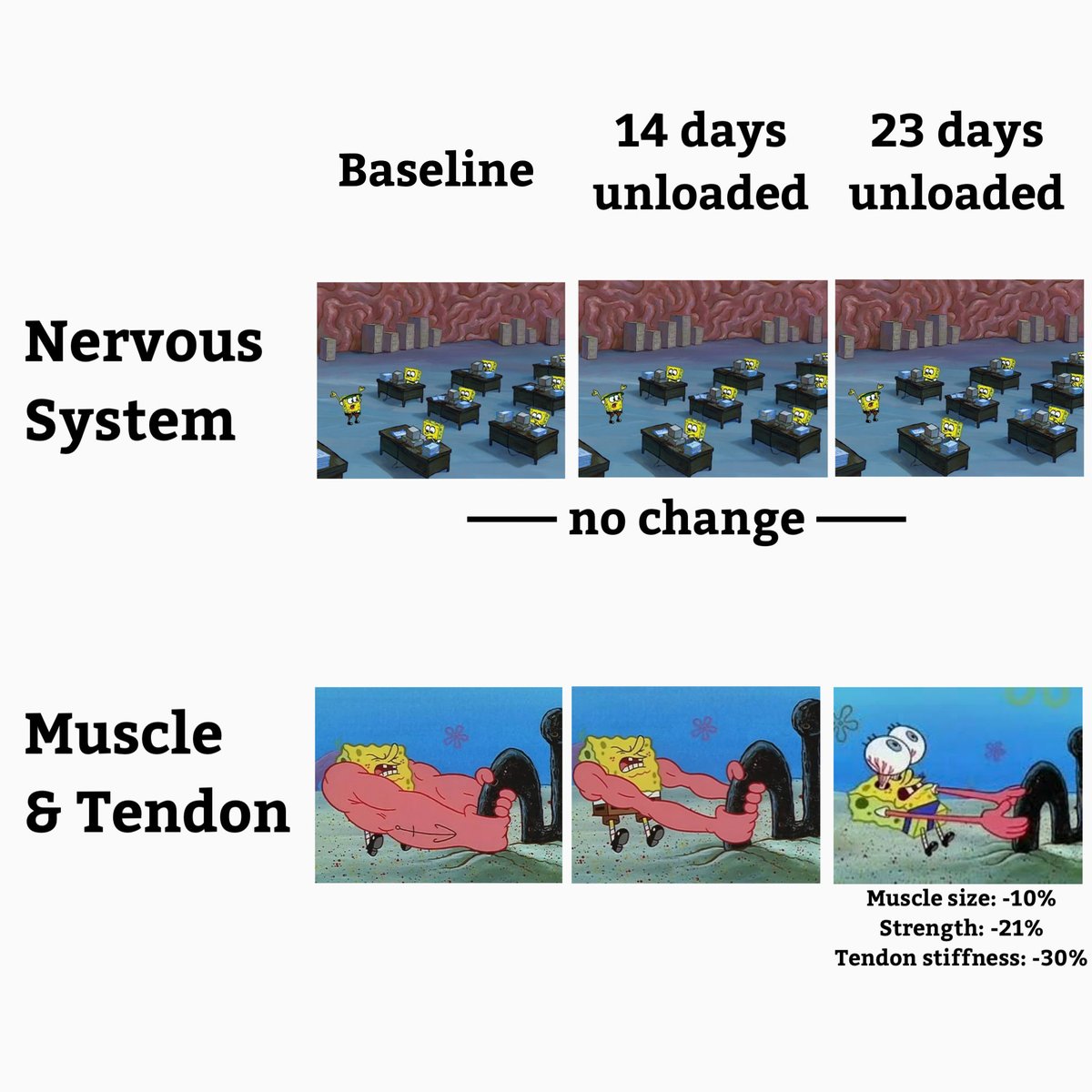
Tendons respond well to heavy but controlled progressive overload. Repeated for many weeks/months. Don’t skip this part.
Always amazed when cyclists in busy jobs, family fathers, do:
6x10 min threshold weekly
Fast-paced group ride in the weekends
Additional LIT work at VT1
And they lift heavy x2 per week
…and then wonder why they don’t improve.
Un marocain de l'Atlas 🇲🇦🗻 redescend des montagnes avec ses courses en glissant sur la neige sur une distance de plus de 2km avec une vitesse folle et sa chèvre "kharboucha" qui le suit en courant derrière.
Les vues des paysages sont à couper le souffle.
modern IV contrast dye for CT scans isn’t neprotoxic.
definitive imaging saves lives.
this is so simple but people & journals & textbooks keep on messing it up.
Did YOU want to watch CCTV's AI Martial Arts cartoon about the Straits of Hormuz crisis? Complete with fighting Persian Cats? Well I subtitled it for you so you can enjoy it in all its trope-laden glory! Remember kids, the mountains will stay standing while the green water flows, and the true art of war is not figuring out how to fight, but how to stop!🥷😼🦅