The @ILONewDelhi and @ncaer convened a Policy Brief Launch event on “Advancing Women’s Digital Financial Inclusion in the Platform Economy” on 24 August at the NCAER campus in New Delhi. The event opened with welcome remarks by Mr. Suresh Goyal, Director General, NCAER, followed by opening remarks from Ms. Michiko Miyamoto, Country Director, ILO DWT SA-CO/India. The event was chaired by Dr Ratna Sahay, Honorary Professor, NCAER.
The ILO–NCAER Policy Brief was presented by Dr Aakash Dev, Fellow, NCAER; Mr. Karun Gopinath, National Project Coordinator, ILO; and Dr Radhicka Kapoor, Senior Specialist–Employment, ILO DWT SA-CO/India.
The Policy Brief highlights affordable access to payments, savings, credit and insurance as critical enablers of decent work, while underscoring the potential of India’s Digital Public Infrastructure, platform-generated data and cash-flow-based lending to expand women’s access to finance. Discussions also emphasised the importance of gender-sensitive design, robust data protection and safeguards against algorithmic bias to ensure that digital finance translates into greater economic opportunity, income security and resilience for women.
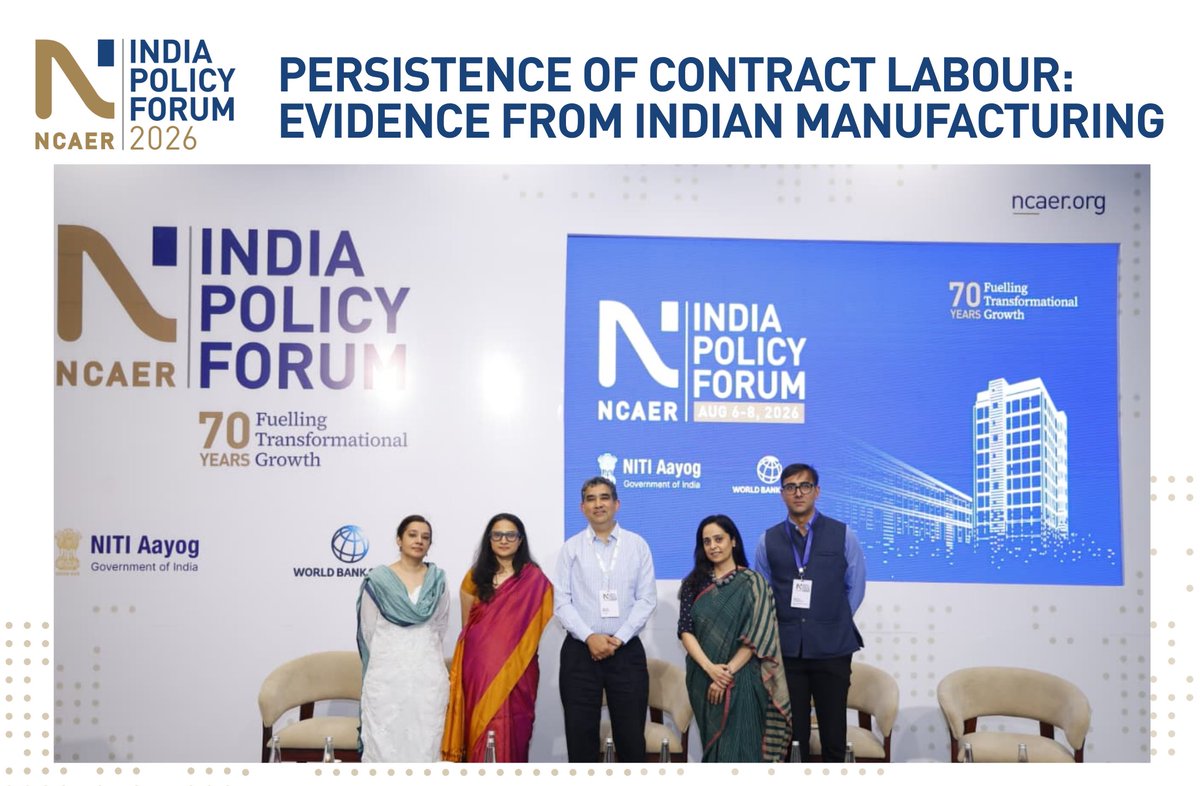
A research paper presented at NCAER's India Policy Forum (IPF) 2026 suggests that the sustained growth of contract labour—now accounting for more than 40 per cent of manufacturing employment—has significant implications for India's labour market policies.
The session was chaired by Rana Hasan, Director, Centre for Economic Growth of States, NCAER; formerly Regional Economic Advisor, South Asia Department, Asian Development Bank. It featured Dr Rahul Singh (SP Jain Institute of Management and Research) and Dr Vidhya Soundararajan (Centre for Advanced Financial Research and Learning, CAFRAL) as the paper's authors and presenters. The discussants were Dr Farzana Afridi (Indian Statistical Institute and NCAER), Dr Ritam Chaurey (Johns Hopkins University), Dr @Radhicka (International Labour Organization).
An insightful #IndiaAIImpactSummit session on AI’s impact on jobs. While automation risks exist, the real story is augmentation—AI automates tasks, not entire occupations.
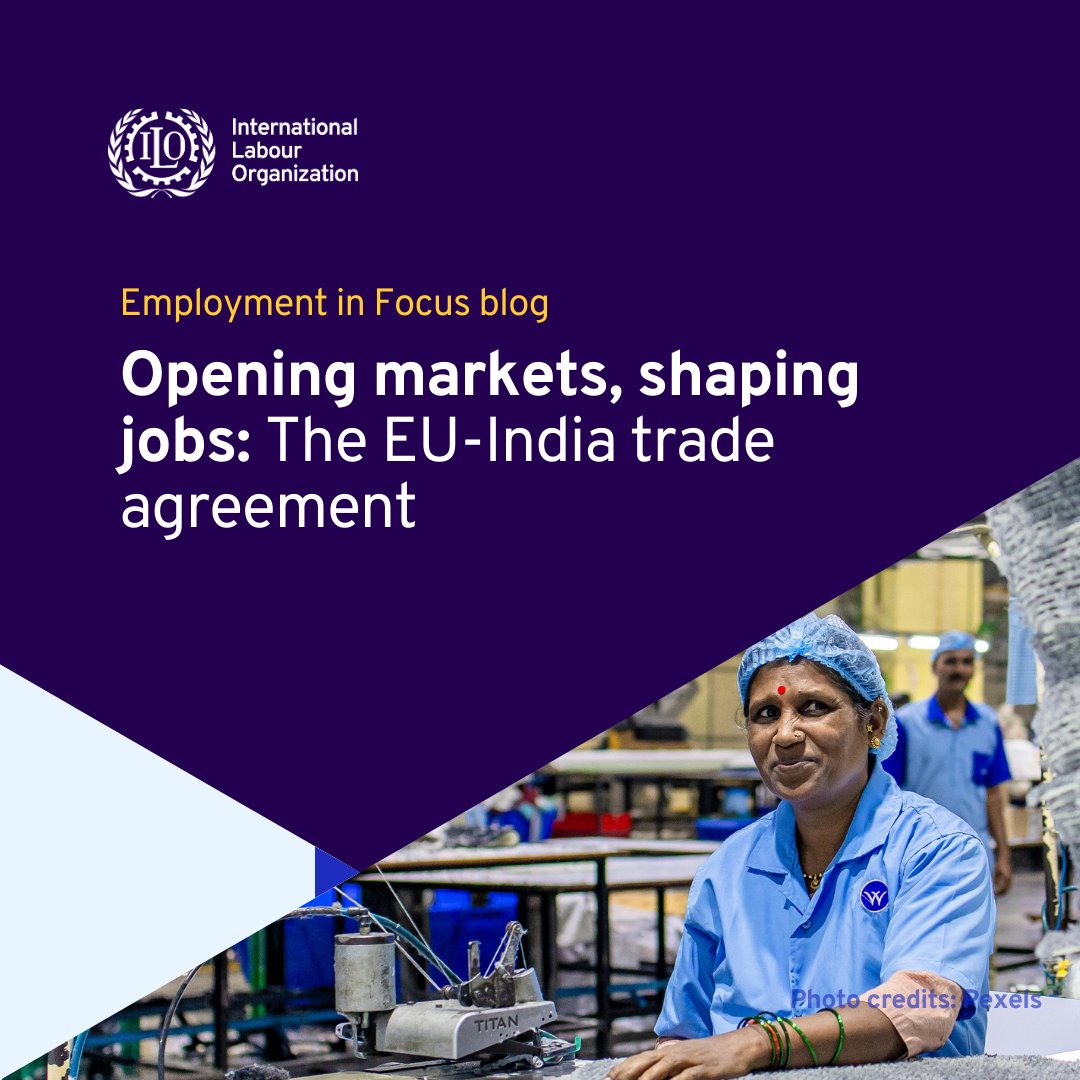
Can #trade agreements create better #jobs?
The EU-India trade deal has the potential to boost growth, wages and #Employment but only if trade policies are aligned with #skills development, labour market policies & sustainable enterprises.
Blog explains: https://t.co/Qwwc7HMb8i
The NCAER Data Innovation Centre, in collaboration with @GoIStats, hosted a conference on Enhancing Gender Statistics on January 15–16, 2026.
Policymakers, researchers, and statisticians discussed conceptual, methodological, and policy challenges in collecting and using data on gender. The two-day event concluded with key insights and takeaways to advance official data systems.
Read More:
PIB release: https://t.co/R0QwVICd5W
Blog: https://t.co/FJdCpvulof
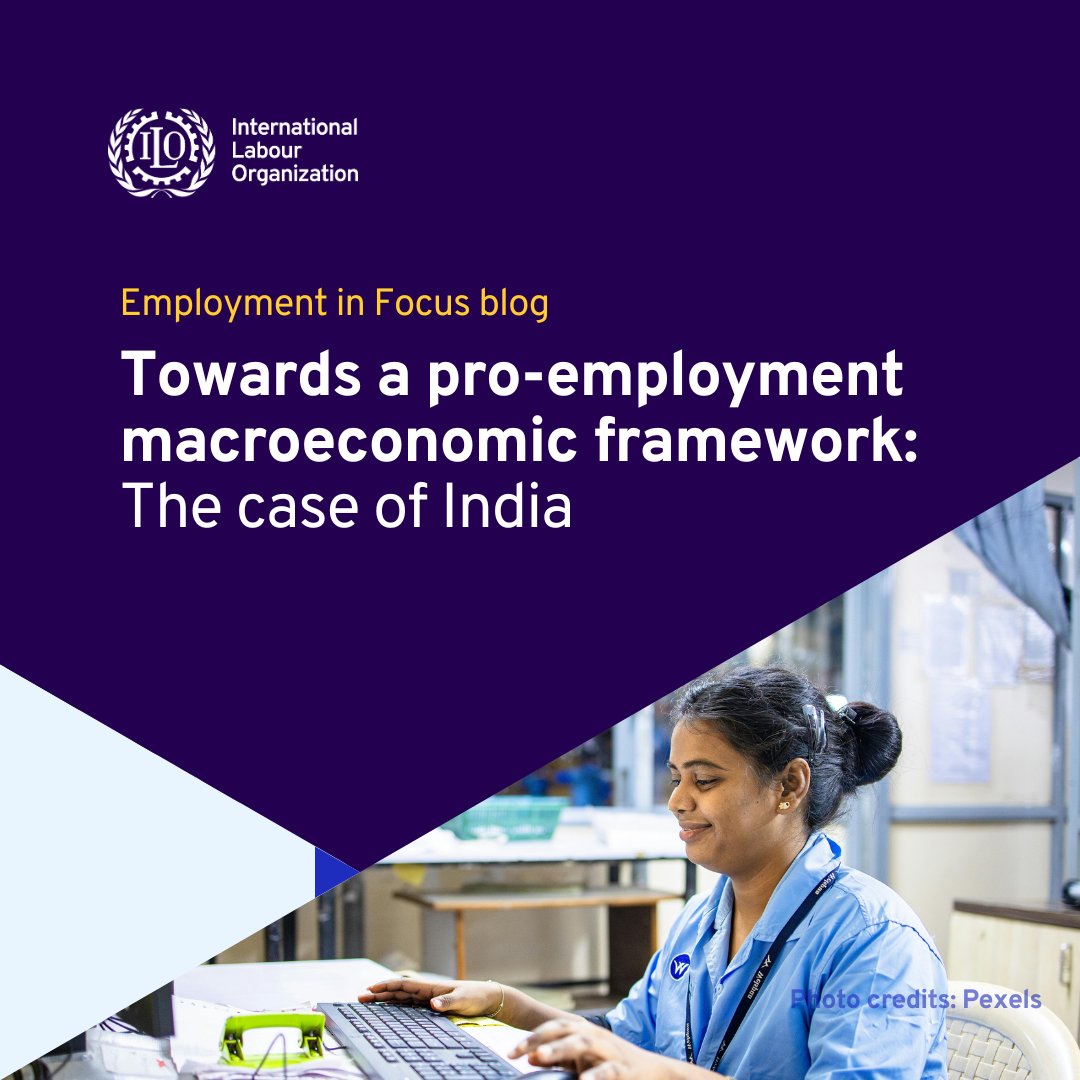
Beyond stability: budgets and central banks shape the #FutureOfWork
The new #EmploymentInFocus article calls for pro-employment frameworks where all fiscal and monetary choice is assessed by its impact on jobs, not just growth.
More here🔗https://t.co/u2OMfoIJUM
In many emerging economies, growth hasn’t led to enough decent jobs. Pro-employment macro policies-where fiscal & monetary tools boost labour demand—can drive structural transformation & make jobs central to development.
🔗https://t.co/zMWbKIRdXN
Emerging economies like #India face a double challenge: grow fast & create decent jobs.
The new Employment in Focus article highlights how pro-employment macro policies- strategic spending, job multipliers, & labour-aware monetary frameworks- can deliver inclusive development.
👉https://t.co/jg7DYXaYxk
NCAER and IHD jointly launched a book by NCAER’s Senior Advisor, Dr G.C. Manna, titled “75 Years of the Indian National Sample Survey” on June 30, 2025.
The event featured a panel discussion chaired by Professor S. Mahendra Dev, Chairman of the EAC-PM. Dr Saurabh Garg, Secretary, MoSPI, also addressed the gathering.
“In developing countries, people work informally not by choice, but due to a lack of formal jobs.” — Radhicka Kapoor, ILO
🌍 2B+ in informal work.
🎓 The free #EmploymentMasterclass tackles:
✔️ Youth jobs
✔️ Gender gaps
✔️ Crisis & climate
Join now → https://t.co/pdCeuymPQz
I am thrilled that ‘Harnessing Technology for Inclusive Prosperity’ - which includes my chapter with @Radhicka - has been selected for the 2024 Noteworthy Books by Princeton University’s Industrial Relations Section (https://t.co/W1IKCtM83c). Thank you, editors and my co-author!
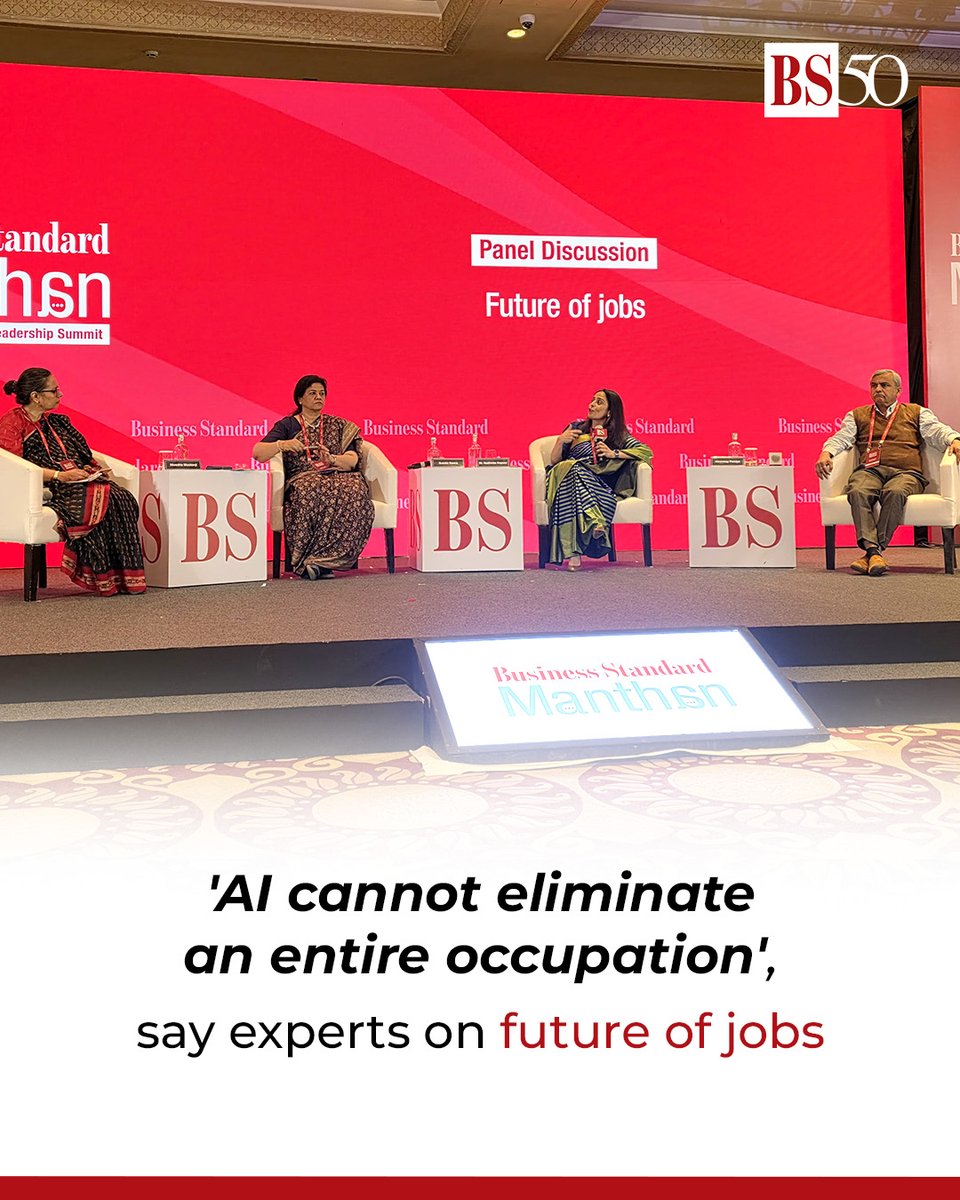
#BSManthan | #AI will augment #jobs rather than replace them, say experts at BS Manthan, highlighting the need for upskilling and policy support to maximise productivity and employment growth.
@SumitaDawra, Govt. of India | @Radhicka, @ilo
| Hiranmay Pandya, @BMSkendra
https://t.co/Jkn6T6g8LM
Based on ASI data on registered firms from 2000-16 @Radhicka & Krishnapriya note importance of older, larger firms in creating manufacturing jobs. Policies should promote entry of new medium-sized plants & growth of dynamic, incumbent small & medium firms https://t.co/SP2ytulwzc
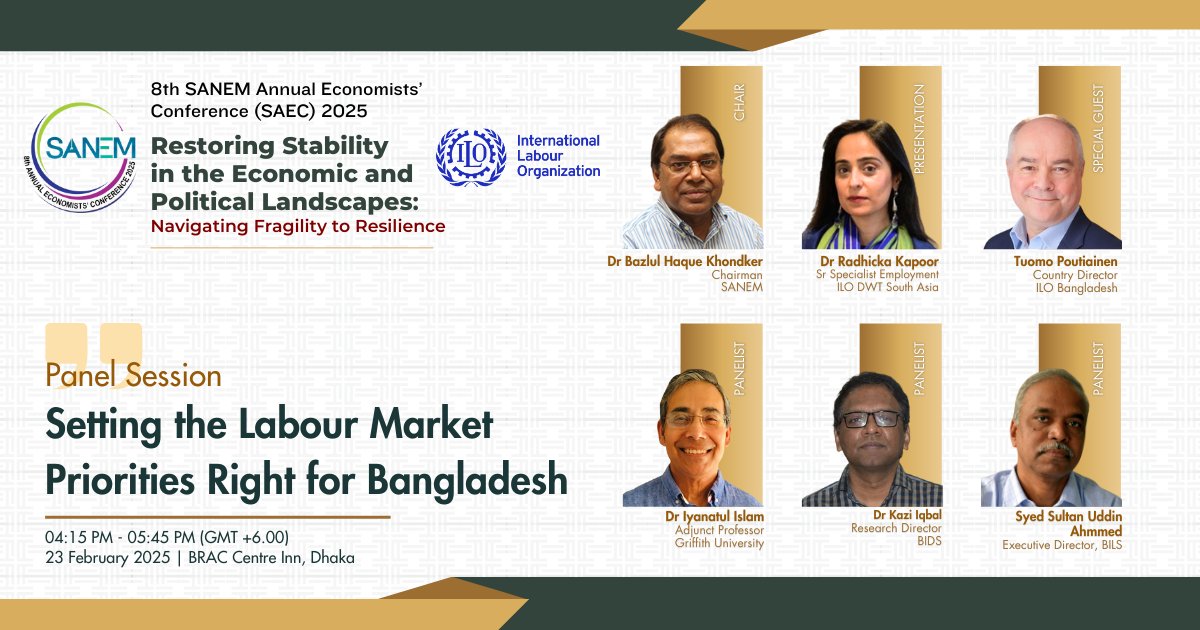
SANEM, in partnership with @ilobangladesh will organize a panel discussion on 𝐒𝐞𝐭𝐭𝐢𝐧𝐠 𝐭𝐡𝐞 𝐋𝐚𝐛𝐨𝐮𝐫 𝐌𝐚𝐫𝐤𝐞𝐭 𝐏𝐫𝐢𝐨𝐫𝐢𝐭𝐢𝐞𝐬 𝐑𝐢𝐠𝐡𝐭 𝐟𝐨𝐫 𝐁𝐚𝐧𝐠𝐥𝐚𝐝𝐞𝐬𝐡 at the 8th SAEC 2025.
Date: Sunday, 23 February 2025
Time: 04:15 PM – 05:45 PM (GMT+6)
One way to create jobs for both women & men is to invest in the care economy. This will Recognise, Reduce and Redistribute women's unpaid care work, free up time for paid work & leisure. Care economy = lab intensive + green jobs. I write for ICPP.
https://t.co/c32BxDduzr
Check out our piece (with @Radhicka Kapoor): 'Technology, Jobs, and the Future of Work in India' in the book 'Harnessing Technology for Inclusive Prosperity' https://t.co/GmOvUxQkLw that discusses how new technologies are reshaping economies and societies.
📢 @ILO_EMP_Policy podcast highlights the need for a new generation of employment policies centred on relevance to country-specific situations, and their implementation based on evidence and social dialogue.
Listen to the full episode 👉 https://t.co/K0fooBagw2
Very interesting piece on promoting equal norms for childcare. A great example of institutionalised childcare support is Germany's "kita" system, where parents can leave their toddlers during the day. This enables #women's participation in the #workforce!