The National Council of Applied Economic Research, India’s largest independent economic think tank, supports policymaking through research and data collection.
Irrigation helps climate resilience, but it’s not enough. NCAER’s study of 57 projects across 20 States: 68% of command-area households reported higher productivity and incomes; 67% outside reported stagnation or decline.
Read: https://t.co/rRSlEY6Xyk #ClimateResilience
"Greater equality in care work, plus formal part-time jobs, could lift India’s female labour force participation from 37% to 43%,” says NCAER’s Dr @aakash_dev94.
He shared the findings at a recent @ADB_HQ - @gatesfoundation workshop in Jakarta.
Read NCAER Working Paper No. 178: https://t.co/k6lwZBiGgk
Women’s safety is an economic imperative.
Safer infrastructure, gender-sensitive education and inclusive workplaces are key to bringing more women into quality jobs and unlocking India’s growth potential.
NCAER’s @BornaliBhandari writes in @businessline.
🔗https://t.co/C9lMvMHmuV
#WomensSafety #EconomicGrowth
📢 New paper: "Does respondent gender influence the measurement of household consumption and expenditure categories?
Drawing on IHDS-III data, NCAER faculty and IHDS team members Sharan Sharma, Pallavi Choudhuri and Sonalde Desai examine gender differences in reported consumption and expenditure across 34 categories. Published in the Journal of Survey Statistics and Methodology, the study finds that gender differences in expenditure reporting vary across categories, while remaining generally modest.
Key findings:
1. Gender effects are generally modest but vary across expenditure categories, with female respondents reporting lower non-zero values in 10 of the 13 categories analysed.
2. Annual education expenses show a notable exception: female respondents report approximately 17% higher average expenses than male respondents.
3. Shopping and expense-management responsibilities partially explain gender differences, while age, education and assistance during interviews have moderating effects on non-zero reported values.
The findings illustrate why respondent gender may need to be considered when interpreting household expenditure estimates and assessing survey measurement practices.
@snsharma | @Pallavi_Econ | @SonaldeDesai
Read More: https://t.co/msDNtqaeuV
We are inviting applications for the position of Associate Fellow – Centre for Gender and Macroeconomy (CGME) at the National Council of Applied Economic Research (NCAER), New Delhi.
Join our team and contribute to advancing research on gender equality, women's economic participation, and the macroeconomic implications of gender gaps in India.
Apply Now: https://t.co/rNAJ7OzAQK
For detailed information about the role, eligibility criteria, and application process, visit: https://t.co/k65hmv53ZG
Application Deadline: November 15, 2026
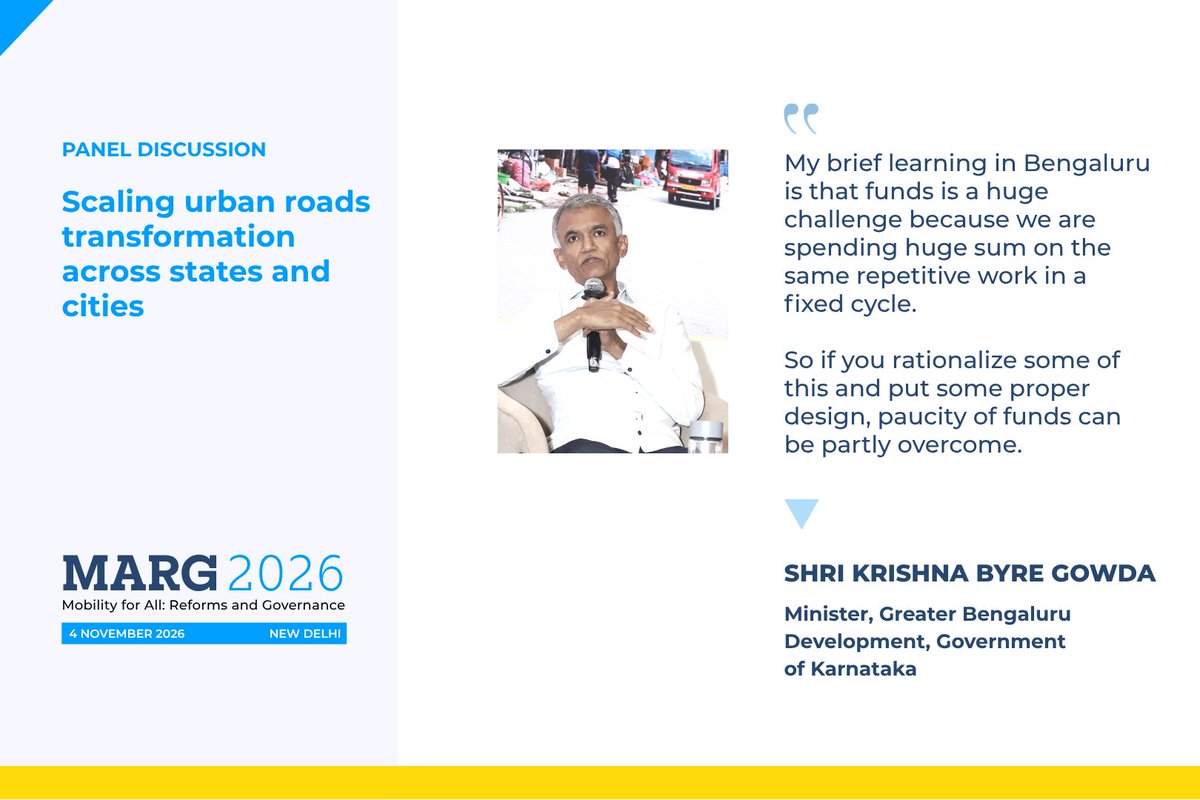
At MARG 2026, a conversation on scaling urban roads transformation across states and cities with:
➡️ Shri @krishnabgowda, Minister, @GBA_office, @Govt_Karnataka
➡️ Smt. Usha Padhee, Additional Chief Secretary, HUDD, Government of Odisha
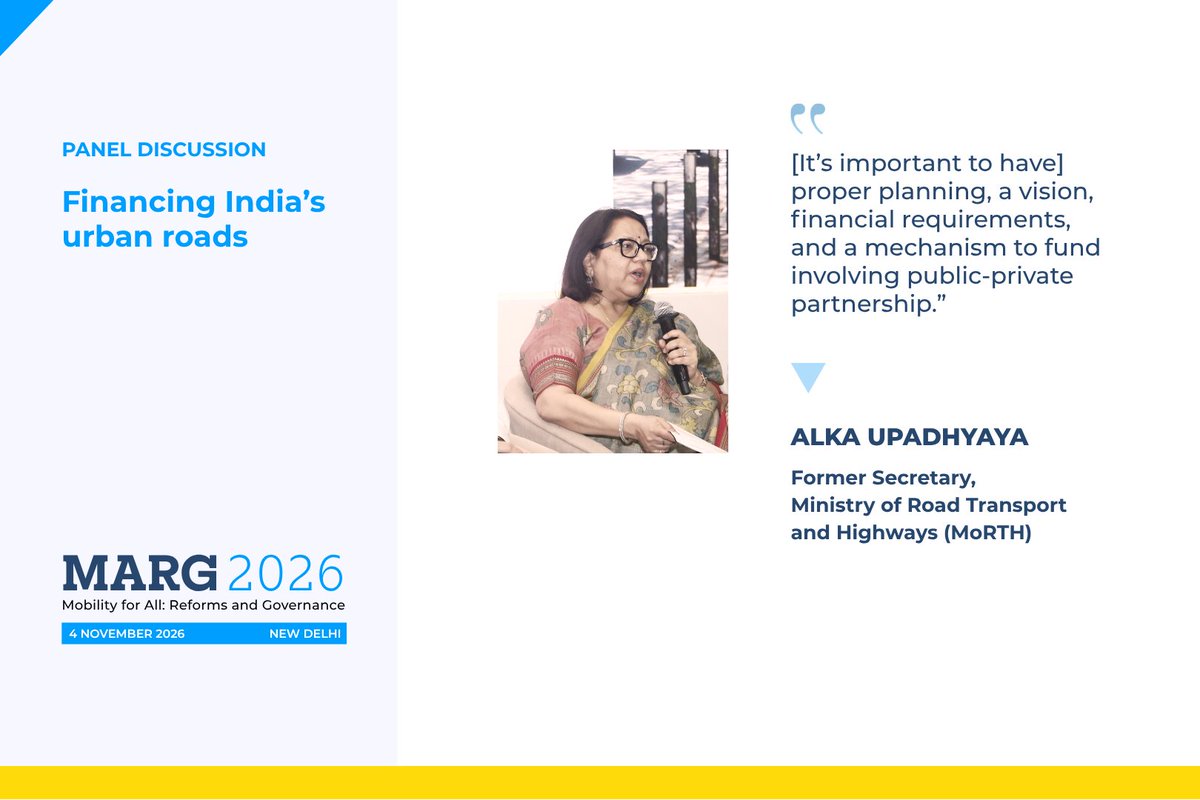
➡️ Alka Upadhyaya, Former Secretary, Ministry of Road Transport & Highways - India
Moderated by Nithya Ramesh, Director, Planning and Design, @janausp
--
MARG 2026 is organised by the NCAER, Jana Urban Space Foundation, and @Janaagraha1.
#MARG2026 #TransformingUrbanRoads #UrbanRoads
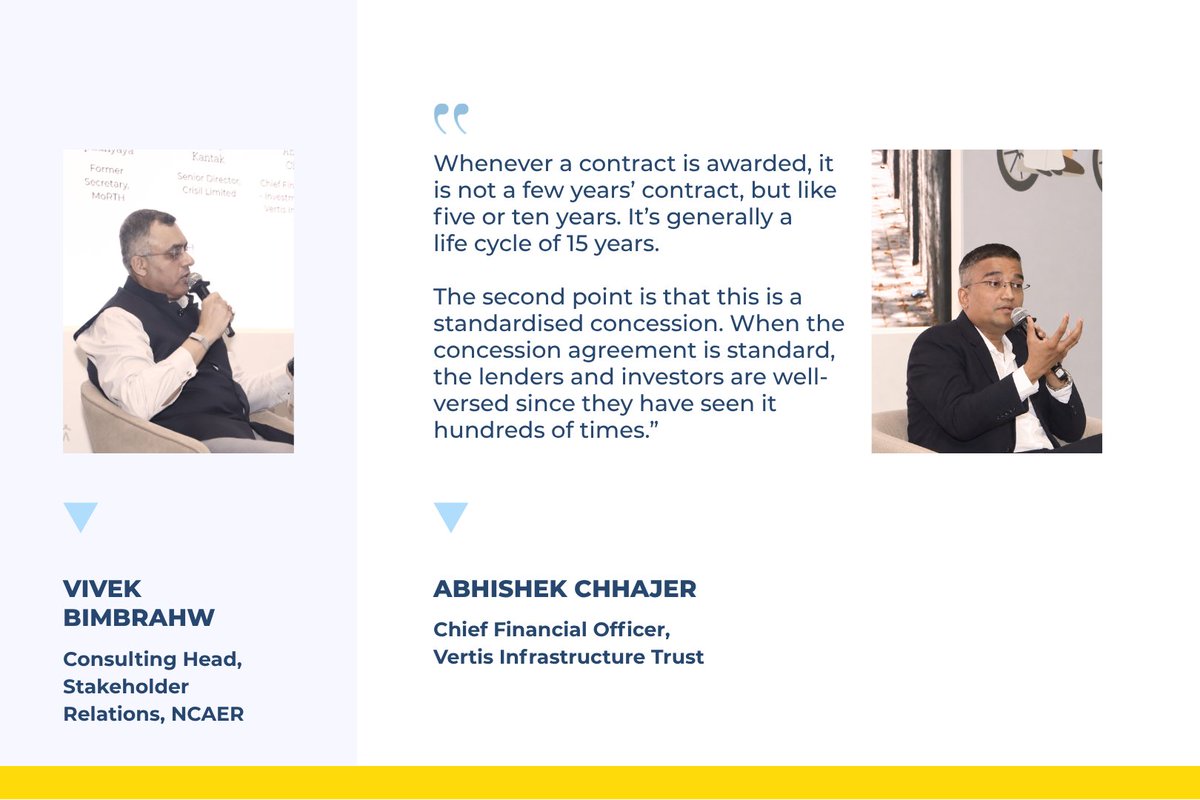
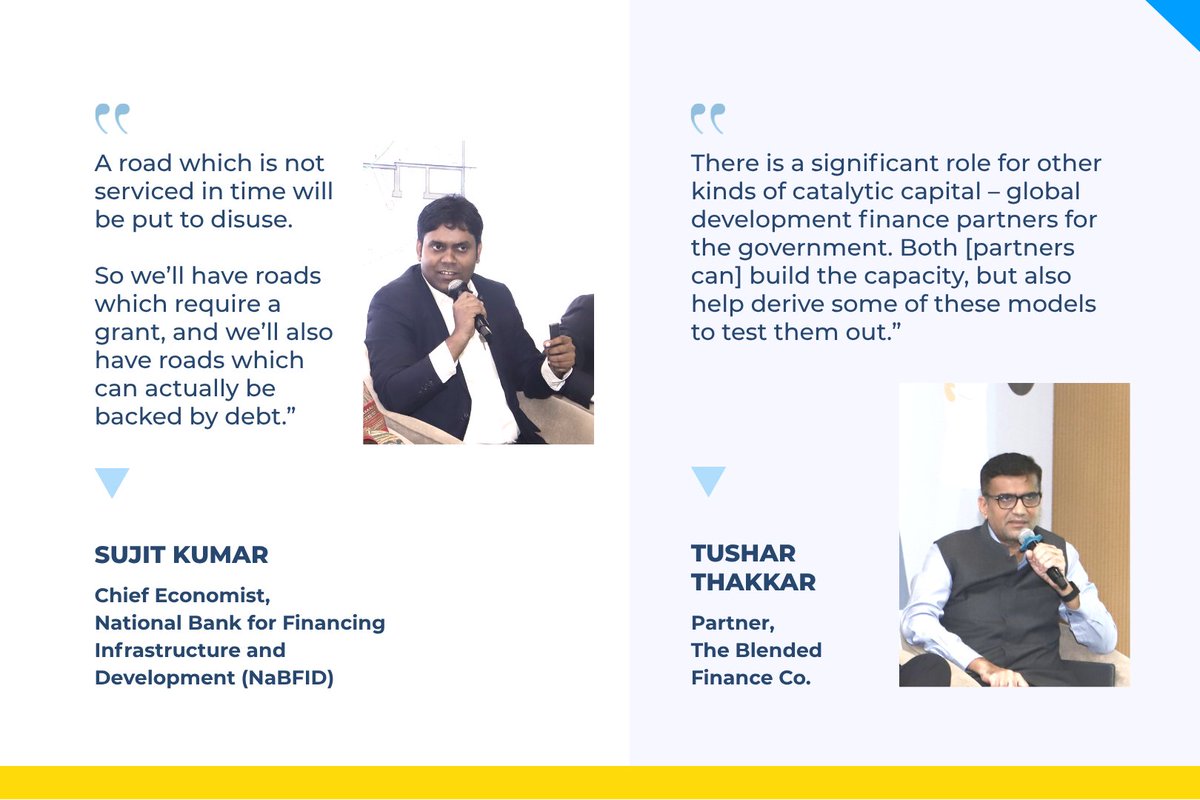
Insights from our panel on Financing India’s urban roads at MARG 2026:
➡️Alka Upadhyaya
➡️Abhay Kantak
➡️Abhishek Chhajer
➡️Sujit Kumar
➡️Tushar Thakkar
Moderated by Vivek Brimrawh, Consulting Head - Stakeholder Relations, NCAER.
#MARG2026 is organised by NCAER, @janausp and @Janaagraha1
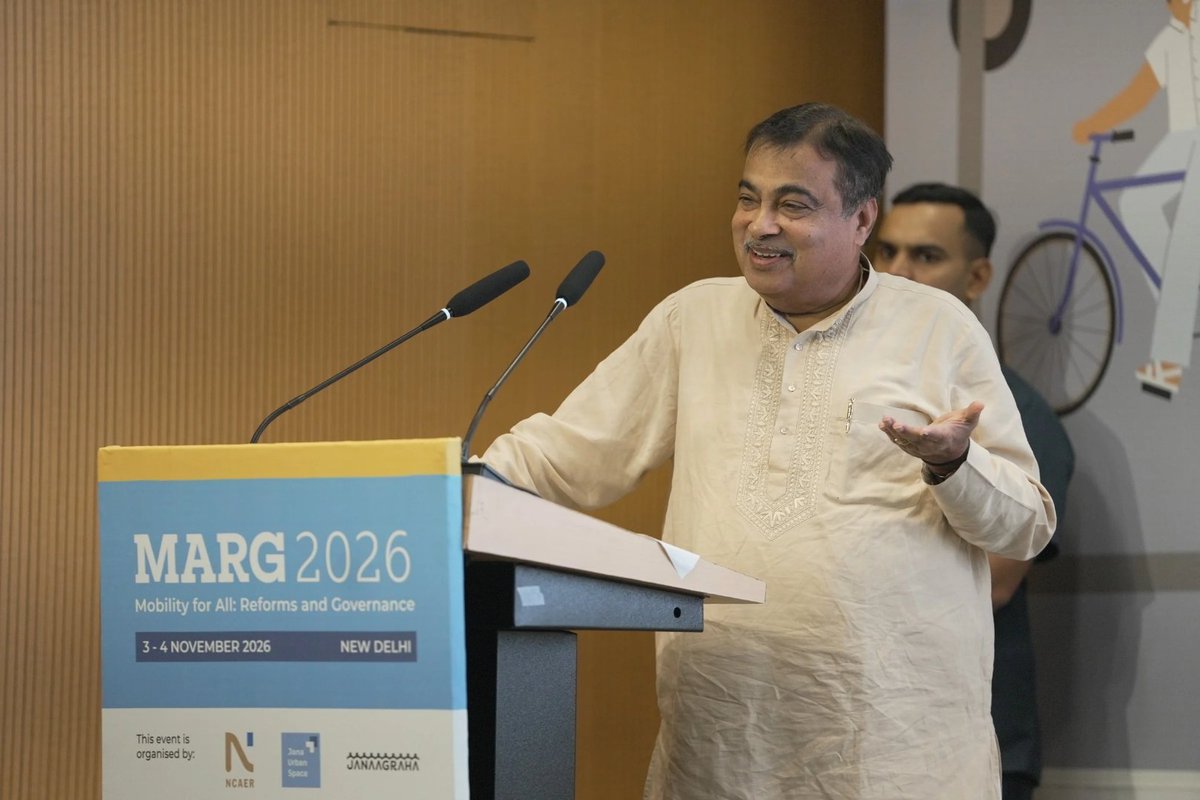
“India has transformed the journey between its cities. Together, we can now transform everyday journeys within them.”
Shri @nitin_gadkari, Union Minister of Road Transport and Highways, at #MARG2026, organised by NCAER, @janausp and @Janaagraha1.
Watch now: Shri @nitin_gadkari delivers the keynote at MARG 2026 on what on what the experience of building India’s highways can teach the planning and building of city roads, hosted at NCAER with @janausp and @Janaagraha1. [https://t.co/R1uhXksI2L] #UrbanRoads
Does education move everyone towards better employment at the same pace?
New research using panel data from NCAER’s India Human Development Survey (IHDS) examines how college education influences access to white-collar employment among young men in India. The study finds that while higher education can help individuals move out of casual work and into more secure occupations, the occupational advantages associated with a college degree are not shared equally. These findings highlight how social and economic advantages can reinforce existing inequalities even as access to higher education expands.
@SonaldeDesai | @Pallavi_Econ | @ihdscorner
Read the issue to explore the findings: https://t.co/YcPKPEsiF7
What happens when households must borrow to meet the costs of healthcare?
New research using two rounds of NCAER’s India Human Development Survey (IHDS) examines the links between non-communicable disease (NCD)-related healthcare expenditure, household borrowing, and impoverishment in India. The study finds that incorporating loan repayments into assessments of household welfare reveals levels of financial distress that conventional consumption-based measures often overlook.
@ihdscorner
Read the issue to explore the findings: https://t.co/YcPKPEsiF7
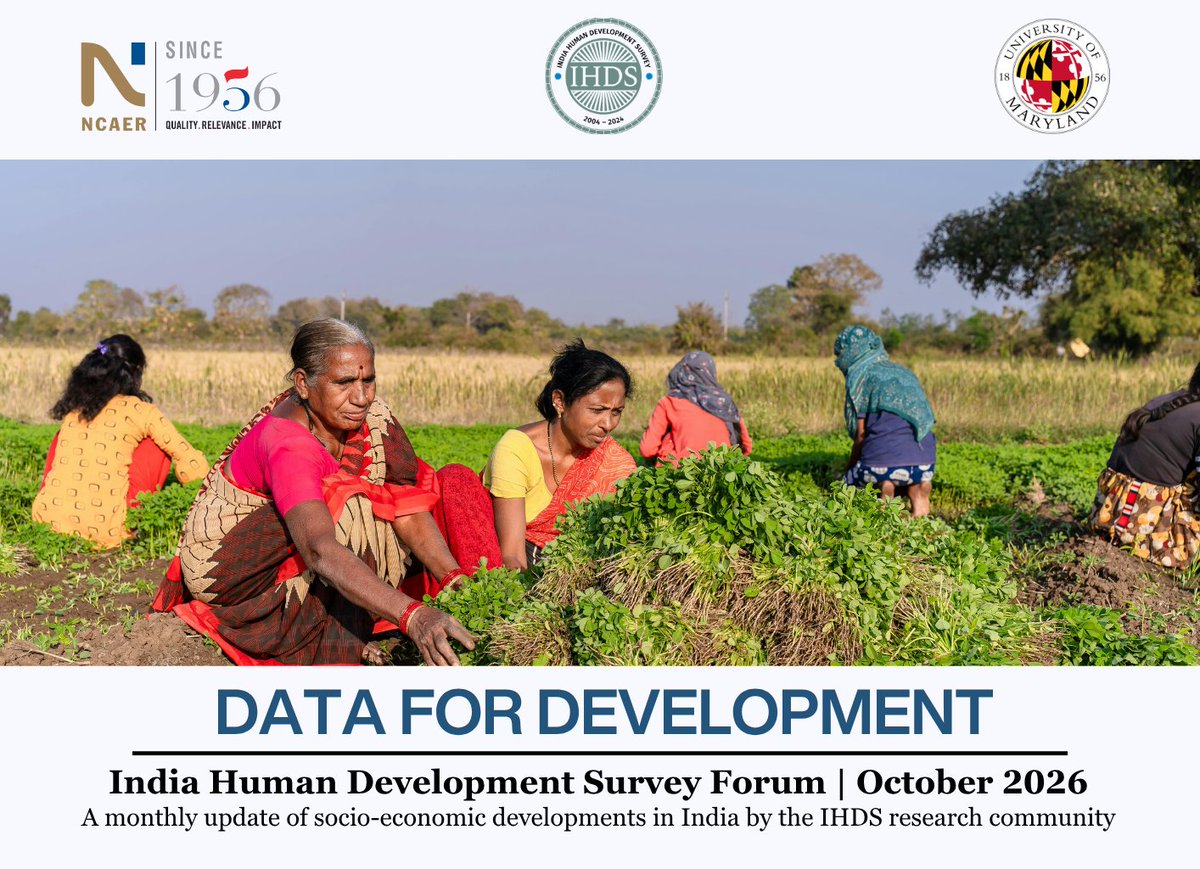
Explore the latest findings from the October edition of the IHDS Research Digest📊
Using NCAER’s India Human Development Survey data, this issue features two studies that examine: (a) how borrowing to meet non-communicable disease-related healthcare costs can deepen household impoverishment, and (b) how the occupational benefits of higher education vary across socioeconomic backgrounds. Together, these studies underscore how financial vulnerability and unequal access to opportunities continue to shape household well-being and reinforce persistent socioeconomic disparities.
@ihdscorner
Read the issue to explore the findings:
https://t.co/YcPKPEsiF7
Original Research Article: Sharma, S., Desai, S., Barik, D., & Sharma, O. P. (2024). Gone and forgotten? Predictors of birth history omissions in India. Demographic Research, 50, 929–966.
https://t.co/wlXbStWmpI
Research Team: Sharan Sharma, @SonaldeDesai , @DebasisBarik25 and Om Prakash Sharma.
Read more:
N-IUSSP Weekly Newsletter: Gone and forgotten? Omissions of birth histories in an Indian survey
https://t.co/imiS9Ecymr