The India Human Development Survey (IHDS) is a nationally representative, multi-topic survey of 41,554 households in 1503 villages and 971 urban neighborhoods.
The April edition of the NCAER IHDS Research Digest is out now!
Drawing on NCAER’s India Human Development Survey data, this issue features: (a) a study on intergenerational height disparities, highlighting the role of parental characteristics and education, and (b) research on how domestic remittances influence food security through market-based pathways. Together, these studies show how family conditions and income flows shape inequality and well-being.
Read more: https://t.co/HRHYnumyv0
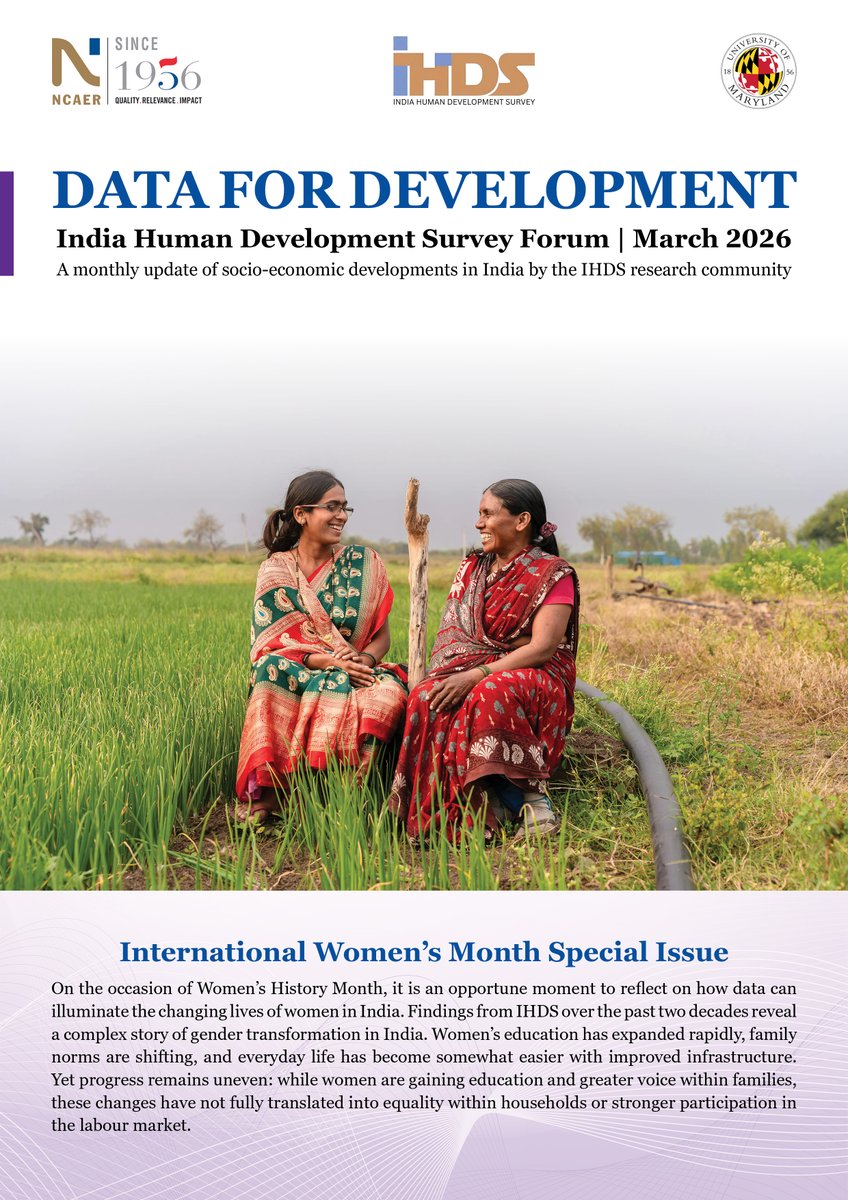
How have women’s lives in India changed over the past two decades?
On the occasion of Women’s History Month, this special issue of the NCAER’s IHDS Research Digest draws on two decades of @ncaer’s India Human Development Survey data to examine gender transformations in India. It highlights significant gains in women’s education, evolving family norms, and improvements in everyday well-being, while also drawing attention to persistent inequalities in household responsibilities and labour market participation.
Read more: https://t.co/TCkClpuJ3X
Can household financial shocks produce gender-differentiated educational setbacks?
New research using @ncaer’s IHDS-I and IHDS-II data shows that gender differences in secondary school dropout are shock-specific, with distinct patterns depending on the type and persistence of household economic adversity. Although girls have lower average dropout rates, their vulnerability increases under certain financial hardships, while boys are more likely to drop out in response to shocks that create immediate income pressures.
Read more: https://t.co/b4zIk6fZJH
📢 The February edition of the NCAER IHDS Research Digest is out now!
Using @ncaer’s data from the India Human Development Survey, this issue features (a) a study examining how household financial shocks produce gender-differentiated impacts on education and (b) research comparing the relative influence of education and wealth in shaping mortality risk in mid-adulthood.
Read more: https://t.co/b4zIk6frU9
NCAER webinar on Gender Transformation: Insights from the India Human Development Survey (IHDS), March 3, 2026 at 6:30 PM IST.
Celebrate Women’s History Month by joining the NCAER IHDS team, for a discussion on emerging insights from a survey of more than 40,000 households between 2004 and 2024.
@SonaldeDesai | @Pallavi_Econ | @snsharma | @DebasisBarik25 | @jruchi6 | @DibyasreeG | @ihdscorner
Register in advance for this webinar here: https://t.co/lqPBbJAFez
When migration reshapes livelihoods, who bears the hidden health costs?
Using @ncaer's IHDS-I and IHDS-II data, new research examines women’s health in migrant and non-migrant households in India, finding lower BMI and higher undernutrition among women left behind. The findings highlight how women’s empowerment and social networks interact with migration dynamics to shape health disparities, underscoring the need for supportive social and institutional frameworks.
Read the issue to explore the findings: https://t.co/ZvLpiIQMdS
When transfers are unconditional, what happens to learning?
Using @ncaer's IHDS-I and IHDS-II data, new research examines whether a Samaritan’s Dilemma arises from in-kind transfers to elementary school children in India. It finds differential learning outcomes between recipient and non-recipient children, highlighting how policy design, particularly incentive alignment, shapes the effectiveness of education-related transfers.
Read the issue to explore the findings: https://t.co/ZvLpiIQeok
Explore the latest findings from the January edition of the NCAER IHDS Research Digest📊
Using @ncaer's India Human Development Survey data, this issue features (a) an analysis of how the design of education-related transfers shapes learning outcomes, and (b) an examination of how household migration relates to women’s health and nutrition.
Read the issue to explore the findings: https://t.co/ZvLpiIQMdS
How can reliable district-level income estimates be generated from limited survey samples?
Using @ncaer’s IHDS-I and IHDS-II data in conjunction with population census data from 2001 and 2011, this study applies a small area estimation framework to assess gaps in direct survey-based income estimates at the district level.
By integrating household survey and administrative data, the analysis demonstrates how model-based approaches enhance the reliability of income distribution estimates in both rural and urban areas.
Read more: https://t.co/iBHHLUwxg9
📢 The December edition of the NCAER IHDS Research Digest is out now!
Using @ncaer’s India Human Development Survey data, this issue features - (a) a study on how formal credit access influences labour allocation decisions among rural workers and (b) new research employing small area estimation (SAE) to address limitations of survey-based measures of district-level income inequality.
Read the issue to explore more: https://t.co/PT2HFuTOSy
Can changes in inheritance rights influence women’s agency?
Using @ncaer’s IHDS data, this study investigates state-level amendments to the Hindu Succession Act and finds that these reforms are associated with improvements in women’s economic participation, attitudes toward intimate partner violence, and various dimensions of physical and civil autonomy. The effects differ across socio-economic groups and settings, underscoring the varied contexts in which legal reforms shape women’s lives.
Read the issue to explore the findings: https://t.co/GkG3jEm3k6
How far does the extended family shape children’s educational prospects?
New research using @ncaer’s IHDS data examines the influence of grandparents’ education on household spending on children’s schooling. When considered alongside differences in family structure, the heterogeneous effects of extended family members highlight the important role families play in prioritizing children’s learning.
Read the issue to explore the findings: https://t.co/GkG3jElvuy
Explore the latest findings from the November edition of the NCAER IHDS Research Digest📊
Using @ncaer’s India Human Development Survey data, this issue presents (a) an analysis of how extended family members shape household spending on children’s education and (b) a study examining how amendments to inheritance laws relate to multiple dimensions of women’s empowerment.
Read the issue to explore the findings: https://t.co/GkG3jElvuy
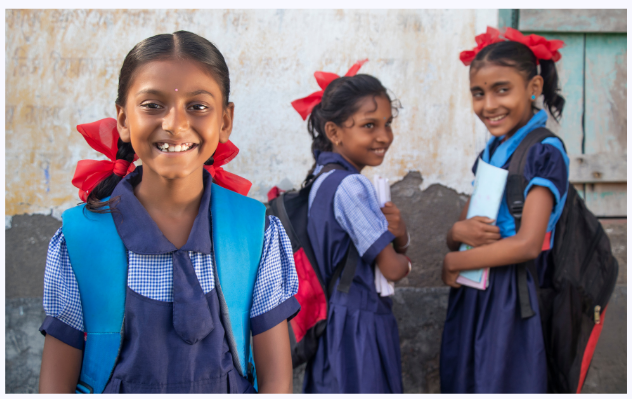
Scholarships don’t just ease financial burdens; they transform school attendance.
Using @ncaer’s IHDS data, new research finds that full scholarships in India’s public schools cut absenteeism by almost 35%, particularly benefiting girls, minority communities, and low-income households.
Read More: https://t.co/7n1LXFHLa1
@tanmay_devi | @ihdscorner
Role of aspirations and insecurities in shaping conspicuous consumption in an emerging economy.
New research using @ncaer’s India Human Development Survey data explores how income inequality induces households to undertake consumption decisions, which offer a fleeting sense of wellbeing while undermining long-term productive investments.
Read More: https://t.co/7n1LXFIiZz
@saravana_iimc, @Rashmish, @ihdscorner
📢 The October edition of the NCAER IHDS Research Digest is out now!
Using @ncaer’s India Human Development Survey data, this issue features research on – (a) how rising income inequality influences perceptions of prosperity and (b) how school scholarships reduce absenteeism and expand access to education?
Read the issue to explore the findings: https://t.co/7n1LXFHLa1
How has private schooling shaped learning inequality in India?
Using NCAER’s India Human Development Survey data, NCAER faculty Dr Athira Vinod presented a paper titled “Stratifier or Equaliser? Heterogeneity in Private Premium in India Over Two Decades” co-authored with Shriyam Gupta on 10th October 2025 at the Economics of Education session of the Young Scholars' Conference 2025 organised by the Centre for Economic Studies and Planning at Jawaharlal Nehru University.
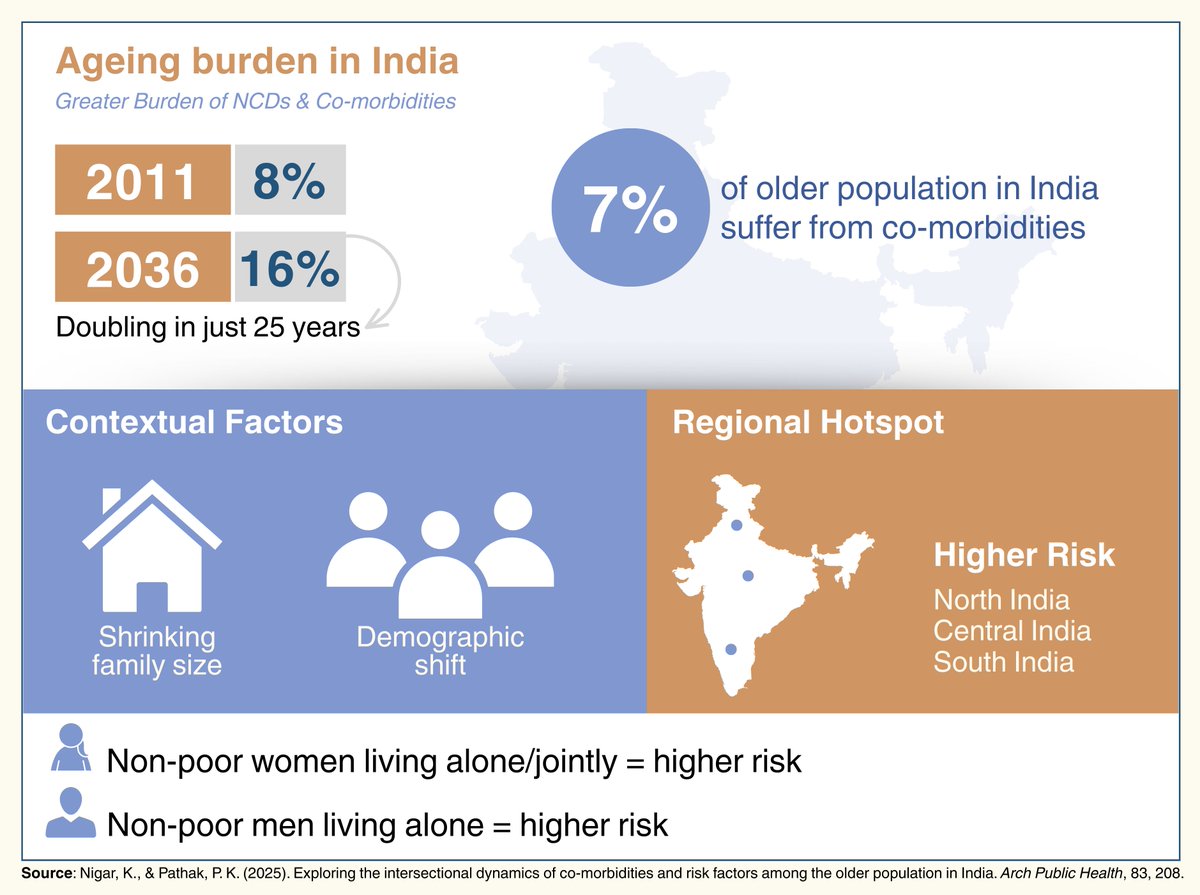
How intersecting risk factors and co-morbidities affect the elderly in India?
New research using @ncaer’s IHDS-II data explores demographic, socioeconomic, lifestyle, and contextual determinants of co-morbidity among older Indians.
Read More: https://t.co/BjXWaJUVyp
How can we reliably measure household’s economic well-being?
Using longitudinal data from @ncaer’s India Human Development Survey, a new study finds that asset indices consistently track long-term economic well-being better than income or consumption.
Read More: https://t.co/39T1QcNygh
@BharSoumyajit | @ihdscorner
📰 Out now! Explore the September edition of the NCAER IHDS Research Digest.
Using @ncaer’s India Human Development Survey data, this issue includes
(a) study on the reliability of asset indices compared to income or total expenditure in assessing household’s long-term economic status and
(b) research exploring the prevalence and determinants of co-morbidity among older Indians, highlighting critical insights for policies aimed at household well-being and promoting healthier ageing.
Read the issue to explore the findings: https://t.co/39T1QcO65P