Official account for Radionuclides for Health UK
Connecting academia, industry and government to establish UK production of radionuclides for cancer treatment
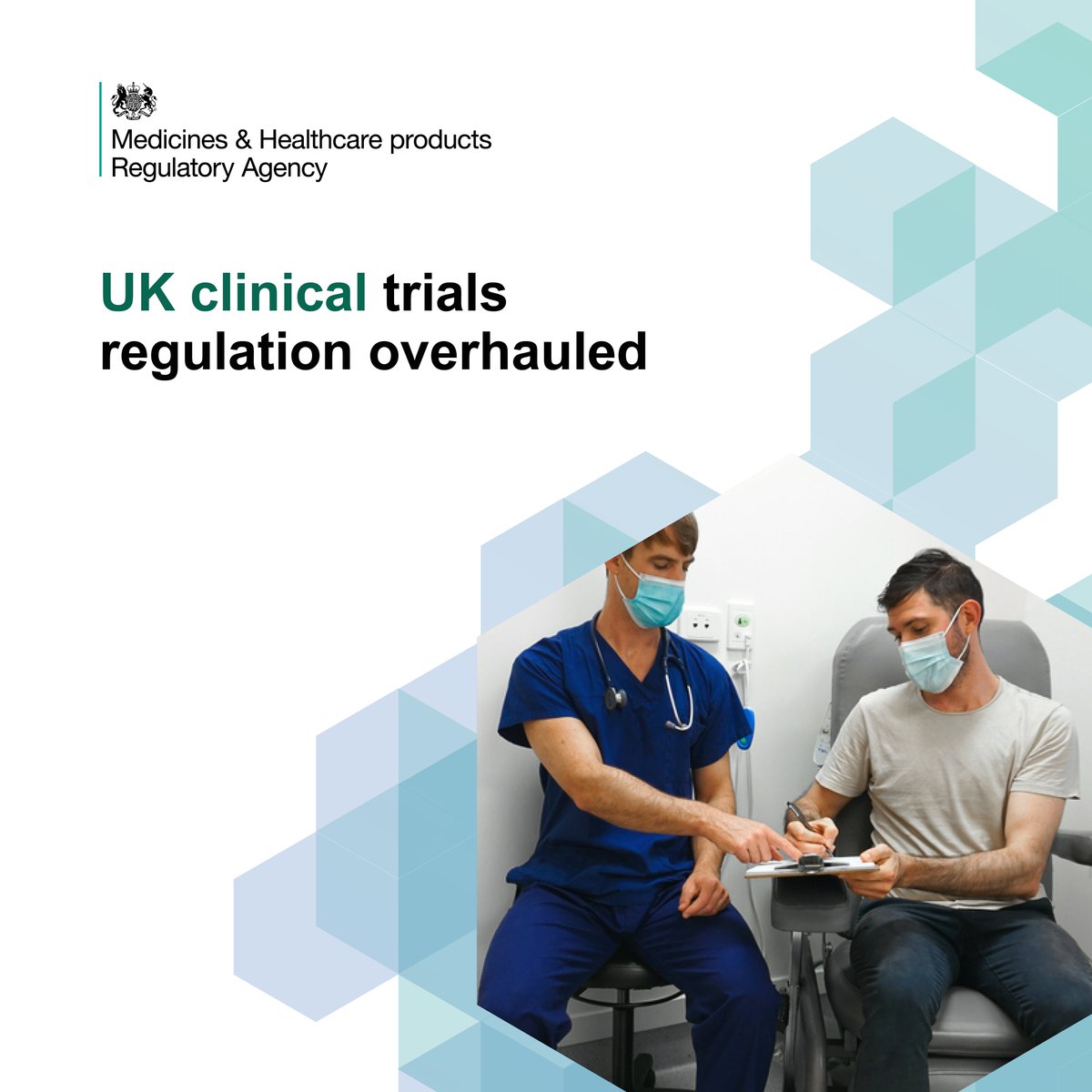
@MHRAgovuk announced today they will be changing legislation for diagnostic radiopharmaceuticals making it simpler for them to be used in clinical trials.
We're working with support from partners to make it faster and easier to gain approval and to run #clinicaltrials in the UK. This is the biggest overhaul in UK clinical trials #regulation in over 20 years 👉 https://t.co/fRmaGaaowT
Radionuclide Production in the UK
@RadionuclidesUK
📢Registration and abstract submission are now open!
https://t.co/qi4KBck87H
📅18 October 2023
📍Governors Hall, St Thomas' Hospital, London.
☢️Radiochemistry Group New Researchers Meeting 2023!
Join us in Sheffield on the 20-21st July.
NRM is a fantastic opportunity for PhD students and early career researchers to present their work at a national conference and network with their peers!
1/3
#AnywhereChem#Radiochem
Around 700,000 nuclear medicine procedures using radionuclides are performed each year in the UK. The Medical Radionuclide Innovation Programme (MRIP) up to £4m Innovation Project Call will support the development of technologies and techniques. https://t.co/xLv3hf9FCY
The Medical Radionuclide Innovation Programme Innovation Project Call is now open. Providing up to £4 million worth of funding to support the development of technologies and techniques to enable future access to medical radionuclides. https://t.co/xLv3hfadsw (Image @sciam)
Finally the news is more official, I am now an @KingsImaging@The_MRC New Investigator Research Fellow on an exciting project with alpha particle-emitters working with @Viewpoint_MT at Perspective Therapeutics through @RadNetCRUKCoL@RadionuclidesUK
https://t.co/ZB9DltdGYe
Another extraordinary day at @PeterMacCC. We gave cycle #17 of Lu-177 PSMA-617 to a patient with prostate cancer. Continues to benefit 4+ years. Bloods and renal function normal.
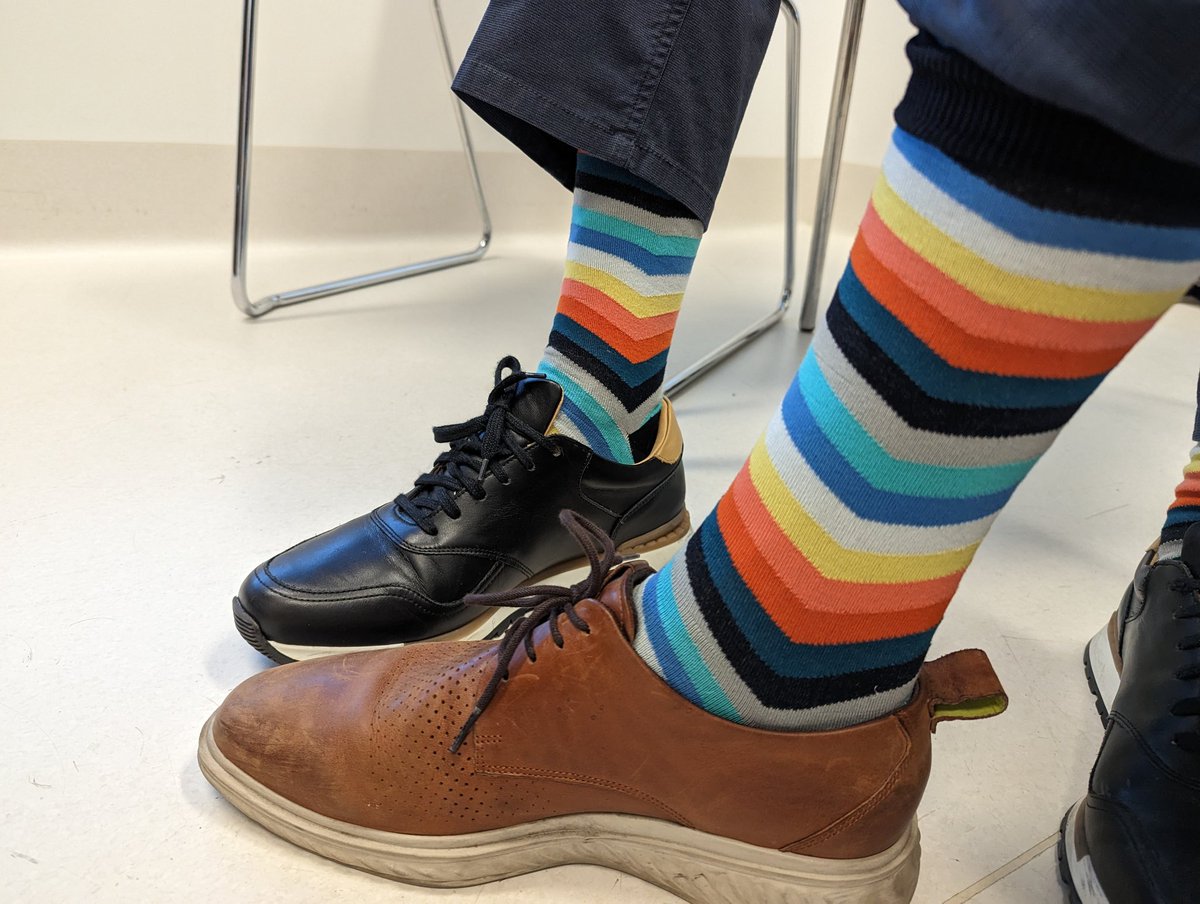
Even more extraordinary, We were both wearing the same socks. @pros_tic
That was an exhilarating talk with Jen from @RadionuclidesUK@KingsImaging with people at the Dutch Embassy around the exciting future of using radioactivity to treat cancer and the reactors that are needed to make this happen!!
Happy to announce publication of @EAHPtweet –#EANM joint statement on availability of radiopharmaceuticals in context of revision of pharmaceutical legislation. Check out our policy recommendations on a flexible regulatory framework for low-volume products.https://t.co/oh8BFnuJ6h
Together with @officialEANM we have issued a Joint Statement on the availability of radiopharmaceuticals in the context of the revision of the general pharmaceutical legislation! You can read it here 👉 https://t.co/114mNCl2Al
#HPcare4U
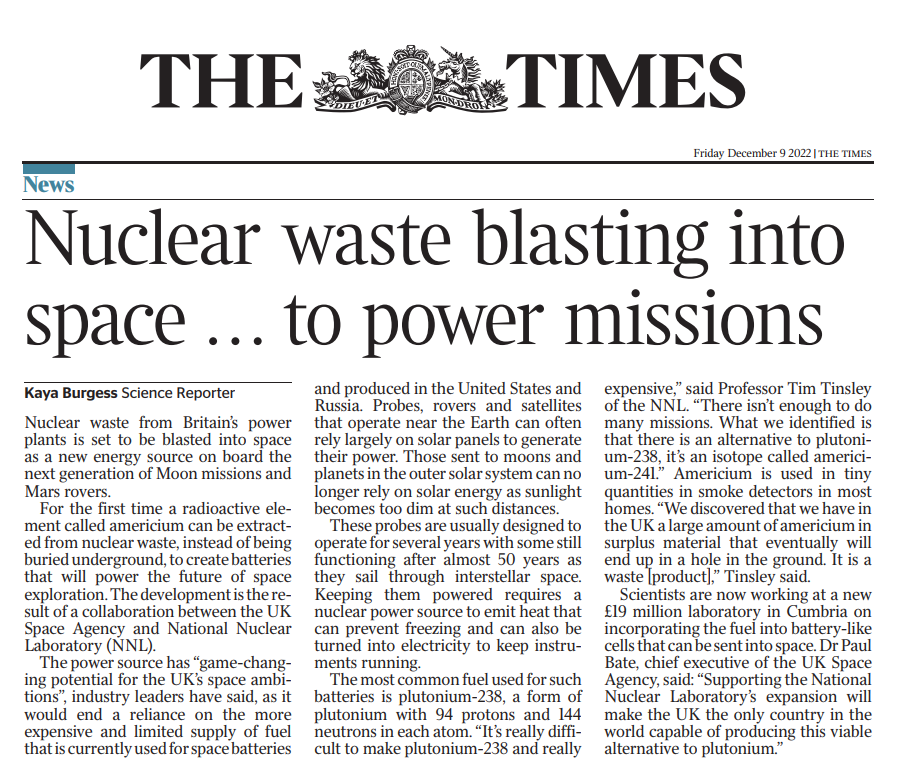
Nuclear legacy material isn't just useful for #NuclearMedicine applications and #CancerResearch it can also be used to power #space batteries!
@SpaceParkLeic@UKNNL are pioneering new and exciting ways to use nuclear legacy material - keep up the fantastic work!
Read more about our collaboration with @spacegovuk on the world's first space battery powered by British fuel, Americium-241 in The Times. #NuclearSciencetoBenefitSociety
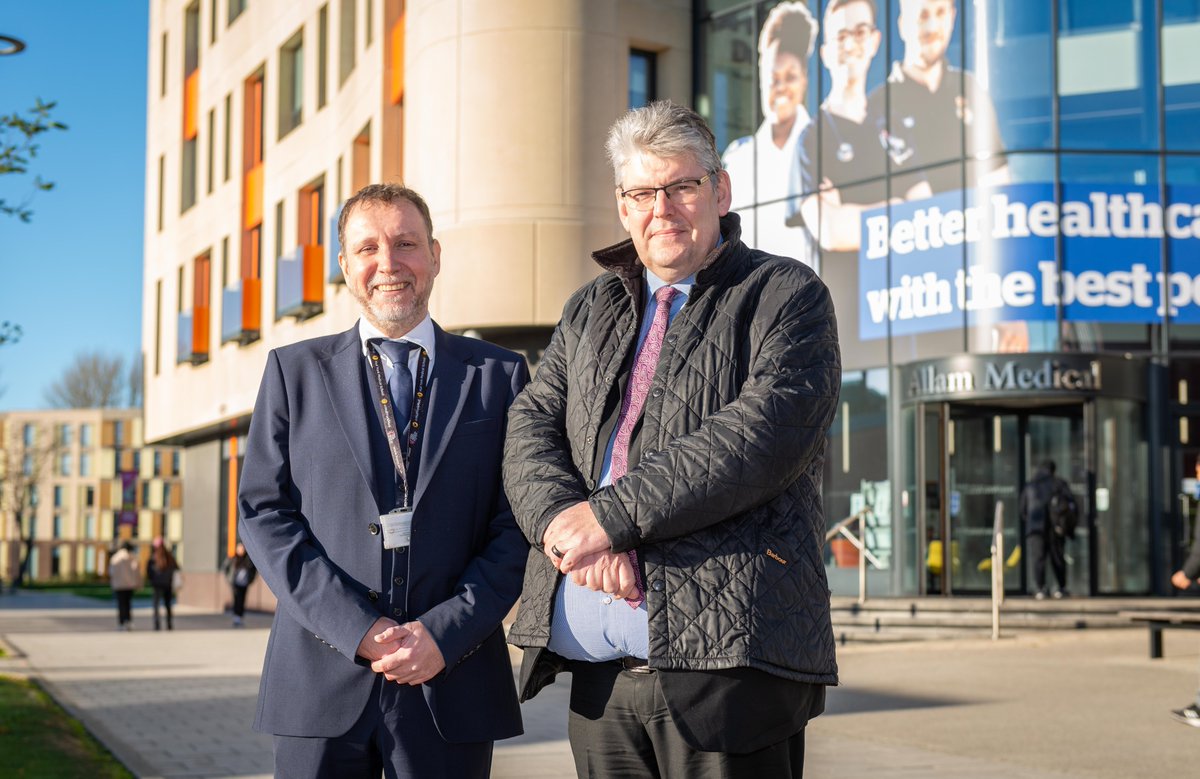
Trip to @UniOfHull@HullHospitals@DaisyAppeal reinforces how vital medical radionuclides and their applications are in NHS services, such as in diagnostic imaging and cancer therapy
Yesterday, Chief Scientific Advisor @psmonks visited @HuMIC_ to launch a £6m Medical Radionuclide Innovation Programme – a new scheme developing technologies which will produce nuclear materials for diagnostics and cancer therapies #InnovationNation
There will be a shortfall in Mo-99 production—and hence a shortage of Mo-99/Tc-99m generators—through late November of this year. Check the Advocacy/Radiopharmaceutical Supply News page on the SNMMI website for the latest updates. https://t.co/ySxjbUE4Es #NuclearMedicine
Right now there are shortages of the radioactive components essential for #NuclearMedicine drugs (Tc-99m, I-131 and Tl-201) and this is impacting #NHS patients.
We call on the government to secure supply for the UK
https://t.co/l6KpUXplhW
Our chief radiopharmacist has called this the worst Mo99 shortage in a decade - it will have a marked impact on Nuclear Medicine tests using Tc99m (a decay product of Mo99) over the next three weeks.
Mo-99 and I-131 shortages are expected through and beyond the third week of November due to a delay in restarting the BR2 reactor after scheduled maintenance. https://t.co/MYKCp7bzDj
#NuclearMedicine