HOW LONG DOES IT TAKE TO FORM A HABIT
1) Drinking enough water daily → 21 days
2) Waking up early → 21 days
3) Working out consistently → 8 weeks
4) Eating clean → 6 weeks
5) Reading daily → 21 days
6) Building discipline → 66 days
7) Controlling anger → 90 days
8) Quitting social media addiction → 8–10 weeks
9) Boosting confidence → 45 days
10) Improving sleep quality → 30 days
11) Reducing sugar intake → 21–30 days
12) Developing a meditation habit → 8 weeks
13) Keeping your home organized → 30–45 days
"@IndiGo6E I reported a mishandled baggage issue (Ref: PAT6E14808), but my bag is still missing. Your team asked me to share a bag image, but the delay is causing a lot of inconvenience. Please resolve this at the earliest. #LostBaggage#CustomerSupport"
@DearS_o_n Best ways to sharpen communication:
1. Listen more, talk less
2. Master eye contact
3. Drop filler words (like “uh” and “um”)
4. Use pauses—they add impact
5. Speak with purpose, not to impress
6. Read daily to expand your vocabulary
That's what I did when I was younger.
' Story of every Medico '
12th - Study hard once you
gets MBBS seat life will be easy...
MBBS- again study hard once you get PG ( clinical) life will be easy...
PG - again study hard once you get Super speciality life will be different...
Doing this again and again there is hardly any life left !!
There is no end to this 'study ' part in our life..
What is your story??
#MedTwitter
#MedX
#MedEd
#MBBS
“Clowns are the pegs on which the circus is hung.”
— P. T. Barnum
The Ministry of Health and Family Welfare, Government of India, Indian Pharmacopoeia Commission has suddenly woken up to the fact that non-steroidal anti-inflammatory drug (NSAID) like mefenamic acid (mostly prescribed in short term for painful period cramps) causes a side effect called as DRESS syndrome (Drug Reaction with Eosinophilia and Systemic Symptoms), a condition first described in 1936 (!!!) from treatment due to anti-serizure drugs
I am not sure which joker thought this has to be a news piece because the whole country is now panicking on this absolutely nonsense alert on one of the safest drug out there on a side effect that is literally not reported in published literature from India.
DRESS syndrome is a well known BUT extremely extremely rare (yes I used two extremely's) adverse event associated with painkillers such as mefenamic acid
The most common drugs that lead to DRESS syndrome are anti-seizure medications (almost 50% cases reported world-wide) such as carbamazepine, phenytoin and phenobarbitone, antibiotic such as minocycline and the drug given for gout, called allopurinol. Carbamazepine anti-seizure drug has been reported to be implicated in most DRESS cases world over - 27% of all reported cases!
https://t.co/7VbXYYHlXR
NSAID causing DRESS syndrome reported world-wide makes hardly 3-5% of cases (WORLDWIDE!)
- of this, indomethacin (a painkiller that is seldom used nowadays) is most commonly implicated, not mefenamic acid.
https://t.co/7P0dFJgPPy
Fact:
Published reports of mefenamic acid causing DRESS syndrome from Asia - ZERO.
Published reports of NSAID group of drugs overall causing DRESS syndrome in India - ZERO.
Published reports of the NSAID drug mefenamic acid drug causing DRESS syndrome in India - ZERO.
https://t.co/YYbXzVDl78 & https://t.co/XcYTuHR9w9
More facts:
Published reports of Ayurvedic drugs with heavy metal contamination - LITERALLY >100s OF CASES Published reports of Ayurvedic drugs with Lead contamination - LITERALLY >50 OF CASES
Published reports of Ayurvedic Giloy herb causing liver injury and liver failure in India >250 CASES.
Published reports of Ayurvedic Ashwagandha causing liver injury and liver failure in India ~ 10 CASES.
Where is the safety alert on these?
I have no idea what the drug regulation system in India has become. It has become the joke of the century. Looks like a one-trick pony favoring traditional medicine over scientific medicine. Shame!
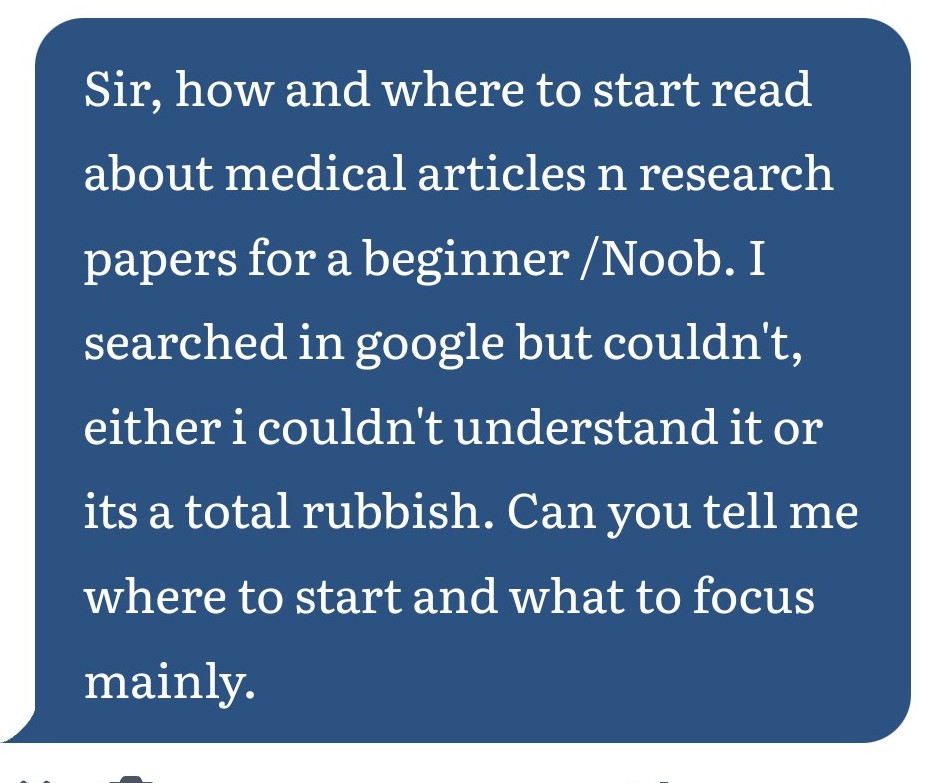
It's a long process. But eventually you will succeed.
1. Volunteer in journal clubs and take them seriously
2. Get a decent grasp of biostatistics - Andy Field, Kirkwood are good starting points
3. Read How to read a paper by Trisha Greenhalgh
4. Choose articles with editorial first.Analyse them without reading the editorial. Then read the editorial and see if the editor has a different perspective
5. Install Read by QxMD and make reading a habit. If you are really enthusiastic, make PubMed your homepage
6. Read NEJM every Thursday. No matter your speciality
You will eventually be comfortable with any paper. Good luck 🤞