The Great British Rail Sale is now on until 12 January, with huge discounts on over 3 million tickets available.
Whether it’s a city break or beach escape, you could save well over 50% on travel between 13 January and 25 March.
Rail Sale tickets can be bought online from ticket retailers and train companies operating in England, Wales and Scotland.
When the East Coast Main Line is good, it’s very very good. When it’s bad, it’s very very bad. Thankfully today was good. York to Gatwick with a simple change at Stevenage was speedy and simple.
The 2026 Railfuture East Midlands branch informal 'pre-Christmas Railway Conversation' social gathering is arranged for Tuesday 8th December, from 12:00 noon, at The Canalhouse pub, 48-52 Canal Street, Nottingham NG1 7EH, near Nottingham station.
No need to book; just turn up.
Celebrating the launch of Bristol Brabazon station with the Transport Secretary and our fantastic partners!
This station is what happens when local leaders make decisions for the places that they know best. This is a major milestone for the West, and it will make a real difference for people living here today and for generations to come - as part of our growing regional rail network.
The new look #RAILEAST magazine from @RailfutureEA is on the website at https://t.co/KbISR1Lorz.
24 pages of news and campaigning from @Railfuture, and details of our public meeting in Cambridge on 28 November (new venue) with EWR guest speaker.
… needs doing urgently not just for South London and Sussex but also to ease knock-on problems for GN / Thameslink services along the ECML towards Cambridge, Kings Lynn and Peterborough
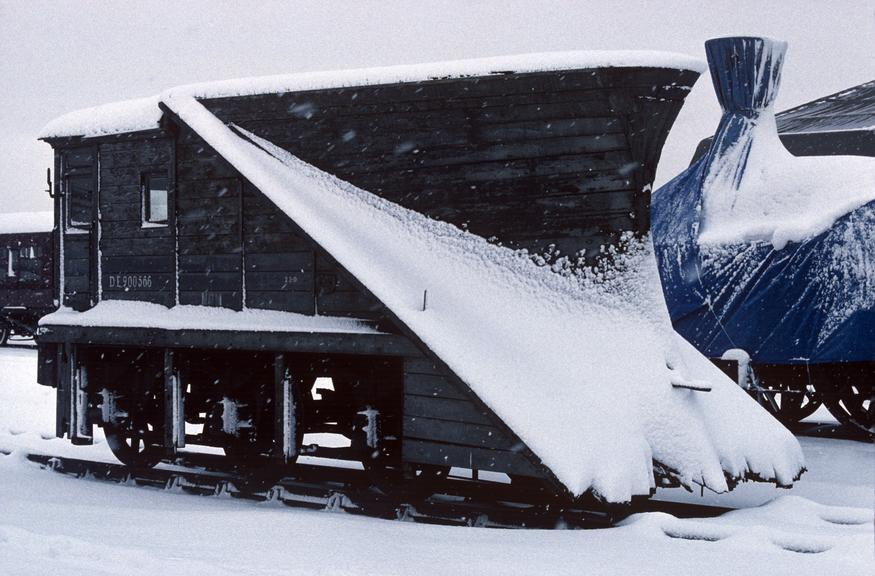
Snow Clearance
In the Eastern Counties Railway (ECR) era before 1862 and the early GER years from 1862 to about the 1880s, most snow clearance was done by hand. Teams of men with shovels cleared blockages, just as they did on other early British railways. Simple wedge or pilot-style ploughs, sometimes called bucker ploughs, became more common in Britain from the mid-19th century after Charles Lowbaert’s 1840 patent for a wedge design. These ploughs were fitted to the front of locomotives or attached to buffer beams to push lighter snow aside. No evidence suggests large, dedicated independent snowploughs were built just for the ECR or GER system. Stratford Works would have managed the fitting and maintenance of any such attachments.
During the later GER era from the late 19th century to 1922, buffer-beam and pilot ploughs continued to be used on steam locomotives for regular winter work. These small, lightweight devices were enough for the occasional East Anglian snowfall but could not handle deep drifts. Independent, self-contained ploughs pushed by locomotives were rare on the GER compared with the NER, which built many wooden and steel-bodied ploughs from the 1880s after harsh winters such as 1886–87 on its Pennine and east-west routes. The GER’s geography did not require such investment. Severe winters still caused problems, and the usual response was to use locomotives with ploughs, extra engines for more power, and many men with shovels.
After the 1923 Grouping, GER territory became part of the LNER Southern Area. By November 1947, the LNER Southern Area Sectional Appendix listed snow ploughs based at Stratford, March, Norwich Thorpe, and Melton Constable, alongside other Southern Area locations such as King’s Cross, Grantham, Lincoln, and Immingham. These ploughs were independent or heavy/medium types that locomotives could push. Small buffer-beam ploughs remained common on locomotives in winter
Under the British Railways Eastern Region from 1948 into the 1990s, allocations continued and became more formal. The 1972 Eastern Region Southern Area Sectional Appendix listed, among others, the Liverpool Street Division with Colchester holding a BR Standard independent plough plus mediums and Stratford, the Norwich Division with Cambridge, Ipswich, and King’s Lynn each having mediums, March having a BR Standard independent plus large, and Norwich having a BR Standard independent plus large.
In the 1960s, BR constructed a fleet of Standard Independent ploughs, coded ZZV/ZZA, utilising redundant frames from withdrawn LNER Group Standard tenders associated with classes such as B1, J39, and V2, designed under Nigel Gresley. These were built at Cowlairs and allocated across the regions, including Eastern examples based at March and Norwich. They were designed to be pushed, often by two locomotives for deep drifts, and remained in service for many years. The fleet also included medium and large departmental ploughs, some built on tender frames and others later used with Class 08 shunters.
From the early 1980s, Beilhack ZZA snowploughs were brought in for medium-duty work. Direct buffer-beam mounting did not work well on some locomotive classes, so the solution was to use old Class 40 and later Class 45 bogies fitted with a German Beilhack blade, ballast, and air brakes. The first six (ADB965576–81) were converted at Stratford in 1984–85 from Class 40 bogies, and four more were converted later, some at Ashford. Several were based in the south-east and Eastern Region, and one became known as the “Stratford Shark.” These ploughs gave drivers better visibility and stayed useful into the Network Rail era. Miniature or mini snowploughs, which are three-piece buffer-beam fittings, became standard on many diesel locomotives for clearing lighter snow and checking routes.
In the Network Rail and modern era from the 1990s to the present, independent snowploughs built on 1960s LNER tender frames, along with later Beilhack units, are still used after being refurbished. Mini snowploughs are also fitted to locomotives for lighter snow. Network Rail uses these ploughs strategically, usually with two locomotives for the larger independent ploughs to provide enough power and reliability.
In East Anglia, these ploughs are only used in rare, severe conditions. One well-known example is the March 2018 “Beast from the East,” when Network Rail ploughs cleared drifts on the Norwich–Lowestoft line, including at Strumpshaw Fen, so Greater Anglia trains could run again after checks on the track, points, and signalling. Deep snow, usually over 30 cm, needs ploughs for safe running, while lighter snow is handled by locomotives with ploughs or by hand.
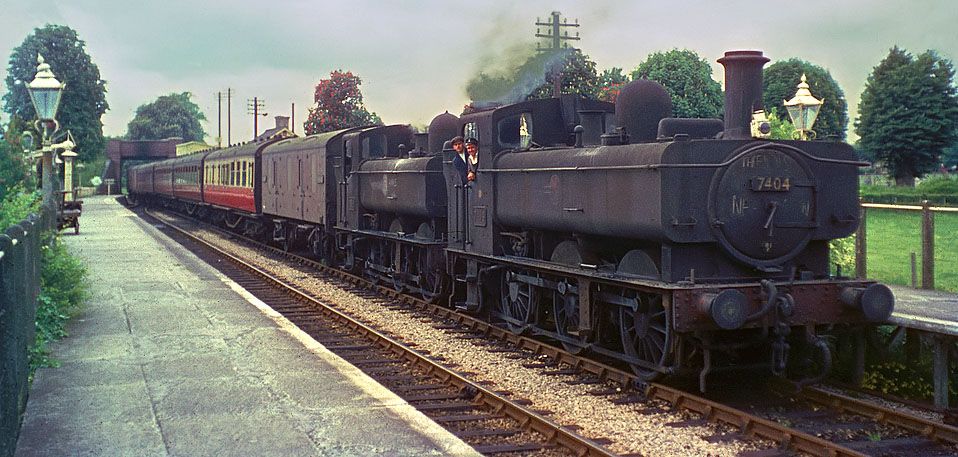
Photos 46455 BR 2MT Swindon built.
Snowplough, NER, BR dept No DE900566, built 1891.
Colas miniature plough arrangement with a couple of Tractors I/C.
🚆 A major milestone for Sizewell C’s rail programme: the renewal of Saxmundham Junction in Suffolk.
Delivered by @balfourbeatty the work was completed safely during a nine-day railway blockade, with the line handed back ahead of schedule.
The upgrade replaces the manually operated junction with modern powered points and integrated signalling, improving efficiency and reliability.
Part of the rail improvements included in our Sizewell C’s Development Consent Order, the work will help prepare the route for increased freight traffic to the site while supporting more reliable passenger services.
#SizewellC #Suffolk #Rail #Infrastructure #SizewellCOnTrack #RailEngineering #Megaprojects #CivilEngineering #TeamSizewellC
#OnThisDay 165 years ago the Witney Railway opened from Yarnton on the Cotswold Line to Witney. Since passenger closure in 1962 Witney's population has expanded 400%: there is an active campaign to reopen the route towards Oxford. 1962 image: Paul Strong https://t.co/V9UUtnduLz
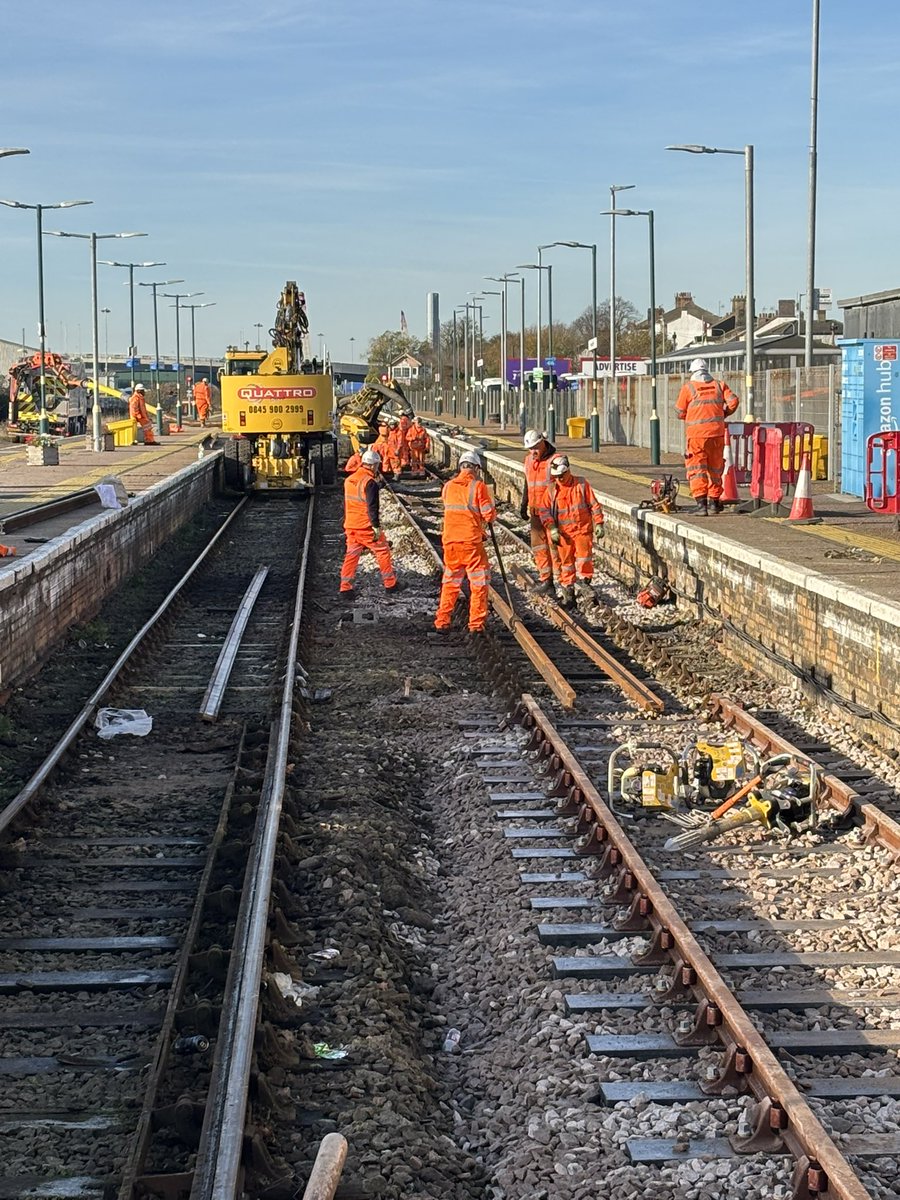
Few more glimpses of @NetworkRailAng teams at work renewing track & ballast into platforms at #Lowestoft today. Bus replacements running over the weekend.
Residents living in a 10-year-old housing development are fed up with ‘constant excuses’ over plans to bring a train station to the area. The potential of a train station at Alconbury Weald was a “big draw” for moving to the area. https://t.co/E9m1J9wSql
At least you had WiFi. My 2-car wedged, 40-year-old @EastMidRailway clapped-out 158 Norwich to Liverpool yesterday had no WiFi, no sockets or USB, and East Anglia is England's largest Not Spot! But it did have stickers on the window saying this train will be "refurbished"; it just didn't say in what decade!
🛂 Welcome to the UK. Plane to train in 15 mins at Manchester Airport.
🚉 Now the (northern English) ritual of 15 minutes standing on a cold platform looking at seats in a warm but locked @TPEassist train.
20 years ago, I asked NR CEO John Armitt about buddleia, not just on linesides but in brickwork. "We are saving up a huge problem for the future," he replied. I'd been prompted to ask after taking this picture of a bridge on the GCR in 2006. You can see his point. 20 years ago!
Like countryside & coast? We've got the perfect route to explore. Starts @ Saxmundham station & follows the Sailors' Path through open heaths/woodland/marshy meadows to Aldeburgh. There's an option to stop @SnapeMaltings. Easily get back to Sax on FirstBus 64. #Tracksandtrails
.@andyburnham is right. Electrifying our transport network is essential in terms of cost and climate.
Only 39% of Britain's railway is electrified. We need a rolling programme of electrification.