Tyre emissions and road run-off - just two of the topics to be discussed at Tyre Emissions & Sustainability Europe 2026, on 7-8 July in Berlin.
Over 20 top speakers on the nature, measurement and mitigation of tyre pollution...
Sign up: https://t.co/Atd3iUB3Hn
@tyreconsortium
East West Rail is saying all things to all people on electrification. To Gov "discontinuous electrification would mean overhead lines would only need to be installed along some sections of the route, which would reduce disruption to existing structures " (1/2)
@sebnoble Okay Seb, I'll bite. 1) It's categorically untrue to claim Cornwall's railway can't handle heavy freight: it can, and does, with 180,000 tonnes a year more when Cornish Lithium goes into production.
📍 RFG has a new address! You'll now find us at Holborn Town Hall, 193–197 High Holborn, London WC1V 7BD.
Please update your records when you get a chance, and we look forward to seeing many of you at our new office soon.
#railfreight#railuk
🚆 Attending Multimodal 2026? Don’t miss the rail freight seminar sessions across the event, alongside the Rail Freight Pavilion. Maggie Simpson OBE will join discussions on rail freight growth, rail reform and long-distance supply chains.
Find out more:https://t.co/jhpHoMx2P9
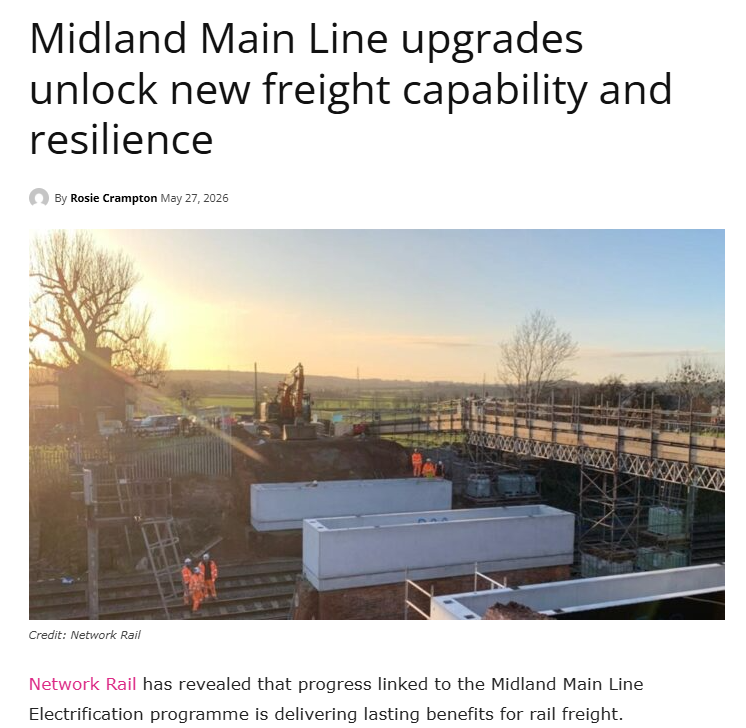
I feel Network Rail was utterly unable to articulate the benefits of midland mainline electrification during the project, but has been waxing lyrical since the project was cancelled.
https://t.co/tBuL5veOD8
🚧 Station Road level crossing closure – Shepreth
From Monday 1 June, the Shepreth level crossing will be closed to vehicles for around 3 weeks as part of Melbourn Greenway works.
✅ Access to Shepreth station and local businesses will remain open
DB 66010 heads today’s Toyota car train on diversion though Paddock Wood due to this week’s closure of the Maidstone East line, working 6X11 0349 Toton North Yard to Dollands Moor Sdgs… 😎
Wissington Light Railway: The Fenland Beet Mover
The Wissington Light Railway was one of the most distinctive private railways in East Anglia. Built to serve remote fenland farms and later the massive Wissington sugar beet factory, it operated as an extension of the Great Eastern Railway’s (GER) Stoke Ferry branch. It exemplified how light railways supported seasonal agricultural traffic in areas with poor roads.
Origins and Early Development
Arthur J. Keeble, a farmer and entrepreneur, constructed the line in 1905. It started life and remained as a standard-gauge (4 ft 8½ in) private railway from a junction near Abbey & West Dereham station on the GER’s Downham & Stoke Ferry branch. Initially horse-drawn, it served an ammonia factory on the banks of the River Wissey at Wissington. Flooding damaged the line around 1915–1917, leading to temporary closure. It reopened in the early 1920s.
When the Wissington sugar factory opened in 1925, initially without reliable road access, British Sugar Manufacturers leased the railway from the Wissington Estate. They extended it by about eight miles, creating a network of roughly 18 miles of track at its peak. This allowed beets to be collected efficiently from dispersed farms across the black fens of Methwold, Feltwell, and surrounding areas.
Route and Infrastructure
The railway left the main line at Abbey Gate and crossed the River Wissey before reaching the factory (about two miles from the junction). From there, it branched south: The main routes were toward Larmans Fen, with passing loops located at Barretts, Cross Road Junction, Decoy, and the Poppylot sidings. A branch from Cross Road Junction served Hemplands, Halfway, Severals Siding, and Common Dyke Loop. Further extensions reached Methwold Fens and Feltwell.
The track used was lightweight 60 lb/yard flat-bottom rails on widely spaced sleepers, very typical of light railways. There was no signalling or block system, so operations relied on the “one engine in steam” principle or very carefully implemented timetable working. The exchange sidings at Abbey handled transfers with the mainline. Main-line locos were not permitted on the light railway.
Operations and Traffic
Obviously, the railway’s main usage was sugar beet transport during the autumn/winter “campaign” (typically October to March). Farmers loaded beets into wagons at remote sidings using chutes or manual labour. Trains of loaded open wagons, often 20–40 per train, then ran to the factory. Other workings distributed the sugar beet pulp for animal feed, imported coal and limestone for use by the factory and distributing general agricultural goods such as fertilisers, machinery, and produce to the local farms.
During WWII, traffic intensified, with cane sugar from the West Indies becoming difficult to ship. The Ministry of Agriculture took control in 1941 under emergency powers, with British Sugar acting as the haulage contractor. Staff worked long shifts, and heavy train loads tested the lightweight track. At its peak, the system had close to 100 wagons and handled thousands of tons seasonally.
Wissington Light Railway Loco Stock
The WLR relied on a small but hardworking fleet of industrial steam locomotives. These engines were perfectly suited to the line’s lightweight track, sharp curves, and seasonal beet traffic in the remote Norfolk fens. Most were saddle tanks or similar suitable for the lightly-laid permanent way.
The Famous “Wissington”, Hudswell Clarke No. 1700. The star of the fleet, and the best-known survivor, is Hudswell Clarke 0-6-0ST No. 1700 “Wissington”, built in 1938 for the British Sugar Corporation. It belongs to Hudswell’s “Countess of Warwick” class, a robust, lightweight design with an axle load of around 8 tons, ideal for light railways. It was delivered new to Wissington, it spent almost its entire working life there excepting for a brief spell at the Spalding sugar factory. It handled beet trains, shunting, and general duties during the campaign season. By the early 1970s, she was in storage, but in 1978 it became the last steam locomotive in commercial ownership in East Anglia. Purchased by the M&GN Joint Railway Society https://t.co/OItFELqSSP, it is now preserved and operates regularly on the North Norfolk Railway https://t.co/WErp002U6c.
A 1942 Ministry of Agriculture report listed the five locomotives then operating the line (all staffed by British Sugar Corporation crews):
Hudswell Clarke No. 533 (1899) 0-4-0ST “The Sidar”. One of the earliest engines was used for lighter shunting duties.
Andrew Barclay No. 1158 (1909) 0-6-0ST “The Ellesmere”, a rugged Scottish-built saddle tank.
Manning Wardle No. 1927 (1917) 0-6-0ST, acquired during the expansion period.
Manning Wardle No. 2006 (1921) 0-6-0ST “The Hayle” Manning Wardle.
... And Wissington.
Another prominent engine was Manning Wardle 0-6-0ST “Newcastle”, Works No. 1532 of 1901. This veteran worked at Wissington for many years and was photographed in the 1950s and 1960s shunting beet wagons and potatoes. It later entered preservation and is now at Beamish Museum, which is well worth a day's visit. https://t.co/cnUT9K3UXi
The fleet was maintained in a small shed at the factory. Diesels gradually supplemented steam in the 1950s–60s, but steam remained in use into the 1970s for certain duties. The lightweight construction of the engines matched the track, allowing them to reach remote fenland loading points that roads could not easily access at the time.
During the 1930s–1950s peak, the railway operated as a highly efficient seasonal system. British Sugar, later British Sugar Corporation, managed most operations, with LNER/BR providing main-line connections. Temporary sidings, intensive shunting, and dedicated crews ensured the factory received a steady supply despite the line’s light construction. Barges on the River Wissey supplemented rail in the earliest years.
Decline and Closure
Road improvements and heavy lorries gradually eroded the railway’s advantage. Lines south of the factory closed in 1957. British Sugar ended beet transport by rail around 1975. General traffic continued until 1981, with full closure and track lifting in 1982. The factory itself remains operational today and is now Europe’s largest beet sugar site but all beets arrive by road.
WATCH: UK’s most important new factory - opening next year:
Tonight as part of my UK GDP report ive been to Somerset Agratas factory which from next year will be manufacturing made in Britain EV batteries that will enable JLR exports to the EU and US…
Absolutely fascinating:
A big thank you to everyone who has visited the joint RFG and Network Rail stand at All-Energy 2026 this week. Great discussions on rail freight’s role in supporting hydrogen and low-carbon logistics.
#AllEnergy26#RailFreight#EnergyTransition
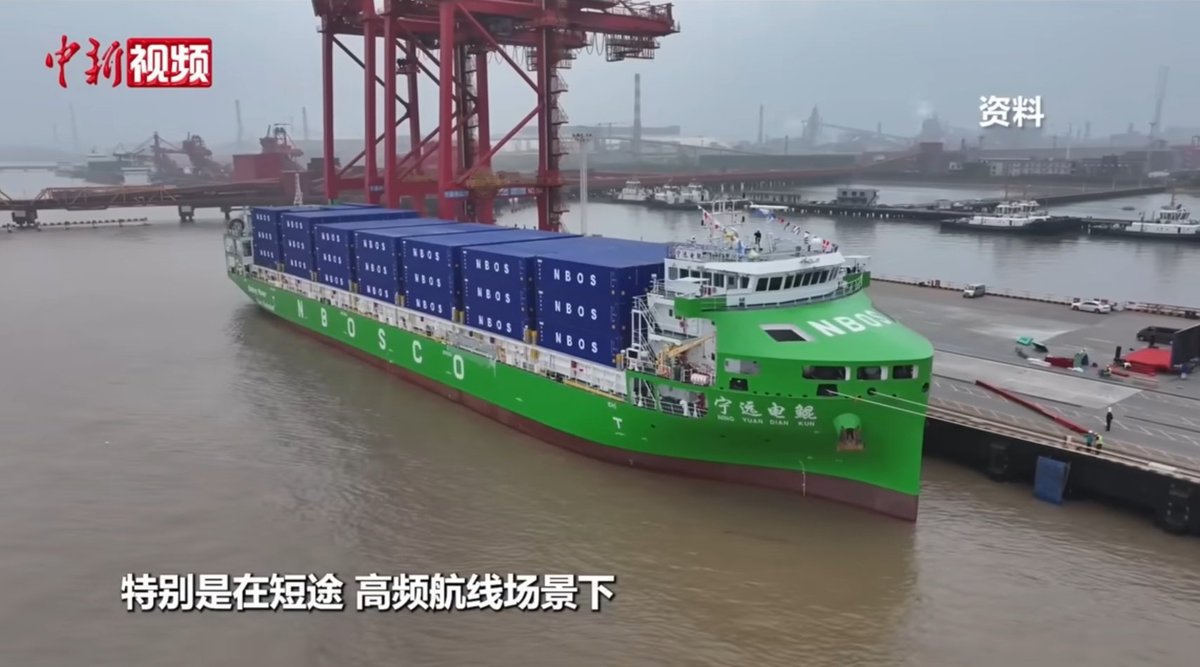
Rail freight has thin margins, even if it could afford to convert a container to batteries, it still won't have the range. Yet a small programme of infil electrification wires would sort freight - but the Gov is currently ideologically against this ((2/2) https://t.co/QV5BaUV5uz
OK - stay with me. This ship shows the difficulty with UK Gov's policy of hoping batteries will sort rail freight. This ship has 10 containers of batteries (19MWh), but only a range of 90ish miles (1/2).
More freight by rail = fewer lorries, lower emissions, stronger supply chains
Our new Freight Forward report sets out how we unlock that potential and why rail reform must deliver for freight.
📄 Read the report: https://t.co/m70BVCdVQP
#IsupportUKrailfreight#railfreight
Rail freight is central to the UK’s future. The new Freight Forward report shows how it drives growth, resilience & decarbonisation - and what’s needed to unlock more.
With a 75% growth target by 2050, now is the time to act.
📄 https://t.co/biUKBjVG3q
#IsupportUKrailfreight