In this edition of Southasia Weekly, we focus on the Sri Lankan government's proposal to increase judges’ retirement age, Sheikh Hasina's address, Pakistan's new rules for foreign media, clashes in Bangladesh's college campuses and more.
Your weekly radar on the region and the latest from Himal. Read here: https://t.co/0fbiAcLO4F
I write on the resurgence of conservative politics in Bangladesh and the shrinking rights of women for @HimalSouthasian .
Thanks to @raisalw for the seamless editorial support.
https://t.co/roN1rAmo11
Discussed media censorship in Southasia, attacks on the press in #lka and the rise of protest movements across the region at the Colombo Literary Festival yesterday.
In contemporary Southasia, taboo words remain a potent device for policing social boundaries and for reflecting entrenched prejudices via widely normalised casteist, religious and gender-based slurs. Abhishek Avtans (@avtansa) writes: https://t.co/bihXysESNZ
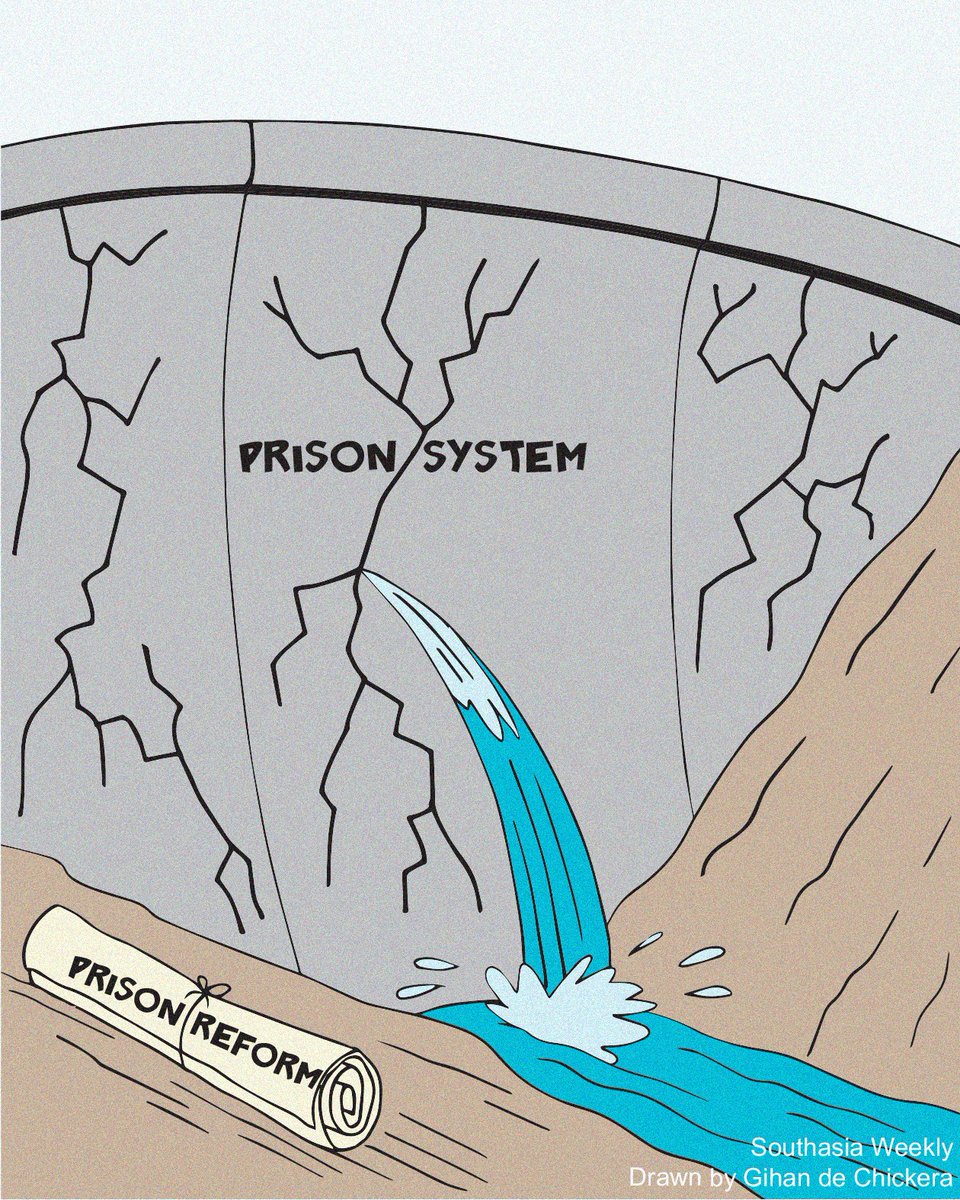
In this edition of Southasia Weekly by @raisalw, we focus on how riots inside Sri Lanka’s Negombo prison have left 26 dead and hundreds injured. This story is a sobering reminder of the inequalities, violence and repression baked into the prison system across Southasia.
Your weekly radar on the region and the latest from Himal. Sign up here: https://t.co/0pvgpw4yJr
Southasia’s swear words - and what they reveal about taboos and systemic prejudice across the region. Lots of fascinating titbits here about why we swear, swearing in second languages etc. @avtansa
Swear words act as a linguistic mirror of Southasia’s socio-cultural fabric, reflecting both its communal bonds and its systemic prejudices. It is hardly surprising that swearing is deeply rooted in the region’s history, and ranges from the risqué character names of classical Sanskrit satire to documented uses of swear words by Mughal emperors. Abhishek Avtans (@avtansa) writes: https://t.co/j4apULKzXr
Himal Southasian is looking for an Editorial Intern!
Primary responsibilities:
- Update formatting SEO and other properties for stories in Himal’s archives
- Transcribe Himal’s podcasts for publication on the website
- Assist in subtitles for Himal’s YouTube content
- Find sources to verify the accuracy of what is published across a range of articles by seeking out information from all manner of sources
- Assist the editors with necessary research around any of the articles and newsletters under processing
- Stay current on political, social and cultural affairs across Southasia
- Helping with general website upkeep
- Provide support on other aspects of publication as needed
The ideal candidate will:
- Be a graduate student/early-career professional
- Demonstrate strong knowledge and interest in Southasian affairs and Southasian journalism and news
- Have a proven record of working well remotely and in small teams, meeting deadlines, taking initiative, and collaborating with people from a variety of social backgrounds
Prior experience working in communication roles linked to publication or media houses, or in community-building roles, will count as a plus. This is a full-time, paid internship position for a period of three months. Himal’s staff operate remotely from their respective bases across the region, with regular online communications following Southasian working hours.
The position is open to all nationalities. Candidates from marginalised social groups are particularly encouraged to apply, and may, if they wish, briefly describe their social background in their cover letter.
Please send applications to [email protected] with the subject line “Name - Editorial intern 2026”. A complete application must include your CV, cover letter and two references.
That Hemarathana is embroiled in so sordid a scandal has compelled many #lka Buddhists to confront the actual state of the country’s sangha, and the glaring yet unacknowledged gap between the Buddha’s teachings and Buddhism as it exists in #SriLanka today https://t.co/ykf1SGjsym
Himal’s Fiction Fest 2026 will be releasing six original translations of Southasian fiction between 8 and 19 June.
An online launch event on 8 June, organised in partnership with the Armory Square Prize for South Asian Literature in Translation, will feature a panel discussion with the International Booker Prize-winning writer and translator Deepa Bhasthi and the scholar, poet, and translator Parwana Fayyaz. The winner of the 2026 Armory Square Prize will be announced at the event. You may register for the event using this link: https://t.co/2tJYQ3TwAZ
Have questions? Reach out to [email protected]
From bodily autonomy to Hindu nationalism, from the climate crisis displacing Southasians to the pharmaceutical industry profiting off patients: these are the stories that Southasia's mainstream media often won't touch, and that we exist to tell.
If you read Himal, share our work, or believe that Southasia deserves rigorous, independent journalism free of government and corporate influence — become a Himal Patron today. Your support keeps us going: https://t.co/HdJiO3nM8R
@kanika0509@soul_restlesss@RomitaSaluja@VidyaKrishnan@ArshuJohn@harsh_mander@karwanemohabbat
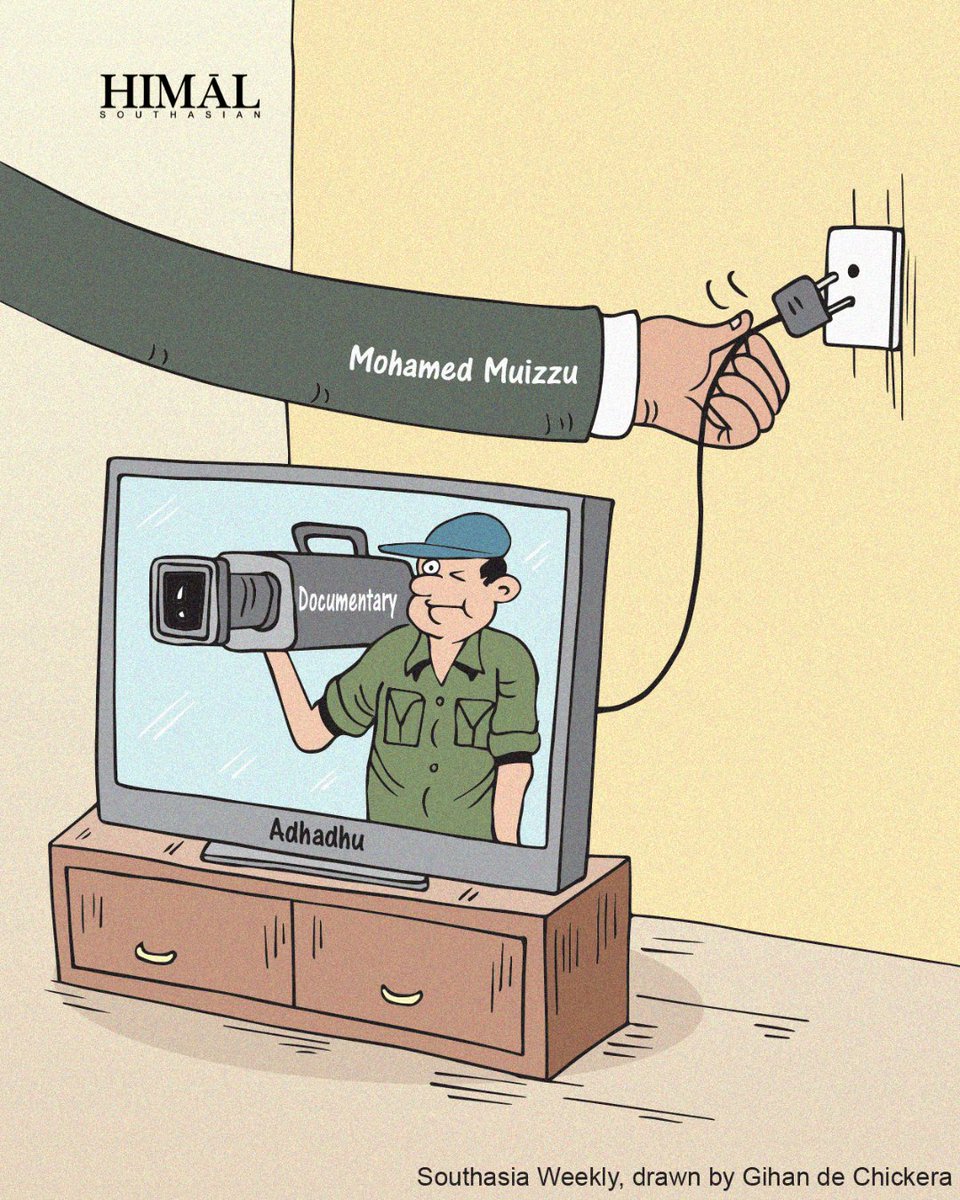
This week in Southasia : Maldives police raid news outlet after story alleging sexual misconduct involving President Mohamed Muizzu.
We've got our finger on the pulse. Sign up for Southasia Weekly to receive the latest from Himal and across the region : https://t.co/BFrZjv9v2L
This week in Southasia : India’s mainstream media uncritically amplifies the government line on delimitation bill.
We've got our finger on the pulse. Sign up for Southasia Weekly curated by our senior editor @raisalw to receive the latest from Himal and across the region : https://t.co/M8ErbgUD0Z
Under Mohamed Muizzu, the Maldives is contesting Mauritius’ claim to the Chagos archipelago, inserting itself into a geopolitical dispute also involving the United Kingdom and United States - Daniel Bosley (@dbosley80) writes : https://t.co/MSPjfpIH0I
"The contrarian has become a recognisable figure within the system he claims to resist. No matter how hard Manu Joseph tries to convince us he is a truth-teller, he is now a merchant of delusions."
Diya Isha and Huzaifa Omair Siddiqi on how Manu Joseph’s new book ‘Why the Poor Don’t Kill Us’ falls short in diagnosing the ills of liberal India, and how the novelist turned provocateur has lost his way: https://t.co/4TL7yWDeZs
Illustration by Aishwarya Iyer
As Tamil Nadu votes in its 2026 assembly election, the actor Vijay’s political debut has drawn intense attention. But how far can cinematic fame translate into lasting political power?
In this Footnotes conversation, we speak to the scholar and researcher @krvtweets about his piece for Himal on the limits of stardom in Tamil Nadu politics, the resilience of the Dravidian duopoly and what Vijay’s entry reveals about the state’s political landscape : https://t.co/mig2WvcR0T
Read the full piece on our website: https://t.co/CqvcBE3JFI
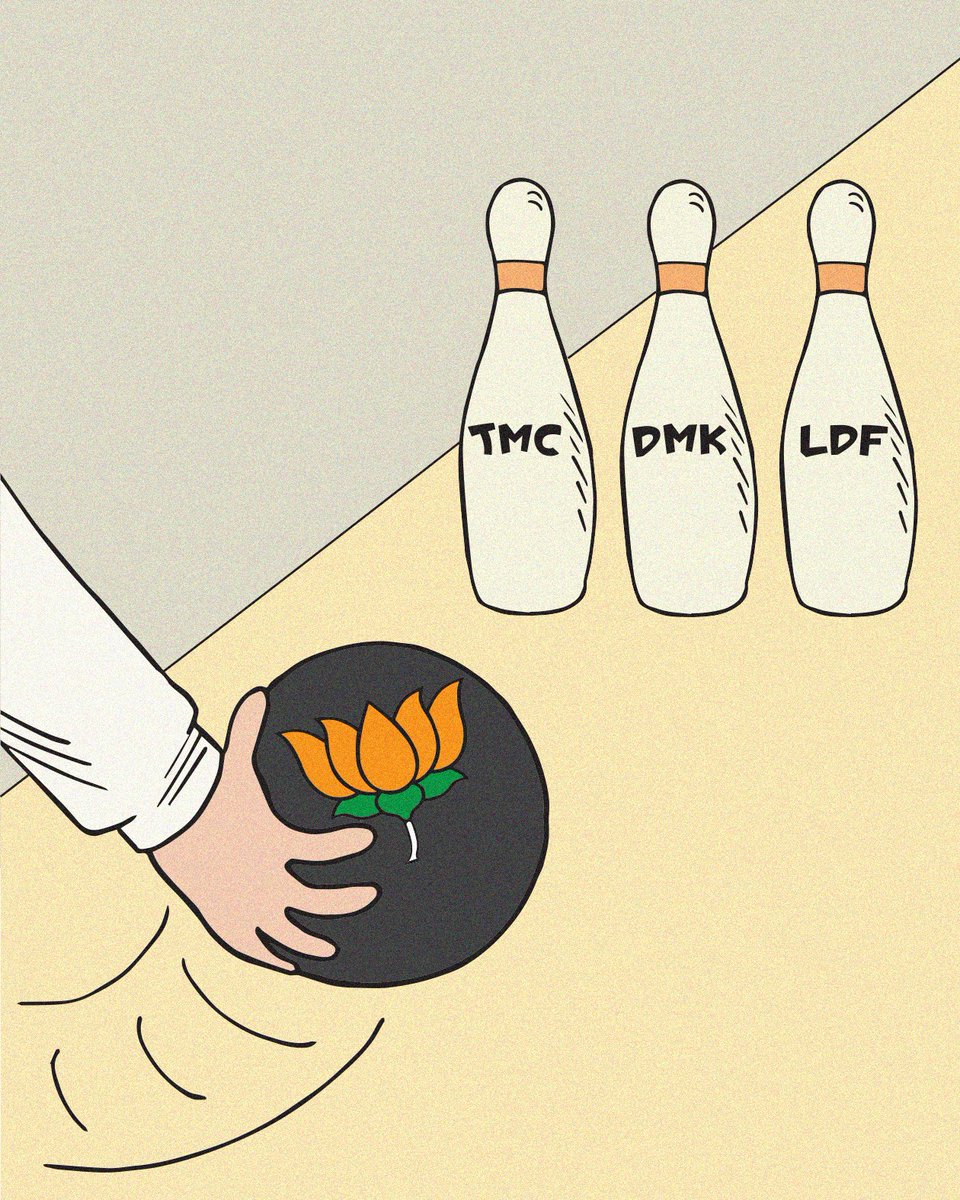
This week in Southasia : India’s assembly election key litmus test for the BJP
We've got our finger on the pulse. Sign up for Southasia Weekly curated by @raisalw to receive the latest from Himal and across the region : https://t.co/BFrZjv8Xdd