Not Indian VCs, but Premji Invest (not WIPRO, but PE arm of the Group) is the biggest investor in AI startups.
11 investments, combined valuation $45B.
Primarily in the US, none in India.
Cheaper launch technology is driving demand for sovereign satellite capability, but engine supply could now limit which space missions are possible, Pulsar Fusion CEO Richard Dinan tells @TomMackenzieTV https://t.co/TTEws5dUeh
An Indian scientist at Harvard discovered ATP (Adenosine Triphosphate). Then he helped create the first chemotherapy drug and the first tetracycline antibiotic. Harvard still refused him tenure. A bowling alley would not let him bowl. He died at 53, without an obituary.
His medicines save tens of millions of lives every year. Most American doctors who prescribe them have no idea what his name was. His name was Yellapragada Subbarow (Subba Rao).
He was born in 1895 in Bhimavaram, India. His father was a Sanskrit scholar who died from tropical sprue. Tropical sprue is an acquired malabsorptive disorder found in tropical regions, characterized by chronic diarrhea, weight loss, and severe nutritional deficiencies. It is most commonly associated with deficiencies in vitamin B12 and folic acid, resulting in anemia, fatigue, and glossitis. The same disease killed two of his brothers. As a child, Subbarow watched them fade away and decided he would spend his life fighting disease.
He failed his school exams twice. Passed on the third attempt. His future father-in-law paid for his medical school books. Subbarow married his daughter and repaid the debt. In October 1922, he arrived in Boston with borrowed money and broken English. He was 27. He entered Harvard Medical School and joined the biochemistry PhD program.
He began working under a senior researcher named Cyrus Fiske. Long hours. Little pay. But he was at Harvard, and he did not care. In 1925, they developed the Fiske-SubbaRow assay, a method for measuring phosphorus in body fluids. It is still used today in kidney failure testing, vitamin D testing, and prostate cancer work. It became one of the most cited methods in biochemistry history.
Then they found something even bigger in 1926 - ATP - Adenosine triphosphate. The energy molecule that powers every cell in every living thing on Earth. That discovery changed biochemistry. It also proved that the 1922 Nobel laureate had been wrong about how muscles worked. Muscles did not run on glycogen. They ran on ATP.
Subbarow earned his PhD in 1930. He stayed at Harvard for another decade. Paper after paper. Discovery after discovery. And every year, Harvard refused to promote him. The biochemistry department had never given tenure to a foreigner. They were not going to begin with an Indian.
His colleagues took him fishing. Played tennis with him. Came to dinner at his home. Then voted against him year after year. Outside the laboratory, he met the same wall. He bought an airplane and learned to fly because he loved flying. Once, he tried to go bowling. The local alley refused him entry. The sign said it was “open only to the Caucasian race.”
Then Fiske turned against him. The senior researcher began blocking Subbarow’s discoveries out of jealousy. Some of Subbarow’s work had to be rediscovered years later by other scientists because Fiske kept his findings hidden.
May 1940. Harvard denied him tenure for the last time. After 17 years of groundbreaking work, he walked away. Lederle Laboratories in New York hired him as Associate Director of Research. By the end of the year, he was Director. In the next eight years, he changed medicine. He developed diethylcarbamazine, an oral medicine that killed the tropical worms crippling American soldiers in the Pacific. The World Health Organization still uses it.
He isolated folic acid from liver and worked out how to produce it on a large scale. Today, folic acid in pregnancy prevents birth defects in tens of millions of pregnancies every year. The same family of diseases that killed his father and brothers became preventable because of him.
Then Dr. Sidney Farber called from Boston with an idea: maybe a drug that blocked folic acid in cancer cells could kill childhood leukemia. Subbarow’s team created the drug. They called it Aminopterin. In December 1947, Farber gave it to an eight-year-old boy dying from leukemia. Within weeks, the cancer cells began to disappear.
It was the first chemotherapy drug in history. The first time anyone had put cancer into remission using a pill. Subbarow’s team later refined it into Amethopterin, now known as methotrexate. It became a gold standard treatment for leukemia, lymphoma, breast cancer, and lung cancer. Then rheumatoid arthritis, psoriasis, and Crohn’s disease. The World Health Organization lists it as an essential medicine. Tens of millions of people use it every year.
In 1948, his lab produced Aureomycin. The first tetracycline antibiotic - a broad-spectrum one that killed typhus, cholera, pneumonia, and many bacteria that penicillin could not touch. It opened the door to the whole tetracycline family: doxycycline, minocycline, and drugs still used today against plague, malaria, anthrax, and drug-resistant infections.
He was 53 years old. He had created medicines that would save tens of millions of lives. August 8, 1948. Yellapragada Subbarow suffered a heart attack at his home in New York and died. No American newspaper gave him a front-page obituary. No university held a memorial. The Nobel Committee never honoured him. His own colleague George Hitchings later won a 1988 Nobel Prize for work built directly on Subbarow’s foundation. Subbarow was not even nominated.
In 1950, Argosy magazine published a feature about him titled “Miracle Man of the Miracle Drugs.” It began with a line that still hits hard. “You’ve probably never heard of Dr. Yellapragada Subbarow. Yet because he lived, you may be alive and are well today. Because he lived, you may live longer.”
Most Americans had not heard of him in 1950. Most still have not. Harvard has never officially honoured him. American medical schools mostly do not teach his name. The Nobel Committee that honoured Hitchings for work built on his foundation never corrected the record. Every methotrexate prescription written today remains silent about the man behind it.
India remembers. The government issued a postage stamp for his 100th birthday. His childhood home became a museum. Indian medical schools teach his name. But the country that denied him tenure, refused to let him bowl, and allowed him to die unknown - the same country that uses his drugs every day - still mostly does not know him.
Here is the truth. If someone you know has ever taken methotrexate for cancer or an autoimmune disease. If someone you love has taken folic acid during pregnancy. If you have ever been prescribed doxycycline for an infection. That was him. Yellapragada Subbarow. Born 1895. Died 1948. Saved tens of millions of lives, while a country he loved barely knows what it owes him.
Please remember his name and let your near and dear know about this little-known scientific legend born on this soil but never got the true recognition that he deserved. A story you need to know. A story all of us need to know. #Medicine #Unknownlegends @centerofright@KiranKS
@RajatSethi86 भाई आपने इस कांग्रेस के सुरेंद्र राजपूत को अपनी राजनैतिक भाषा से बहुत ही करार जवाब दिया क्योंकि यह इस भाषा के लायक "ये अपनी कुर्सी के चक्कर में लड़ते हैं, इसलिए बार बार कांग्रेस का हश्र...क्योंकि राहुल बाबू प्रियंका गाँधी अपना फर्जी दिमाग़ चलते है फिर इसका खमिजा
Next in who after the Ramanujan series?
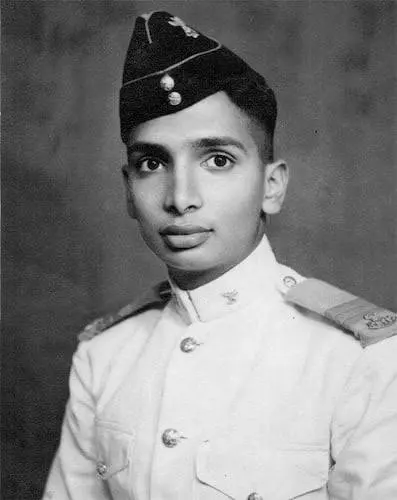
At a tender age of 16, a brilliant but completely unguided boy from Tamil Nadu joined the National Defence Academy & was commissioned into the Indian Navy's electrical branch . He did not have the luxury of a quiet university setting; he was trained in practical skills to maintain weapons systems on warships.
But Arogyaswami Paulraj possessed an insatiable, self-taught obsession with the advanced mathematics of signal processing, control theory & information theory. He studied advanced matrices & random variables by lamplight on naval ships.
By the late 1970s, India faced a serious strategic challenge. After the 1971 Indo-Pak War exposed weaknesses in imported sonars, the Navy needed an advanced anti-submarine warfare system but was blocked by international export restrictions. The Navy turned to Paulraj, then a rising officer with a PhD from IIT Delhi (earned while still in service). He was tasked with leading a major indigenous project to develop a world-class hull-mounted panoramic sonar from scratch.
Operating under intense resource scarcity, Paulraj’s mathematical genius took over. He designed complex signal-processing algos that could filter the chaotic, deafening acoustic noise of the ocean to pinpoint enemy submarines. The resulting system, APSOH (Advanced Panoramic Sonar Hull), inducted in 1983, completely stunned global military observers. It did not just work, it outperformed contemporary Western systems.
After setting up major defense labs in India, Paulraj retired from active naval service & arrived at Stanford University in 1991 as a research associate. This is where the story shifts from military history to modern legend. While working on signal separation experiments for airborne military reconnaissance, Paulraj noticed a strange, fleeting physical phenomenon.
When a radio signal is transmitted in a crowded area (like a city with buildings), it bounces off walls & scatters into 1000s of chaotic, distorted paths. Engineers treated this scattering as a nightmare, multipath interference that corrupted data.
Paulraj had a paradigm-shifting realization rooted in multi-variable calculus & spatial matrices: What if the scattering was not a bug, but a feature?
He realized that if we used multiple antennas at the transmitter & multiple antennas at the receiver, we could use advanced matrix mathematics to isolate those scattered paths & stream parallel, independent channels of data over the exact same frequency, at the exact same time.
He called it MIMO (Multiple Input, Multiple Output).
When he 1st proposed it, the academic world mocked him. Prominent profs & industry skeptics told him it violated the laws of physics & information theory. They claimed it was mathematically impossible to multiply data speeds w/o expanding bandwidth.
Paulraj did no back down. He built his own prototype, founded a startup & proved the mathematics in real-world silicon. He designed the microscopic architecture, the microchip algos that allowed small devices to execute these hyper-complex spatial matrix calculations in fractions of a microsecond.
If we look at the device we are using to read this right now, look at the top corners of our screen. We cannot see them, but embedded inside the frame of our phone are multiple microscopic antennas operating on Paulraj’s exact MIMO-OFDMA mathematics.
Every single modern 4G network, 5G network & high-speed Wi-Fi router on Earth is built entirely on the mathematical foundation invented by the self-taught Indian Navy officer who packed his bags for Stanford. He did not just solve a math problem; he built the invisible highway that carries nearly 100% of the world's mobile data traffic today.
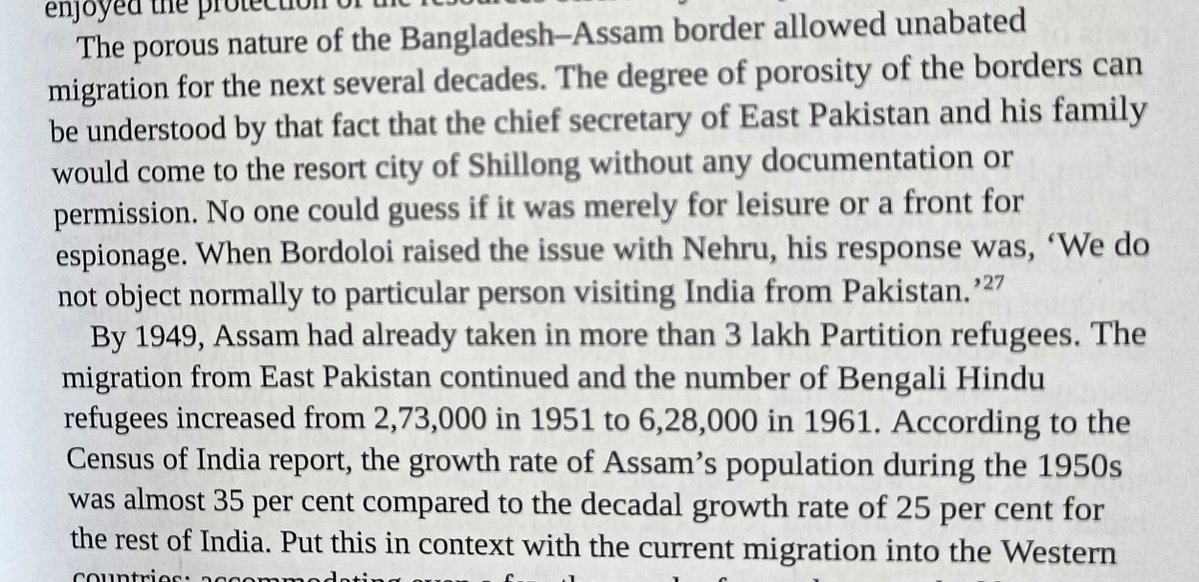
Is there literally any part of the country not historically betrayed by the statesmanship of Nehruji!
Source - The last battle of Saraighat by @RajatSethi86@Shubhrastha
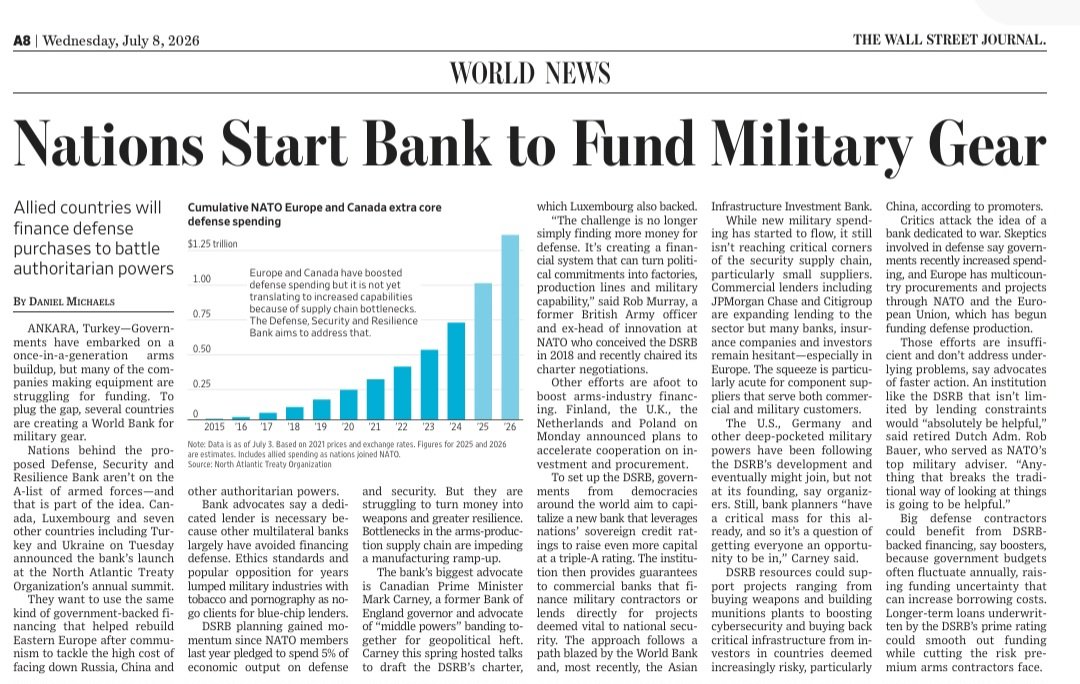
#NATO just invented defense-industrial QE. The DSRB doesn't spend, it guarantees, turning sovereign AAA ratings into private bank credit for def supplychain. India's #defense corridors need similar mechanism, not more budget headlines. #Capital & bankability have been constraints
LG's $1bn move shows Vietnam climbing semiconductor value chain -
LG lists in India, does secondary, takes out capital, we hand over market, they invest elsewhere. Minister @PiyushGoyal why are they not investing here? Are we only,, here? https://t.co/ugZqXvtewf
UCSD researchers teleoperated Unitree robots, nicknamed “Surgie”, for live gallbladder removal on a large mammal (not human).
Surgie achieved the same surgical precision as existing specialized medical robots, though the procedure took longer due to mid-surgery recalibrations.
A 60lb humanoid could one day replace 1800lb da Vinci-class specialized surgery system, which takes up a lot of OR space and needs a large team to set up.
Full Nature article below:
U.S. based humanoid robotics company @1x_tech has just unveiled their new tendon-driven robot hands with 25 degrees of freedom (DOF).
• Made in USA
• Tendon Drive Ratio: 5:1–15:1
• Wrist Dexterity: 3 DOF
• Backdrivability: Fully backdrivable
• Tactile Sensing: Pressure + location + slip
• Finger Force: Up to 45 N
• Wrist Torque: 17.75 Nm
• Position Accuracy: ±0.2 mm
• Waterproof Rating: IP68
• Reliability: >2 million cycles
"These hands are designed to do something fundamental: remove the hardware ceiling on what humanoid robots can actually do, and make data the only barrier to capabilities. By matching or surpassing human hands across the dimensions that matter, they ensure our AI models are no longer limited by dexterity. NEO can now perform virtually any task a human can do with their hands– with the precision, adaptability, and gentleness required for real-world environments."
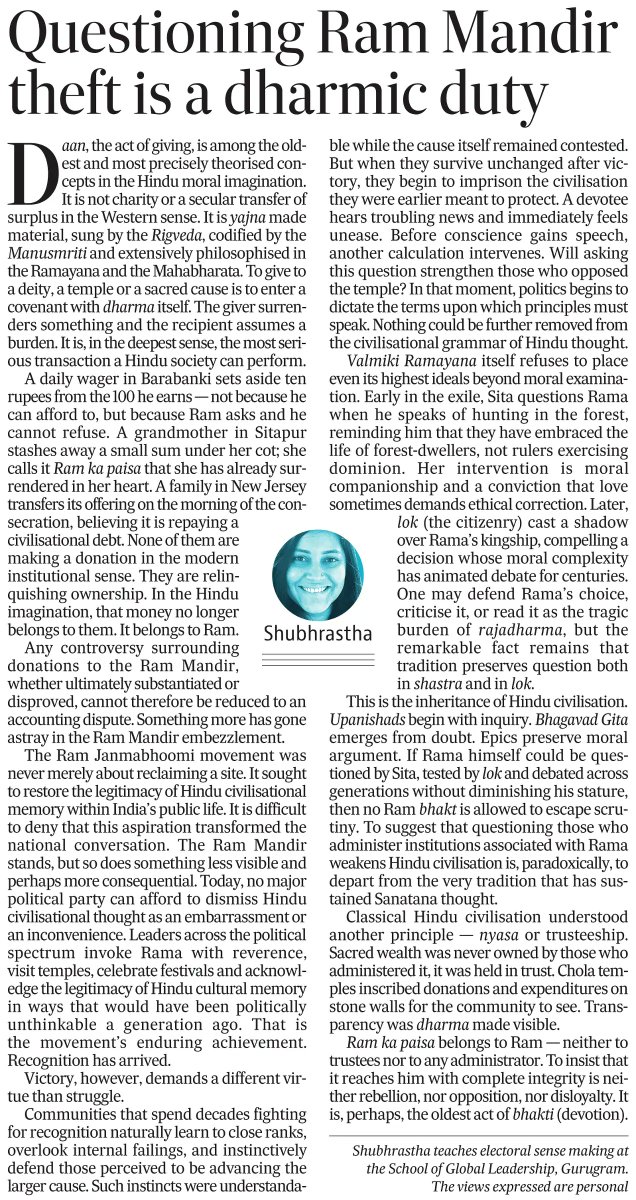
Ram Mandir was built on faith, sacrifice and civilisational memory. To demand integrity from those entrusted with Ram’s wealth is not dissent; it is dharma. Even her anger is not without elegance. Read @Shubhrastha
“Absence of deeptech ecosystem has kept ₹1 lakh crore RDI Fund from reaching deserving startups. Our VCs are still building that muscle, the ability to understand which founder is faking it & which is real.” - PMEAC member Neelkanth Mishra. https://t.co/G1mQ2mq9tf
Meet June: your private AI agent now with local models on your Mac.
Turn the wifi off: Agent, dictation, meeting notes, and your files all in one workspace.
100% free to use with local inference.
Open Source. MIT. Local first.
Try it: https://t.co/SC6KoHApdF
Proof of life in Indian R&D
A visit this month to the Wockhardt headquarters in downtown Mumbai offered me evidence contrary to the familiar narrative that Indian companies excel at cost arbitrage and reverse engineering, but rarely at original innovation.
A $2 billion drug, research fund and rocket tech collab show how India’s upping its innovation game.
Slowly.
My latest India Edition 👇
https://t.co/c4K9Wtmh2S