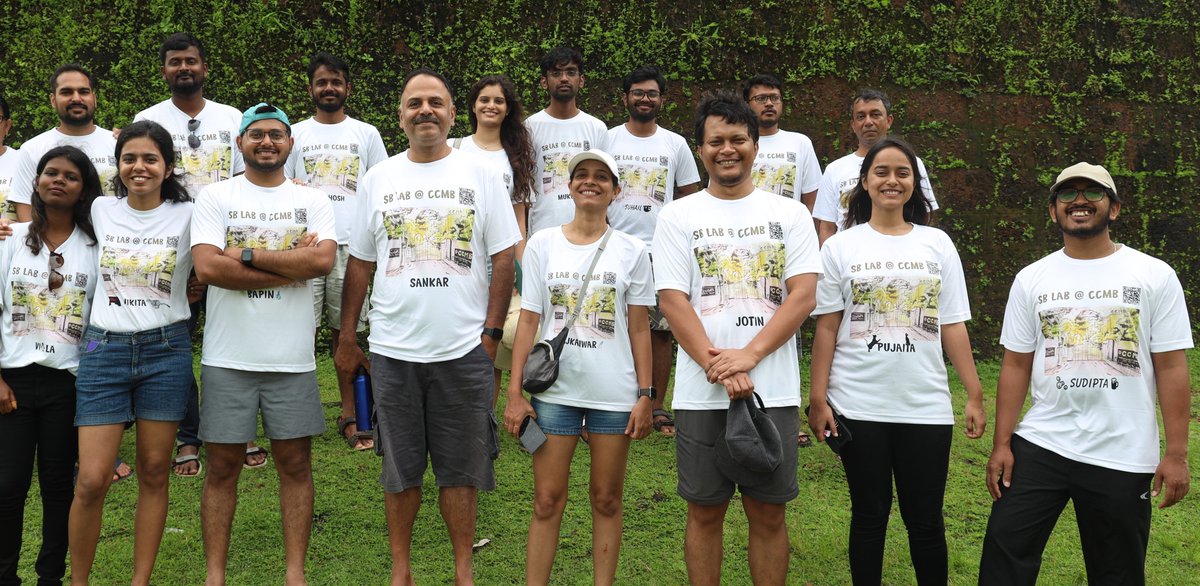
I am truly honored and grateful to the TNQ Foundation ( @TNQLectures ) for this tremendous recognition of our work. All this was possible due to the fantastic ethos of @Sankar_Lab at @ccmb_csir and the unwavering support and guidance of @sankarfr1.
New research from @ccmb_csir reveals that tiny mistakes in protein synthesis might actually help cells survive stress!
These "errors" could trigger protective responses and boost adaptability.
📖 Written by @SomdattaKarak
Read the full article: https://t.co/8l0LYXqol0
A new study from @CCMB_CSIR published in Nature Communications, reveals how two enzymes—AlaRS-Ed and ThrRS-Ed—help cells strike a balance between precision and adaptability during protein synthesis.
This remarkable molecular switch dates back ~3.5 billion years, underscoring its evolutionary importance. This natural proofreading mechanism is key to how life has endured Earth’s changing conditions.
Read the full study here: https://t.co/q4c14zRZXu
Thrilled to share our recent work describing an ancient coupling between protein quality control & redox-signaling through leveraging the tunability of Zn(II) binding by editing domain of two universally conserved aa-tRNA synthetases @Sankar_Lab@ccmb_csir
https://t.co/BQRLaiykZ2
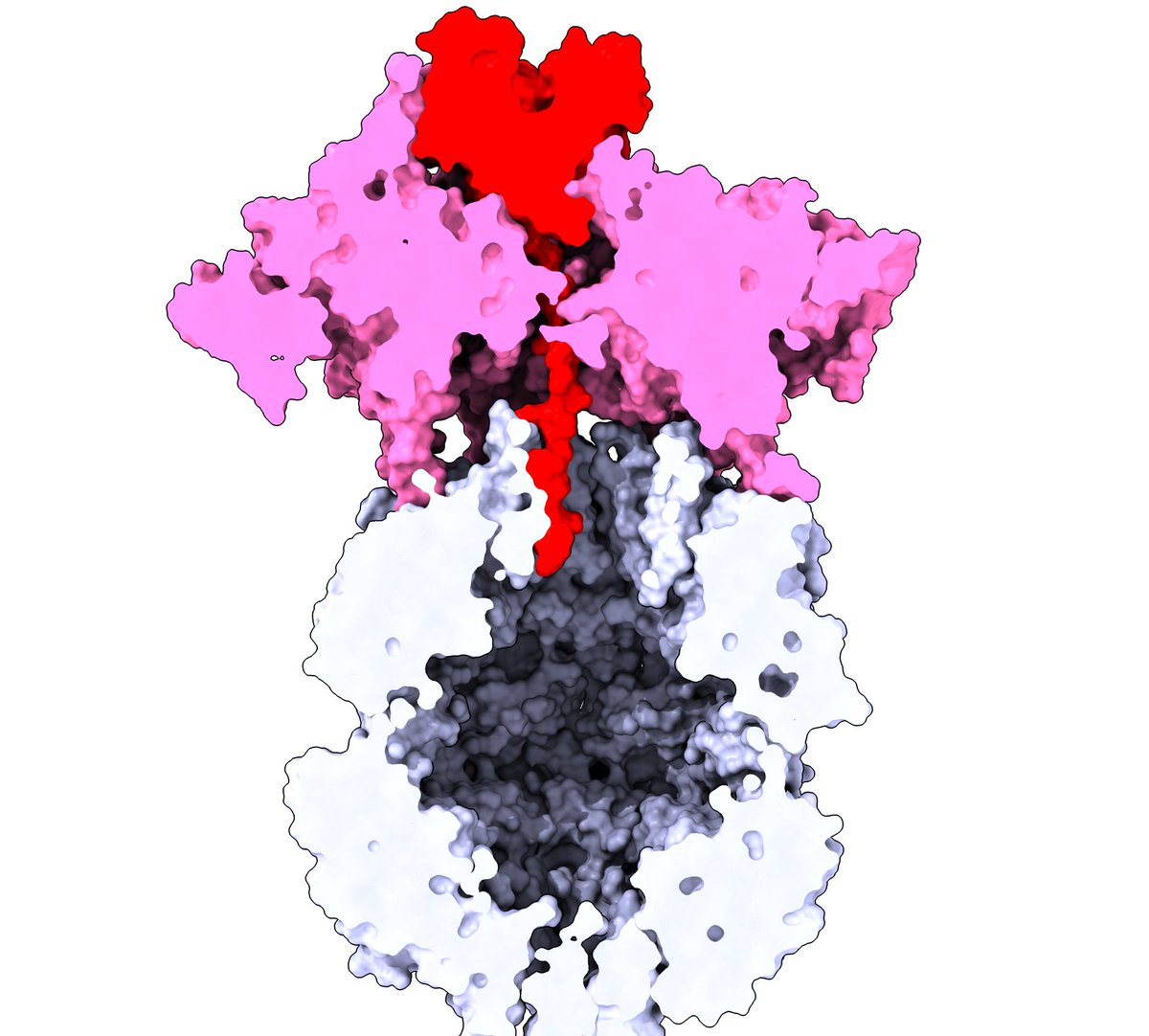
Excited to share our latest work in @NatureComms! We've captured an AAA proteolytic machine in action, right as it poised to unfold its substrate for degradation—a first-ever glimpse into this long-sought, elusive step in AAA proteolysis! Enjoy! https://t.co/oBzuhlSJJ2
Happy to share a new paper from @microbelab grad student Carissa Chan (weeks away from PhD!):
Hsp70 is just a protein chaperone, right?
Think again: Salmonella Hsp70 also slows translation to aid bacterial survival in low Mg2+
https://t.co/jxu3ng1SbG
Glad to share the second paper from my lab! We found LapB not only works as an adapter, but also regulates LpxC deacetylase activity.
Dual function of LapB (YciM) in regulating Escherichia coli lipopolysaccharide synthesis | PNAS https://t.co/5GLH3vOL0q
Really excited about this work from the lab. @celenagwin, together with @Kuldeep_R_Gupta, worked to understand how mycobacteria create heterogeneity in growth. https://t.co/OIHGHOn4pP
Hello #sciencetwitter, Sankar's lab @csir_ccmb @hyderbad has joined twitter!! We are interested in the structure, function & evolution of protein machineries involved in translational quality control and lipid metabolism. Read more👇
https://t.co/0ZtdkqqoFd
Three of the more costly and frequently used reagents in molecular biology are rolling circle amplification (RCA) mix, chemically competent MachOne (or other E. coli) cells, and Gibson assembly mix. Postdoc Julian Willis—who is starting his own lab in the UK soon—developed homemade recipes for each that reduce costs ~3x (or more at large-scale). Links to each recipe:
RCA mix:
https://t.co/Cmir57uM0J
Chemically competent MachOne cells:
https://t.co/kNYVxLIToA
Gibson assembly mix:
https://t.co/OFwXmmLDWB
D Balasubramanian in collaboration with Sushil Chandani write on evolution of diff multicellular organisms, covering recent work from Sankaranarayanan lab.
https://t.co/Gz2oRPv3jv