Pues nada, aprovecho el jaleo tras el post del overbooking de @vueling para recordaros que con Alex Fidalgo @LQTDradio nos quedó un podcast la mar de entretenido 😅
👇👇👇
https://t.co/5UIBjAY0uw
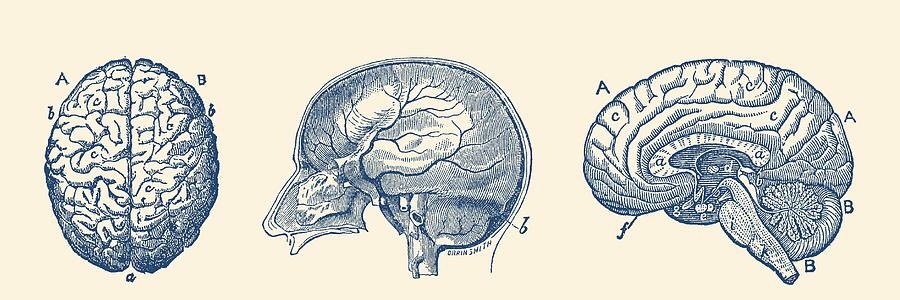
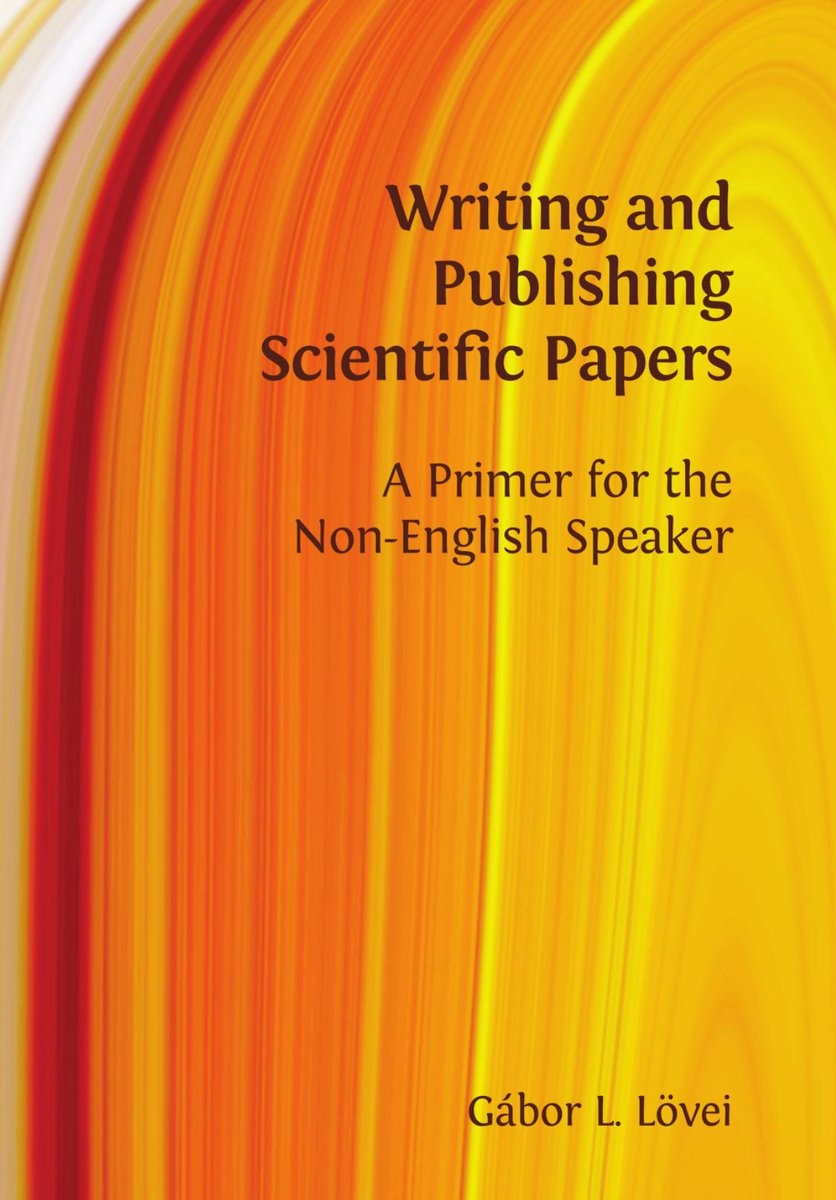
Si quieres saber cómo funciona el cerebro, no te puedes perder estos dos libros de Saul Martínez-Horta, uno de los mejores neuropsicólogos del país. #geoPlaneta@smartinezho1
"Durante el neurodesarrollo se empieza a mielinizar antes el área de Wernicke que su área de Broca, es decir, los niños empiezan a comprender el lenguaje antes que a producirlo" —Robert Sapolsky
1% de las neuronas del 🧠 tiene receptores #Monoaminergicos (Dopamina, Noradrenalina, Serotonina)
40% de las neuronas del 🧠 tienen receptores de #Glutamato y 30% #GABA
En el tratamiento de #Depresión estos 2 neurotransmisores tienen fundamental importancia
@ecnptweets
Feel like waving the white flag over white matter disease?
Do you grade the degree of small vessel disease, or just mention & hope no one asks for more?
Degree of small vessel disease is important & the Fazekas scale is an easy way to semi-quantitate disease burden
Here’s how to remember it:
Think about how the number looks or feels — it grows in intensity!
Deep White Matter Fazekas:
1 → “1-hit wonder”
Punctate foci — just tiny spots, like little dots.
2 → “2 = two-gether”
Beginning confluence of foci — two dots coming together, mild merging.
3 → “3 is a crowd”
Large, confluent areas — everything blending into a mess, too much white.
Periventricular Fazekas:
1 → “1 is a pencil”
✏️ Pencil looks a number 1 (pencil-thin “cap” or rim along ventricle).
2 → “2 curves into a halo”
⭕ Smooth halo of hyperintensity — picture the roundness of 2 encircling the ventricle.
3 → “3 branches out”
🌿 Irregular fingers of white matter reaching into the deep — the edge of the number 3 look like irregular finger
Now you know the Fazekas score for small vessel disease! Now your knowledge of small vessel disease will be anything but small!
Autoimmune Disease Doubles Risk of Depression and Anxiety
A large-scale study analyzing data from over 1.5 million UK participants has revealed that individuals with autoimmune diseases face nearly double the risk of mental health conditions such as depression, anxiety, and bipolar disorder.
The association remained strong even after adjusting for factors like age, income, and family history.
Women with autoimmune disorders were especially vulnerable, showing a significantly higher prevalence of affective disorders than men.
Researchers believe chronic inflammation may underlie this link, potentially disrupting mood-regulating systems.
While the study could not determine causality, the strong associations suggest the need for mental health screening in this population.
Early intervention could help address mental health issues before they worsen.
¿Cómo aprenden los niños a hablar?
No es ambiente ni solo genética. El lenguaje se construye activamente desde la experiencia, combinando mente, cuerpo y entorno. Hilo va!👇🧵