Day 30 of great biology papers. 🎆The final day.🎆
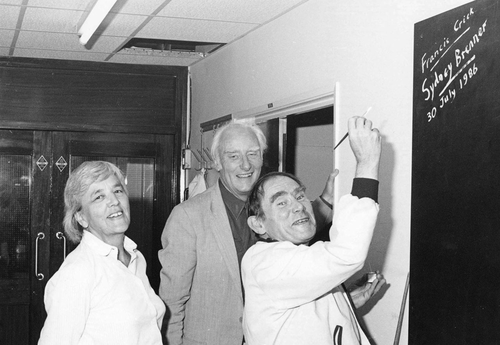
"General Nature of the Genetic Code for Proteins," by F. Crick, S. Brenner, L. Barnett & R.J. Watts-Tobin (1961).
This paper is, in my opinion, the most impressive in the history of molecular biology. Here's why...
****
When the structure of DNA was solved in 1953, molecular biology was a relatively barren landscape. By that, I mean that messenger RNA had not yet been discovered, nobody was quite sure whether there was any link between DNA and proteins, and there were zero technologies to isolate a gene, let alone sequence one.
And yet, just 8 years after that seminal paper, these four scientists used a simple experiment — and fragmentary evidence — to correctly determine that...
1. Each amino acid in a protein is encoded by a triplet code...
2. The letters in this code do not overlap (e.g. AUGACC is read by the ribosome as 'AUG' and 'ACC,' rather than 'AUG,' 'UGA,' 'GAC' etc.)...
3. There is a start codon.
Again, they discovered all of these things in the absence of tools to sequence DNA, or to compare a DNA sequence with a protein's amino acids. But before I tell you how they did it, I want to set the scene.
The year 1961 was, essentially, the annus mirabilis for molecular biology:
- In May, two separate groups reported that they had isolated and proved the existence of messenger RNA, and they postulated that it probably carried information from DNA to proteins.
- Jacob and Monod argued that there are two types of genes: Those that encode proteins, and others that regulate gene expression.
- Marshall Nirenberg showed that a chain of RNA containing the letters "UUUUUUUUUUUU" encoded a protein filled with phenylalanine amino acids, thus demonstrating a profound, initial insight into the genetic code.
(See the excellent review by Matthew Cobb: https://t.co/JJfkqHdgUb)
With these prior experiments in mind, Brenner, Barnett, Crick, and Watts-Tobin set out to understand how, exactly, the genetic code works.
Their experiments began with a bacteriophage that infects bacteria, called T4. When these bacteriophage are doused with mutagens, and their genetic material is altered, they sometimes lose their ability to infect bacteria.
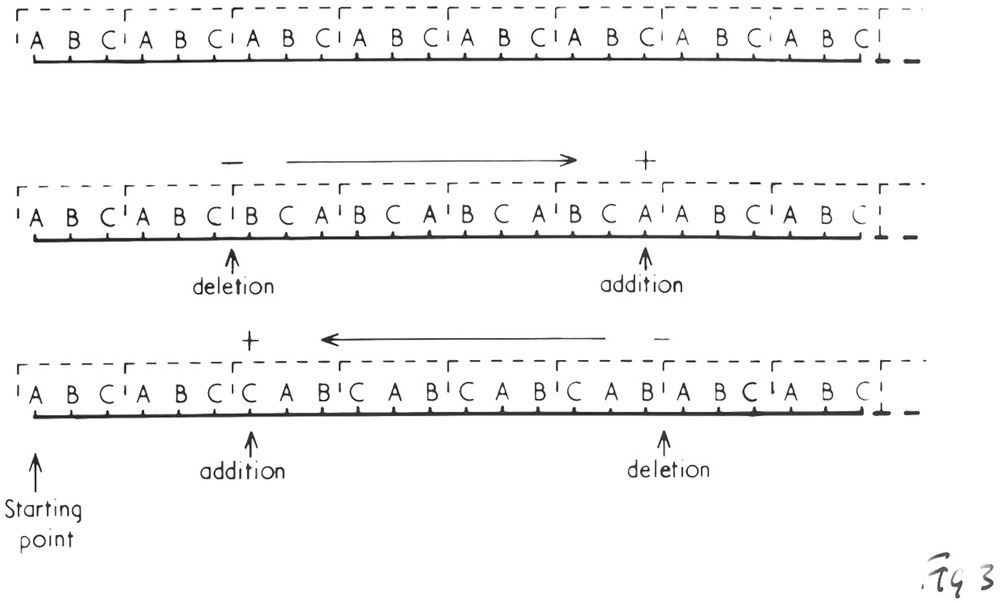
Now, there is also a dye, called acridine, that causes single nucleotides to be added or deleted from a piece of DNA. This is quite important, because most other mutagens just randomly change sections of DNA. But acridine always adds or removes just one nucleotide.
So Crick put these two things together and had a brilliant idea. He took a T4 bacteriophage, exposed it to acridine, and found that it had lost its ability to infect E. coli. This strain was called FC0 — Francis Crick Zero. But then, he (and the others) used acridine to add or remove more letters in the bacteriophage DNA until it regained its ability to infect bacteria.
If they added one base and then removed one base, the phage infected the bacteria.
If they added two bases, the phage did not infect bacteria.
If they added three bases, the phage infected bacteria.
From these observations, they argued that the genetic code must use triplets to encode each amino acid. It was a brilliant takeaway, based on partial experimental evidence. From the paper:
"The simplest postulate to make is that the shift of the reading frame produces some triplets the reading of which is ‘unacceptable’; for example, they may be ‘nonsense’, or stand for ‘end the chain’, or be unacceptable in some other way to the complications of protein structure."
Even though the "combination of mutations strongly suggested that the code was based on units of three bases, the experiments could not prove that to be the case – a code using groups of six bases was consistent with the results," writes Cobb in his review.
"This, however, would raise all sorts of problems by massively increasing the number of either meaningless or degenerate sequences (there would be 4096 possible combinations of bases, rather than a mere 64). As Crick later put it, this was 'hardly likely to be taken seriously.'"
In his classic book on the history of molecular biology, The Eighth Day of Creation, Horace Judson called this experiment, "a classic of intellectual clarity, precision and rigour." And I agree.
Thanks for reading this series!
Paper: https://t.co/gy4uldZKeM
Full text: https://t.co/18cicPzVDF
Join the @PacBio Discoveries Roadshow in #Frankfurt!
@LisaMnner of @LOEWE_TBG and @Senckenberg will be also there, talking about the chromosome-level #genome assembly of the solar-powered sea #slug, Elysia timida 🌊🐌🧬
See the full agenda & register 👇
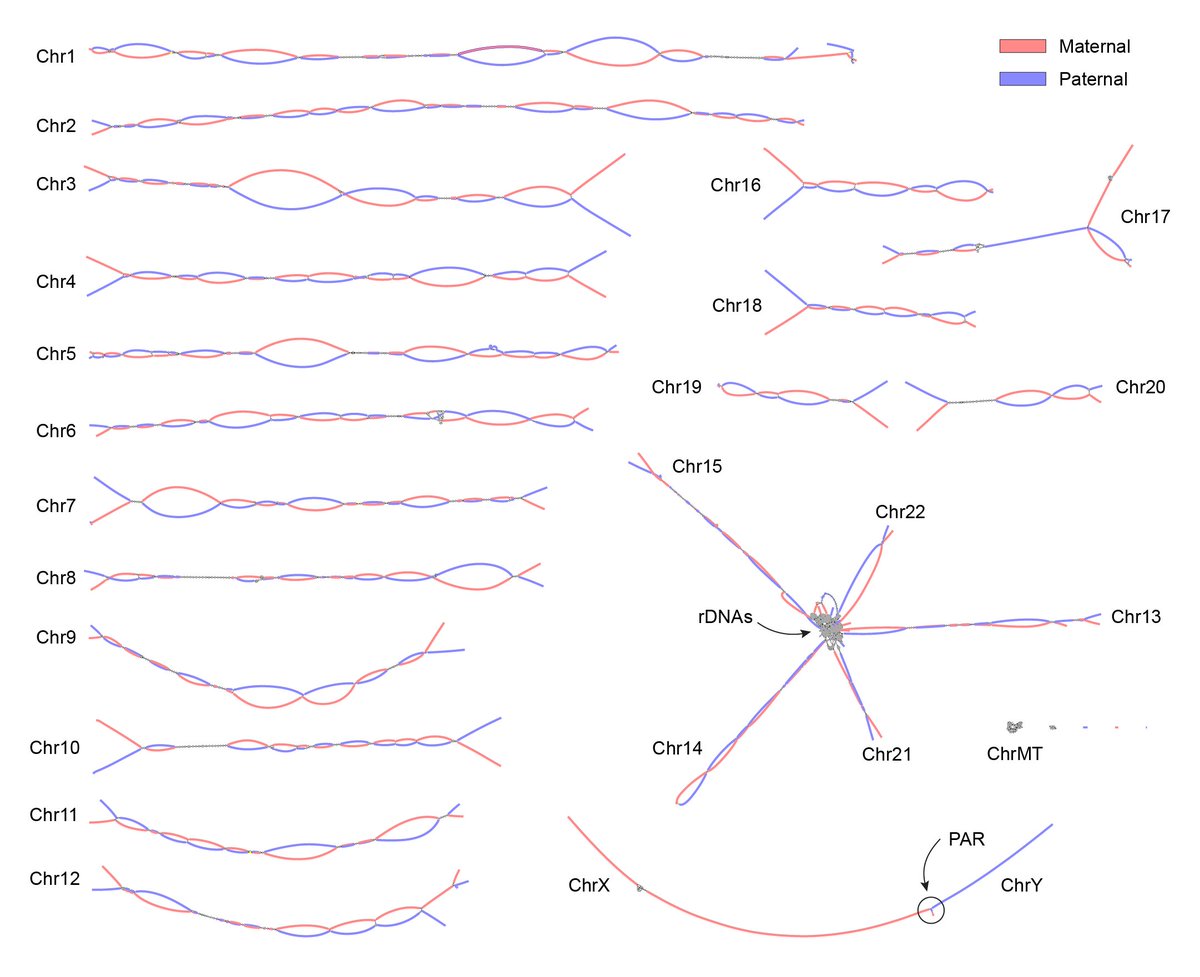
Our next big thing! 🎉 "Verkko: telomere-to-telomere assembly of diploid chromosomes" from @MikkoRautiaine3@sergeynurk@sergekoren generates beautiful graphs and automatically assembles 20/46 human chromosomes from HG002 #T2T without gaps https://t.co/6Jb0avtVmU
>70% GC virus genome? Dense repeats too? Not a problem with @PacBio sequencing. Scientists @FredNatLab report the first ever #herpes simplex virus type 2 strain G genome bringing to 5 the total number of HSV-2 references, 3 done with PacBio. https://t.co/sNdaKPeULy
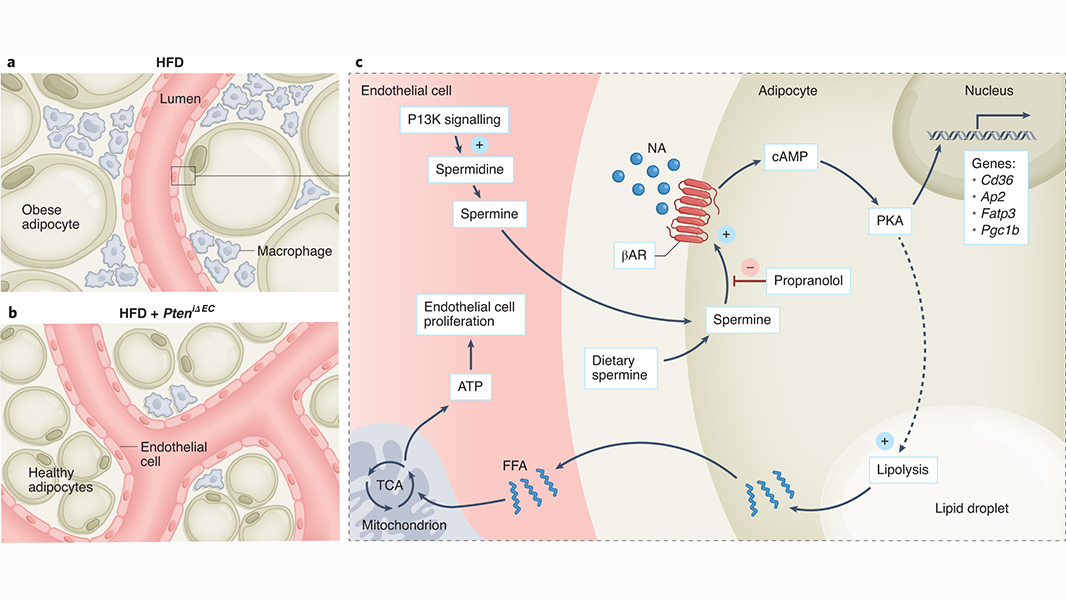
News & Views: A study in @NatMetabolism shows that endothelial cells communicate with adipocytes via polyamines to promote vascularization of adipose tissue, thereby reversing the metabolic effects of obesity. https://t.co/B3mBEjy9Rr
Last summer at #LINO70, a panel feat. Nobel Laureates Emmanuelle Charpentier and Christiane Nüsslein-Volhard, Lindau Alumna Julia Jansing and ethicist Alena Buyx discussed gene editing – and the stigma around it. Watch a recording in our Mediatheque: https://t.co/buipQhsbiI
Students from The Breakthrough Project in @RingsendC were delighted to have a Zoom talk by Emmanuel Charpentier earlier. Emmanuel was awarded the 2020 Nobel Prize in Chemistry #CRISPR. With thanks to Janice Valentine from @ersgenomics and Ciara Moran, DP @RingsendC@tcddublin
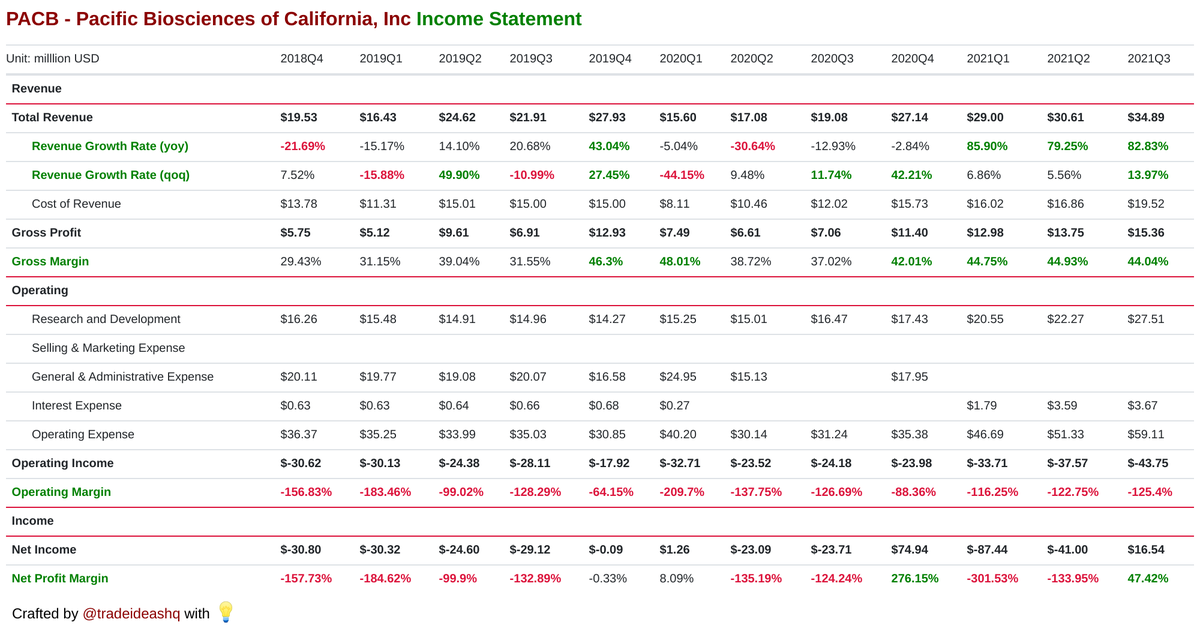
Pacific Biosciences of California, Inc current quarter revenue growth YoY of 82.80% ranked 550 out of 5681 companies in our database.
👉 https://t.co/RFuDLUENQ3 $PACB
🚀🚀🚀🚀🚀
You got single-cell @PacBio Iso-Seq questions, we have answers for you! Come hear the scIso-Seq experts chat and ask them questions! (I'm just the humble moderator along with @velociroger and @JG_Underwood)