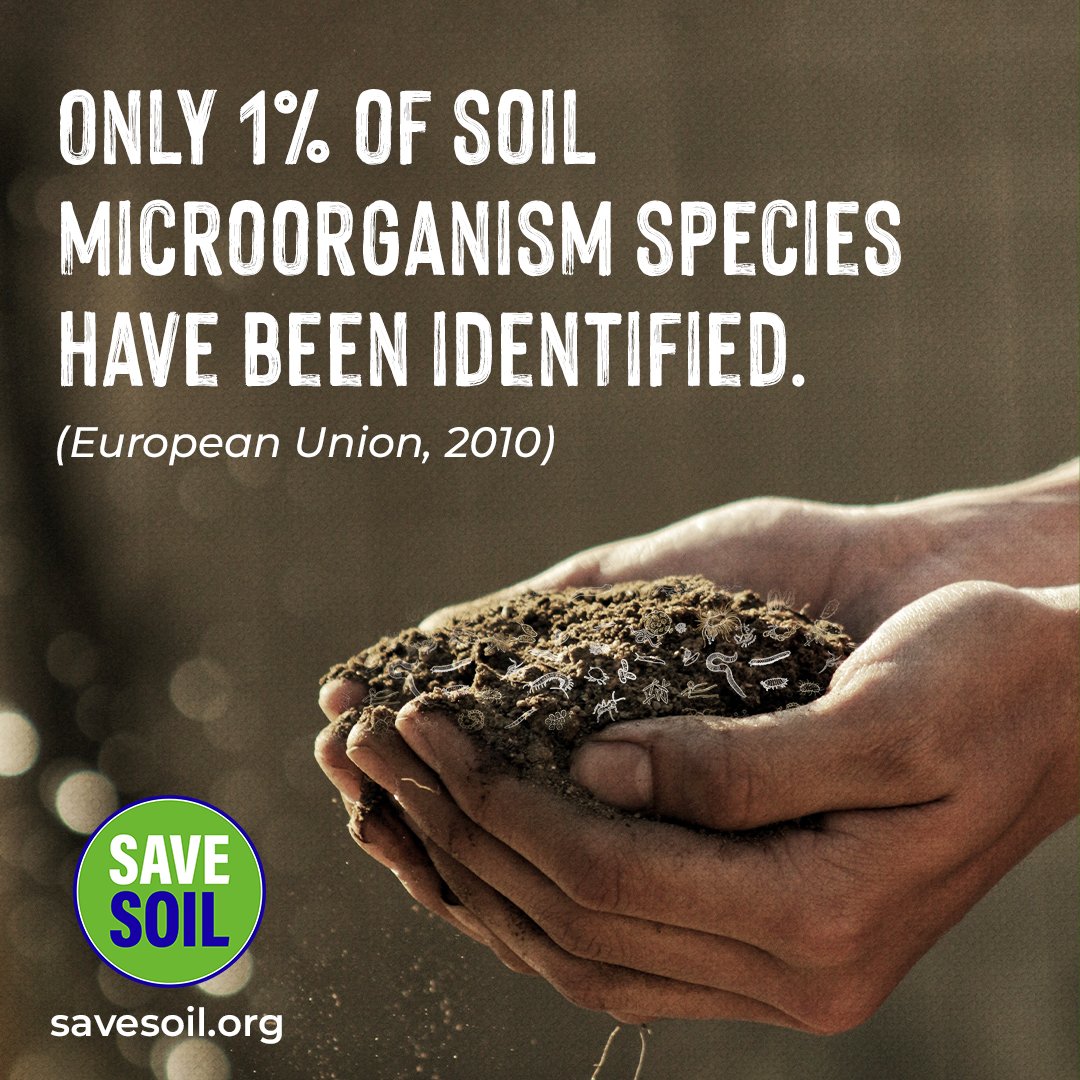
Soil is alive and kicking.
It's not just dust and rocks but an entire ecosystem of microbes, fungi, worms, nematodes, insects (and many more) that accumulate organic carbon and transport nutrients throughout the system.
#SaveSoil@cpsavesoil
📹 wholeplantcollective [Insta]
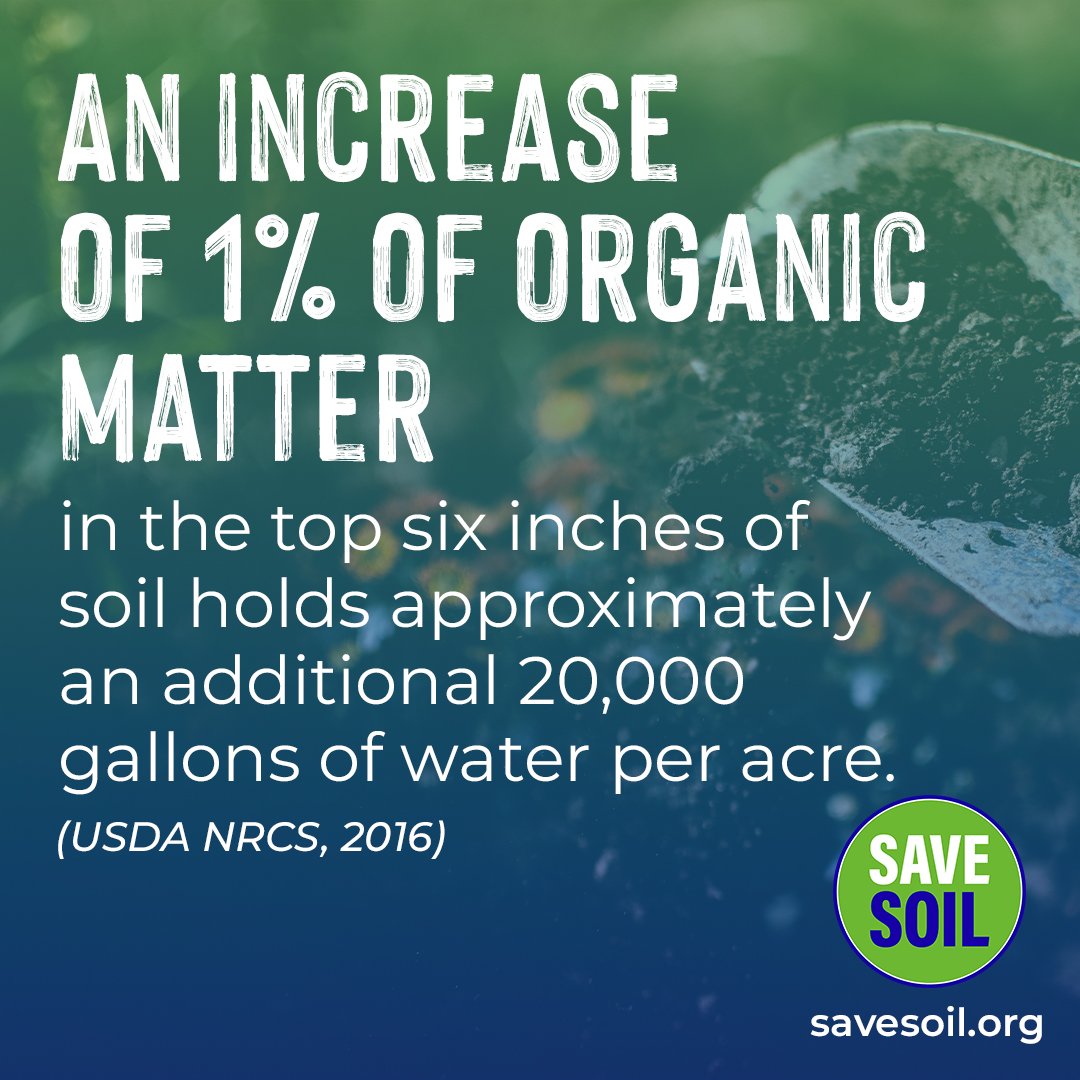
When even 1 % matters to move towards a livable future on our Earth!
Let's urge our political leaders to put #SoilHealth on top of their political agenda for the sake of the people and the countries they represent 🌱
#SaveSoil#ConsciousPlanet#GenerationRestoration#SoilLaw
Healthy soil doesn’t always require more intervention sometimes it requires less disturbance.
🍀☘🙏
Reduced tillage can maintain yields while supporting soil carbon, microbial life, and lowering labour and fuel use.☘🌱🌿🍀🌴🙏
#SaveSoil https://t.co/9zoOooJonq
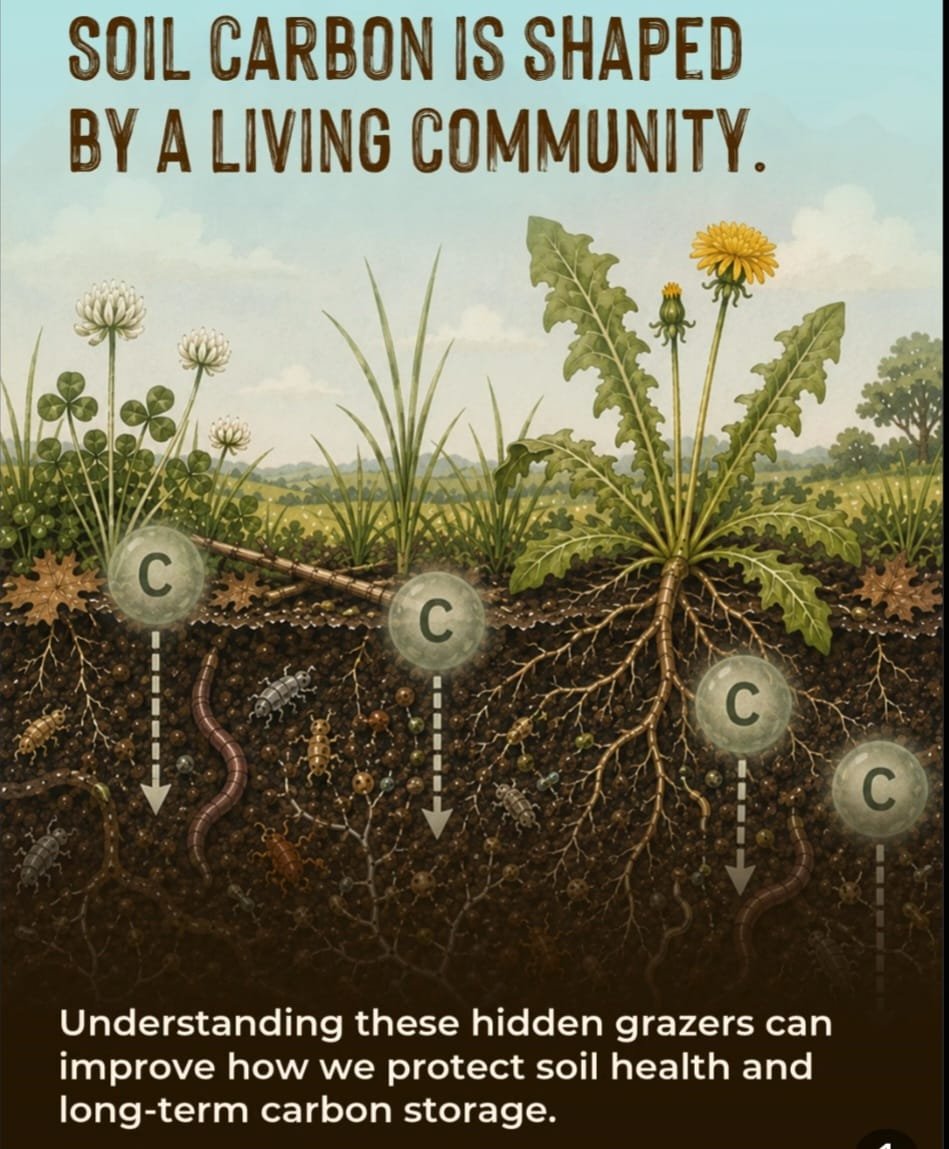
Grassland carbon storage is shaped by a complex web of life.
A study in Global Change Biology found that livestock do not fully substitute the ecological role of native herbivores in supporting soil carbon stock. The difference is linked partly to changes in microbial decomposers, which influence how carbon is processed and retained.
This points to an important lesson: soil carbon is not only about plants. It is also shaped by animals, microbes, and the way land is managed.
Action Now: https://t.co/uVnQCIZBeZ
Citation: Roy, S., Naidu, D., & Bagchi, S. (2023). Functional substitutability of native herbivores by livestock for soil carbon stock is mediated by microbial decomposers. Global Change Biology, 29, 2141-2155. https://t.co/vBhXAgRWiP
🙏🏼Did 11 kms of #SaveSoil running campaign and reached 7,600 kms.
Most of the known environmental issues will be solved if the Soil is rich in organic content. Let's join hands to save our soil. Visit https://t.co/ncloCbhfZs
@DRDO_India@InternetH0F@DirMktg_iocl@DirHR_iocl
Soil health isnt just about adding compost or fertilizer.
What makes everything click is the microbial life of diverse creatures that make nutrients available.
If that microbial ecosystem isn't there, soil simply won't work.
#SaveSoil 📹 livingearthbiology [Insta]
Scientists analysed more than 1 million cases of vector-borne diseases across the Brazilian Amazon between 2015 and 2019 — including malaria, dengue, leishmaniasis and Chagas disease.
They found that disease patterns were closely associated with different forms of land use and environmental change. Remote forested areas, mining, agriculture and expanding towns each showed distinct disease patterns.
It’s a reminder that human health and the health of ecosystems are deeply connected.
Understanding how land-use changes shape these patterns can help identify vulnerable areas, strengthen disease surveillance and better protect both people and forests.
Citation: Barbosa, M., Lana, R.M., Dal’Asta, A.P. et al. Vector-borne disease co-occurrence is shaped by agrarian economy and socioenvironmental contexts in the Brazilian Amazon. Commun Earth Environ 7, 590 (2026). https://t.co/nA2d2la3PY
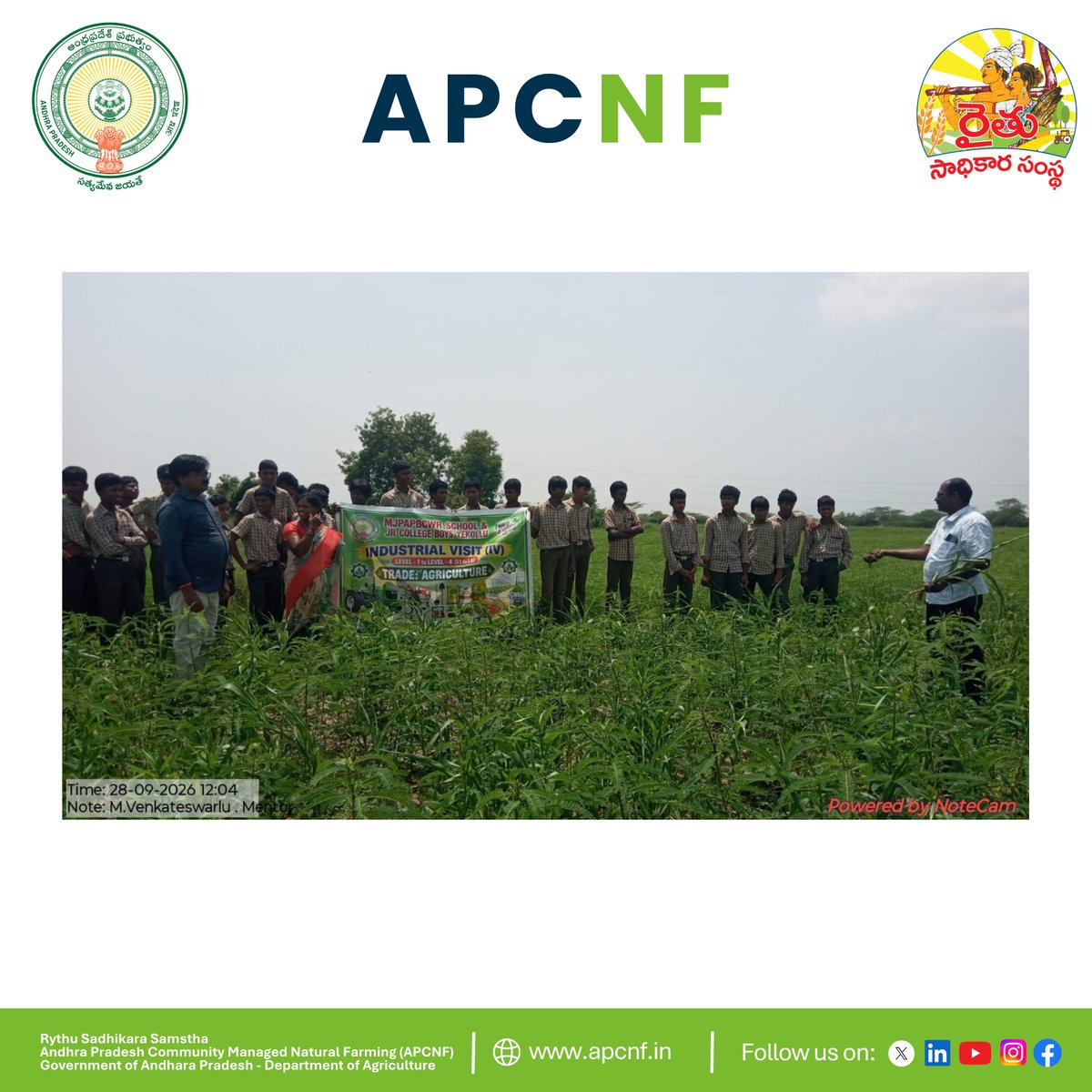
Students of Classes 9 and 10 from the BC Residential School, Doravarisatram Mandal, visited the ATM Model farm at Thallampadu village in Tirupati district on 28 September 2026. The exposure visit was facilitated by M. Venkateswarlu @iggaarl Mentor, Tirupati District, who guided the students through various #NaturalFarming practices and concepts.
During the visit, the students explored a wide range of vegetable, biodiversity crops, and tree species maintained in the ATM Model. M. Venkateswarlu explained how plants absorb nutrients, the role of root exudates in RDS (PMDS) crops under the A Grade Model, and the importance of soil microorganisms in sustaining soil fertility. He also educated the students on the differences between indigenous and Jersey cattle and highlighted the adverse effects of excessive chemical fertilizer use on soil health. The visit provided valuable insights into how Natural Farming supports healthy food production, ecological balance, and environmental sustainability, inspiring students to better understand the connection between agriculture, health, and nature.
@vijaythallam@AndhraPradeshCM@ap_agriculture@icarindia@FCGulbenkian@FoodPlanetPrize@rajbudithi65
#SoilHealth #Biodiversity #FutureFarmers #StudentExposureVisit #ExperientialLearning #AgriEducation #HealthyFoodHealthySoil #IndigenousCattle #SustainableAgriculture
I happen to have some agricultural land in Pakistan and would love to try out this compost challenge.
I commend the organisers for putting farmer's welfare and and soil health first when creating solutions for our climate, agriculture and economy.
#SaveSoil 📹 @trashitpk
Many cities are beginning to rethink the ground beneath them.
Depaving removes asphalt and concrete so that soil can absorb rainwater, support vegetation, reduce heat, and help restore biodiversity in urban spaces.
From Genoa to Paris, Copenhagen, New York, and São Paulo, cities are finding ways to replace sealed surfaces with green infrastructure. This is not just beautification. It is a practical response to flooding, heat, and the long-term need for more resilient cities.
Action Now: https://t.co/uVnQCIZBeZ
Source: Re Soil Foundation, “From Genoa to New York: why depaving is reshaping the future of the cities,” 5 June 2026.
This is excellent news. 👌🏻
If farmers can be shown that reducing tillage doesn't reduce the yield and even makes soil healthier, they will be more willing to switch over to natural farming.
So Let's make the necessary policy changes that can facilitate this switch.
#SaveSoil