Physician. Special interest in Integrative Medicine and Neuroscience. Nationalist. Passionate about ancient Indian Shastras and heritage. RT# Endorsement
Today, on my final day as Director of National Intelligence, I’m releasing never-before-seen communications and documents exposing how Dr. Fauci provided millions in US taxpayer dollars to fund dangerous gain-of-function research at the Wuhan lab, worked with politicized elements within the Intelligence Community to suppress the truth about his actions and hide the virus’ lab-leak origins, and lied to Congress while under oath in 2024. It’s time you know the truth.
https://t.co/3YJSstB7d4
I took some time to review the White Paper published by the TVK Govt on the state of Tamil Nadu's finances.
No surprises, as most of it was already known. In many ways, it serves as a post-mortem of the State’s fiscal mismanagement over the past five years, laying bare the extent of the deterioration and benchmarking Tamil Nadu’s key financial indicators against those of other similarly industrialised states.
-₹10 Lakh crore outstanding debt & per capita outstanding debt at ₹1,28,934
-Interest payments at 22.8% of total revenue receipts.
-State’s own tax revenue (SoTR) to GSDP ratio fell from 5.93% in 2021-22 to 5.45% in 2025-26.
-Major State PSUs in power, transport, and civil supplies hold a combined debt of ₹3.18 lakh crore.
-Revenue loss due to systemic corruption, suppressing registration revenues by undervaluing real estate prices and many more.
The shrinking working-age population in TN by 2031 leaves the state with very little time to recover and strengthen its revenue base. This is a serious issue!
The TVK Govt, therefore, has very little time at its disposal and must not treat this White Paper as an excuse for non-performance; instead, it should explore ways to repair the damage done. I propose that the government form a “functional” consultation group that includes not only academicians and economists but also experts from all fronts to find constructive ways to mitigate the crisis at hand.
Dear @SMedia4
I agree, NEET must be conducted fairly at any cost. "Students’ futures cannot be compromised".
But as a veteran, I respectfully submit that defence resources are meant for exceptional aid to civil authority for calamities, engineering support, or law and order assistance.
If a civilian entrance exam requires IAF airlift and military grade security, it is not just a remedial measure. It is a warning sign that normal exam governance has failed.
One time action may be understandable. But it must not become a precedent.
Secure #NEET, yes. But fix the system too.
Two-tier CRPF+CISF escort with IAF airlift.
4-layer CCTV with AI surveillance.
Biometric & facial recognition before entry.
Multiple layers of frisking.
Multi-level oversight with direct monitoring from the Prime Minister’s office.
Yes, you read it right. But these are not arrangements to buy high-level, classified, military-grade software. These are the arrangements made by the Ministry of Education for the NEET retest scheduled for 21st June 2026.
Every student would appreciate the government's efforts to prevent paper leaks by implementing additional security measures and enhanced monitoring. But an increase in scrutiny before entry, extended frisking, and an increase in the overall exam time from 180 minutes to 195 minutes will only add to their already ballooning exam pressure.
While the government has taken measures to contain leaks, they have forgotten the additional burden they have imposed on a young student before they take up an assessment, one that they have spent months preparing for, dissolving the entire purpose of our exam system and the NEP 2020’s goal to reduce “Exam Stress”.
Despite all these arrangements for the examination, there are issues with downloading the admit cards, and NTA has assured students that it will resolve them at the earliest.
Yes, there are challenges that demand meaningful solutions. However, I am concerned that the approach devised for the NEET retest may not resolve the issue; instead, it risks creating a new set of problems.
திருவள்ளூர் மாவட்டம் கும்மிடிப்பூண்டி அருகே, 3 வயது பெண் குழந்தை பாலியல் தாக்குதலுக்குள்ளாகி, சிகிச்சை பலனின்றி உயிரிழந்த செய்தி, மிகுந்த அதிர்ச்சியும், வருத்தமுமளிக்கிறது.
இந்தக் குற்றத்தில் தொடர்புடைய வடமாநிலத்தைச் சேர்ந்த ஒரு நபர் கைது செய்யப்பட்டிருக்கிறார். அதே போல, காஞ்சிபுரம் மாவட்டம் ஆதனூரில், பத்து வயது பெண் குழந்தைக்கு பாலியல் தொல்லை கொடுத்த வடமாநில நபர் கைது செய்யப்பட்டிருக்கிறார்.
கடந்த சில மாதங்களாகவே, தமிழகத்தின் பல்வேறு பகுதிகளில் நடைபெறும் குற்றங்களில், வட மாநிலங்களைச் சேர்ந்தவர்கள் தொடர்பு இருப்பது அதிகரித்துள்ளது.
இந்த ஜூன் மாதத்திலேயே, சென்னையில் மூதாட்டியிடம் சங்கிலி பறிக்க முயன்ற ஒரு வடமாநில இளைஞர் ஒருவர் கைது செய்யப்பட்டார். கடந்த மாதம், தாம்பரம் அருகே இளம்பெண்ணிடம் பாலியல் தொல்லை செய்த வழக்கு, திருவள்ளூர் அருகே வீட்டில் தனியாக இருந்த பெண்ணிடம் அத்துமீறிய வழக்கு, சென்னை வேளச்சேரி பேருந்து நிலையம் அருகே 61 வயது பெண், கூட்டு பாலியல் வன்கொடுமை செய்யப்பட்ட வழக்கு, சென்னை வேளச்சேரியில் மனநலம் பாதிக்கப்பட்ட பெண்ணுக்கு பாலியல் தொல்லை கொடுத்த வழக்கில், 15 வயது சிறுவன் உட்பட மூன்று வடமாநில தொழிலாளர்கள் கைது, சென்னை மதுரவாயல் பகுதியில் அதிகாலையில் வீட்டிற்கு வெளியே கோலம் போட்டுக் கொண்டிருந்த பெண்ணிடம் பாலியல் சீண்டல் செய்த வழக்கு என, தொடர்ந்து பல குற்றங்களில், வட மாநில இளைஞர்கள் கைது செய்யப்படுவது பல கேள்விகளை எழுப்பியுள்ளது.
குற்றங்களில் ஈடுபடுபவர்களை, காவல்துறை உடனடியாகக் கண்டுபிடித்துக் கைது செய்வது பாராட்டத்தக்கது. ஆனால், குற்றங்கள் நடைபெறாமல் தடுப்பதற்கான என்ன நடவடிக்கைகளை மேற்கொள்ளப் போகிறது தமிழக அரசு?
பணி நிமித்தமாக, பல மாநிலங்களைச் சேர்ந்தவர்கள் தமிழகத்துக்கு வருவதும், தமிழகத்தைச் சேர்ந்தவர்கள், பல இடங்களுக்குச் செல்வதும் இயற்கை. ஆனால், பிற மாநிலங்களிலிருந்து தமிழகத்துக்கு வருபவர்கள் குறித்த சரியான விவரங்கள், அவர்களை பணியிலமர்த்தும் ஒப்பந்ததாரர்களிடமோ அல்லது, நிறுவன உரிமையாளர்களிடமோ இருக்கிறதா? இந்த விவரங்கள், தமிழக அரசிடம் வழங்கப்படுகிறதா? இதனை முறைப்படுத்த வேண்டாமா?
தமிழக அரசு உடனடியாக இது குறித்து நடவடிக்கை எடுக்க வேண்டும். தமிழகத்தில் வடமாநிலங்களைச் சேர்ந்த எத்தனை தொழிலாளர்கள், எந்தெந்த நகரங்களில் இருக்கிறார்கள், அவர்கள் சொந்த ஊர் உள்ளிட்ட விவரங்கள், தற்போதைய பணியிடங்கள் மற்றும் தங்குமிடம் என, அனைத்து தகவல்களையும், வடமாநிலத் தொழிலாளர்களைப் பணியமர்த்தும் உரிமையாளர்கள், தமிழக அரசுக்கு வழங்க வேண்டும். இதனை தமிழக அரசும் முறையாகக் கண்காணிக்க வேண்டும் என்று வலியுறுத்துகிறேன்.
Indian-origin restaurant manager in London sprinted across rooftops and caught a 3-year-old girl as she fell from a second-floor window after dangling for nearly 9 minutes.
While onlookers watched in horror and police struggled to reach her in time, he acted without hesitation. The rescue ended with an emotional hug from a police officer.
Funny how anti-India clips go viral worldwide within hours, but stories of Indians saving lives rarely get the same attention from major Western media or social media algorithms.
Courage doesn't trend as easily as propaganda. But this hero deserves to be seen. 👏
Ancient India holds a completely mind-blowing, hardly-known conceptual connection to small sample statistics problem: estimating a massive population from a microscopic sample.
It is recorded in the Vana Parva of the Mahabharata, through a highly advanced mathematical concept known as Akṣa-Hṛdaya (The Heart of the Dice/Numbers).
In the epic, King Nala loses his entire kingdom in a rigged game of dice because he lacks the cognitive framework to understand probability & patterns. He goes into exile, loses his identity & ends up working as a humble charioteer named Bāhuka for King Rituparna of Ayodhya.
Rituparna was not just a king; he was a master of Akṣa-Hṛdaya, which ancient texts describe as a secret system that allowed a person to immediately compute vast numbers & understand the mathematics of gambling.
1 day, as Nala is driving Rituparna’s chariot through a dense forest, they pass a massive, sprawling Vibhitaka tree (the Terminalia bellerica, ironically the very tree whose nuts were dried & used as dice in ancient India).
Rituparna looks at the bursting, chaotic canopy of leaves & fruits & makes a casual boast to Nala:
"Look at this tree, Bāhuka. Not all of its leaves & fruits are visible to the eye. But I can tell you that on this tree, there are exactly 50 million leaves & 2095 fruits."
Nala is stunned & deeply skeptical. He stops the chariot & says, "O King, you are making a claim about things that are hidden from view. I am going to chop down this tree, count every single leaf & verify if your words are true."
Nala literally spends hours cutting the branches & counting. When the final tally matches Rituparna's calculation down to the last single digit, Nala falls at his feet & begs to learn the secret.
How did King Rituparna do this? Mainstream mythological retellings treat this as a magical mantra/a divine superpower. But in reality, Rituparna was executing the world's oldest recorded example of Estimation by Sampling.
Rituparna could not see 50 million leaves. He did not have time to count them. Instead, he took a tiny sample of a single branch, counted the density of leaves on that specific layout, calculated the total volumetric area of the tree's canopy & multiplied the sample weight against the whole.
The text notes that the moment Nala absorbs the mathematics of sampling & probability into his consciousness, the demon Kali (the personification of chaos, ignorance & bad luck) is literally vomited out of Nala’s body.
In ancient Indian thought, mastering the mathematical relationship b/w a tiny sample & the grand universe was the ultimate spiritual tool to destroy chaos & regain control over destiny. 🙏🙏
His name is Ranjitsinh Disale.
He wanted to be an engineer. When that did not work out, his father suggested he train as a teacher instead.
In 2009, he was posted to a government primary school in Paritewadi, a small village in Solapur district, Maharashtra. The school was a crumbling building wedged between two storerooms, one of which had been used as a cattle shed.
What he found there troubled him.
Girls were being married off young instead of being sent to class. Attendance was poor. The textbooks were written in a language many of the children, who spoke Kannada at home, could not properly read.
He decided to fix all of it, starting with the books.
He learned the children’s mother tongue and rewrote their textbooks in a language they could actually understand.
Then he did something no one in India was doing at the time.
He printed unique QR codes inside the textbooks, allowing students with access to a phone to scan a page and instantly access audio poems, video lessons and practice questions.
A village school in Solapur had built a digital classroom out of paper and printed squares.
The results changed the village.
Girls’ attendance reached nearly one hundred percent. Teenage marriages in the area stopped. His QR code idea worked so well that the Maharashtra government adopted it across the state.
The following year, the national education body embedded QR codes in textbooks across the country.
In 2020, Ranjitsinh Disale won the Global Teacher Prize. He was chosen from more than twelve thousand nominations across roughly one hundred and forty countries and was the only Indian in the top ten.
The award carried one million dollars, around seven crore rupees.
Then he did something no winner had ever done before.
He announced that he would give away half the prize money, dividing it equally among the other nine finalists so that their work could continue as well.
He said teachers are the real change makers.
He meant all of them, not just himself.
A man who became a teacher only because engineering did not work out changed how an entire country learns, and then gave half his fortune to the people he had competed against.
Follow for stories India deserves to remember.
His name is Ranjitsinh Disale.
He wanted to be an engineer. When that did not work out, his father suggested he train as a teacher instead.
In 2009, he was posted to a government primary school in Paritewadi, a small village in Solapur district, Maharashtra. The school was a crumbling building wedged between two storerooms, one of which had been used as a cattle shed.
What he found there troubled him.
Girls were being married off young instead of being sent to class. Attendance was poor. The textbooks were written in a language many of the children, who spoke Kannada at home, could not properly read.
He decided to fix all of it, starting with the books.
He learned the children’s mother tongue and rewrote their textbooks in a language they could actually understand.
Then he did something no one in India was doing at the time.
He printed unique QR codes inside the textbooks, allowing students with access to a phone to scan a page and instantly access audio poems, video lessons and practice questions.
A village school in Solapur had built a digital classroom out of paper and printed squares.
The results changed the village.
Girls’ attendance reached nearly one hundred percent. Teenage marriages in the area stopped. His QR code idea worked so well that the Maharashtra government adopted it across the state.
The following year, the national education body embedded QR codes in textbooks across the country.
In 2020, Ranjitsinh Disale won the Global Teacher Prize. He was chosen from more than twelve thousand nominations across roughly one hundred and forty countries and was the only Indian in the top ten.
The award carried one million dollars, around seven crore rupees.
Then he did something no winner had ever done before.
He announced that he would give away half the prize money, dividing it equally among the other nine finalists so that their work could continue as well.
He said teachers are the real change makers.
He meant all of them, not just himself.
A man who became a teacher only because engineering did not work out changed how an entire country learns, and then gave half his fortune to the people he had competed against.
Follow for stories India deserves to remember.
Dr Abdul Kalam was a visionary way ahead of his time. He saw the need for sovereign tech back in 1998.
We have to work hard to catch up now. It is doable, we have the talent. The private sector must make R&D a big priority and the government can assist.
One concrete idea is to hold annual evaluations of critical tech capability across 100 critical sectors and publish a leaderboard in each area. Rank companies by capability. Let competitive forces do the rest.
The government can also institute a prestigious "Dr Abdul Kalam Award" exclusively for engineers and scientists. We must do this annually and create visibility on the progress we make in each critical sector.
Honoured to have had the opportunity to attend the Graduation Day of Park Institutions, Coimbatore, today.
My heartfelt greetings to Chairman Thiru PV Ravi avl on 50 years of academic excellence, to CEO @DrAnusharavi avl, to the dedicated faculty, and to the proud parents of these brilliant graduates.
We are stepping into a profound new era. In 1982, TIME’s "Man of the Year" was a computer; in 2025, it was AI. Urged the youth not to fear AI taking away jobs, but to adapt and harness it to evolve. The future belongs to those who take bold risks to solve the world's biggest problems.
Students should dream big with a global vision, be lifelong learners, stay humble, and never forget their Alma Mater. (1/2)
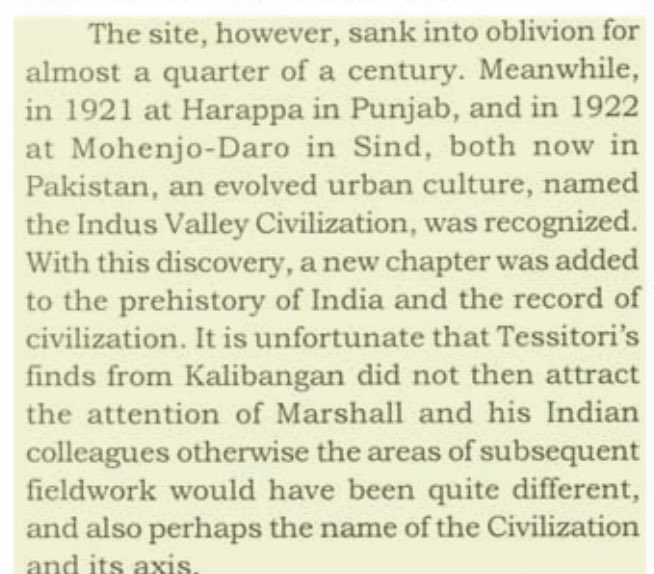
Did you know that Harappa was not the first site discovered in SSVC (Sindhu-Saraswati Valley Civilization)?
What we call Indus Valley Civilization today should have been named the Sindhu Saraswati Valley Civilization & the core of it should have been Kalibangan NOT Harappa. Italian scholar L.P. Tessitori found evidence of it in Kalibangan in 1917, a full 7 years BEFORE discovery of Harappa.
Shockingly, Tessitori's findings reveal that in 1900, British engineer Warren was constructing a section of the Jodhpur-Bikaner Railway. He ruthlessly dug up ancient bricks & terracotta artifacts from 2 large mounds of Kalibangan, which were smashed into gravel for the tracks!
Thankfully Tessitori was curious enough to dig himself at the site. What he found was incredible - pottery, terracotta cakes, beads, bangles, brick platforms, burial urns, vases, charred bones, tiles, rings, perforated jars, bull figurines, disc beads, buttons & copper objects!
Though he had no idea how old the artifacts were, Tessitori was dedicated & recorded all the evidence. Yet, inexplicably Kalibangan was IGNORED by ASI's Marshall & in 1923-24 the lies of Pakistan as the cradle of "Indus Valley civilization" with type site Harappa was born.
In December 1947, Hungarian British archaeologist Aurel Stein surveyed the area & read Tessitori's records, but reported there were no remains of Chalcolithic period. Stein who was fascinated with finding Greco-Buddhist traces of Alexander just didn't find Kalibangan worthy enough.
It was only after 1951, 4 years after Partition, that A. Ghosh carried out systematic explorations in the region & found 25+ mounds of "Harappan culture" of which Kalibangan stood out for its twin mound complex, which resembled the urban structures of Mohenjodaro & Harappa.
If the Kalibangan evidence of Tessitori in 1919 had been explored, we would call it Saraswati Valley Civilization today with a crucial extra detail, Kalibangan not only has all the elements of advanced urban design, plumbing, etc. but Fire altars in a ritual citadel & within homes too. Radiocarbon dating by ASI has verified that Kalibangan dates back to 3000 BCE.
Had Kalibangan been excavated thoroughly in 1920s, it would have been clear that the rituals of Vedic civilization were already an integral part of the SSC culture, & undermined the British lies of a mythical Aryan Invasion theory that has plagued Hindu history for far too long
Zaynich (cefepime-zidebactam) made by Wockhardt Pharma becomes the first NCE (new chemical entity) to be fully discovered and developed by an Indian company to get US FDA approval.
Used for complicated UTI.
This is my tenth book `History and Heritage of India - An Introduction’. The book has more than 80 articles, more than 200 photographs and three sections – dynasties of India; general topics; and monuments. A basic introduction to our history and heritage
Heartiest congratulations to our Hon. PM Thiru @narendramodi avl on becoming the longest-serving elected Prime Minister in India’s history, completing 4,399 days in office today.
May the almighty bless him with immense strength and good health in continuing his service to our nation.
Karnataka High Court Declares
“Tipu Sultan was a Jihadi who fought the British for his own Kingdom and was not a Freedom Fighter”
“Tipu Sultan massacred and raped thousands of Hindus, forcibly converted them to Islam. He destroyed temples. Tipu fought Britishers for Islam, not for independence of India. Tipu was a tyrant jihadi, not a freedom fighter.”
Justice Subhro Kamal Mukherjee
Chief Justice, Karnataka High Court
“He massacred, raped & converted Hindus. He didn’t fight for India’s Independence.”