25 Linux commands every DevOps engineer should know — and when you actually use them.
You don’t need 300 commands.
You need the right 25 when production is on fire.
Here’s the real-world Linux toolkit I’ve used in incidents, outages, and late-night debugging sessions:
⸻
🔥 Process & CPU Debugging
1️⃣ top / htop → See what’s eating CPU & memory right now
2️⃣ ps aux → List every running process with ownership
3️⃣ strace → Trace system calls (last-resort debugging)
⸻
🌐 Networking & Connectivity
4️⃣ lsof -i → Which process owns which port
5️⃣ ss -tulnp → Active connections & listening sockets
6️⃣ netstat -rn → Routing table (when traffic disappears)
7️⃣ tcpdump → Capture real packets when curl lies to you
8️⃣ curl -v → Full HTTP request/response with headers & TLS
9️⃣ dig / nslookup → DNS resolution debugging
🔟 traceroute / mtr → Track packet path & failure point
1️⃣1️⃣ iptables -L → Firewall rules (often the silent culprit)
⸻
💾 Memory, Disk & System Health
1️⃣2️⃣ df -h / du -sh → Disk usage before “no space left” hits
1️⃣3️⃣ free -m → Memory overview (buffers & cache included)
1️⃣4️⃣ vmstat 1 → Real-time CPU, memory & IO snapshot
1️⃣5️⃣ iotop → Identify disk-heavy processes
1️⃣6️⃣ uptime → Quick node health via load averages
1️⃣7️⃣ dmesg -T → Kernel logs (OOM kills show up here)
⸻
📜 Logs & Services
1️⃣8️⃣ journalctl -b -1 → Logs from previous boot
1️⃣9️⃣ systemctl status → Service state, exit codes & recent logs
2️⃣0️⃣ crontab -l → Scheduled jobs (often forgotten until they fail)
⸻
👤 Access & System Info
2️⃣1️⃣ who / last → Who logged in & when
2️⃣2️⃣ env / printenv → What environment variables are actually set
⸻
📂 Files & Permissions
2️⃣3️⃣ find / -name → Locate files across the system
2️⃣4️⃣ tar -xvf / gzip → Compress & extract archives
2️⃣5️⃣ chmod / chown → Fix permission issues (classic production task)
⸻
You don’t need to memorize all of them.
But if one of these saves you 20 minutes during an incident…
It was worth knowing.
Linux isn’t optional in DevOps.
It’s the foundation.
#DevOps #Linux
Most people think VPC subnets are just IP ranges.
They're not. They're trust boundaries.
Public subnet → has a route to the Internet Gateway → anything here is reachable from the internet.
Private subnet → no direct internet route → resources here can't be reached from outside.
This is why your Load Balancer goes in public, your EC2 app servers go in private, and your RDS goes in an isolated subnet with no internet at all.
One wrong placement = your database is open to the internet.
Design subnets by who should talk to what. Not by convenience.
Kubernetes in 60 seconds.
More users = more traffic
More traffic = more containers
More containers = chaos
Unless you use Kubernetes.
It scales, manages, and heals your system automatically.
This is why every modern system relies on it.
#Kubernetes#DevOps#Cloud#Tech
AWS just fixed one of the most frustrating errors in cloud engineering.
Yes… the legendary:
BucketAlreadyExists
You try to create a simple S3 bucket like:
company-data-prod
And AWS says:
Already taken.
Why?
Because S3 bucket names had to be globally unique across ALL AWS accounts.
Which led to bucket names like:
company-prod-data-final-v2-us-east-1
Not exactly beautiful.
But AWS just released a small feature that removes this headache.
Amazon S3 Account-Regional Namespaces
Now bucket names are scoped to:
• your AWS account
• your AWS region
Instead of the entire internet.
Which means you can finally use clean bucket names like:
logs
backups
datasets
Even across multiple accounts.
For teams managing multi-account AWS architectures, this is actually a big quality-of-life improvement.
Official announcement:
https://t.co/WofBEoKzBM
Quick question for fellow engineers:
What’s the weirdest S3 bucket name you’ve ever created just to make it unique?
Today @GoogleMaps is getting its biggest upgrade in over a decade. By combining our Gemini models with a deep understanding of the world, Maps now unlocks entirely new possibilities for how you navigate and explore. Here’s what you need to know 🧵
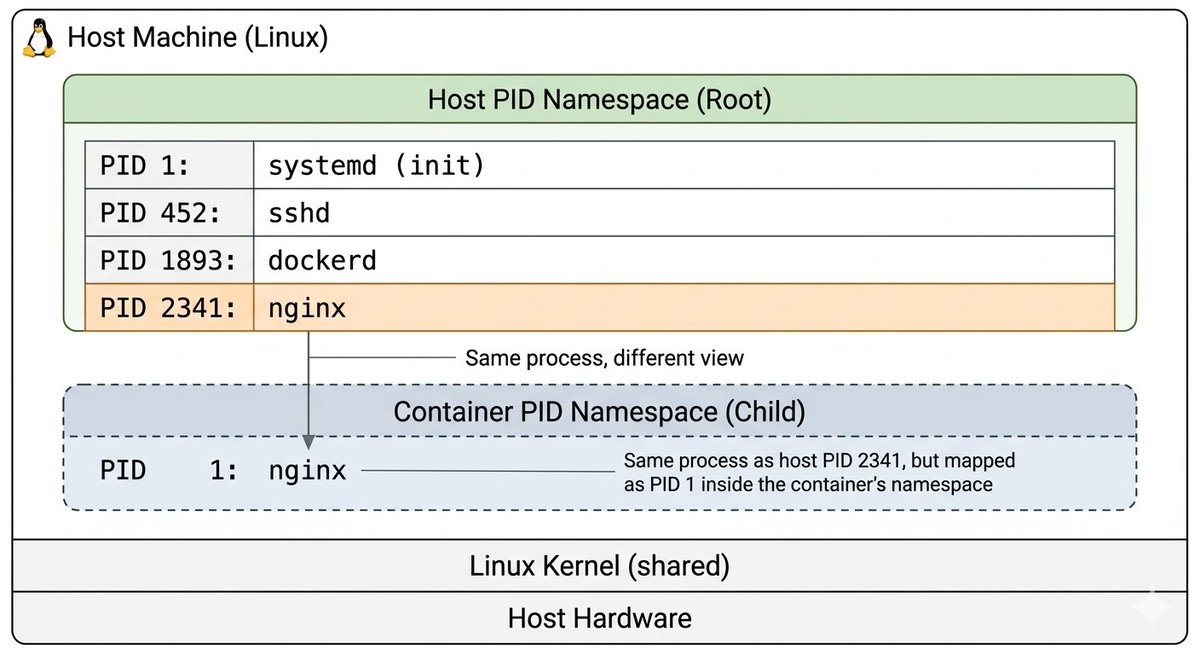
A container is just a Linux process.
Read that again.
↳ Host sees: PID 2341 → nginx
↳ Container sees: PID 1 → nginx
Same process.
Same kernel.
Different namespace.
No guest OS.
No hypervisor.
No virtualization.
This one diagram explains what most DevOps courses
Take 3 hours to teach.
Save this. You'll need it.
Terraform in simple terms:
Instead of clicking 100 buttons in the cloud console…
Write it once in code
Run terraform apply
Let automation do the rest.
Infrastructure as Code for the win.
#DevOps#Terraform#aws
Every engineer has that one server where the home directory looks like this… 🫠
At first:
ls
Everything looks clean. Organized. Perfect.
Then one day…
ls -a
And suddenly you discover years of forgotten files, logs, temp folders, backups, and chaos.
The funny part?
It’s never because of:
• Traffic spikes
• Kubernetes issues
• Broken deployments
It’s usually just:
“Disk space: 100% full.”
And now you can’t even SSH into the server.
Lesson learned 👇
Automate your cleanup jobs.
Monitor disk usage.
Delete what you don’t need.
Because your future self (and your on-call alerts) will thank you.
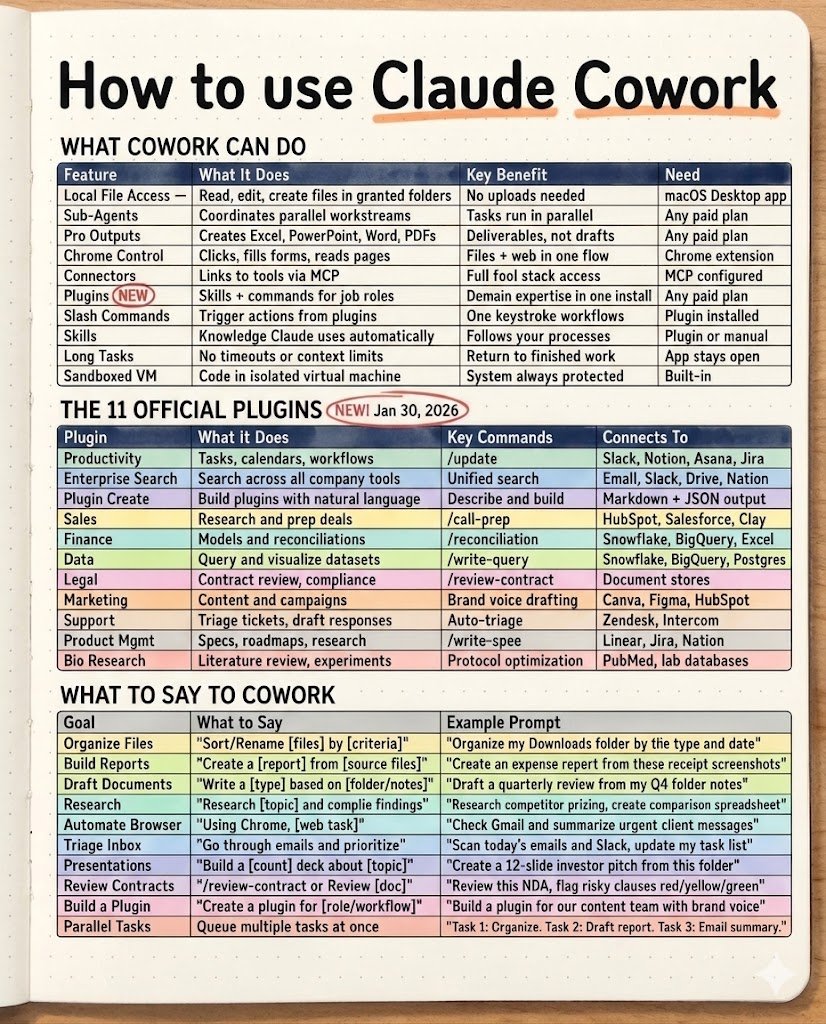
Most people are using Claude AI completely wrong.
Anthropic quietly released Claude Cowork — an AI system that can actually do work, not just answer questions.
It can:
• Organize files
• Run tasks in parallel
• Control your browser
• Build plugins
• Generate full reports
And almost nobody is talking about it.
Here’s a quick breakdown 🧵
🧠 What Claude Cowork can actually do
• Access local files (no uploads required)
• Run multiple AI agents in parallel
• Control Chrome to complete tasks
• Generate real outputs (Excel, PowerPoint, Docs, PDFs)
• Connect with external tools using MCP
• Run code inside a sandboxed VM
In simple terms:
Claude is moving from chatbot → AI coworker.
⚡ 11 official Claude plugins
Productivity — task & workflow automation
Enterprise Search — company-wide knowledge search
Plugin Create — build plugins using prompts
Sales — deal research & preparation
Finance — reconciliation & financial models
Data — dataset querying & analysis
Legal — contract review & compliance
Marketing — campaign planning & content
Support — ticket triage & responses
Product — specs, roadmaps, research
Bio Research — literature review & experiments
🧩 Prompts that unlock Claude’s power
Try commands like:
• Organize my downloads folder by type and date
• Create an expense report from these screenshots
• Research competitor pricing and build a spreadsheet
• Scan Gmail and summarize urgent messages
• Build a 12-slide investor pitch deck from this folder
💡 The real shift
Claude isn’t just answering questions anymore.
It’s executing tasks.
Think of it like:
AI = Operator
You = Director
Save this cheat sheet for later.
#AI #ClaudeAI #Anthropic #AIagents #Automation
Follow
@RamuChelloju
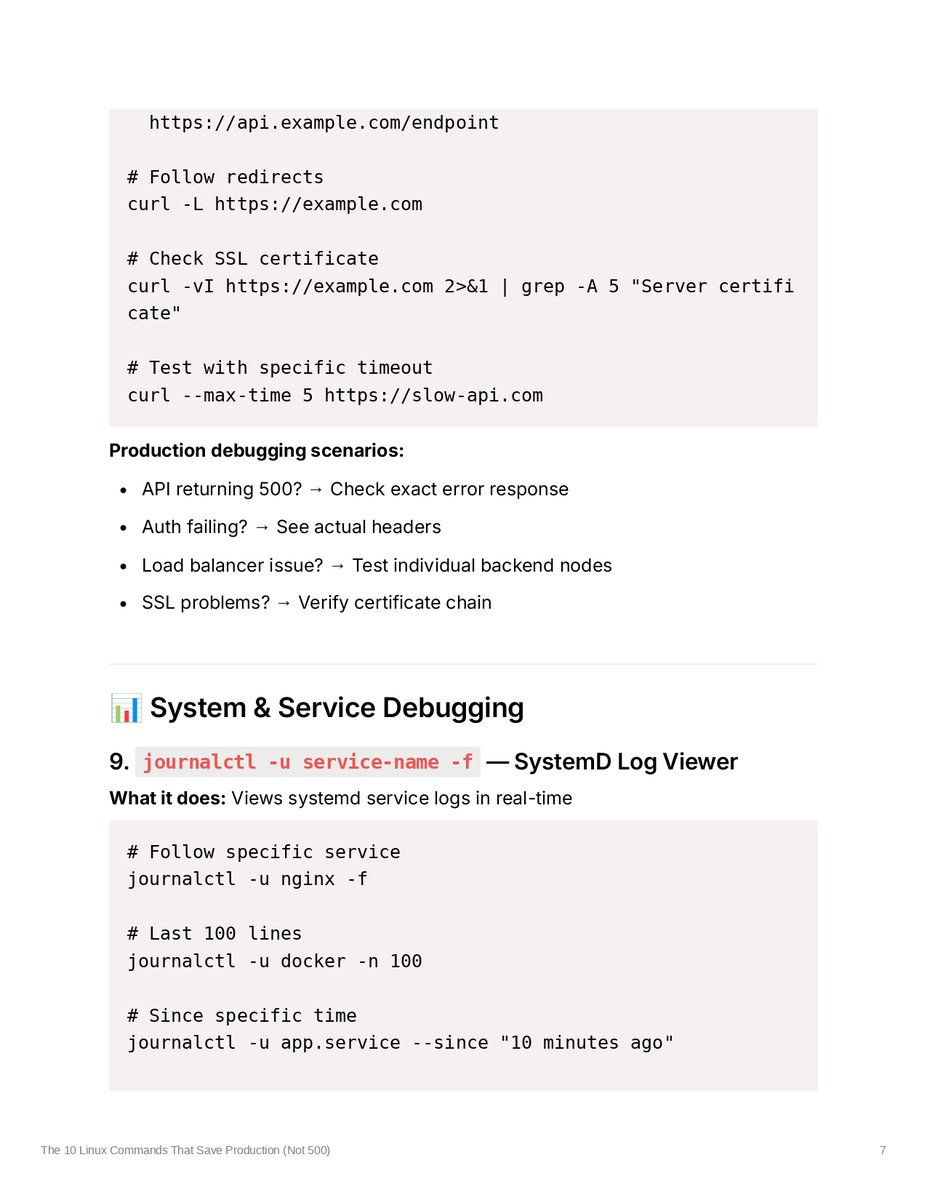
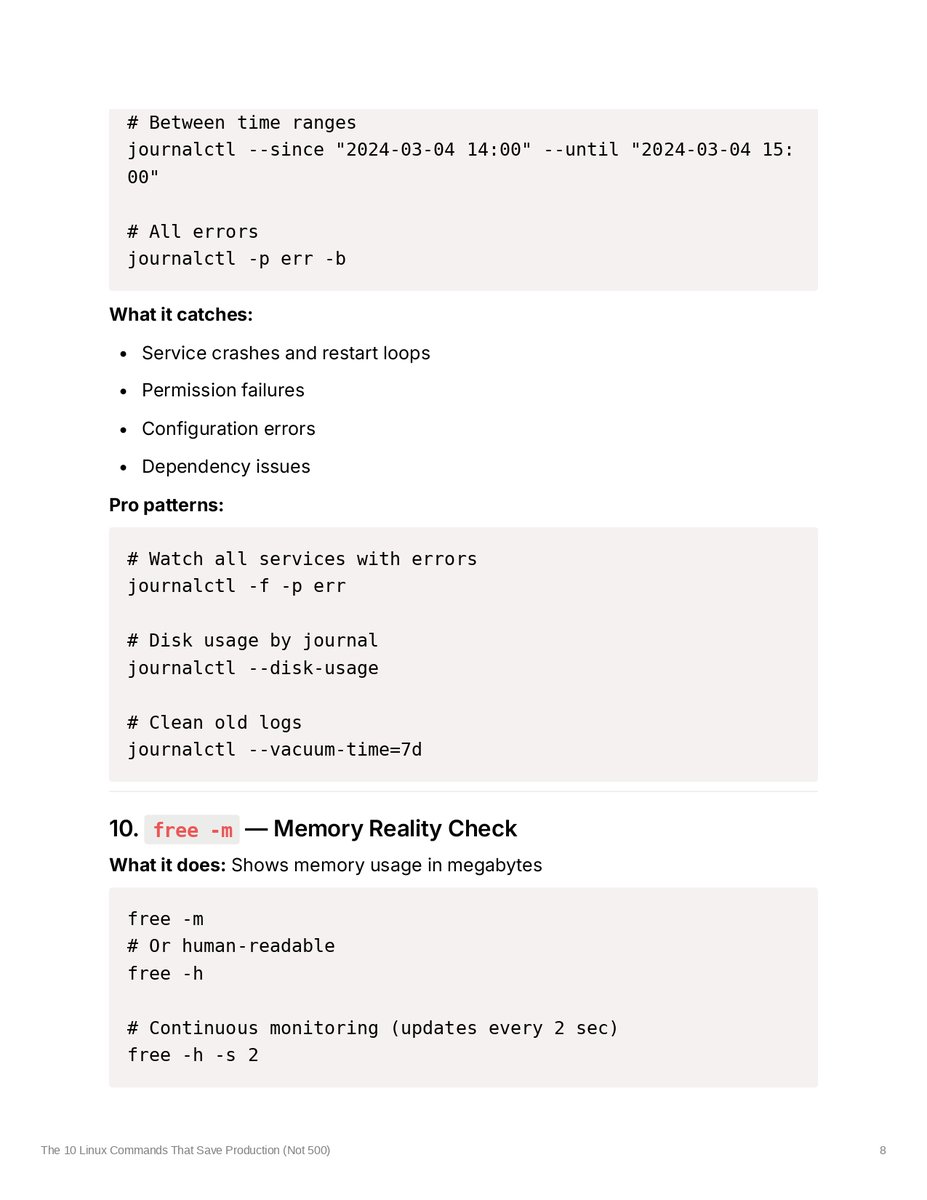
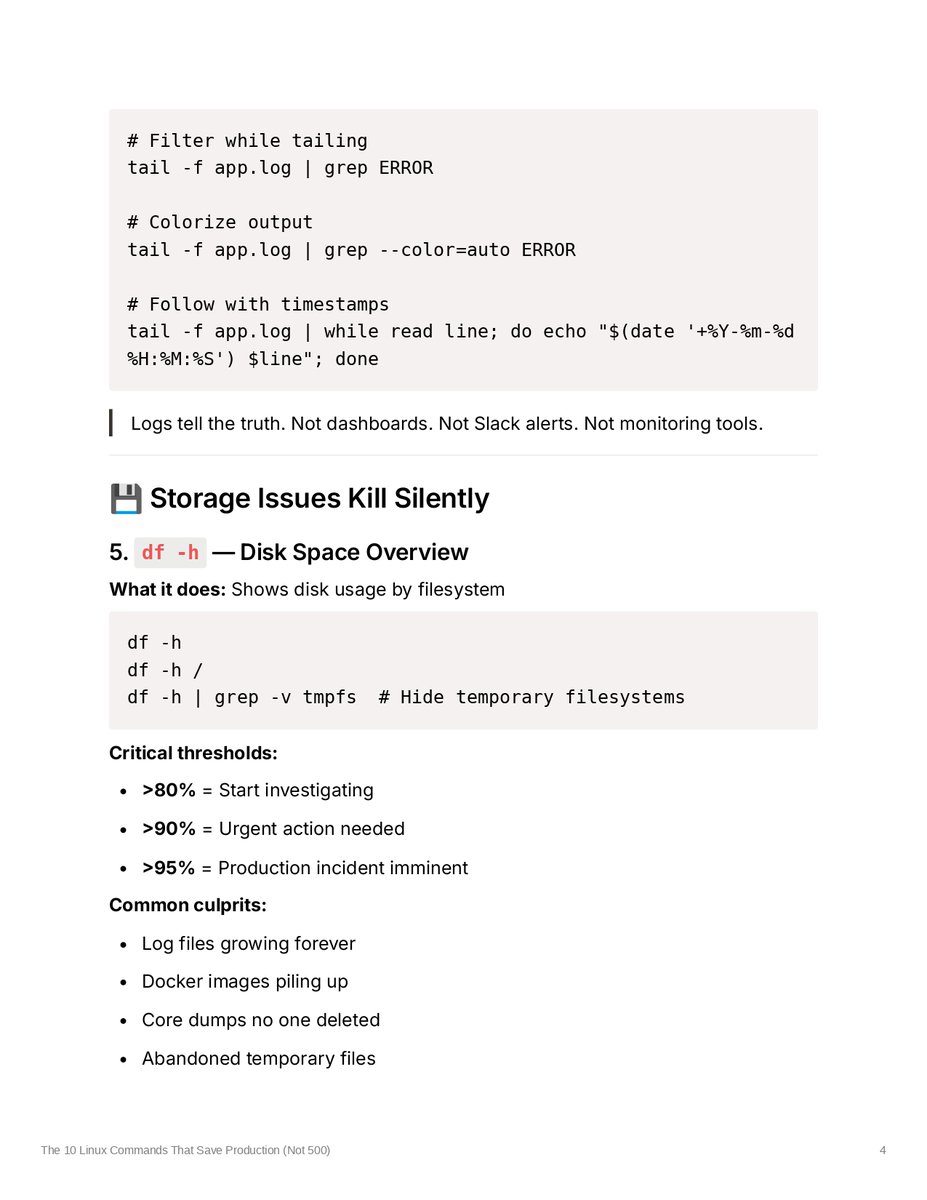
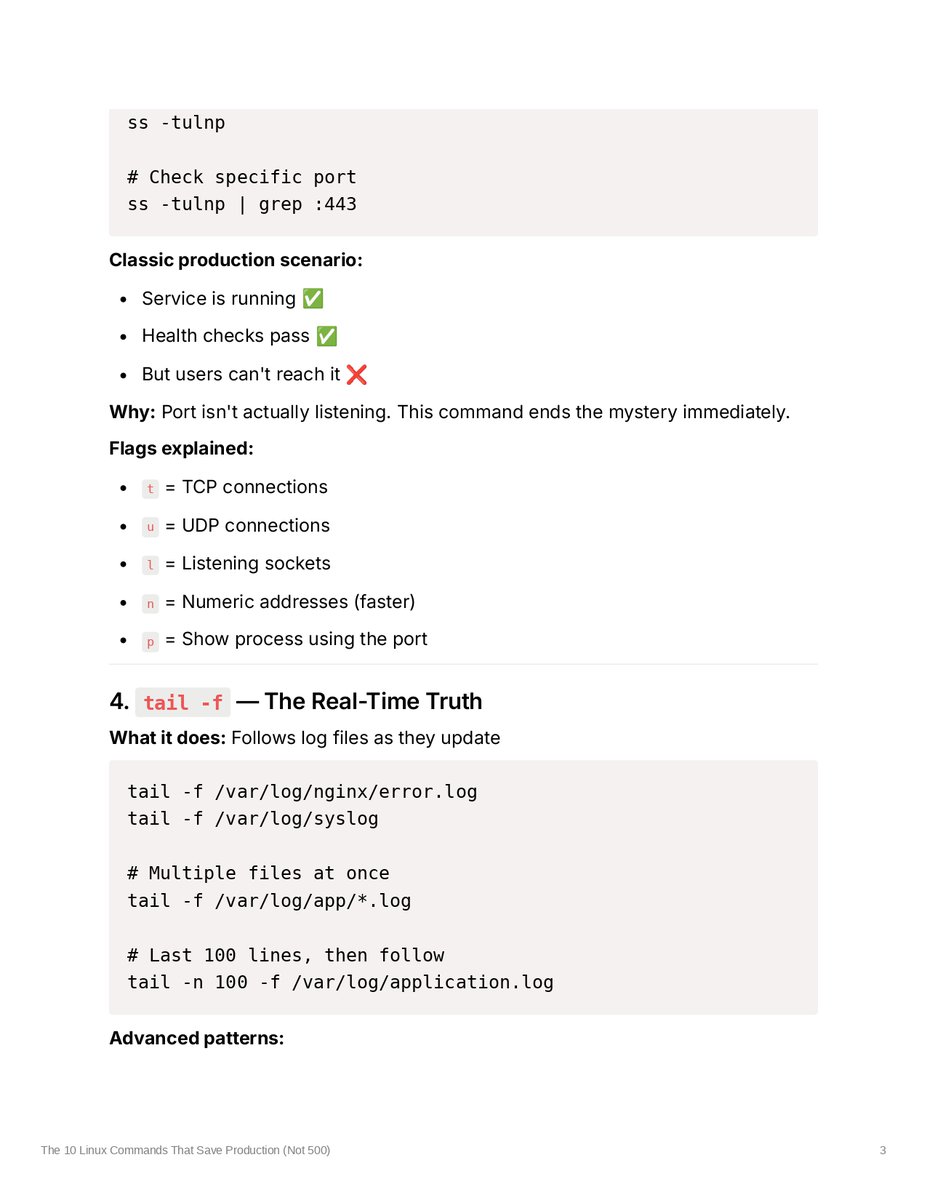
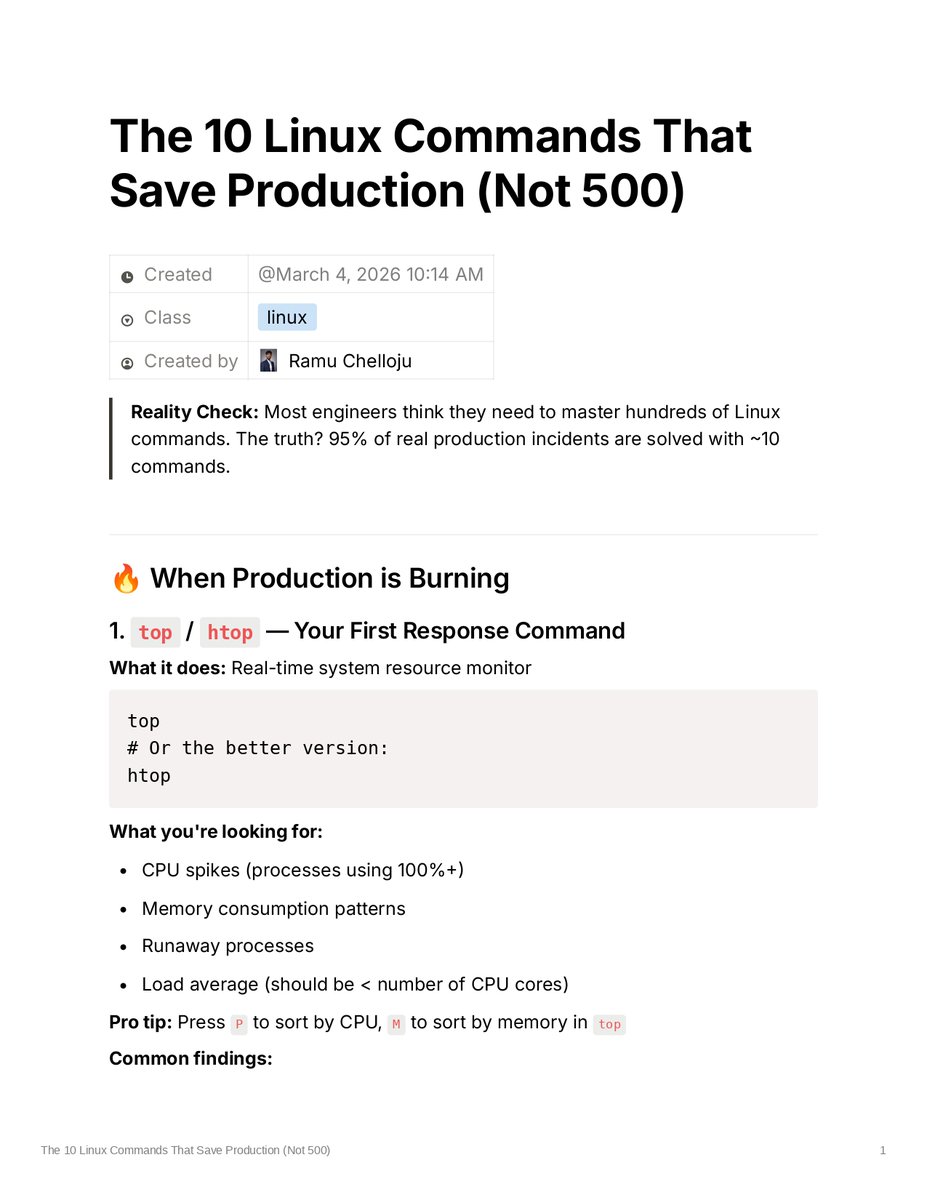
Quick reference guide for Linux debugging commands that actually get used in production.
I put together examples and use cases for the commands that come up most often when something goes wrong.
Nothing fancy — just practical examples for:
Process monitoring
Network checks
Log tailing
Disk diagnostics
Service debugging
📄 Full breakdown in the attached images. Feel free to save it for reference.
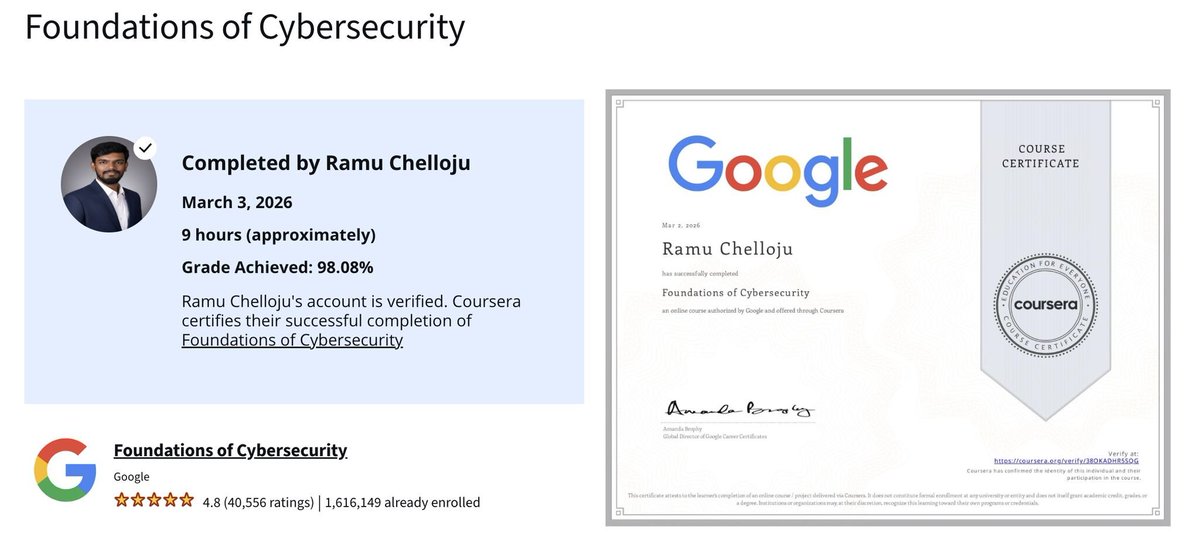
Excited to share that I've completed the "Foundations of #Cybersecurity certificate by @GoogleIndia on @coursera ! 🛡️
This first step provided a solid grounding in the core pillars of security, including:
The CIA Triad (Confidentiality, Integrity, and Availability)
NIST Cybersecurity Framework (CSF) for managing risk
Security Ethics and Professional Responsibility
Compliance & Regulations
Looking forward to diving deeper into the technical modules as I continue this professional certificate journey.
Excited to share that I've completed the "Foundations of #Cybersecurity certificate by @GoogleIndia on @coursera ! 🛡️
This first step provided a solid grounding in the core pillars of security, including:
The CIA Triad (Confidentiality, Integrity, and Availability)
NIST Cybersecurity Framework (CSF) for managing risk
Security Ethics and Professional Responsibility
Compliance & Regulations
Looking forward to diving deeper into the technical modules as I continue this professional certificate journey.
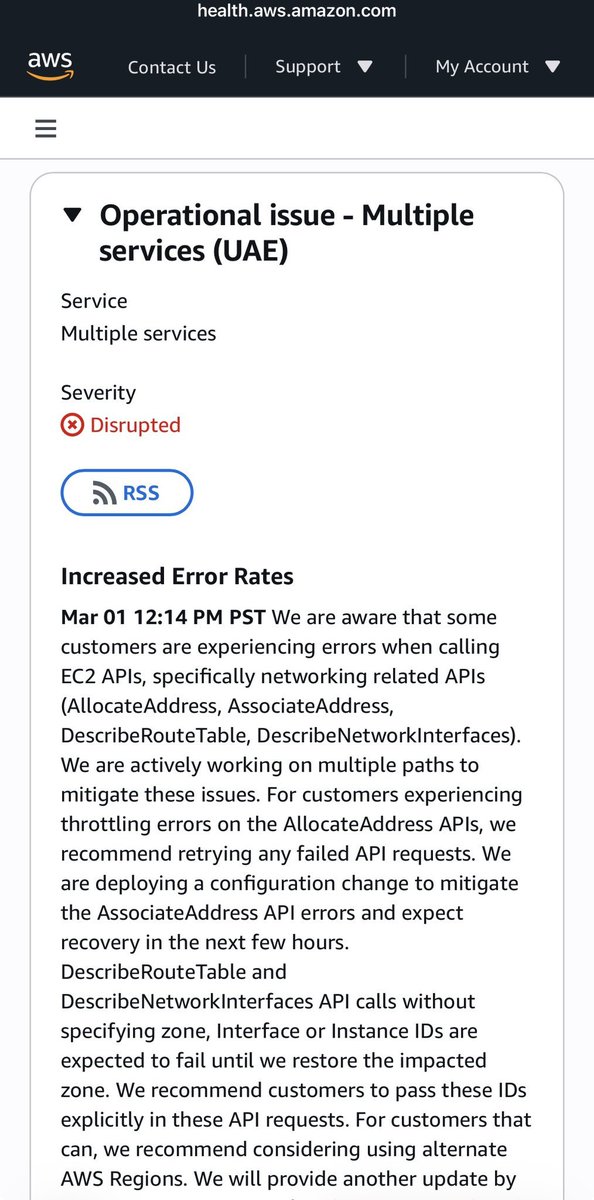
BREAKING: AMAZON AWS DATA CENTER BOMBED IN UAE BY IRAN
Amazon’s main Middle East data center hit. ME-CENTRAL-1 just went fully offline. Damages reported
🚨 AWS Data Center Outage in UAE — Real News, Not Rumor
Amazon Web Services reported that one of its data center availability zones in the UAE went offline after unidentified objects struck the facility, causing sparks and a fire and triggering a temporary power shutdown. 🇦🇪🔥
This is happening amid ongoing regional tensions with missile and drone activity across the Gulf, but AWS has not confirmed any direct link to missile strikes.
Here’s what we know:
• AWS said “objects struck” the data center and caused a fire.
• Power was shut off by emergency responders to control the blaze.
• The affected Availability Zone (mec1-az2) remains disrupted, and services like networking APIs have shown error rates.
• AWS recommends rerouting to other regions while recovery continues.
• Other zones in the UAE remain operational.
⚠️ AWS declined to confirm or deny if this was caused by an external conflict.
What this teaches us as engineers: every cloud service still relies on physical infrastructure, and outages can impact production systems unexpectedly — whether due to hardware failure, environmental damage, or geopolitical events.
#AWS #CloudOutage #UAE #DevOps #CloudInfrastructure
Most DevOps beginners fail in their first 90 days.
Not because they’re dumb.
Not because they didn’t study enough.
Because nobody tells them what DevOps actually requires.
After 5 years in production, here’s what I wish I knew 👇
Mistake 1: Learning tools, not context
Watching 10 hours of Kubernetes tutorials isn’t the same as debugging a crashed pod at 3 AM.
Tutorials teach syntax.
Production teaches ownership.
Mistake 2: Chasing certifications before building anything
AWS Certified ✅
CKA Certified ✅
Terraform Associate ✅
Zero real deployments ❌
Certifications open doors.
But production questions expose gaps.
Mistake 3: Ignoring Linux fundamentals
Everything in DevOps runs on Linux.
If you can’t read systemctl failures, debug networking with ss, or trace disk spikes with iostat — production will humble you.
Mistake 4: Skipping networking
“The infrastructure team will handle it.”
In cloud environments, you are the network team.
If you don’t understand VPCs, security groups, NACLs, DNS, and incidents become guessing games.
Mistake 5: Never breaking things intentionally
The fastest-growing engineers:
Crash clusters in staging.
Misconfigure IAM.
Kill pods deliberately.
Controlled failure builds real confidence.
Mistake 6: Underestimating communication
DevOps sits between Dev and Ops.
You’ll explain outages.
Defend release decisions.
Push back on unsafe changes.
Communication is not optional.
What separates those who survive:
• They built something real
• They broke it and fixed it
• They read logs, not just docs
• They asked “why” repeatedly
• They stayed consistent for 90 days
You’re not failing because you’re not smart.
You’re failing because tutorials don’t simulate responsibility.
Build. Break. Fix. Repeat.
#DevOps #Kubernetes #Linux #AWS #CloudComputing
Stop trying to learn “everything” in Linux for DevOps. ❌
Most beginners waste months on commands they’ll never touch in production.
I’ve worked as a DevOps Engineer for 5 years.
Here’s the REAL Linux checklist I use daily in production 👇
1️⃣ Networking (Where most “bugs” actually live)
• ss / netstat → Check open ports
• curl / wget → Test APIs quickly
• ip addr → Inspect network interfaces
• /etc/resolv.conf → DNS troubleshooting
Most DevOps issues = networking issues.
2️⃣ Process & Resource Management
• htop → Real-time CPU & memory view
• kill -9 → Stop runaway processes
• systemctl → Start/Stop/Enable services
• journalctl -u → Service-specific logs
If you can’t debug a process, production will humble you.
3️⃣ “Where did my disk space go?” toolkit
• df -h → Disk usage overview
• du -sh * → Find heavy directories
• lsblk → Inspect block devices
Storage issues cause real outages.
4️⃣ Log Surgery (Critical Skill)
• grep / awk → Extract patterns from logs
• tail -f → Watch logs in real time
• sed → Fast text replacement
• chmod / chown → Fix permission errors
Logs tell the truth. Learn to read them.
5️⃣ The SSH Standard
Password authentication in production? 🚩
Use SSH keys.
Master ~/.ssh/config for faster, cleaner access.
6️⃣ Automation Foundation
If you do something twice, script it.
At minimum, master:
• Variables
• Loops
• Exit codes ($?)
Automation starts here.
Linux isn’t just an OS.
It’s the foundation of the Cloud. ☁️
If this helped, follow for practical DevOps insights.
#DevOps #Linux #CloudComputing #SRE #AWSCommunityBuilders