Assistant Professor of Political Rhetoric @ACUedu. @AmeriCorps & @FulbrightPrgrm alum. Author. Dad. Husband. Texan. I study US foreign policy rhetoric in MENA.
Excited to share that my latest book is out! A bit different than previous ones, but it's a great (and short) read, dealing with how the places we inhabit shape our practices of thought, speech, and invention. (1/3)
It has a set of excellent contributors, including a good number of whom have the wisdom to not be on Twitter/X, and I'm glad to say that @routledgebooks has proven to be a great home for the project. (2/3)
@jamesrwoodtheo@FeserEdward Please engage the world of policymaking, defense, and intelligence as it exists. What degree of IC concurrence is necessary to be "certain" within the JW trad? Does "degrading the terrorist regime but not total victory" count as a legitimate aim? Is low-intensity conflict war?
Anyway, if you want more of my thoughts feel free to check out my Amazon author page or the pieces I've written for @ProvMagazine
https://t.co/gI651JoW22
Gets a lot right about the significance of Trump's speech, much of which the punditry has dismissed or ignored. My research shows that going back to 1946(!) US strategists had this formula for why the Gulf mattered:
Gulf oil-->European economy-->overall Allied strength
Food for thought.
Trump, Hormuz and the End of the Free Ride
For half a century, Western strategists have known that the Strait of Hormuz is the acute point where energy, sea power and political will intersect. That knowledge is not in dispute. What is new in this war with Iran is that the United States, under Donald Trump, has chosen not to rush to “solve” the problem. In Hegelian terms, he is refusing an easy synthesis in order to force the underlying contradiction to the surface.
The old thesis was simple: the US guarantees open sea lanes in the Gulf, and everyone else structures their economies and politics around that free insurance. Europe and the UK embraced ambitious green policies, ran down hard‑power capabilities and lectured Washington on multilateral virtue, secure in the assumption that American carriers would always appear off Hormuz. The political class behaved as if the American security guarantee were a law of nature, not a contingent choice. Their conduct today is closer to Chamberlain than Churchill: temporising, issuing statements, hoping the storm will pass without a fundamental reordering of their responsibilities.
Trump’s antithesis is to withhold the automatic guarantee at the moment of maximum stress. Militarily, the US can break Iran’s residual ability to contest the Strait; that is not the binding constraint. The point is to delay that act. By allowing a closure or semi‑closure to bite, Trump ensures that the immediate pain is concentrated in exactly the jurisdictions that have most conspicuously free‑ridden on US power: the EU and the UK. Their industries, consumers and energy‑transition assumptions are exposed.
In that context, his reported blunt message to European and British leaders, you need the oil out of the Strait more than we do; why don’t you go and take it? Is not a throwaway line. It is the verbalisation of the antithesis. It openly reverses the traditional presumption that America will carry the burden while its allies emote from the sidelines.
In this dialectic, the prize is not simply the reopening of a chokepoint. The prize is a reordered system in which the United States effectively arbitrages and controls the global flow of oil. A world in which US‑aligned production in the Americas plus a discretionary capability to secure,or not secure, Hormuz places Washington at the centre of the hydrocarbon chessboard. For that strategic end, a rapid restoration of the old status quo would be counterproductive.
A quick, surgical “fix” of Hormuz would short‑circuit the dialectic. If Trump rapidly crushed Iran’s remaining coastal capabilities, swept the mines and escorted tankers back through the Strait, Europe and the UK would heave a sigh of relief and return to business as usual: underfunded militaries, maximalist green posturing and performative disdain for US power, all underwritten by that same power. The contradiction between their dependence and their posture would remain latent.
By declining to supply the synthesis on demand, and by explicitly telling London and Brussels to “go and take it” themselves, Trump forces a reckoning. European and British leaders must confront the fact that their energy systems, their industrial bases and their geopolitical sermons all rest on an American hard‑power foundation they neither finance nor politically respect. The longer the contradiction is allowed to unfold, the stronger the eventual synthesis can be: a new order in which access to secure flows, Hormuz, Venezuela and beyond, is explicitly conditional on real contributions, not assumed as a right.
In that sense, the delay in “taking” the Strait, and the challenge issued to US allies to do it themselves, is not indecision. It is the negative moment Hegel insisted was necessary for history to move. Only by withholding the old guarantee, and by saying so out loud to those who depended on it, can Trump hope to end the free ride.
2. Trump, as ever, seems to be operating in 90s politics mode. That era saw rogue states--what Clinton called the "unholy axis" of terrorists, drug cartels, and states like Iran--as the chief threat. Not Russia. Not China. It assumes US global hegemony & others' acceptance of it.
@FeserEdward I appreciate your work, but I think you ought to broaden your selection of comparative cases to the current situation, which might also help illuminate a question to which your answer seems uncertain: under what conditions can an "undeclared" or low/medium intensity war be just?
Despite comparisons to the 2003 Iraq War or the US-aided 1953 coup in Iran, Trump’s current posture towards Iran is more reflective of Operation Praying Mantis in 1988 @RandallFowlerTX
https://t.co/t7KYKEcAlg
In the Gulf, the competition right now is over who intercepted more of the Iranian missiles.
Beyond that, retaliation isn’t in the conversation. If this doesn’t transform the Gulf, nothing will.
More here by @kshaheen: https://t.co/KLwzl1byKH
BREAKING
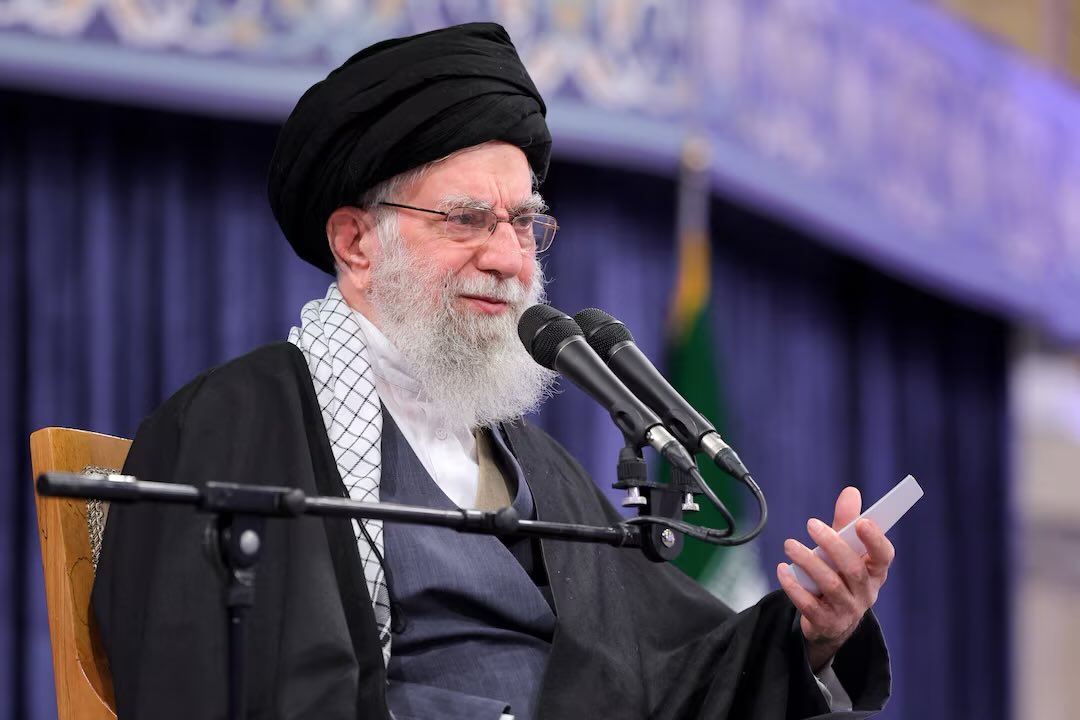
In a new statement, Israeli Prime Minister Benjamin Netanyahu says it is highly likely that Ayatollah Ali Khamenei, the Supreme Leader of the Islamic Republic is no longer alive.
If events follow historical precedent — as they did with Khomeini in 1989 and Raisi in 2024 — the regime would likely wait until tomorrow morning to issue any formal confirmation, typically during state broadcast hours and often accompanied by Qur’an recitation and mourning programming before or alongside the announcement.
Something to consider as we wait / pray / assess is the credibility of the people screaming loudest against this operation. (I’m generally supportive, with obvious trepidation).
Recall their predictions about the 2025 Iran and 2026 Venezuela operations. How did those turn out?
This is not to say this time cannot turn out far worse, of course — but many of the reflexive, shrill critics have been proven profoundly wrong in very recent memory. This shouldn’t be forgotten or ignored as people draw their own conclusions now.