Do Arrhenius laws hold up for rare events with long-term memory? Not really.
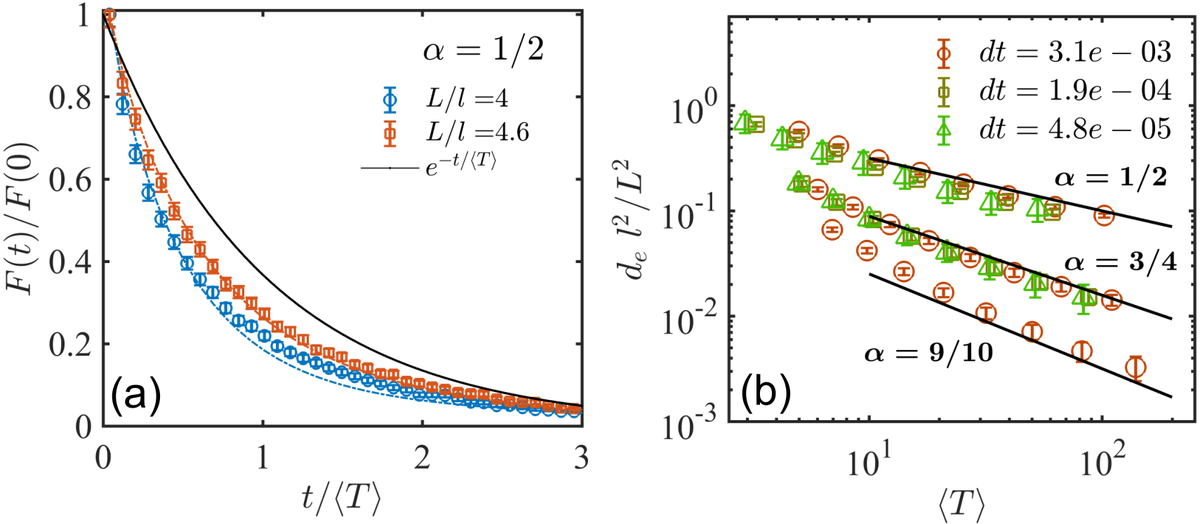
This study goes beyond the Arrhenius paradigm, describing an approach that can predict the joint distribution of how often rare events will occur in succession.
Read the paper: https://t.co/WyyjFfAm1N
Very Happy to share this @PhysRevX highlight of our just published article, from a collaboration between our group at @UninaIT II and Walter Kob at the University of Montpellier.
Using large scale simulations, scientists studied the dynamical properties at temperatures significantly below the mode-coupling temperature, showing how the relaxation dynamics differ below this temperature and revealing unexpected scaling laws.
🔗 https://t.co/GLTMnlbHEw
A man spends 50 years teaching at MIT.
He knows his time is running out.
So he records one last lecture — everything he knows, distilled into a single hour.
He died 5 months later.
This is that lecture.
The most important hour you'll watch this week. 👇
Bookmark it for later
A professor at MIT spent his life studying uncertainty.
Near the end, he compressed everything into a single one-hour lecture.
No buzzwords. No heavy theory.
Just a clear explanation of how prediction really works.
Not long after, he was gone.
This is that talk.
The idea at its core is simple but powerful:
prediction isn’t about being certain
it’s about understanding probabilities
Most people will scroll past it.
A few will see it and start thinking differently.
Save it.
Perché ignorare la cultura scientifica è pericoloso? Perché significa non essere più in grado di capire quel che succede nel mondo, non saper “leggere” il proprio tempo. La cultura classica e quella scientifica continuano a rimanere separate, o almeno quella classica continua a ignorare i valori di quella scientifica. […] Per troppo tempo abbiamo parlato di “due culture”. In realtà ne esiste una sola, che deve saper fondere il patrimonio umanistico con quello scientifico. Perché solo chi riesce a navigare in entrambi i mondi può contribuire a scrivere il futuro con intelligenza, responsabilità e creatività.
Su Repubblica un estratto del saggio postumo del grande divulgatore: Chiedetevi sempre perché (Mondadori, a cura di Massimo Polidoro)
#rep
@andst7 Ma non crede che questo sia un problema? Sapere o non sapere cosa succede in una parte del mondo dipende (e dipenderà sempre di più) dalla volontà o meno di una persona di fare in modo che si sappia. Non lo trova pericolosissimo?
📢 Publication alert
#rheology#openscience#microscopy
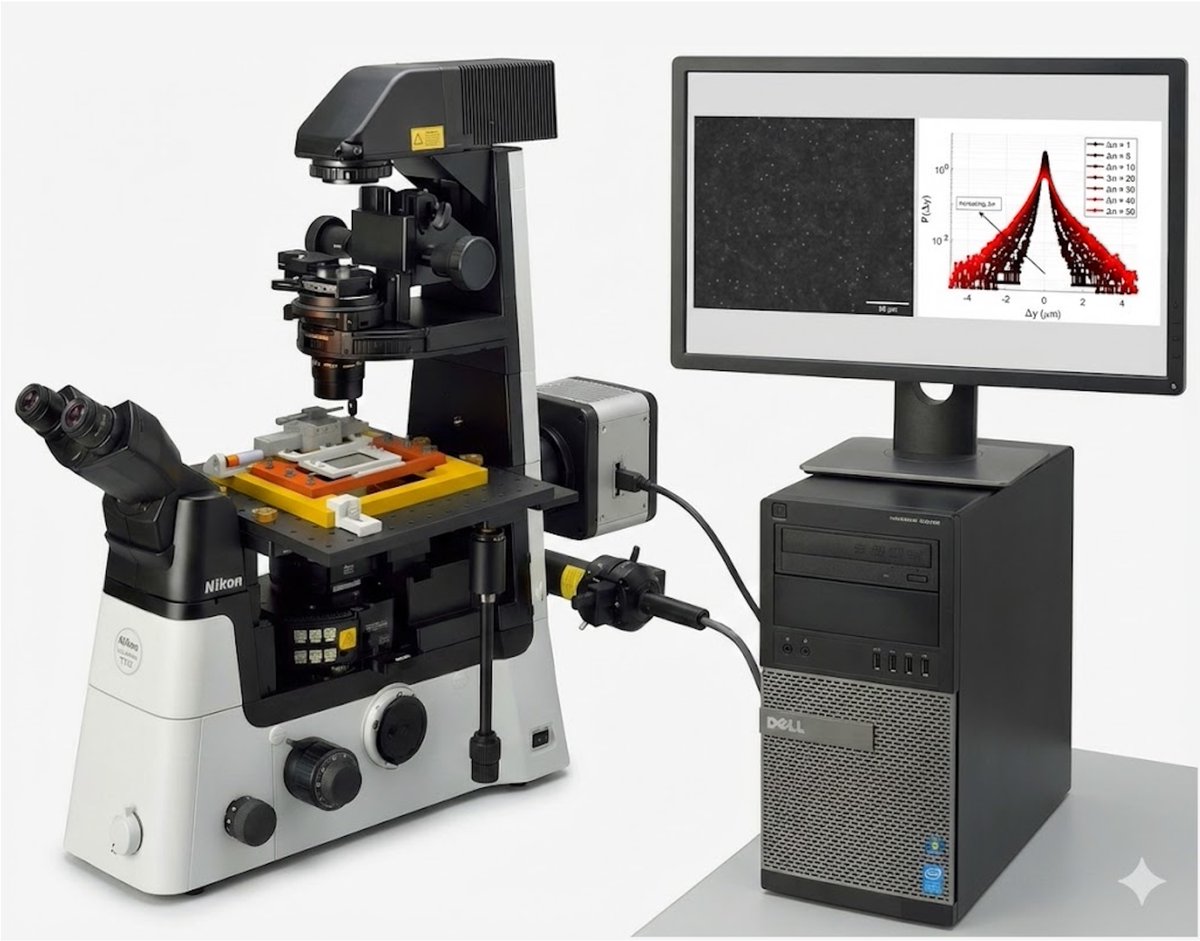
We are pleased to share our latest work on ShearView: a compact, open-source rheometer compatible with optical microscopy, designed to enable synchronized rheology–microscopy measurements.